
SHARE ON:
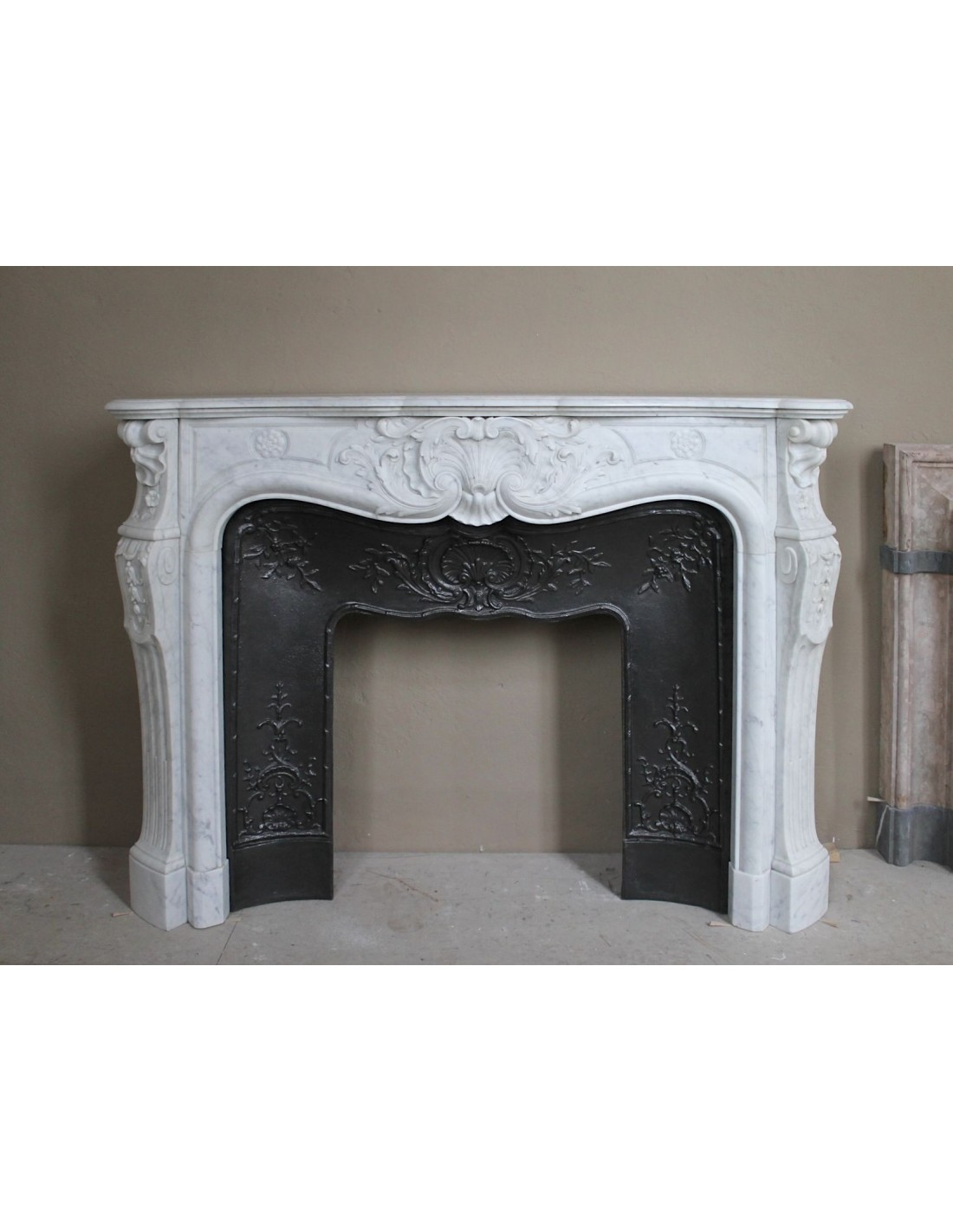
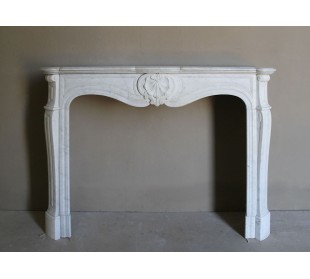
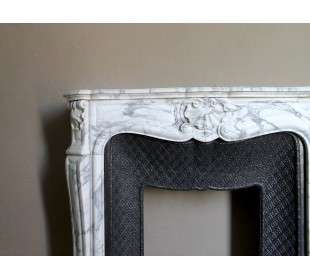
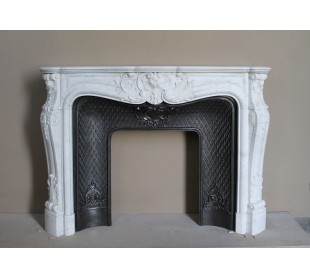
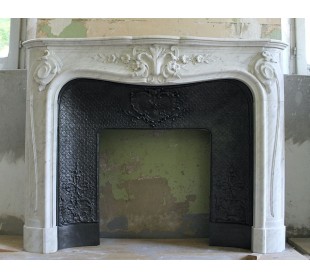
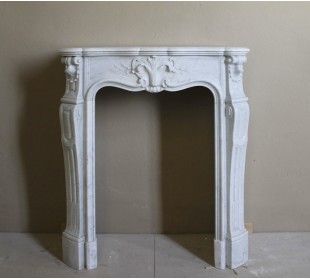
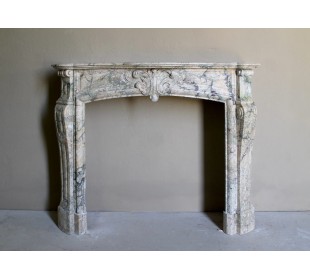
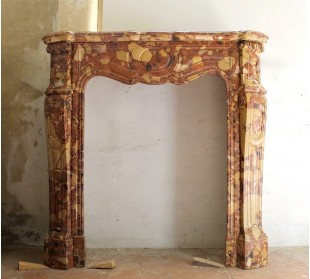
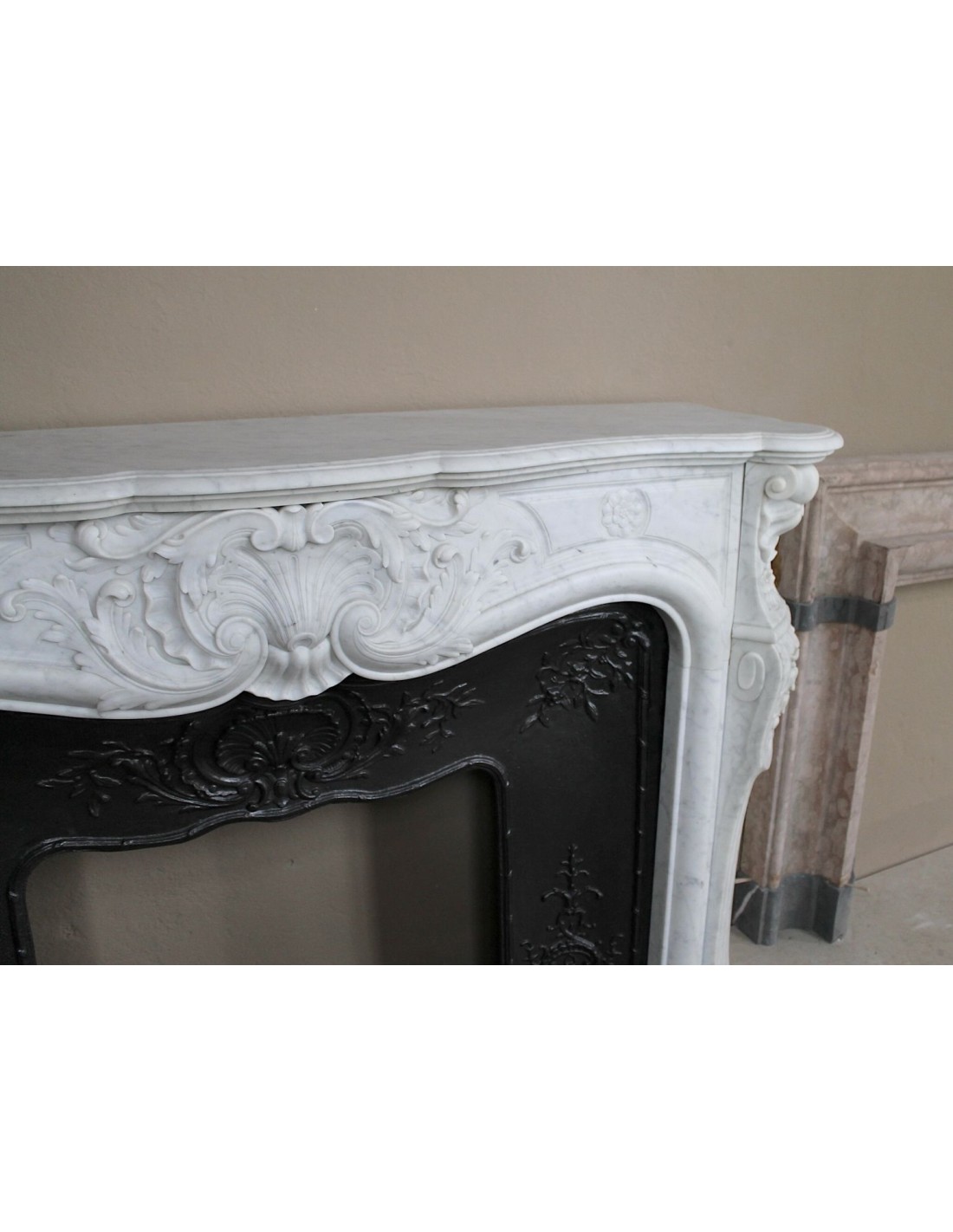
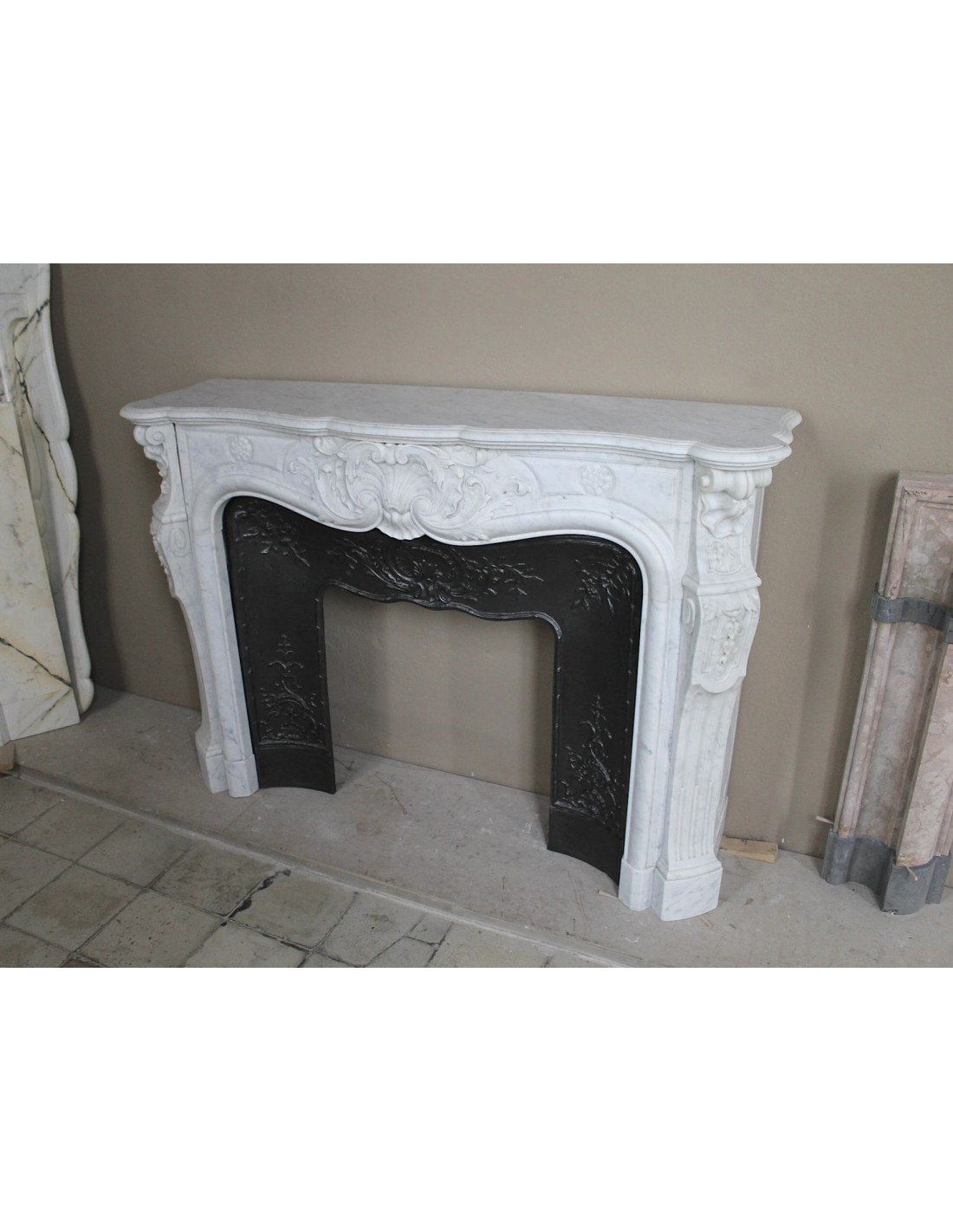
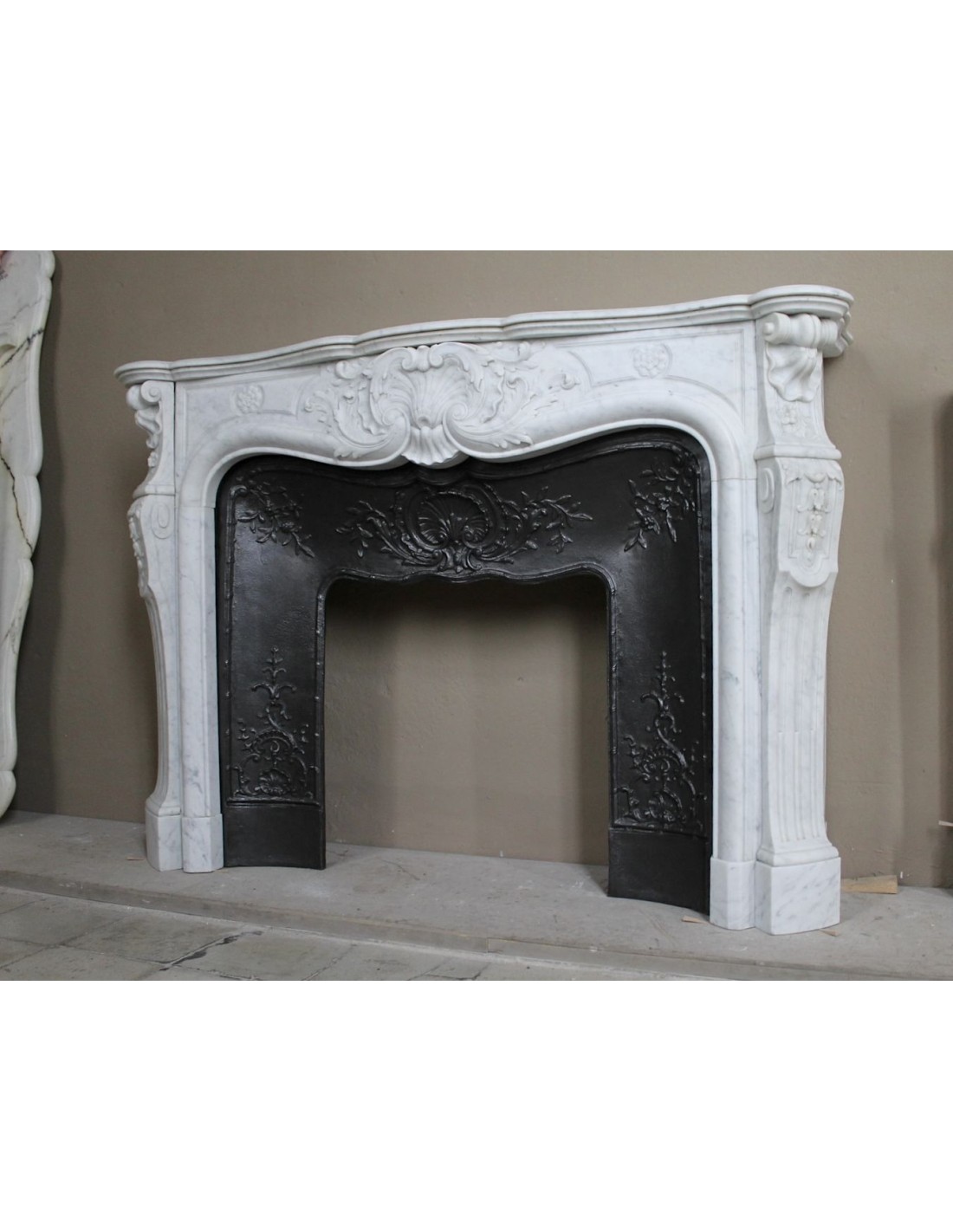
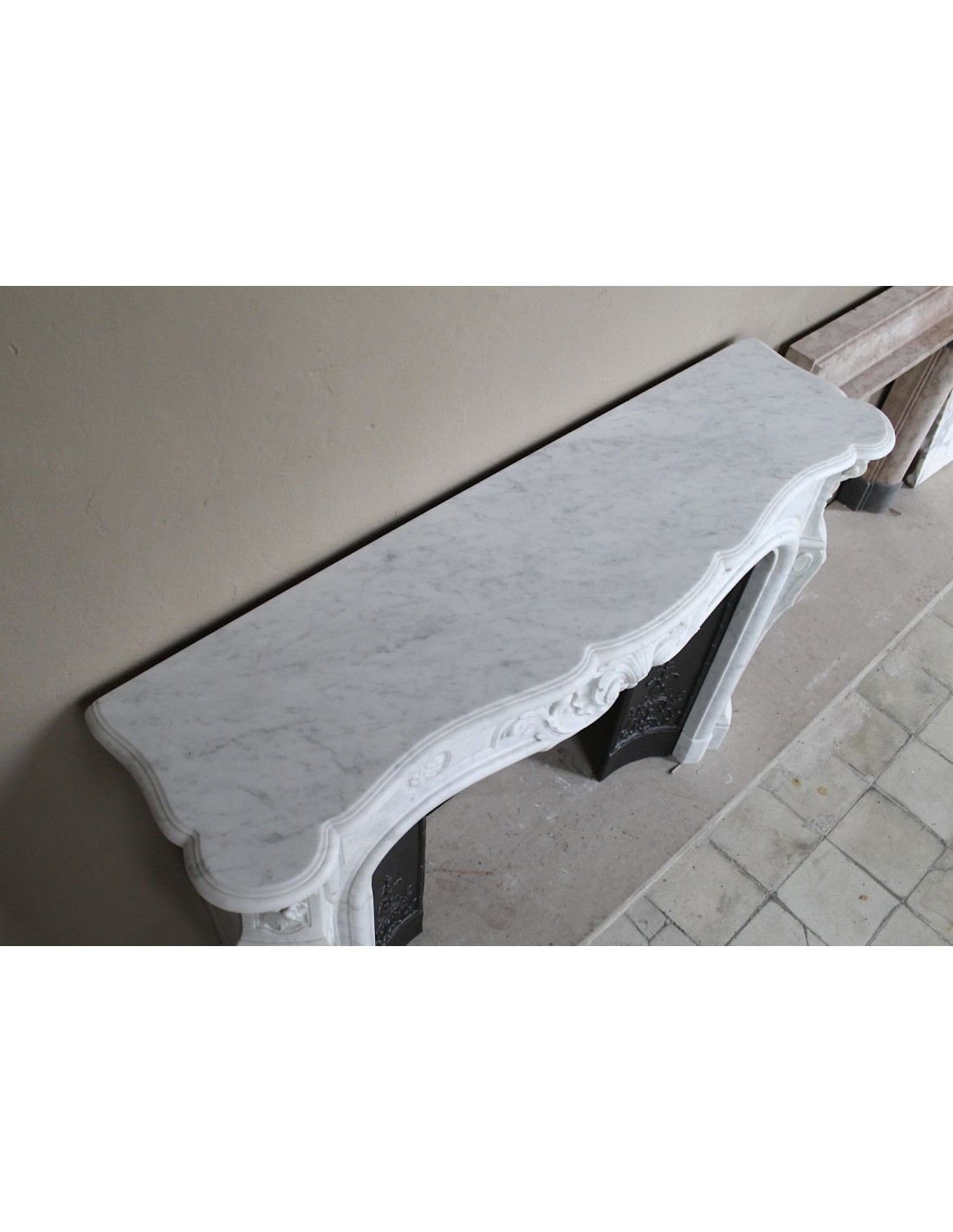
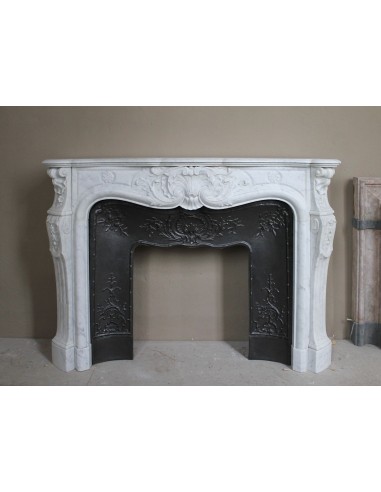
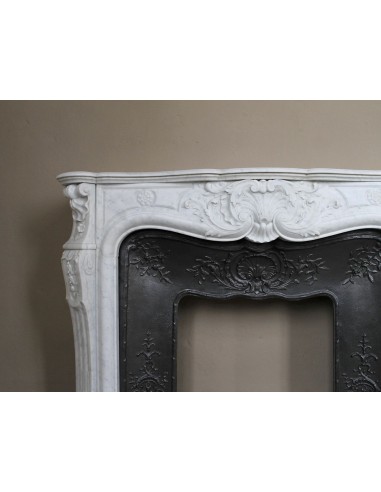
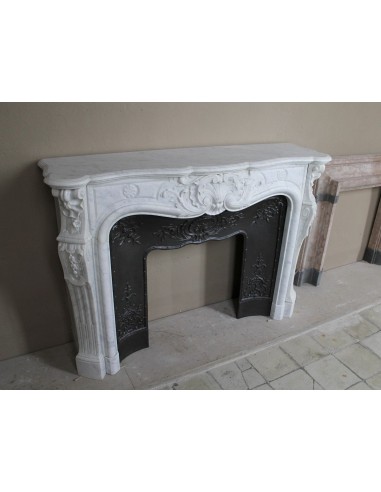
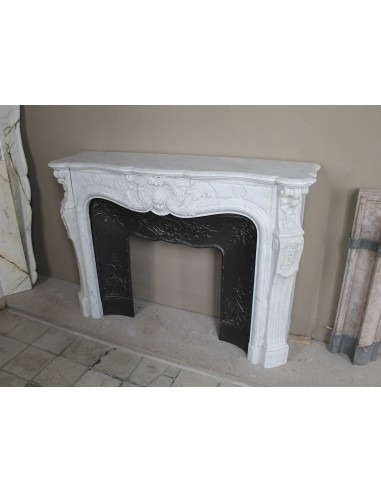
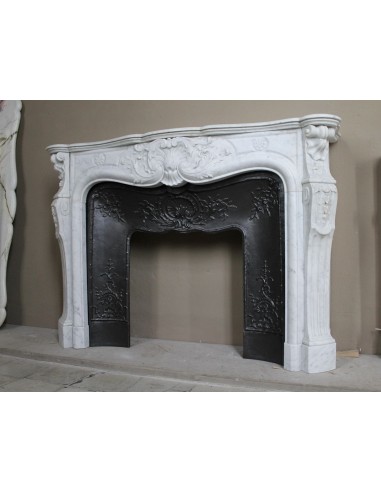
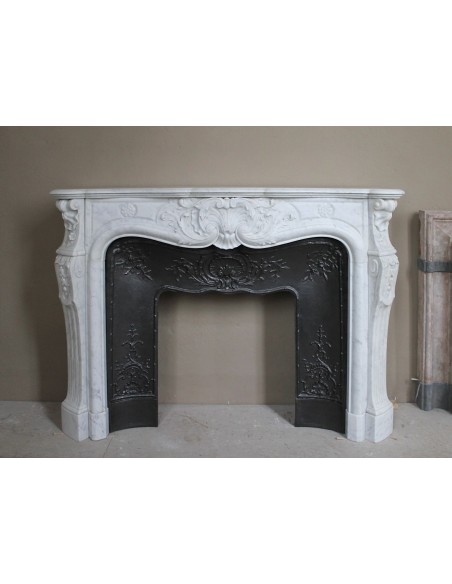
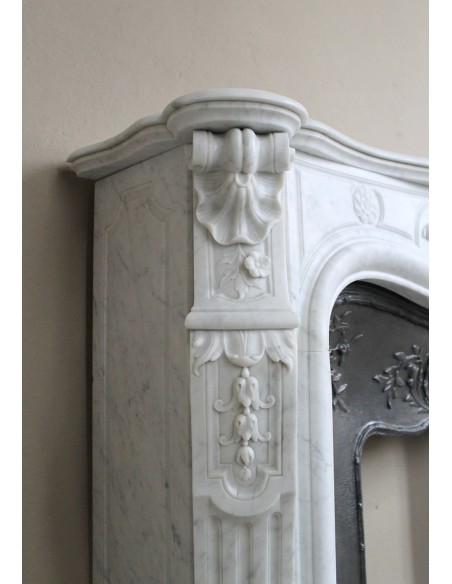
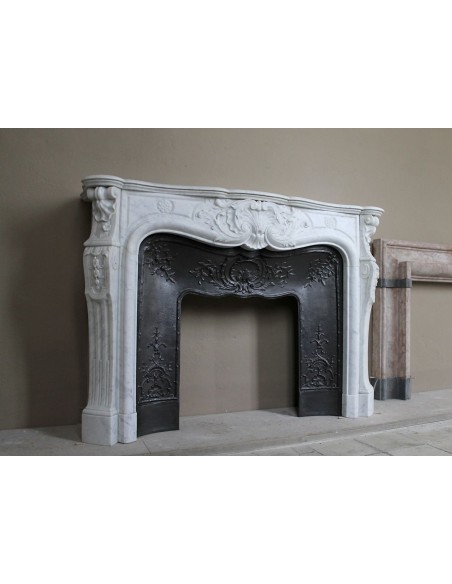
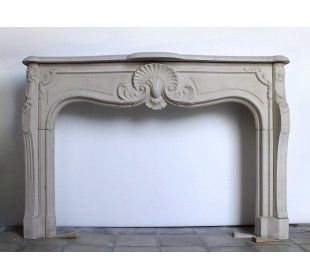
The name of this fireplace is “Rosaces,” a French term that literally means “twists.” In this case, these are arboreal, leafy, and floral twists. But don’t expect precise, geometric, perfectly defined spirals; in French, when this word is applied to the “arboreal world,” it refers more to an “elegant confusion,” a joyful clustering of floral elements — in short, a sort of botanical… celebration!
So let’s join the celebration ourselves and enjoy it from beginning to end, just as the future buyer of our now “celebrated” fireplace will soon be able to do.
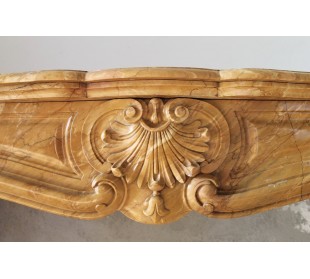
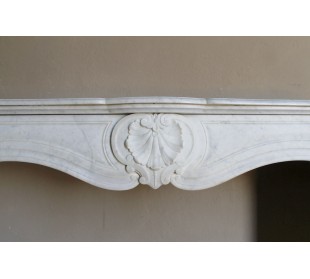
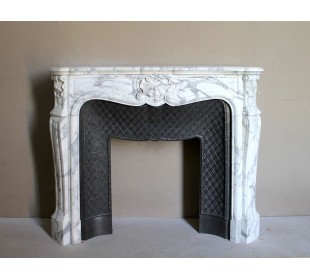
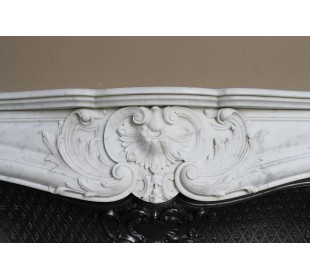
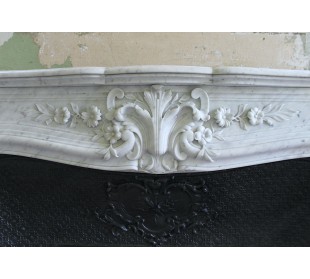
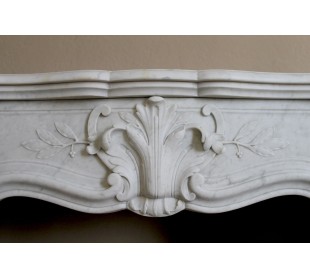
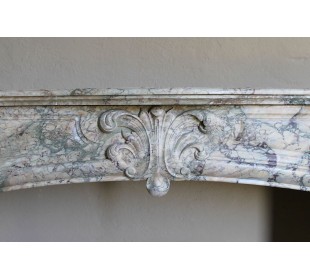
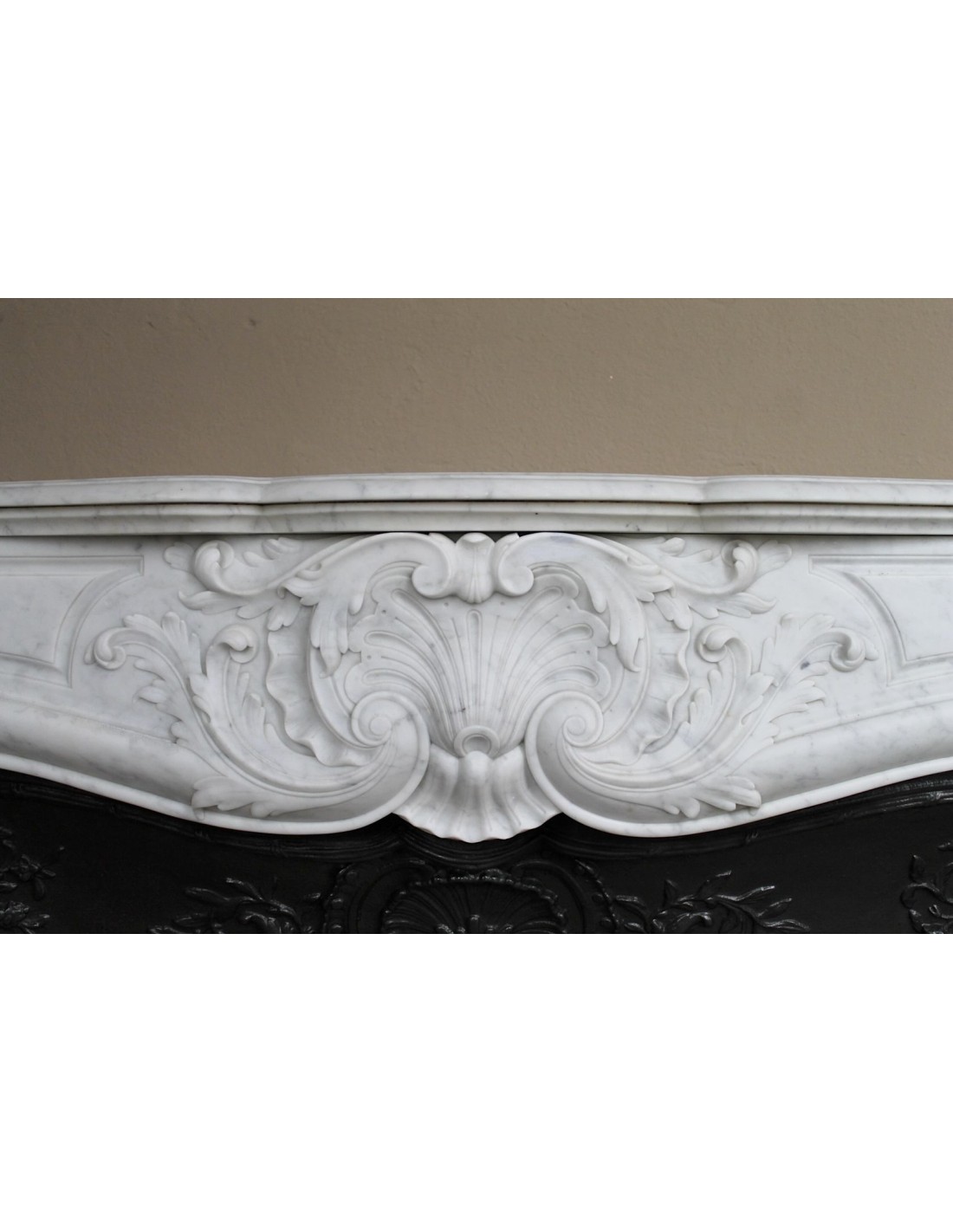
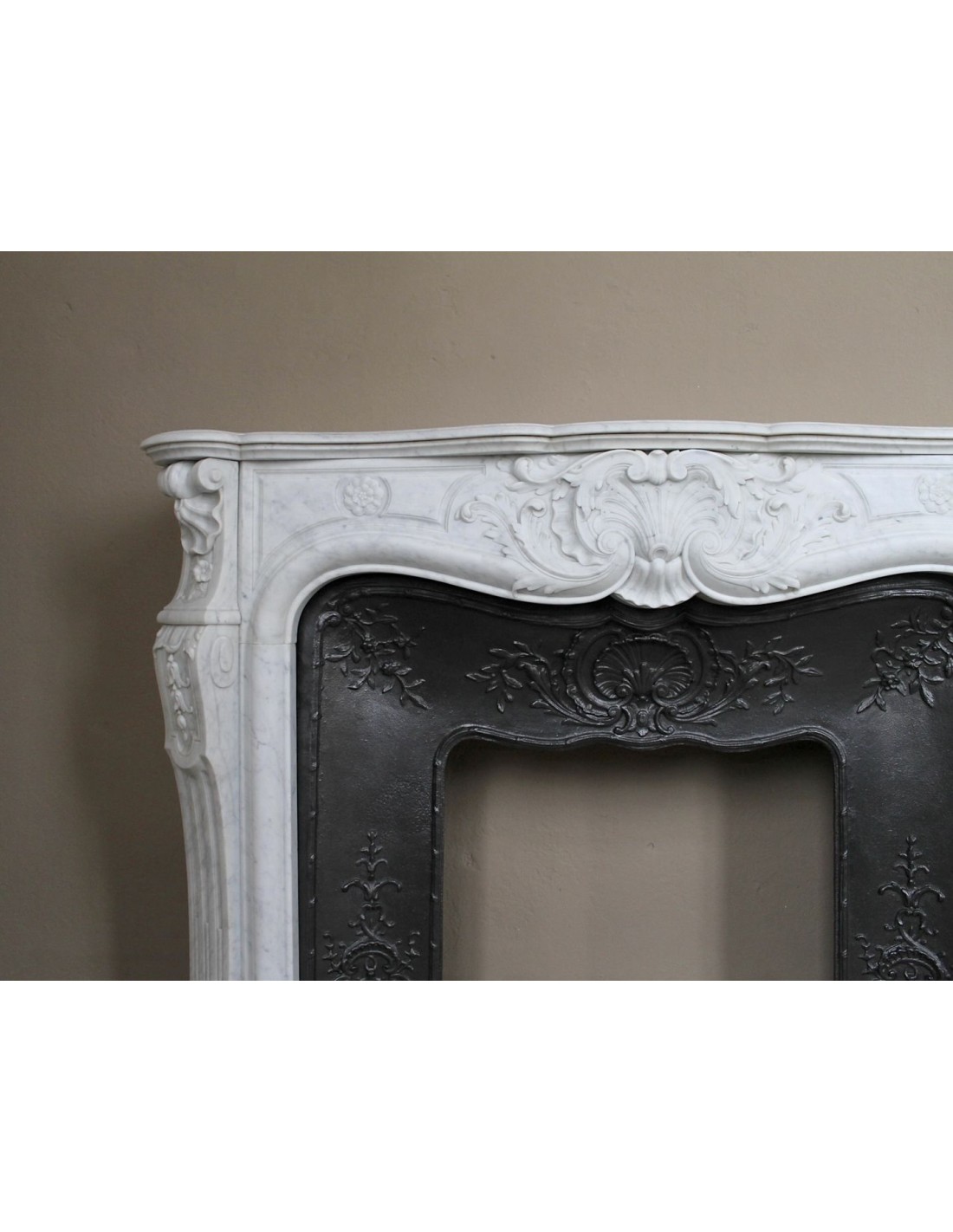
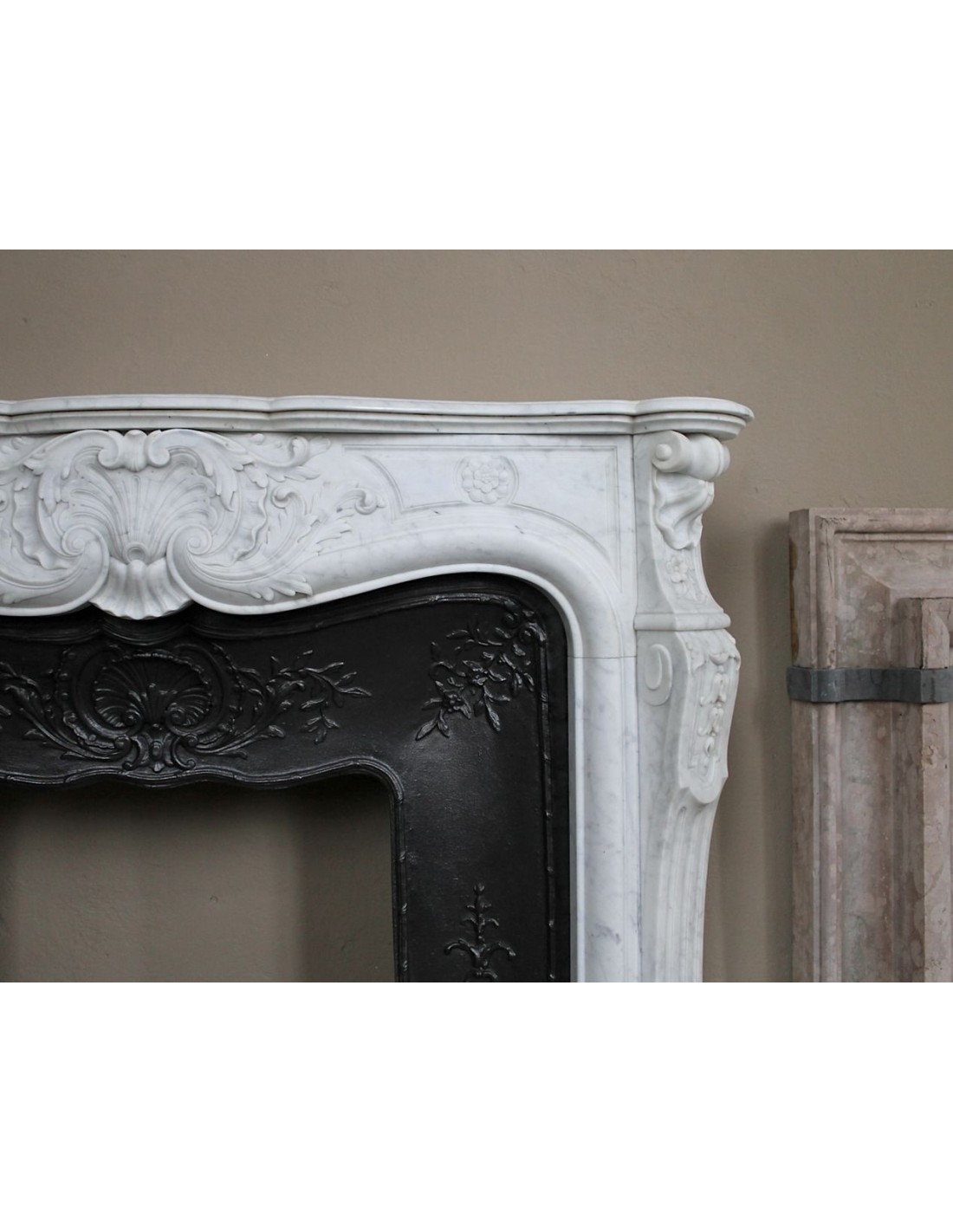
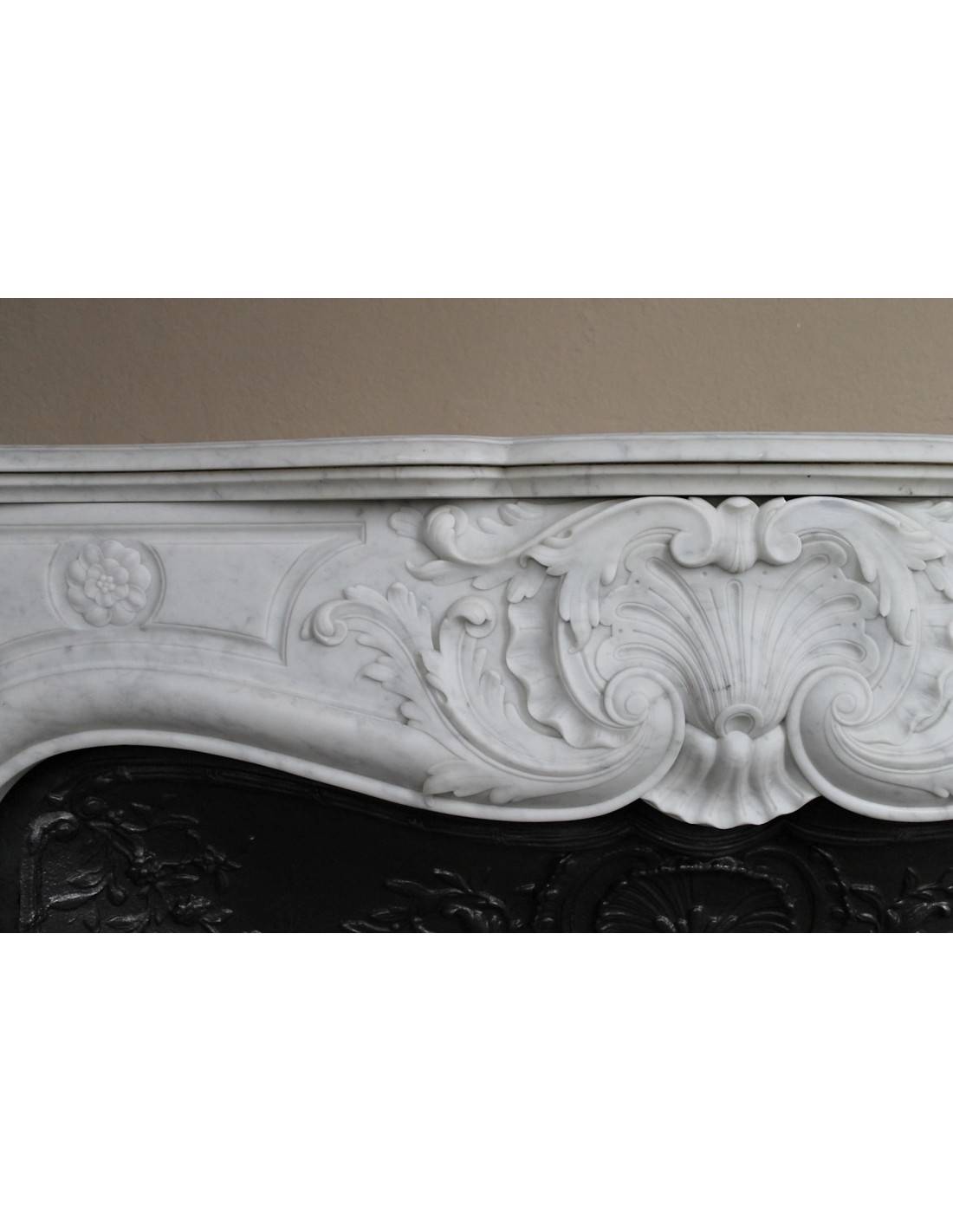
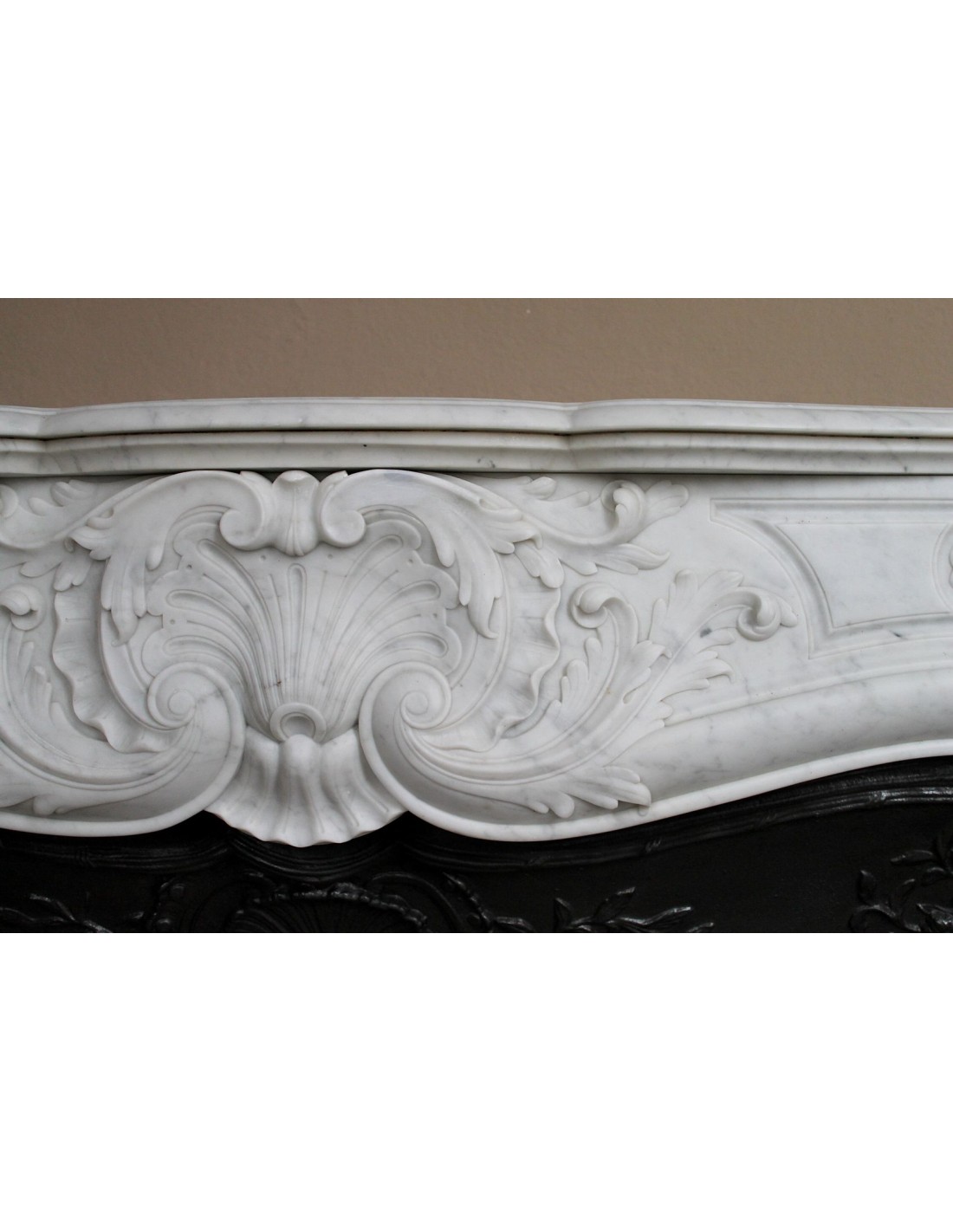
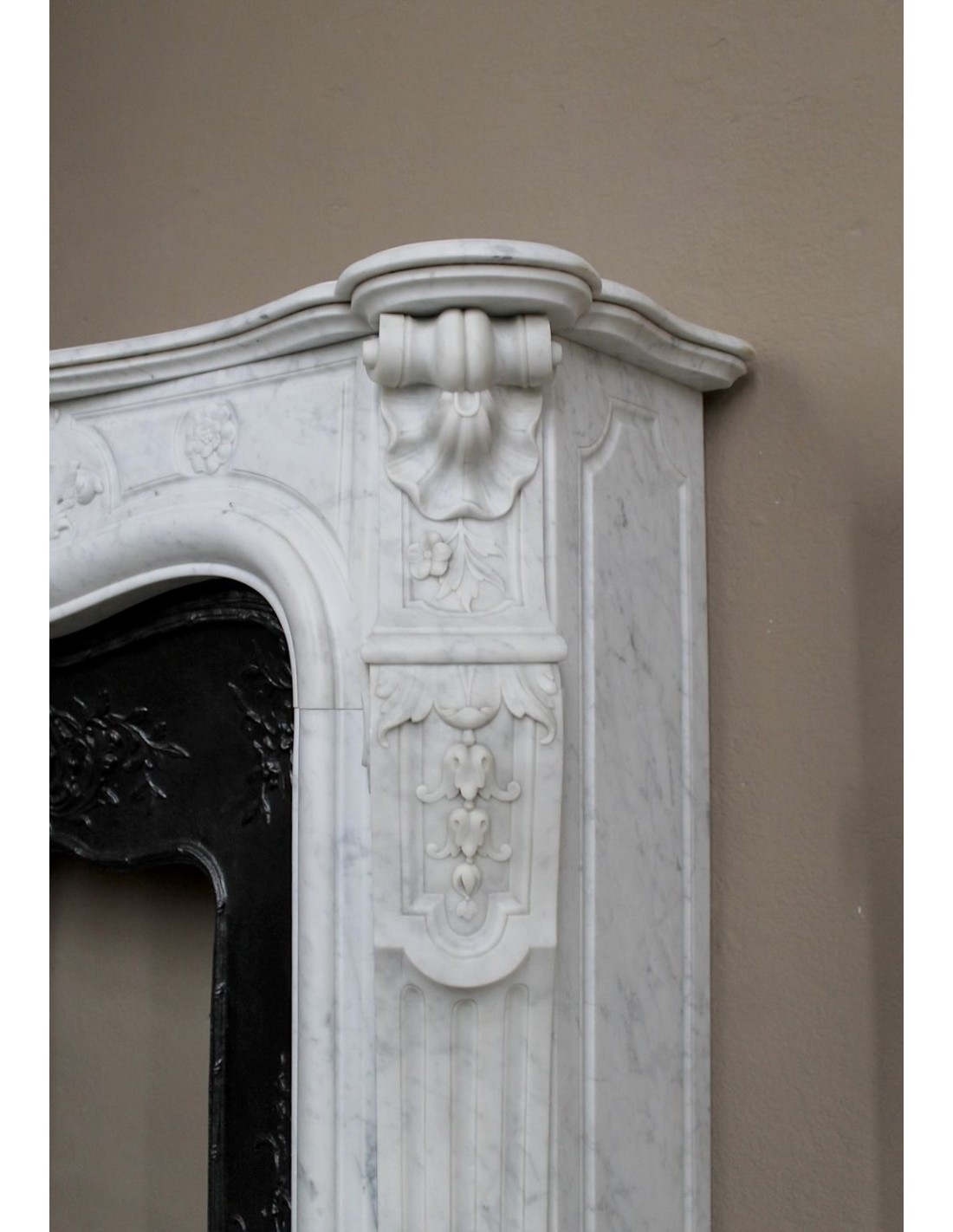
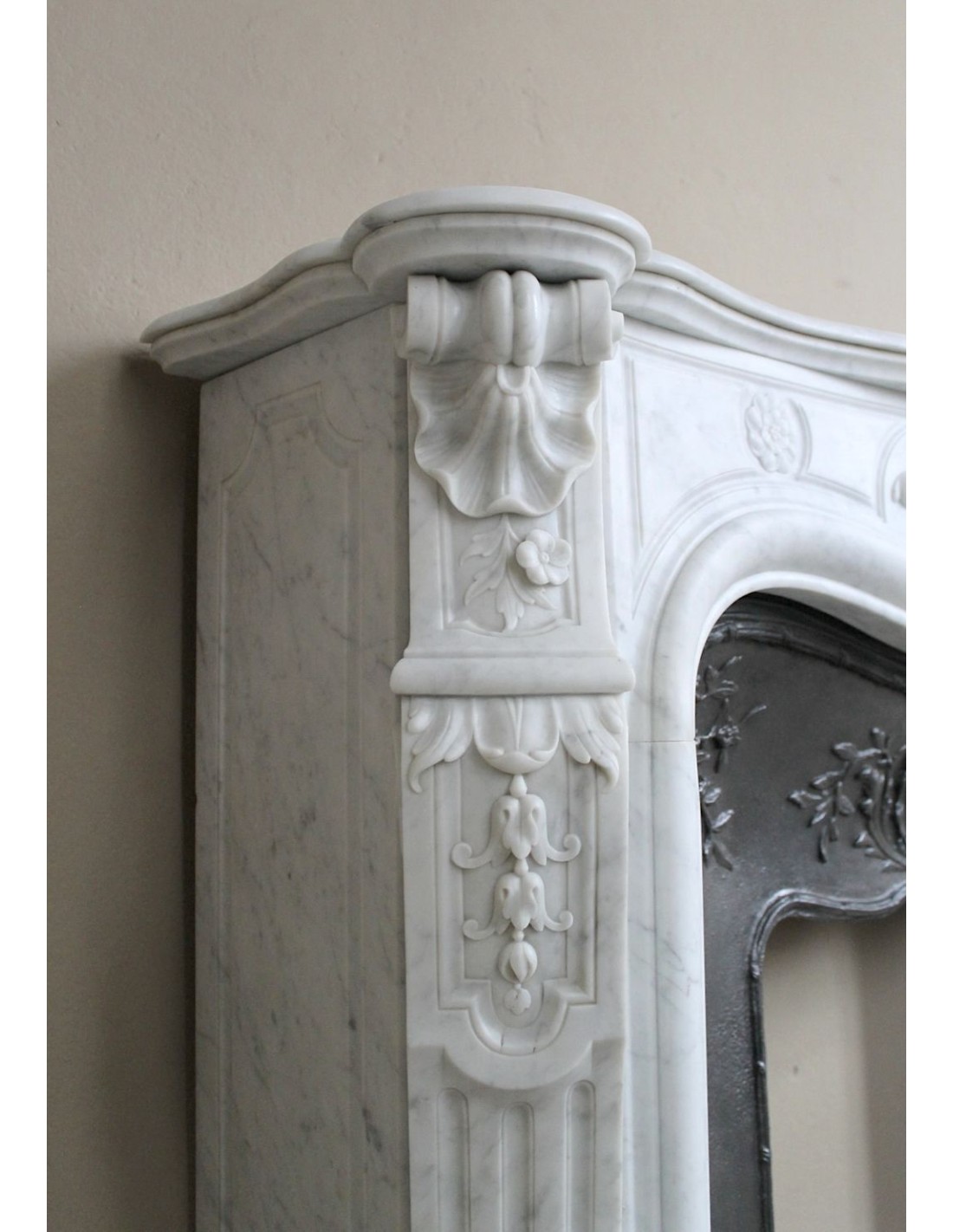
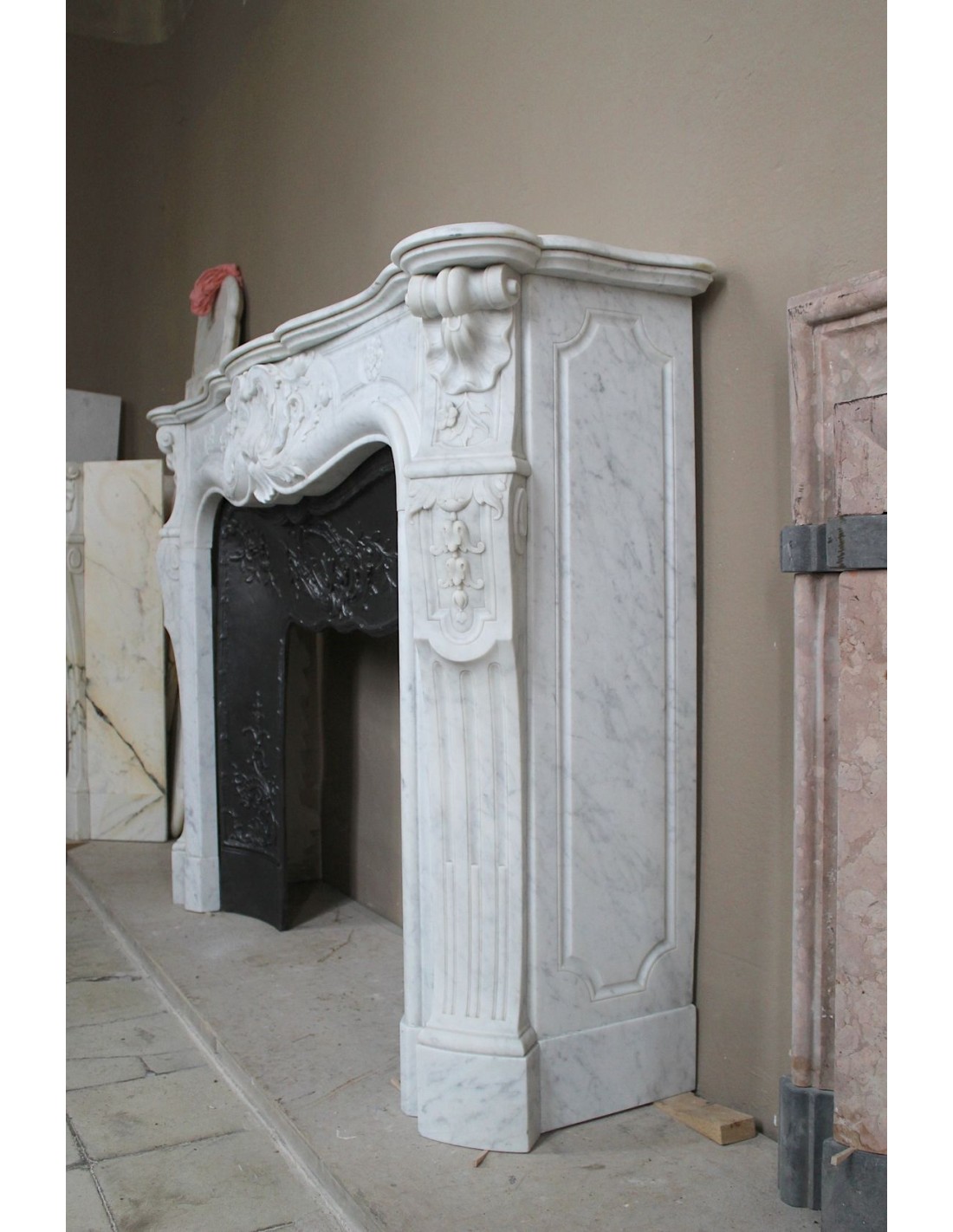
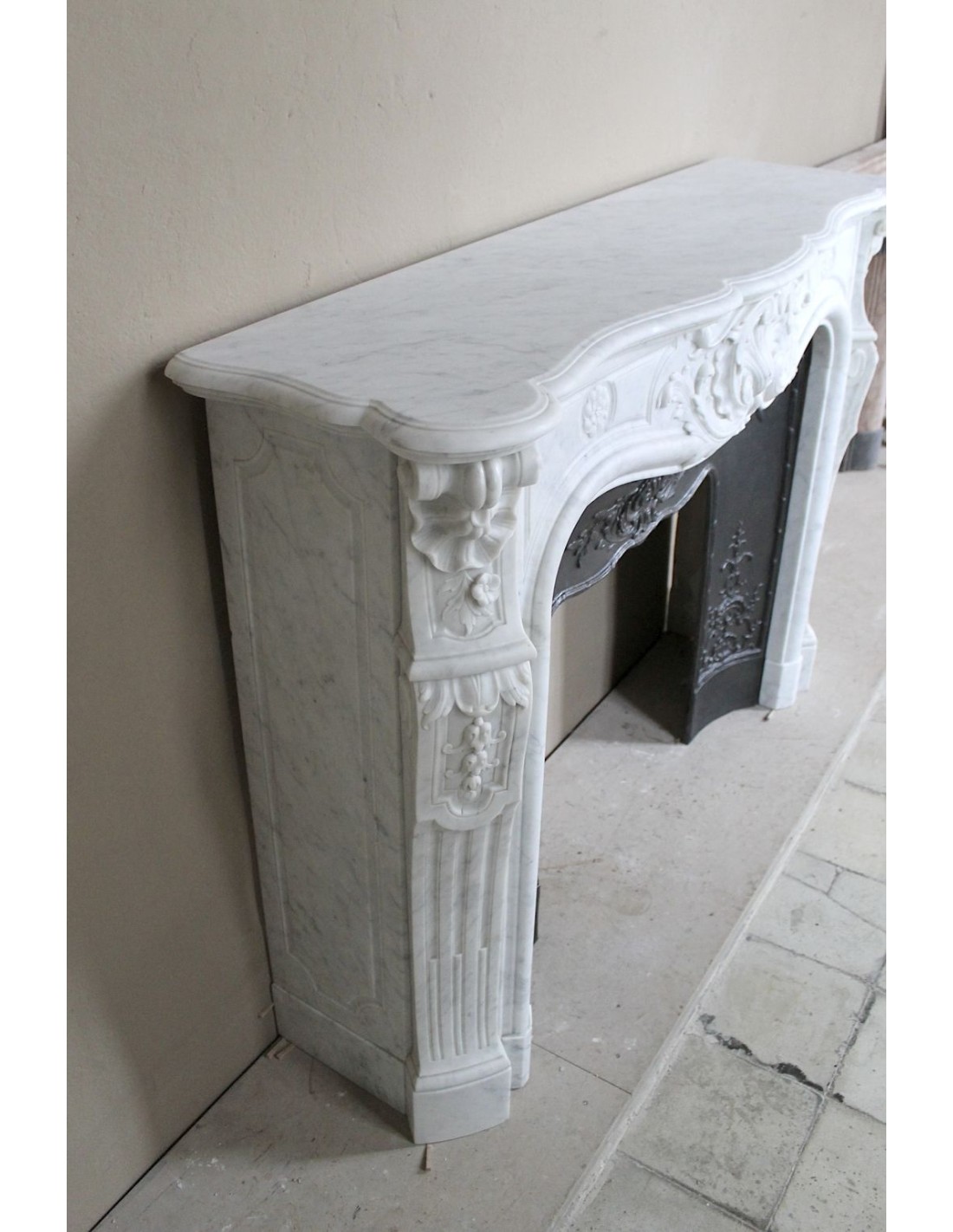
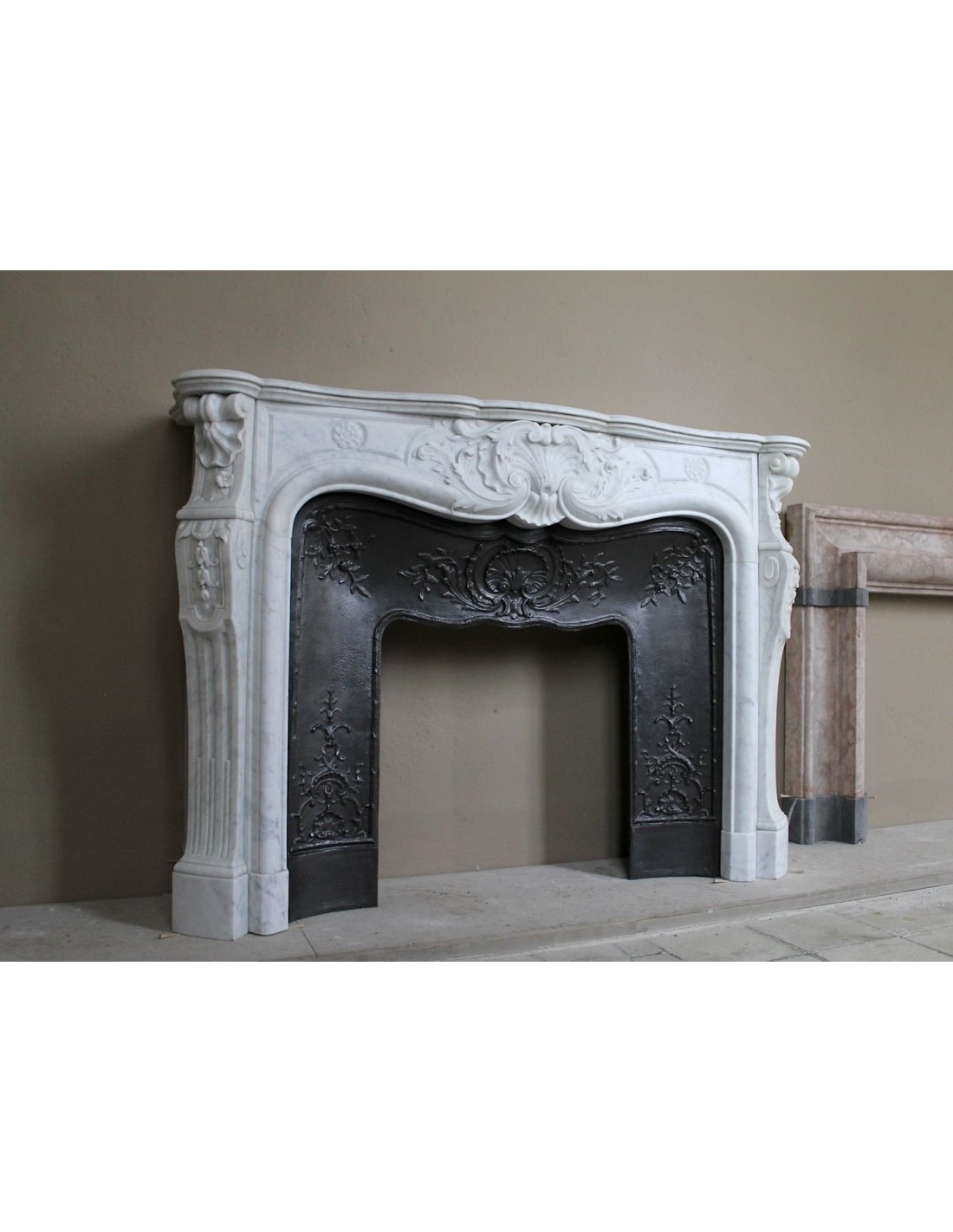
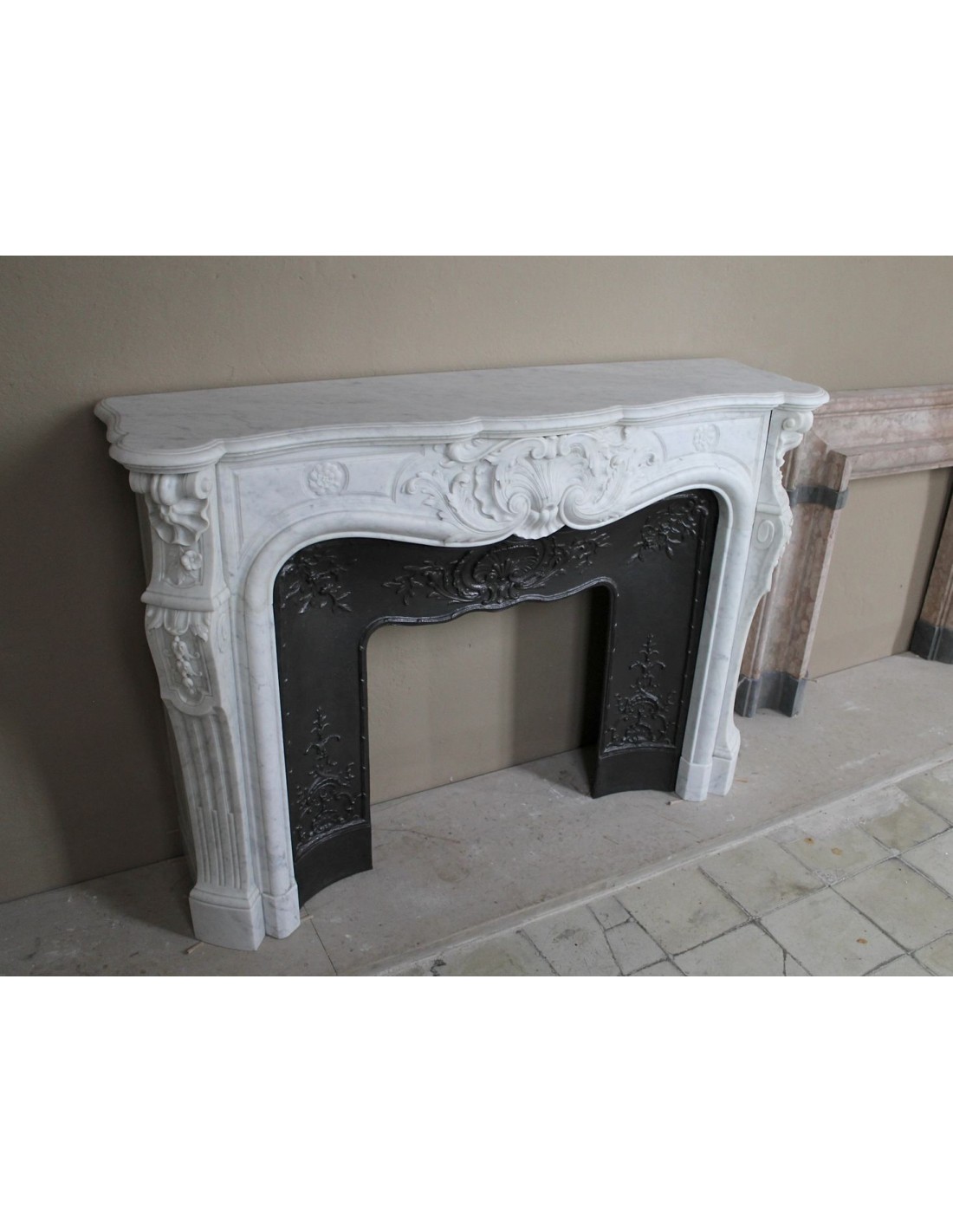
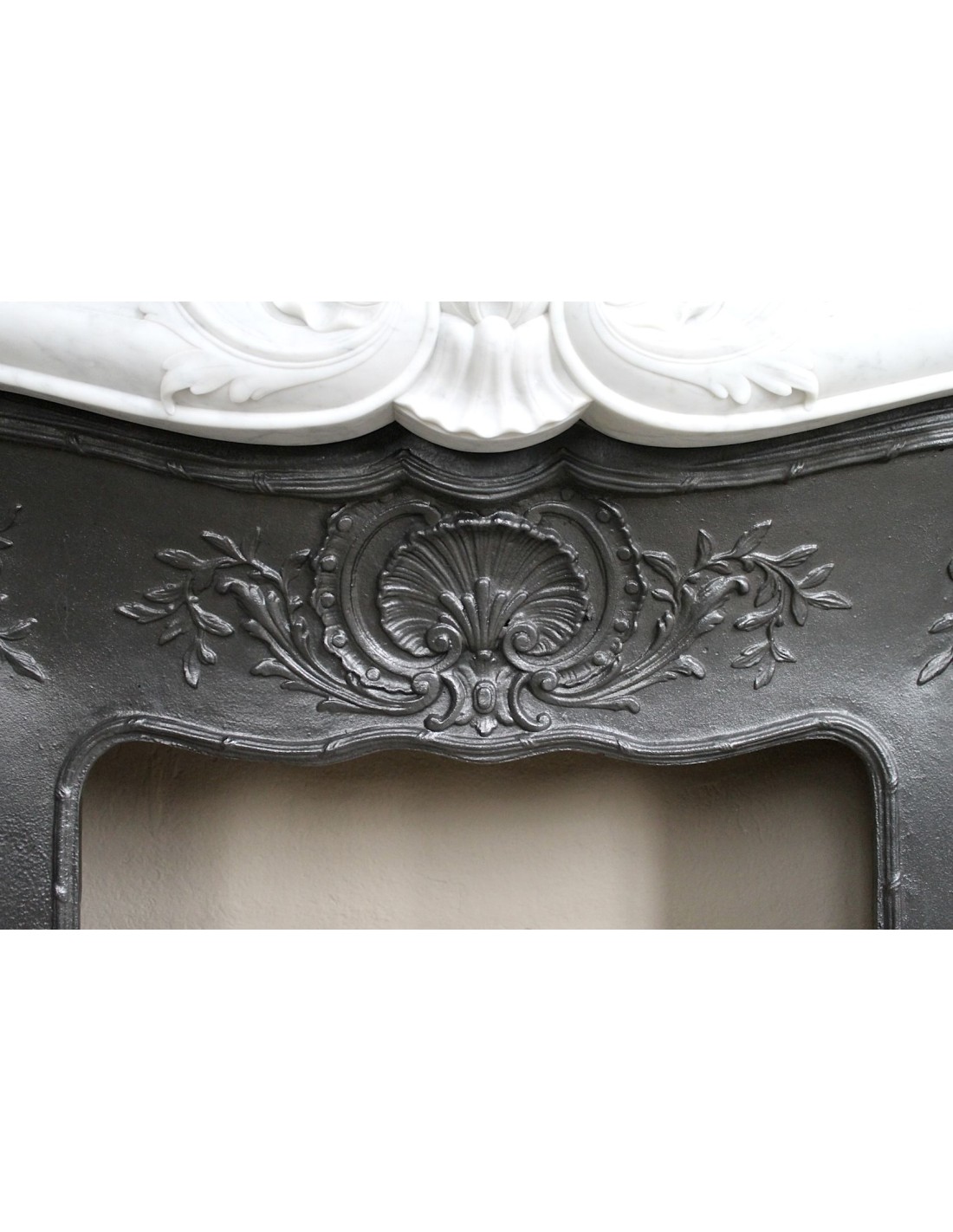
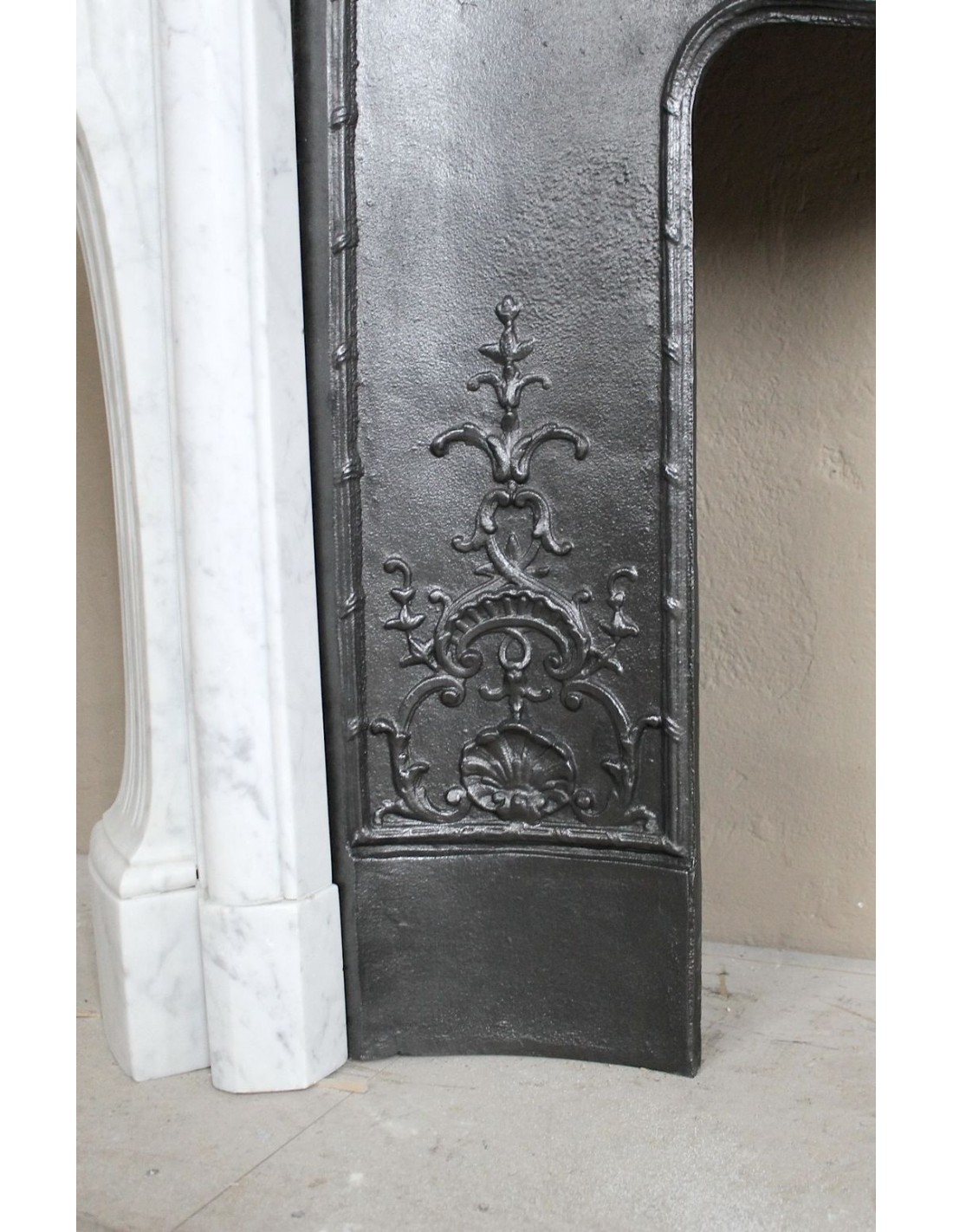
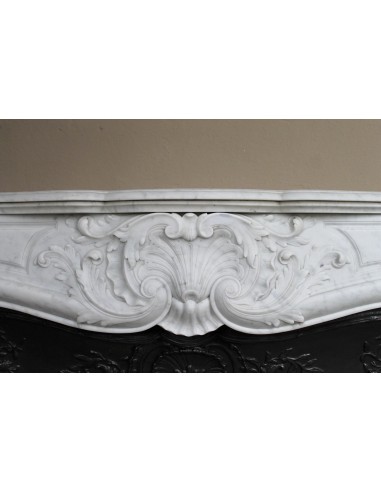
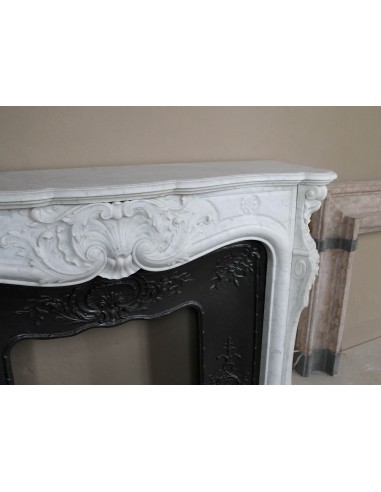
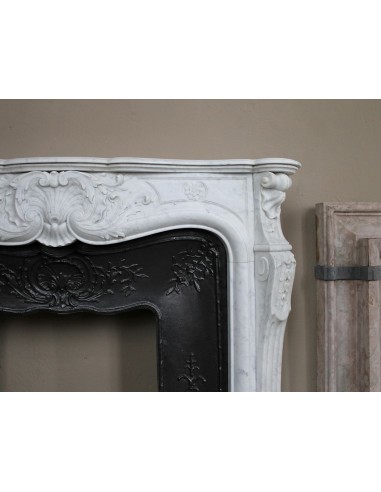
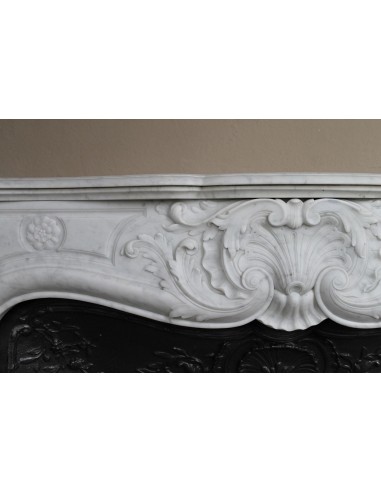
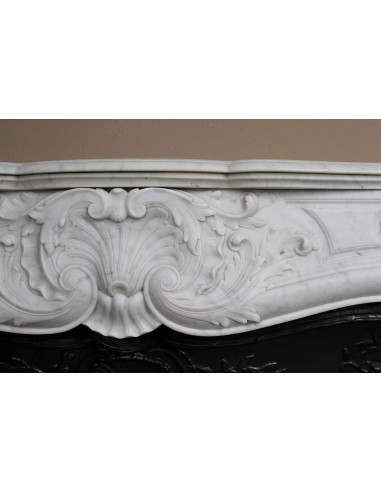
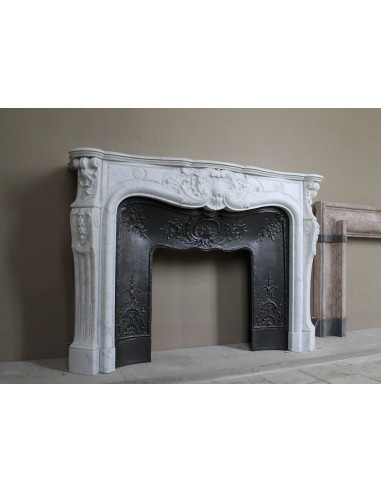
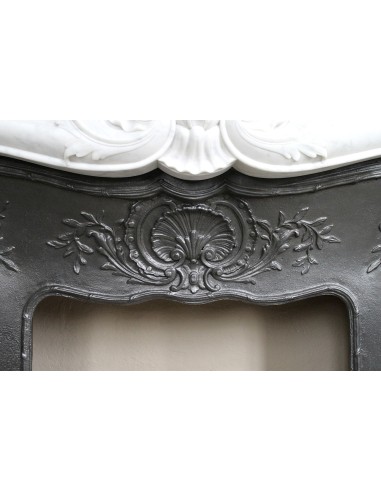
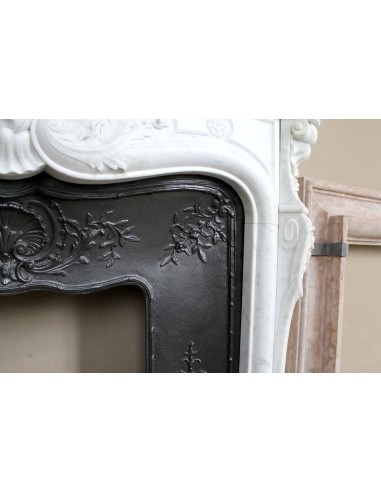
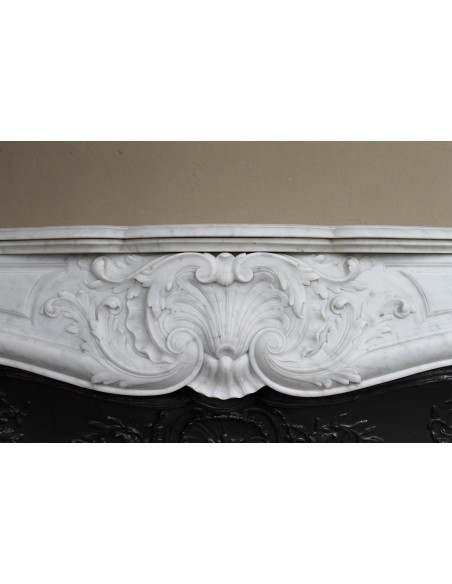
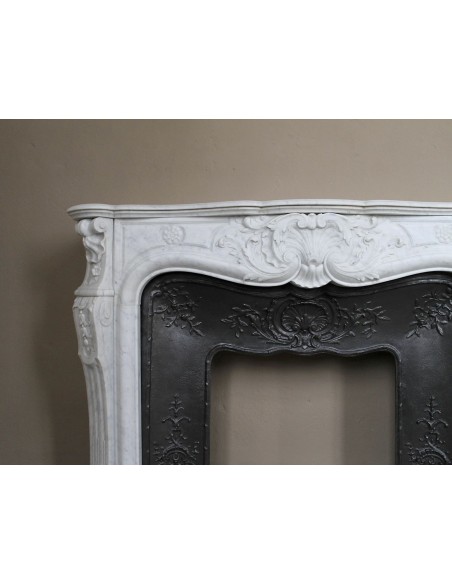
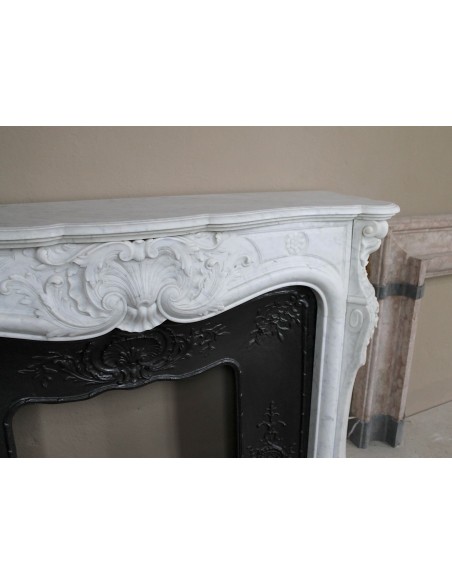
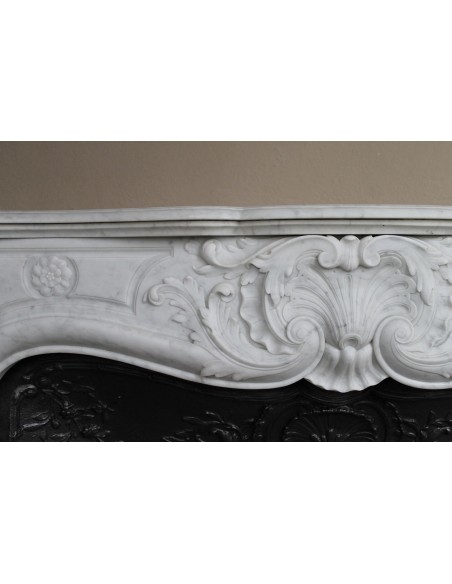
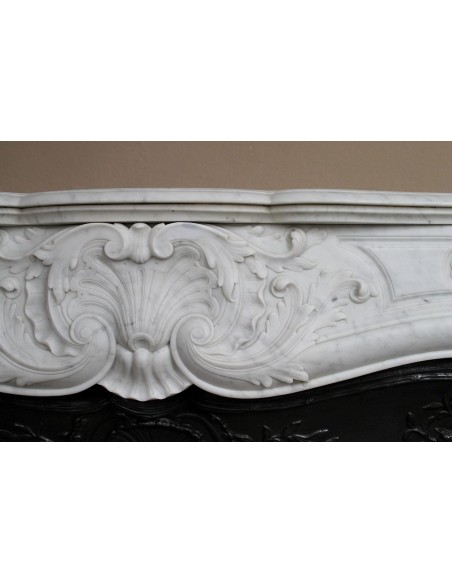
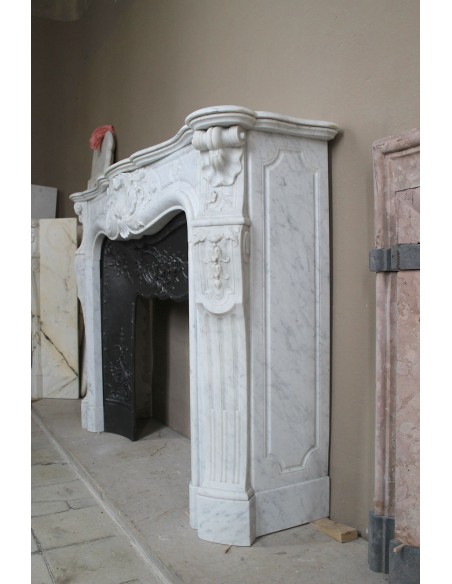
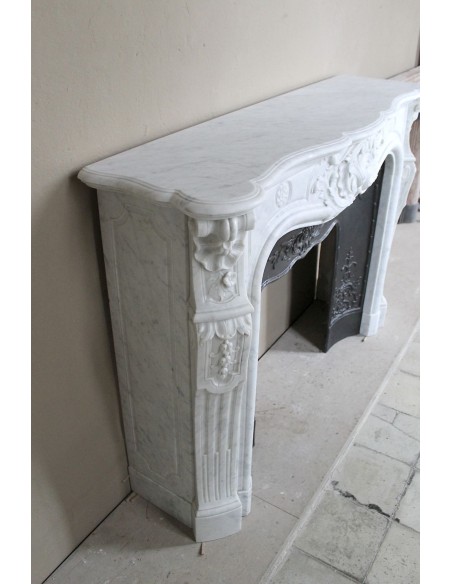
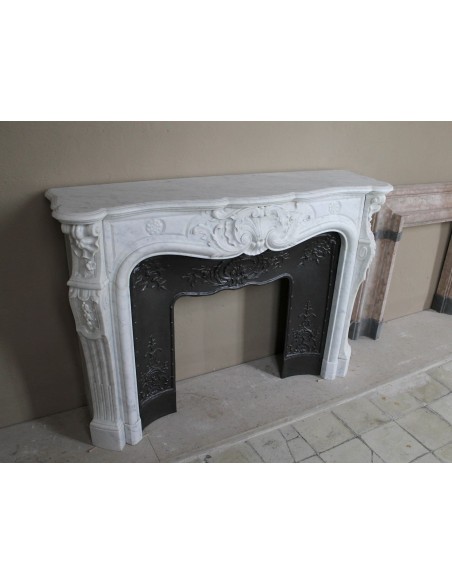
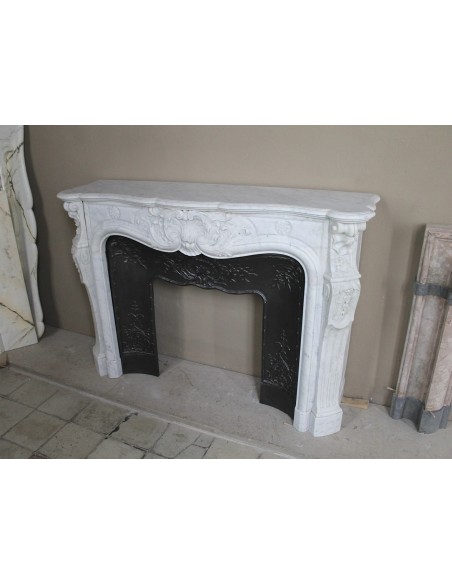
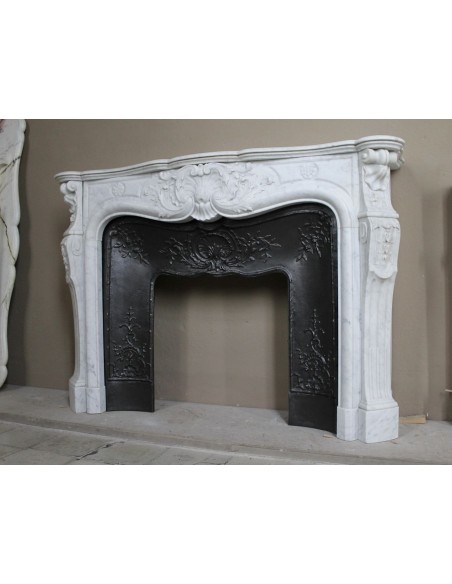
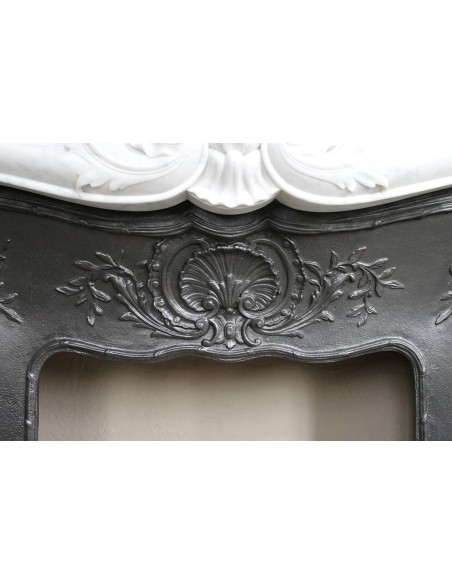
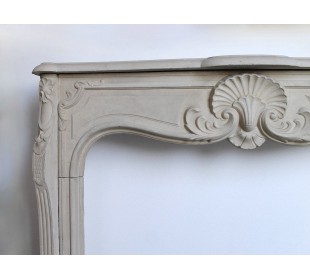
Let’s start with the frieze, where the central figure is a Saint Jacques shell, whose upper part is formed by a series of parallel, plant-like “stems.” It is interesting to note how, in the cast-iron insert (exactly beneath our arboreal shell), there is another Saint Jacques shell — this time in iron — serving as a companion to its marble twin.
INTERLUDE:
The Saint Jacques shell holds tremendous symbolic value for the French, as in the past it was believed to be able to carry its fortunate owner straight to Paradise.
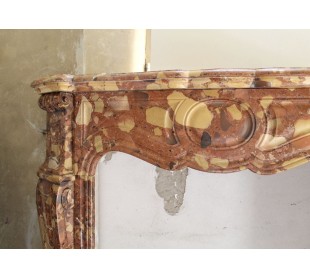
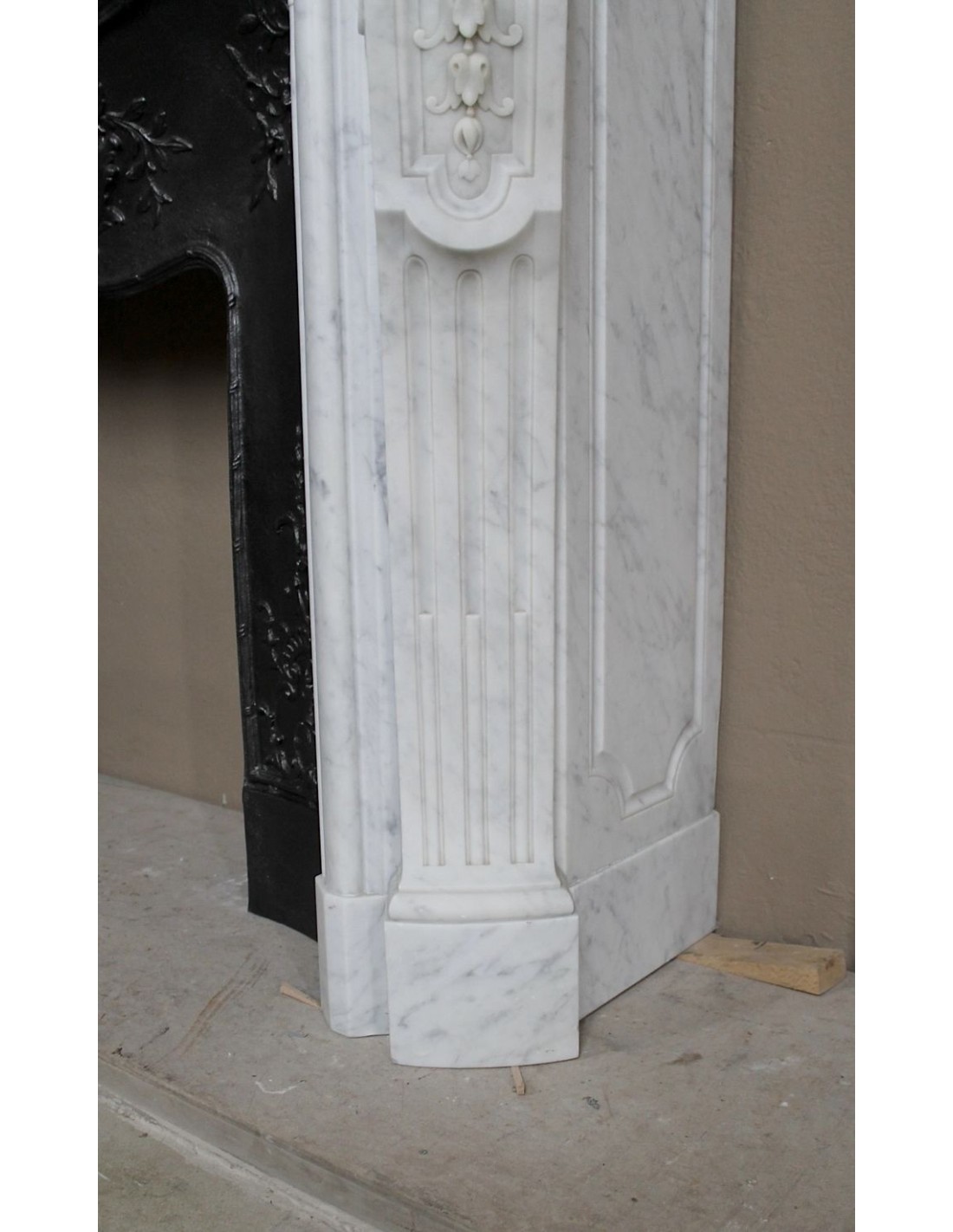
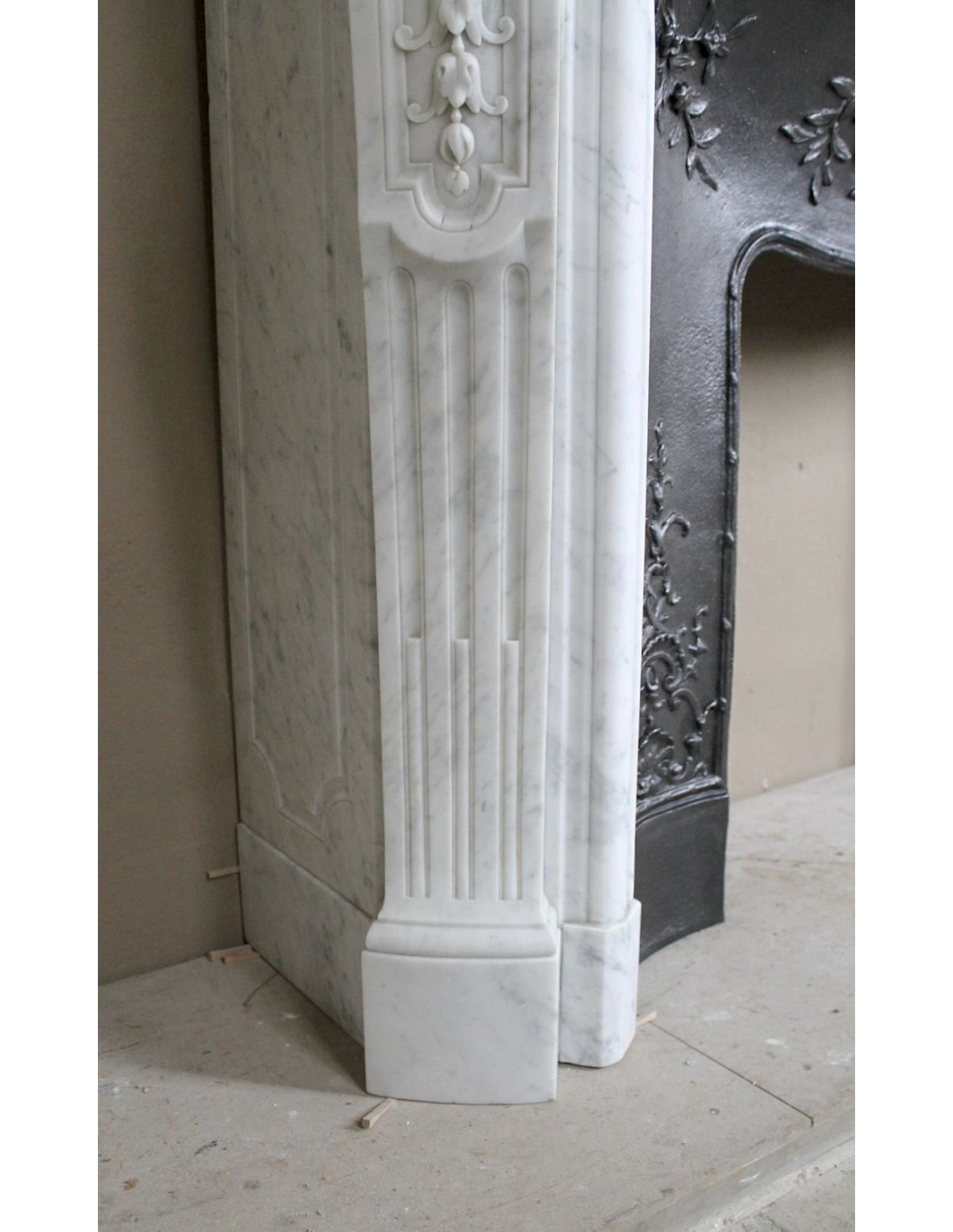
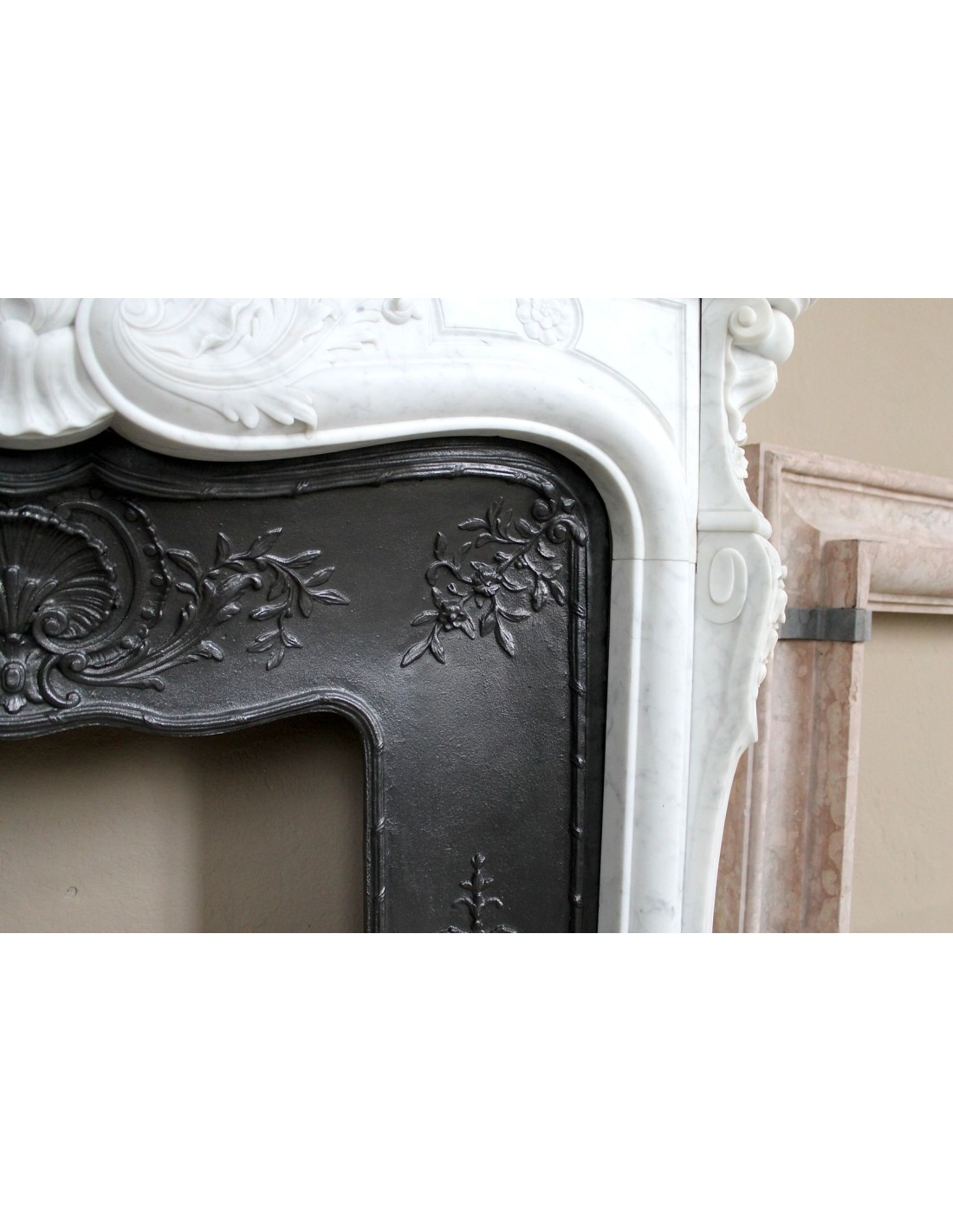
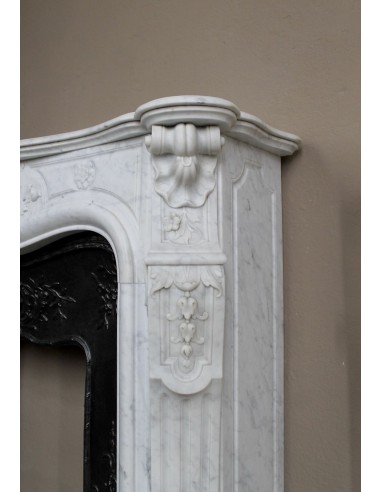
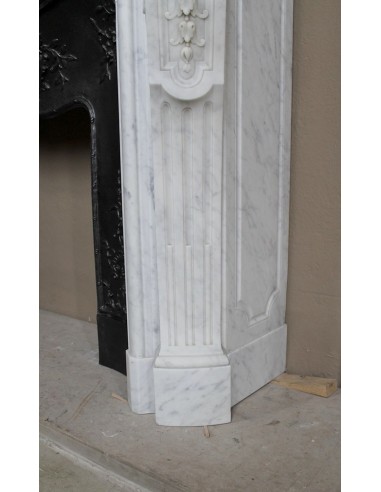
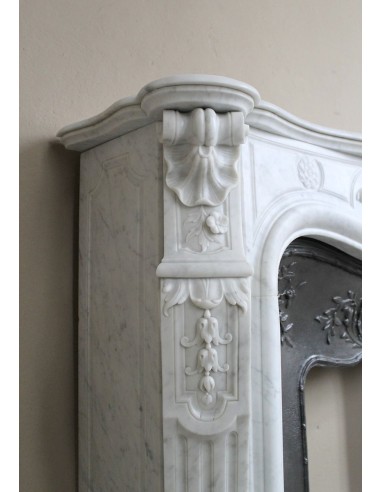
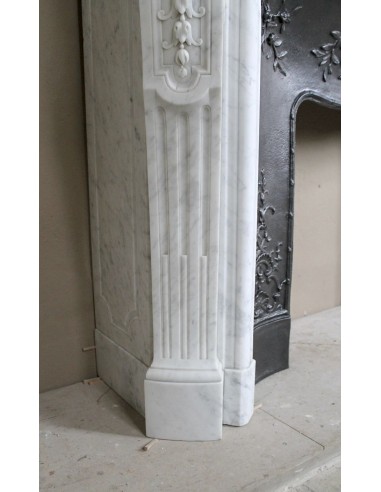
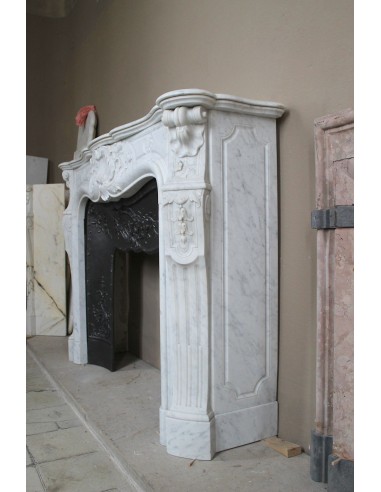
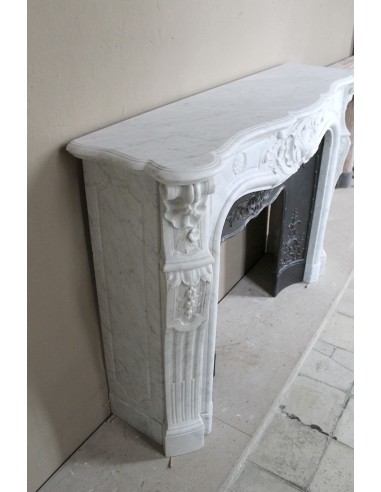
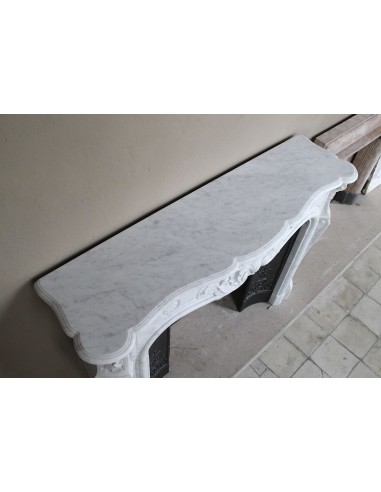
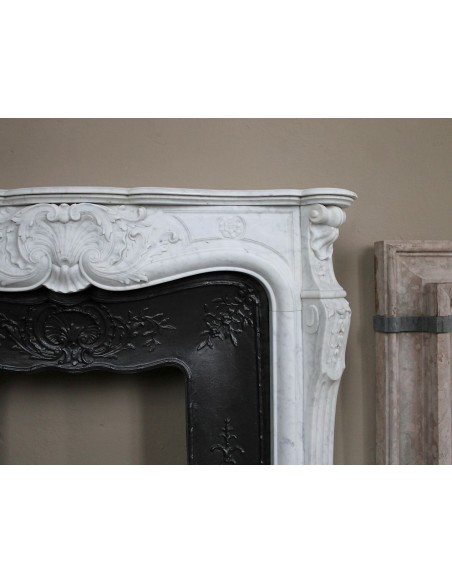
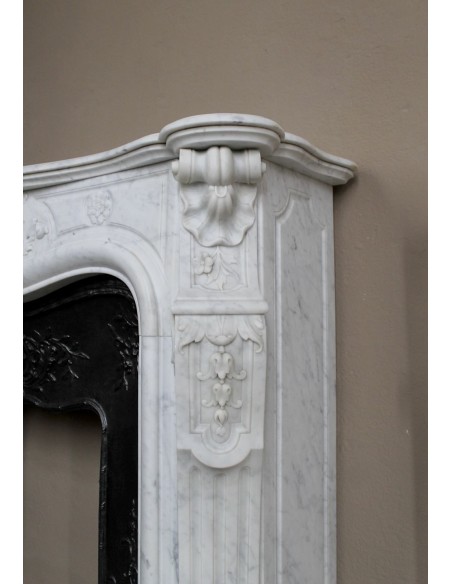
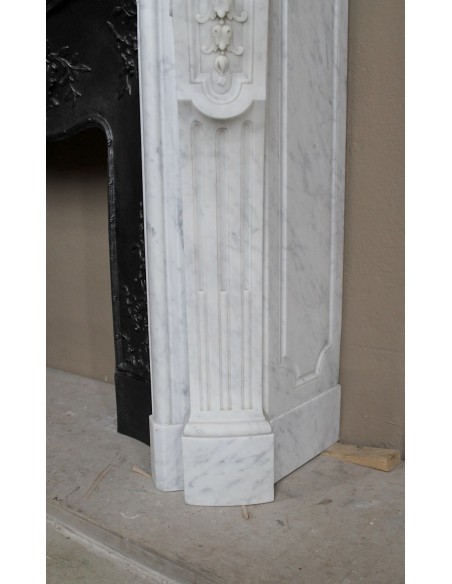
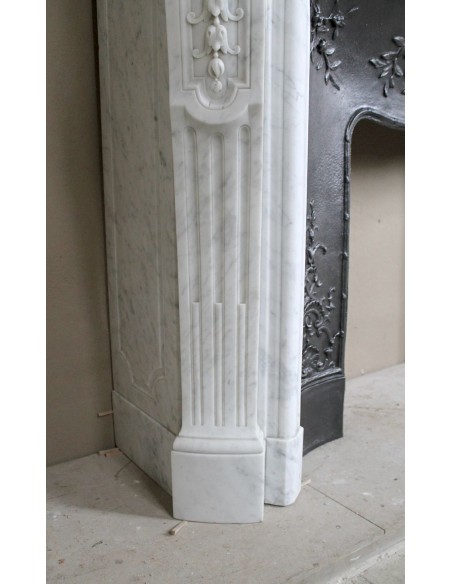
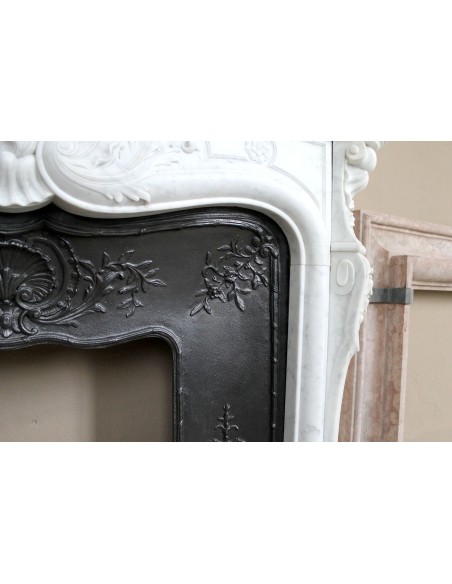
Framing the shell sculpted at the center of the frieze is a swirl — an “entanglement” — of leaves, which, if you look closely, follow no strict order; they seem almost to revel in this floral celebration. On either side of the frieze, we find ROSES, but not the classic, solemn ones — rather small, joyful, almost “wild” rosettes, youthful, graceful, and smiling. On the jambs (the upper portion of the legs), a succession of leaves descends until two campanulas close this arboreal drapery.
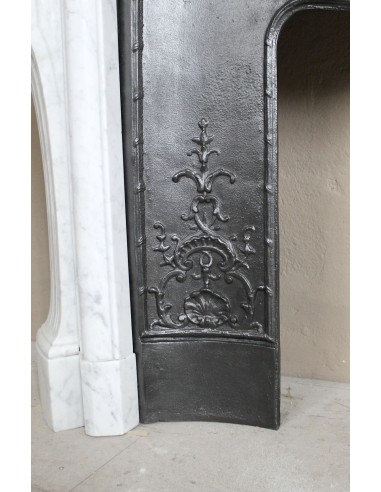
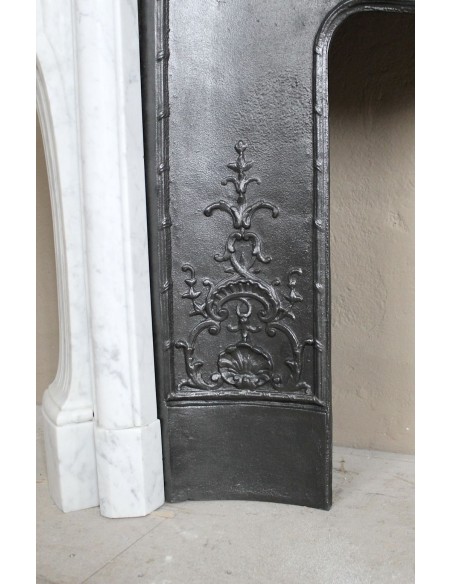
The artistic cast-iron insert belonging to this richly decorated fireplace faithfully follows the same decorative motifs — floral and arboreal — found on the marble frame, yet with an added touch of noble sophistication. The pyramid of branches, flowers, and seeds that ascends along the vertical sides of the insert refers to the most important “twists” ever discovered: those found during the excavation that accidentally brought to light the Domus Aurea, Nero’s “row-house villa”…
A curiosity:
In Italy, those mural decorations of the Domus Aurea are called “Grotesques” because the first worker who broke through the ceiling and entered thought he had fallen into a grotto!
On my nightstand I keep a book that seemed “light,” or so I judged it from its cover and title: “Mao perché sei morto” by Massimo Bucchi, whom I had always considered little more than a cartoonist.
Instead, the book turned out to be fascinating — even striking. I can’t summarize it all here, but I’ll mention one vignette: a priest is sitting at the bedside of a dying man. The priest asks whether the man has anything to repent for. With the generosity and seriousness that come at such moments, the man replies: “I leave my son the lit match.”
In other words: “We’ve turned this world into a moral and physical dump. We realized it but did nothing to fix it. That is my greatest sin, and it pains me deeply to leave this landfill to my son, who will have to clean it up despite having no fault.”
And what does this have to do with an 19th-century fireplace?
Well, in my life I can at least say that, from the very beginning of my work, I have tried to keep this world a little cleaner. For every fireplace I find, restore, and sell, there is a piece of mountain that is not quarried and torn apart…
I know it may be hard to take my word for it, but I was thinking about these things more than half a century ago, on my very first steps in the world of restoration. I was comforted — with the naïve certainty typical of being twenty years old — by the belief that an antique fireplace is more “beautiful,” more “authentic,” more “fascinating,” more “artistic,” and more “sustainable” than a new one, smelling of plastic and acids…