

- -€1,400.00

SHARE ON:
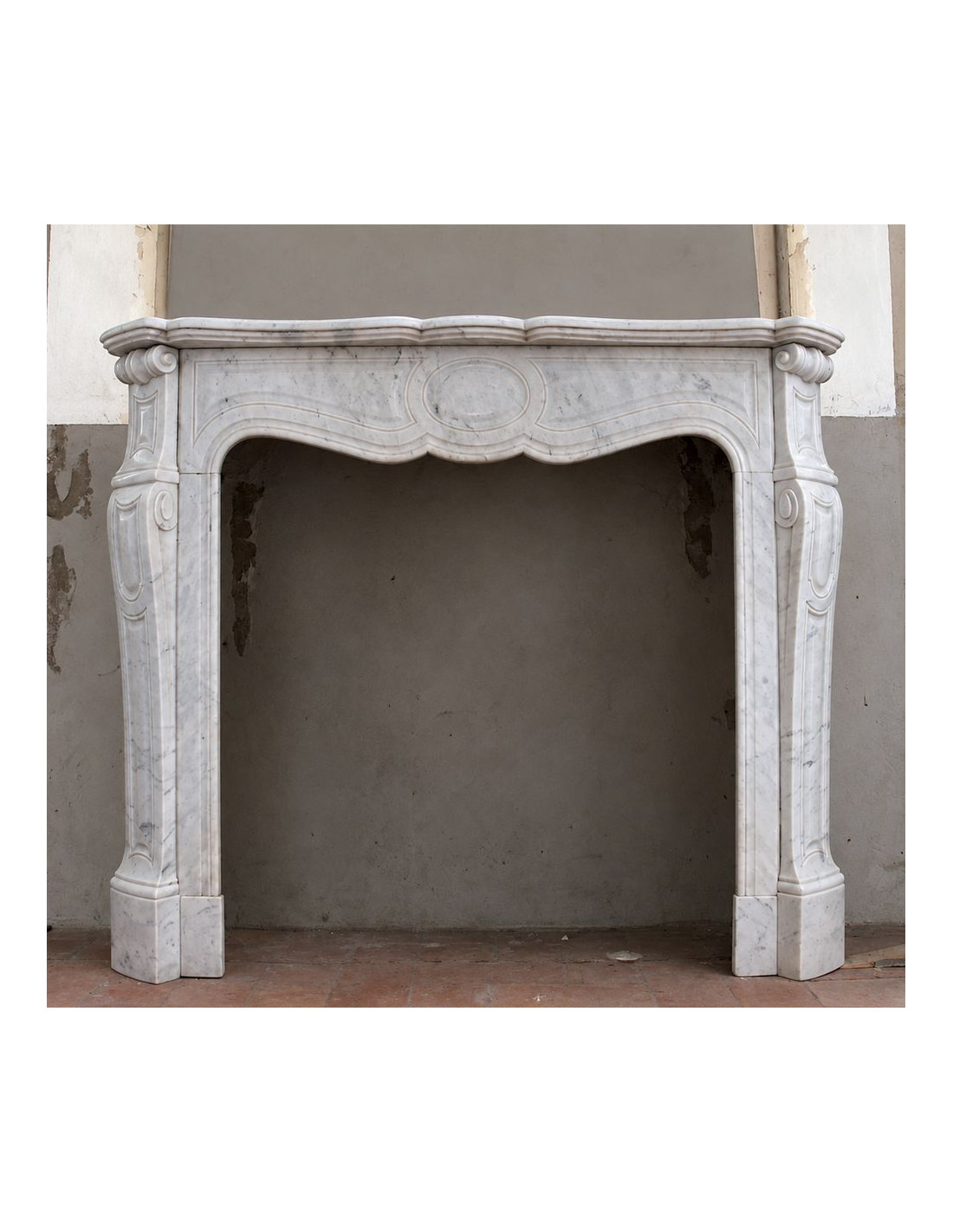
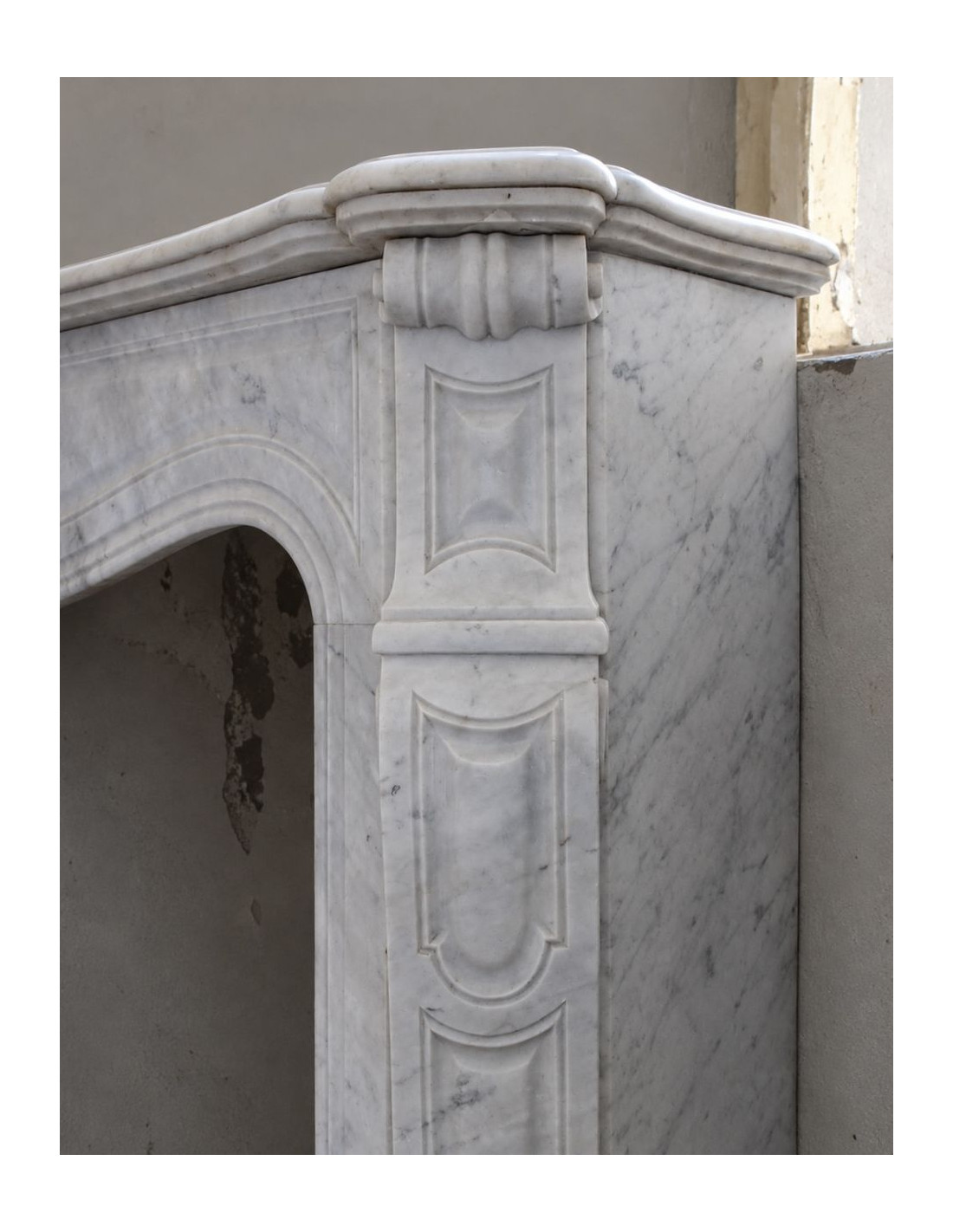
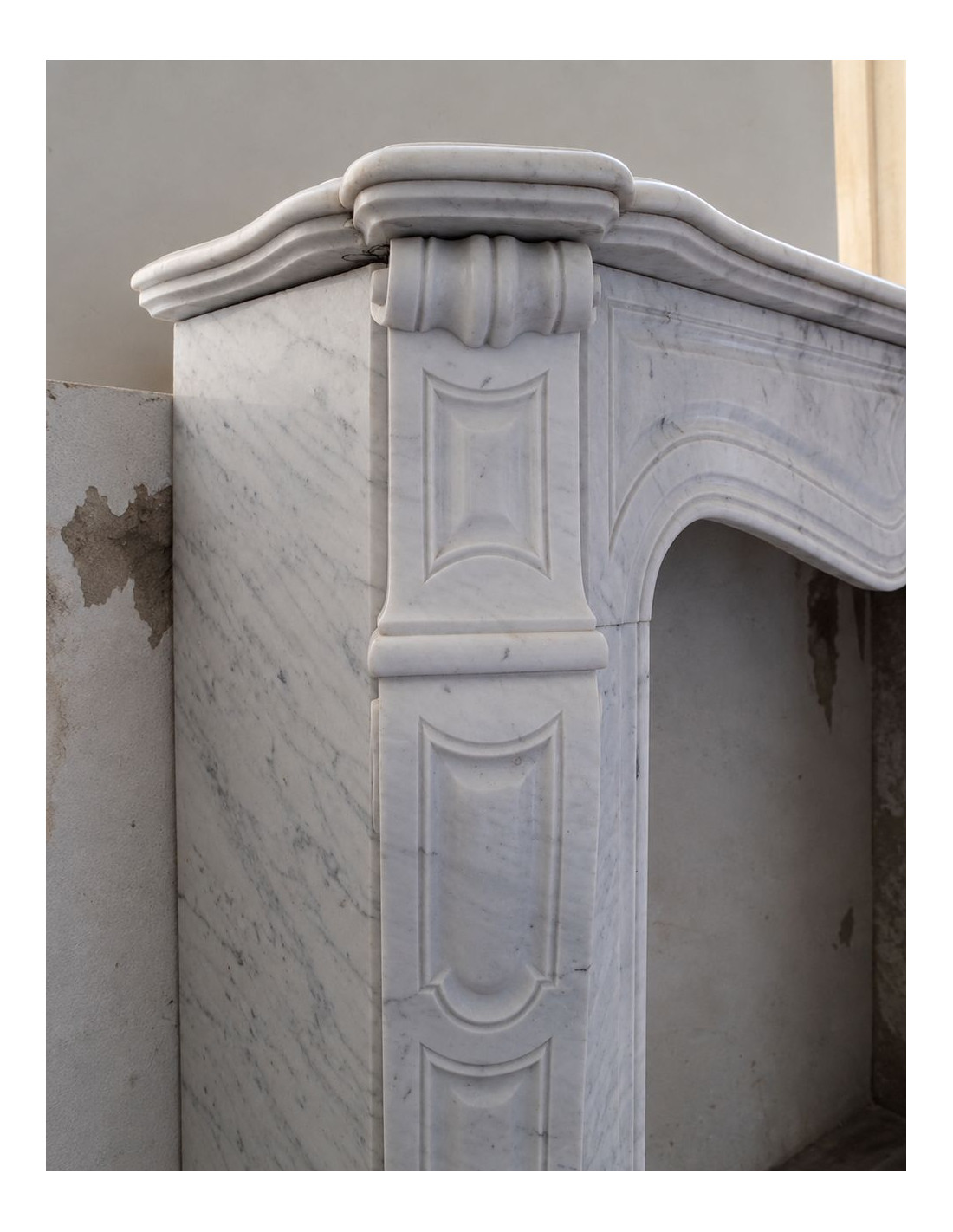
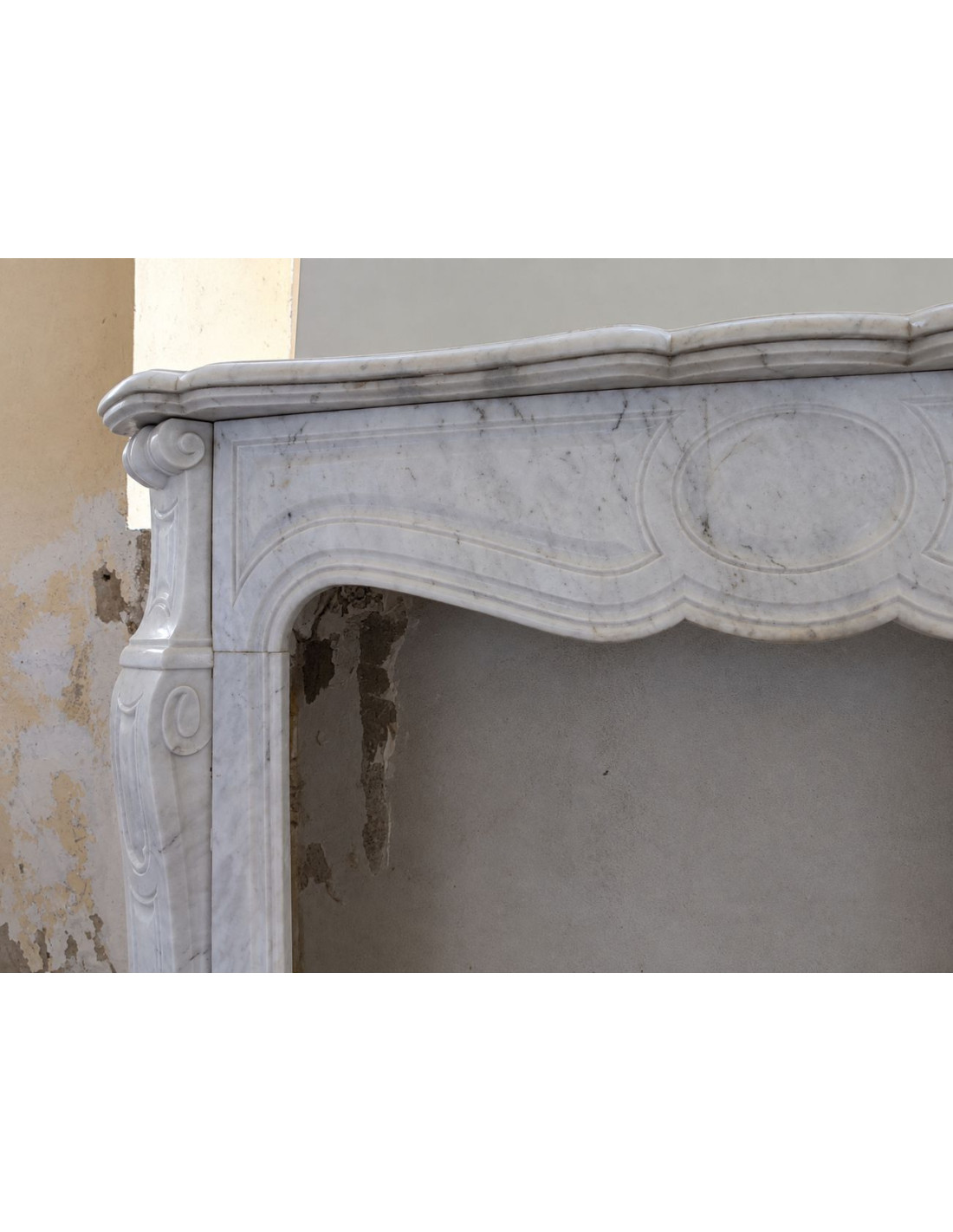
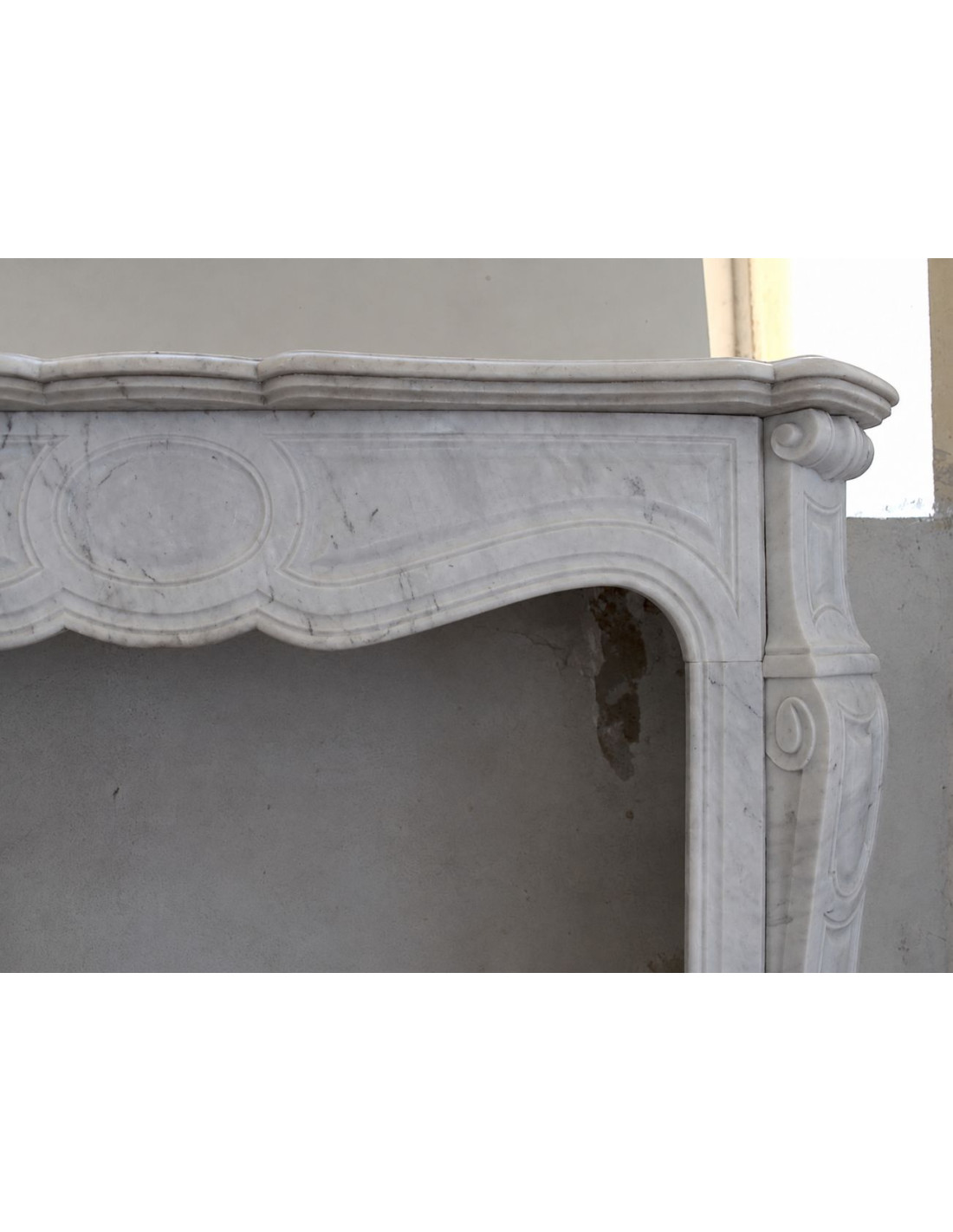
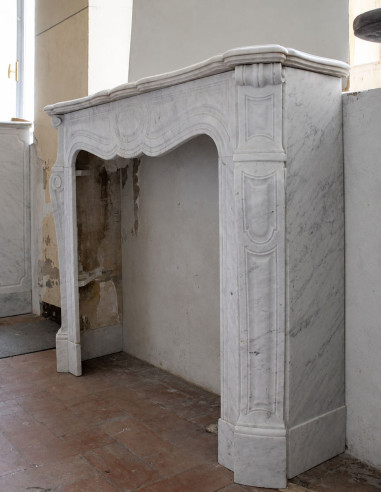
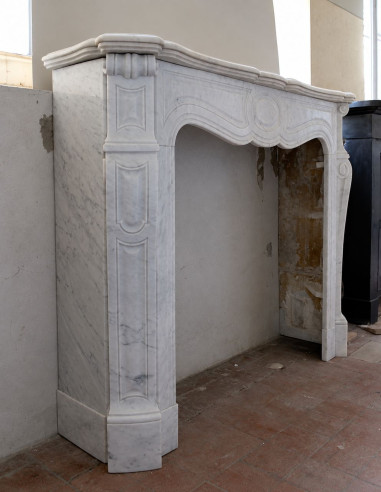
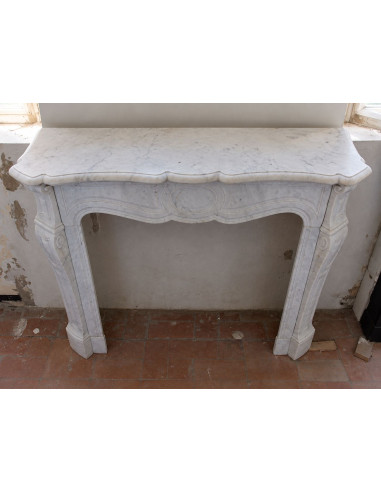
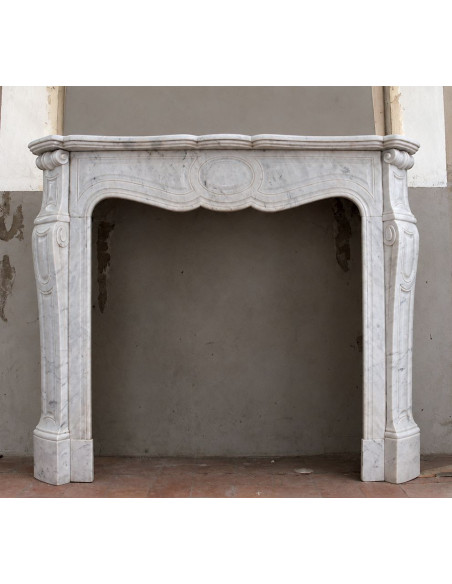
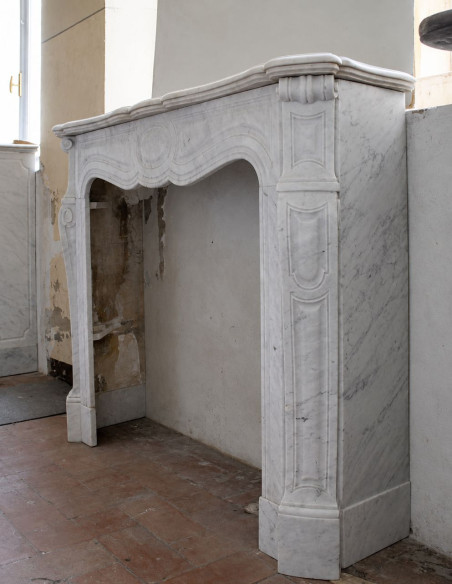
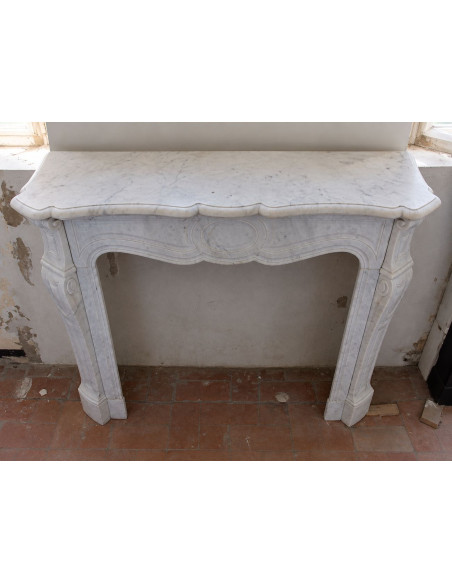
I described the 125 cm (49.2 in) width of this antique fireplace mantel as particularly interesting because it strikes an almost perfect balance: not so large that it cannot be comfortably placed in a bedroom, yet not so small that it would look out of place in a contemporary living room. A sort of Goldilocks size, in other words.
Indeed, this was also one of the preferred dimensions for this type of Pompadour fireplace mantel during the 19th century, when examples of this model were very often installed in bedrooms.
Perhaps that is why, whenever I think of the Pompadour Galbé, these are precisely the proportions I imagine. To my eye, it is even more charming at around 125 cm wide than, say, at 140 cm.
But perhaps I am simply being peculiar. After all, this model is attractive in virtually every size. It is, after all, a rather feminine fireplace mantel — one need only consider its name — and fireplace mantels, like women in general, can be tall and beautiful or small and beautiful. It is always a matter of proportion.
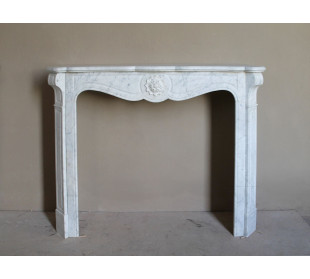
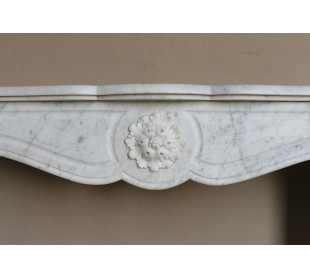
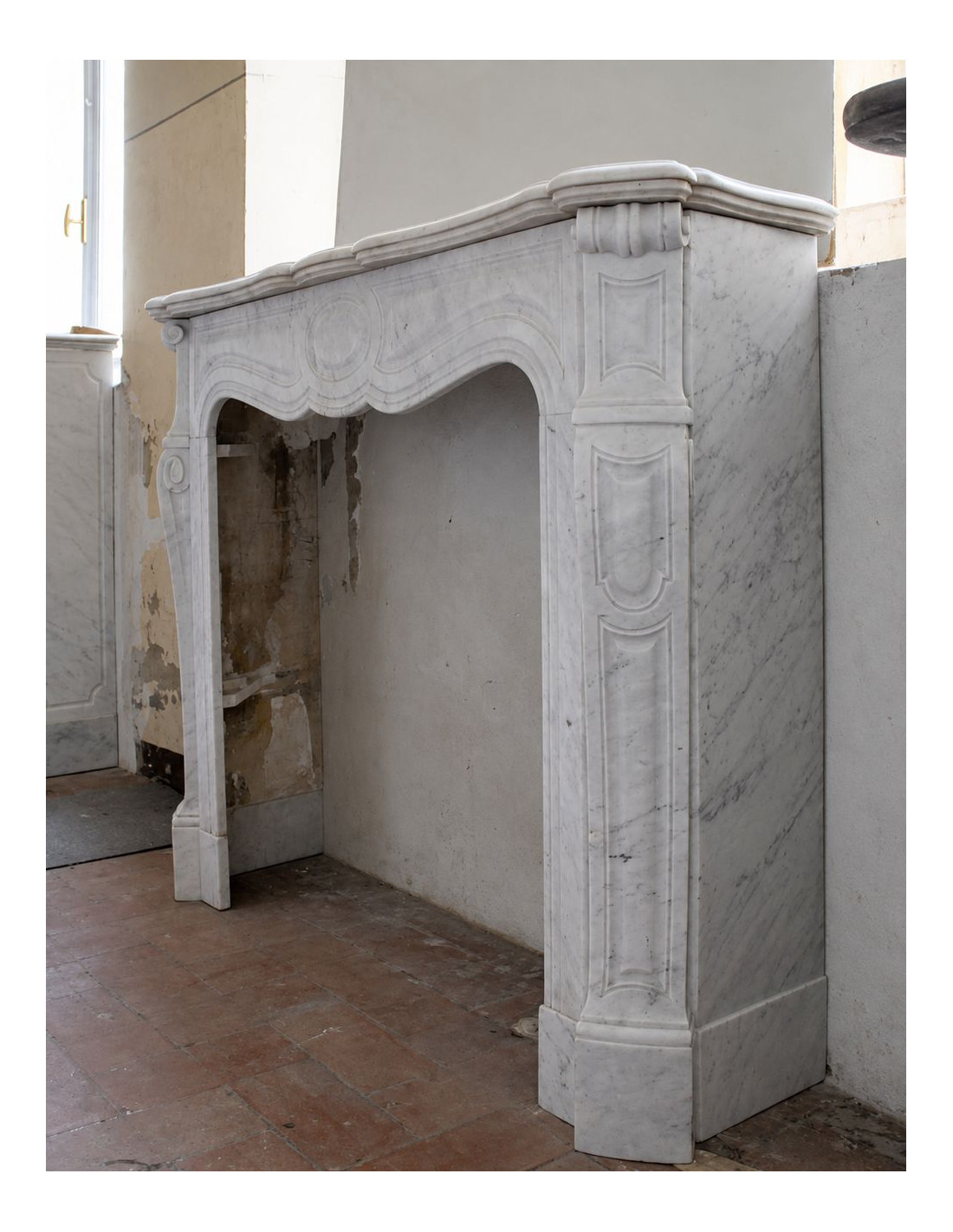
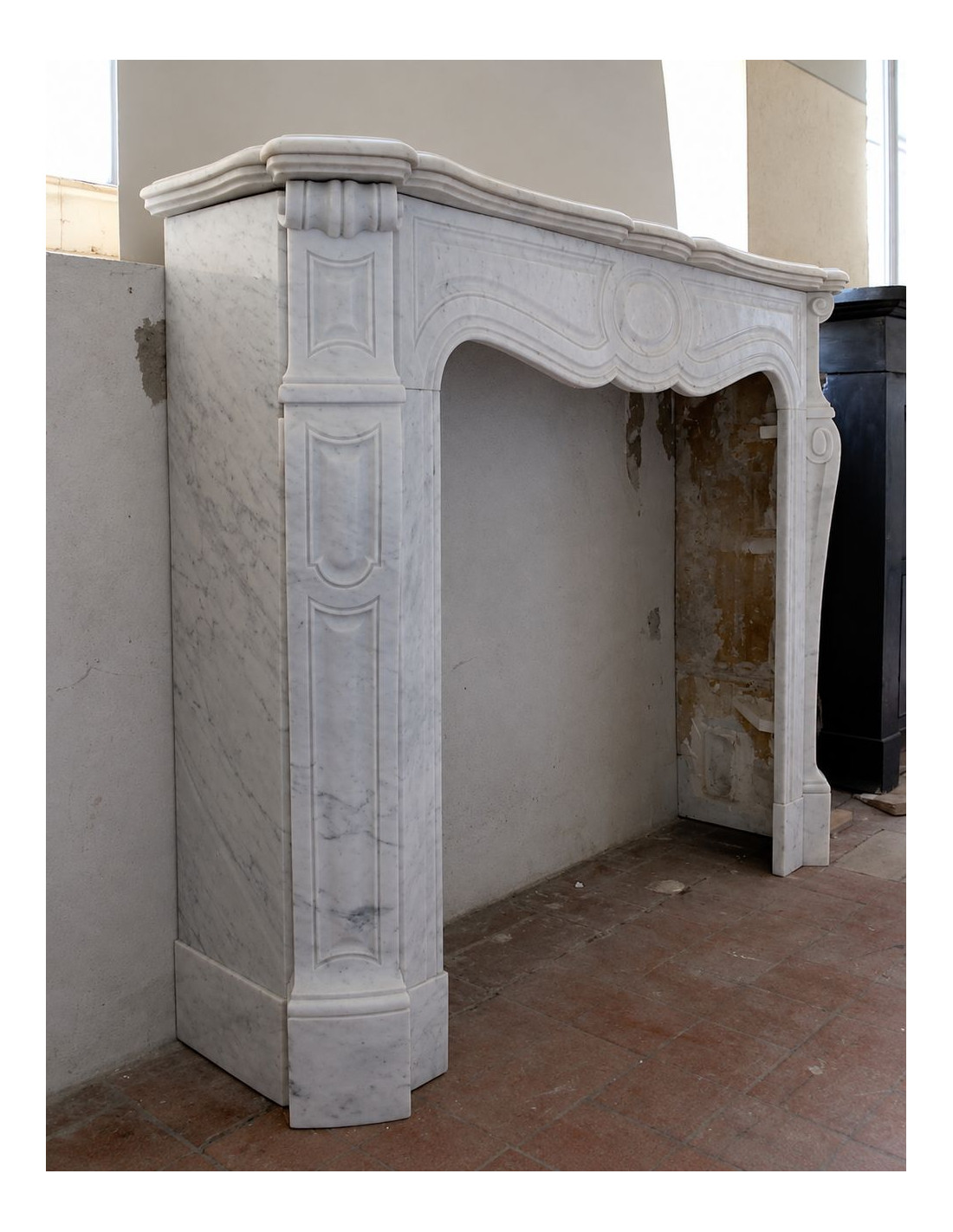
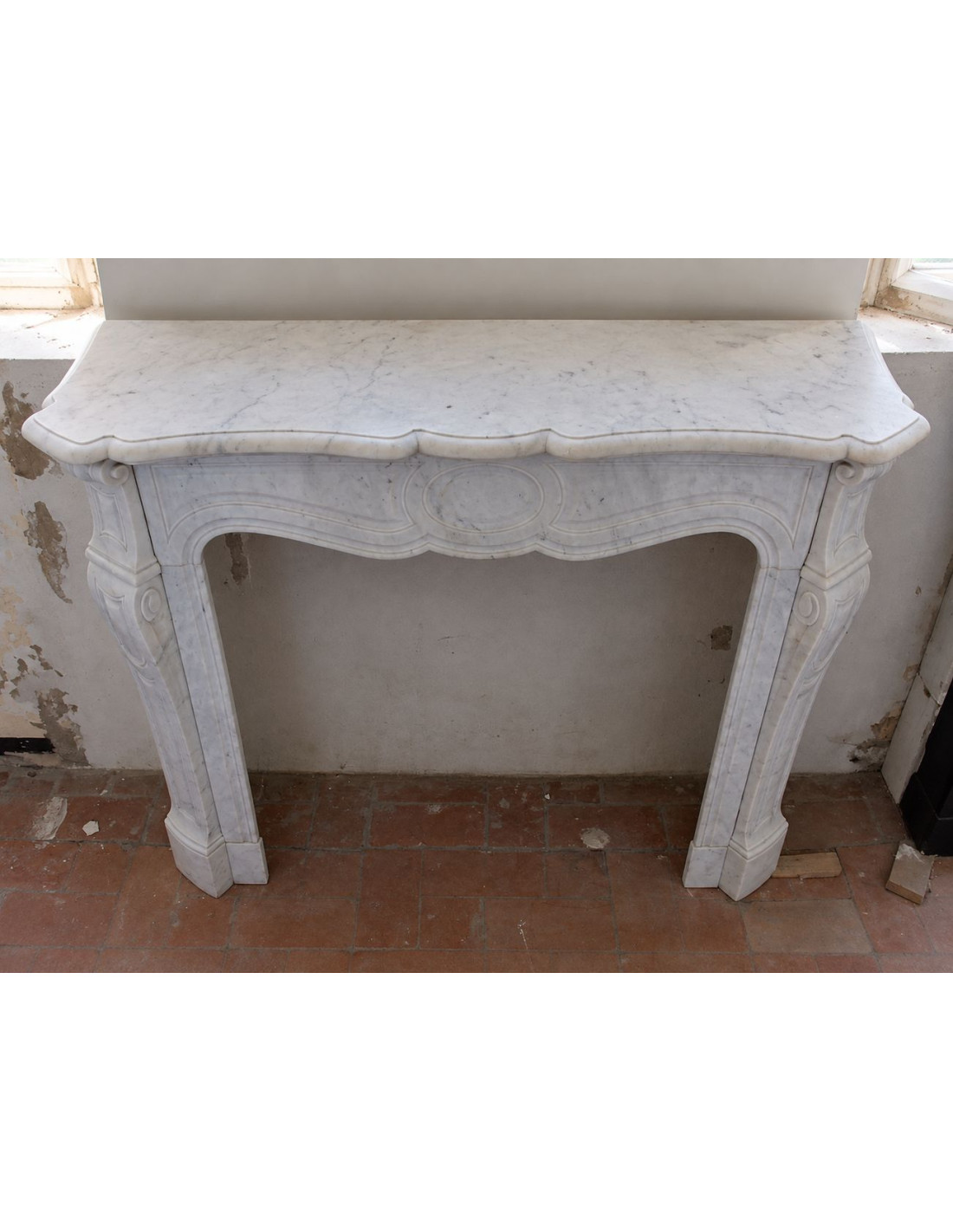
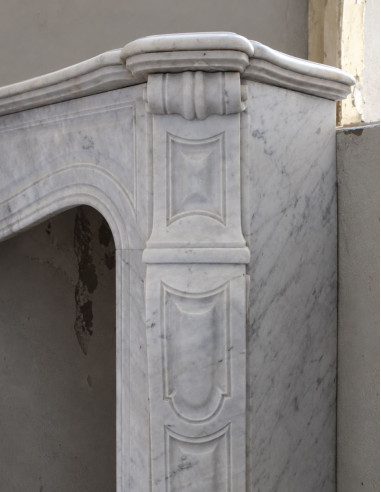
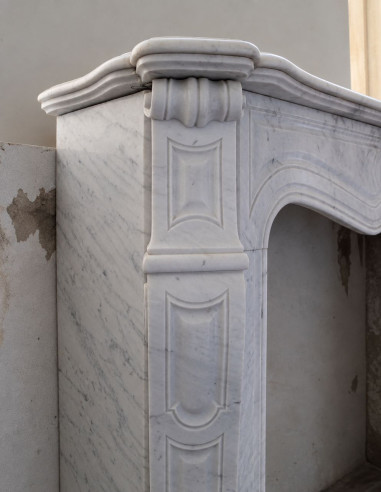
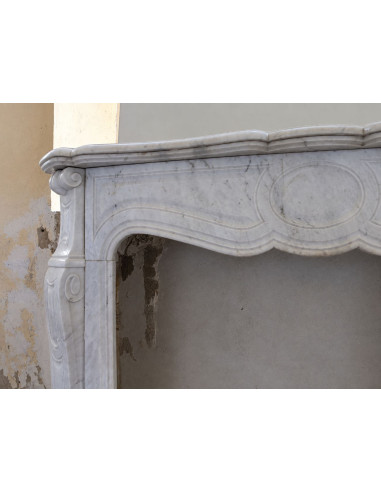
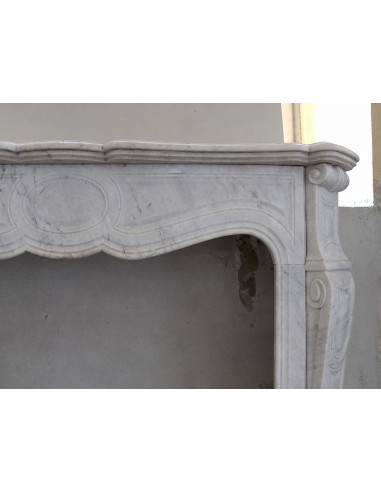
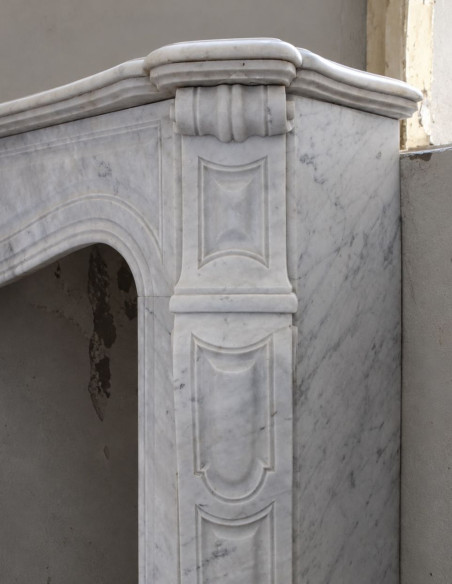
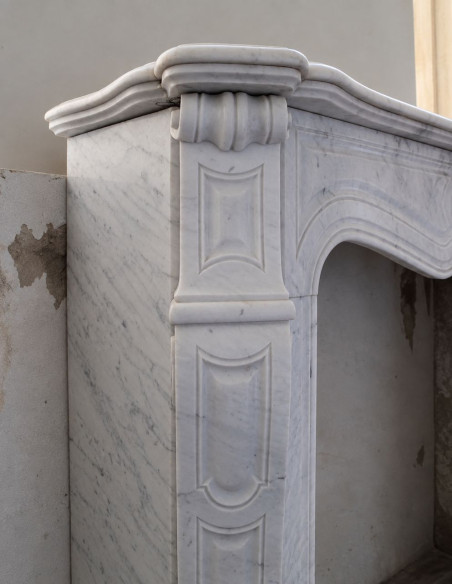
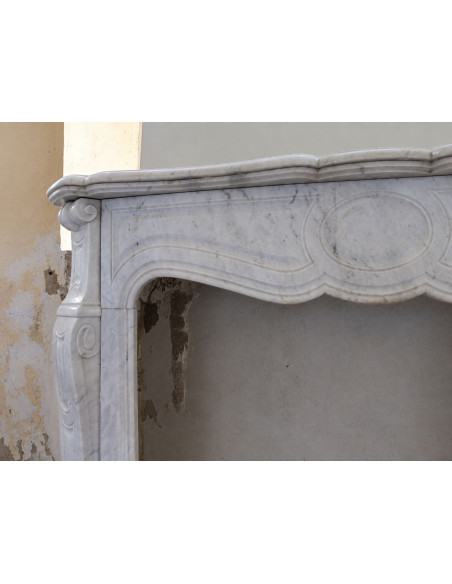
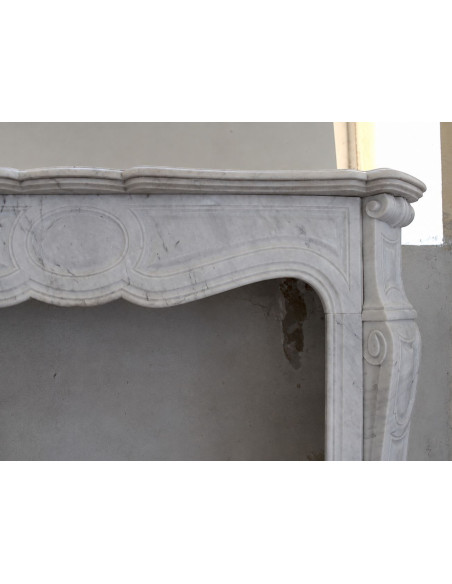
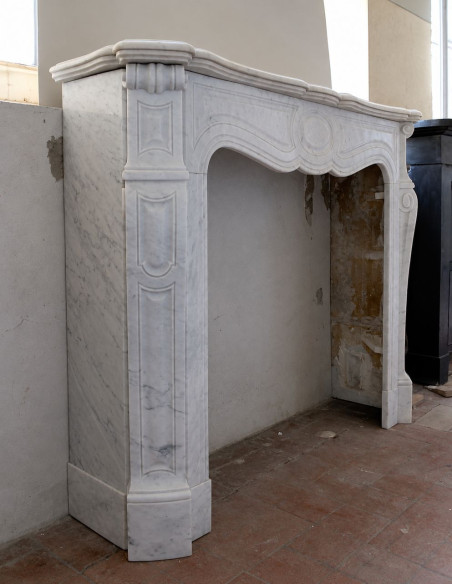
The example presented here is IN EXCELLENT CONDITION. It is carved from white Carrara marble which, although displaying some soft gray clouding, retains a beautifully bright white background rather than an overall gray appearance.
Today I feel like defending this model a little. Some contemporary antique dealers — the cashmere-jacket, affected-R, Rolex-on-the-wrist sort (often a fake Rolex, naturally) — dismiss it as “too common.” Which, after all, merely means that it was extremely popular.
So allow me to call two particularly important witnesses in its defense.
The first is the famous Italian architecture and design magazine AD. A photograph published by the magazine of the home of a certain Colombo Mario — does that name mean nothing to you? He is the owner of Colmar — shows our Mario leaning against the mantel shelf of a magnificent and extremely elegant POMPADOUR GALBÉ IN WHITE CARRARA MARBLE!
REMOVED FROM A PARISIAN INTERIOR, THIS AUTHENTIC ANTIQUE FIREPLACE MANTEL WAS CREATED DURING THE FINAL DECADES OF THE 19TH CENTURY IN AN ITALIAN MARBLE-CARVING WORKSHOP, MOST LIKELY IN LUNIGIANA. IT IS PRESERVED IN EXCELLENT CONDITION AND RETAINS A BEAUTIFUL PATINA.