











SHARE ON:
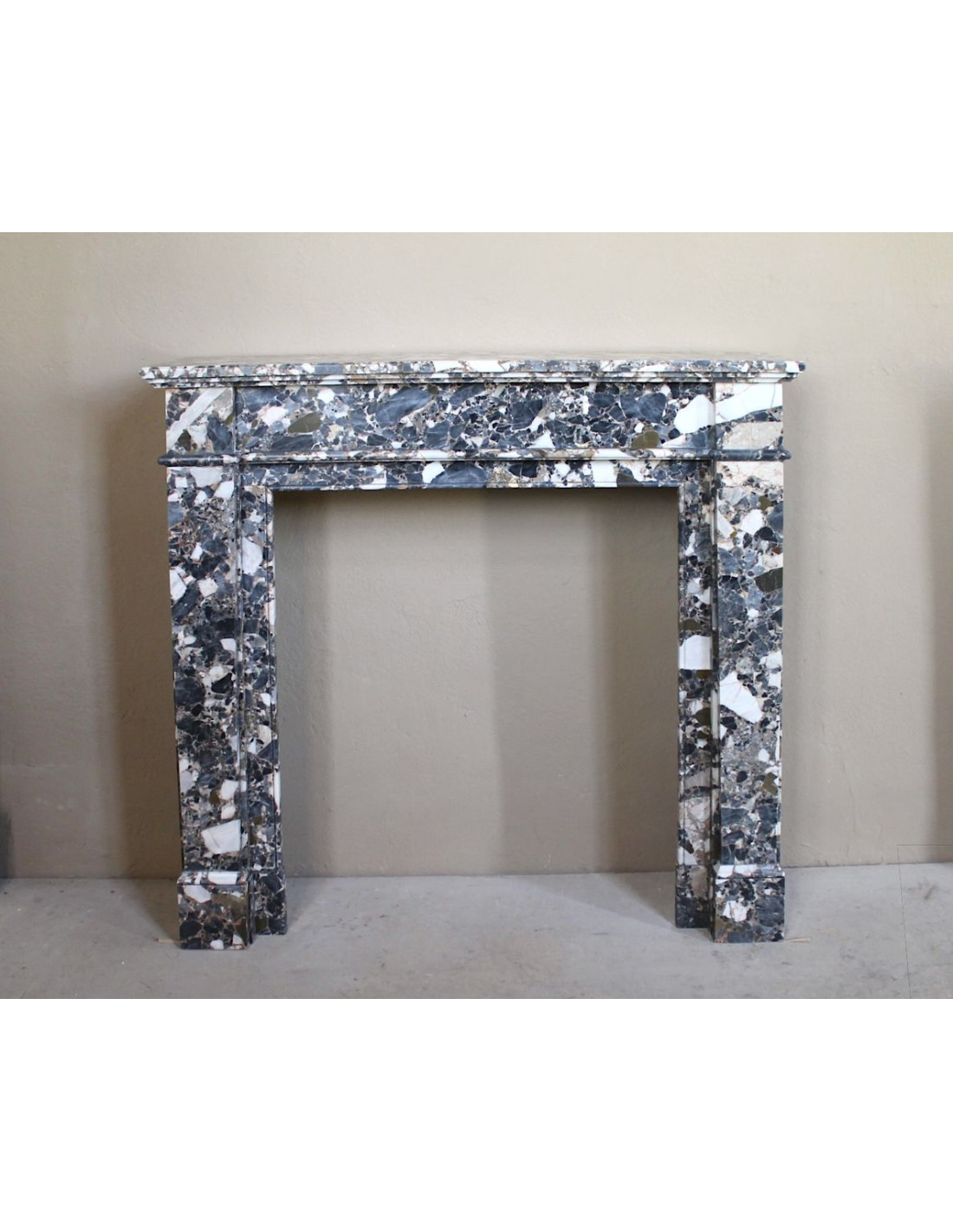
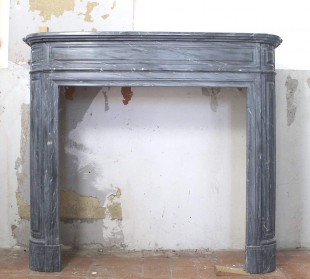
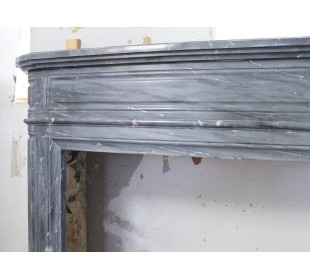
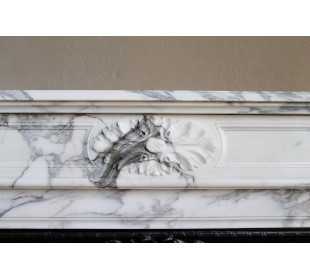
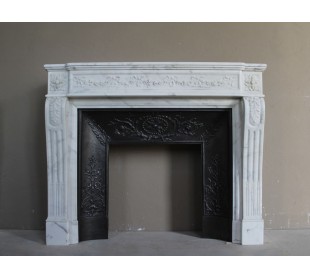
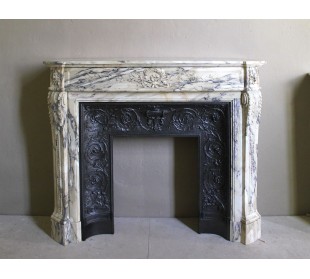
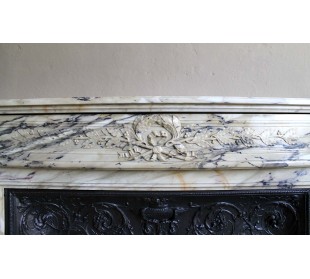
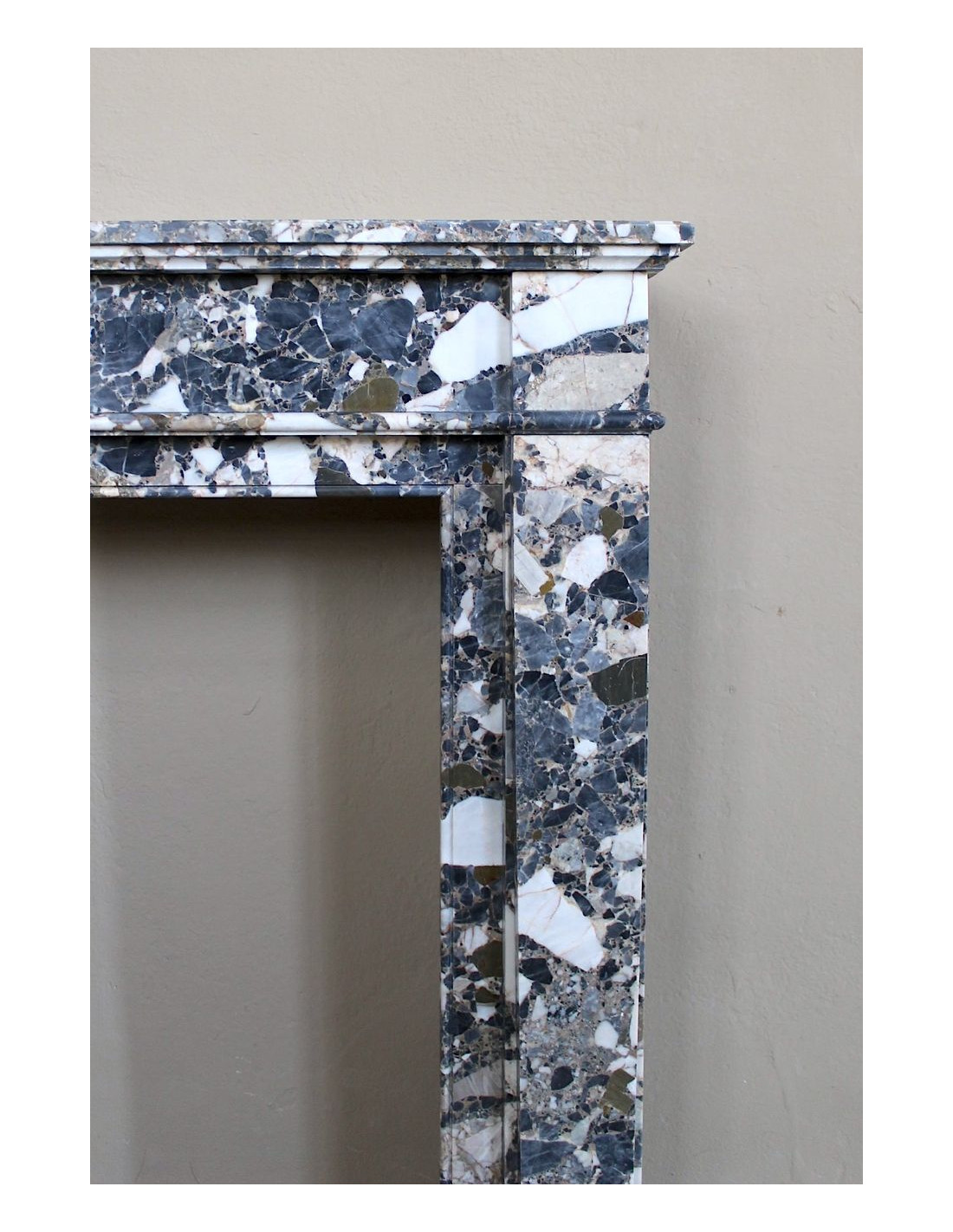
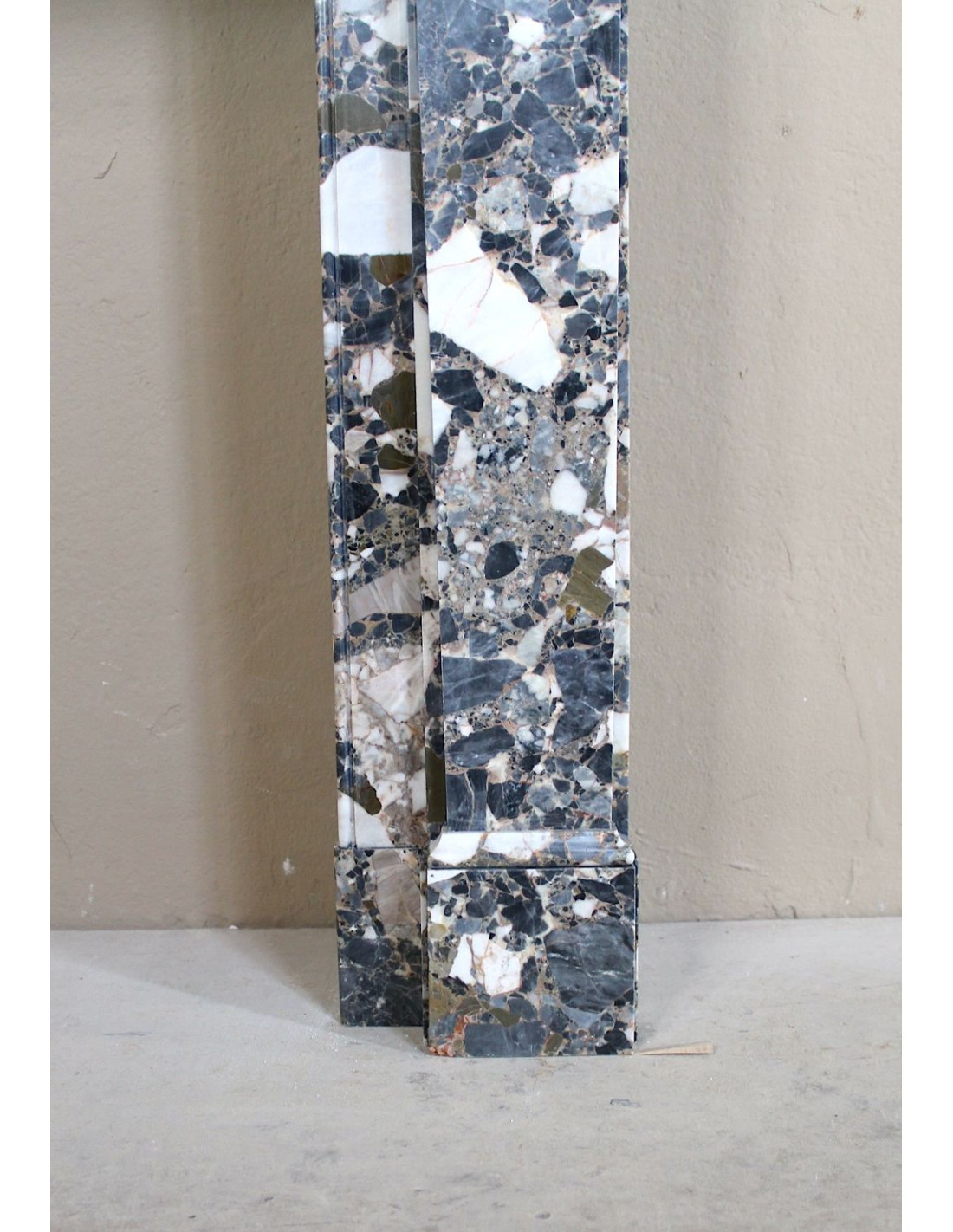
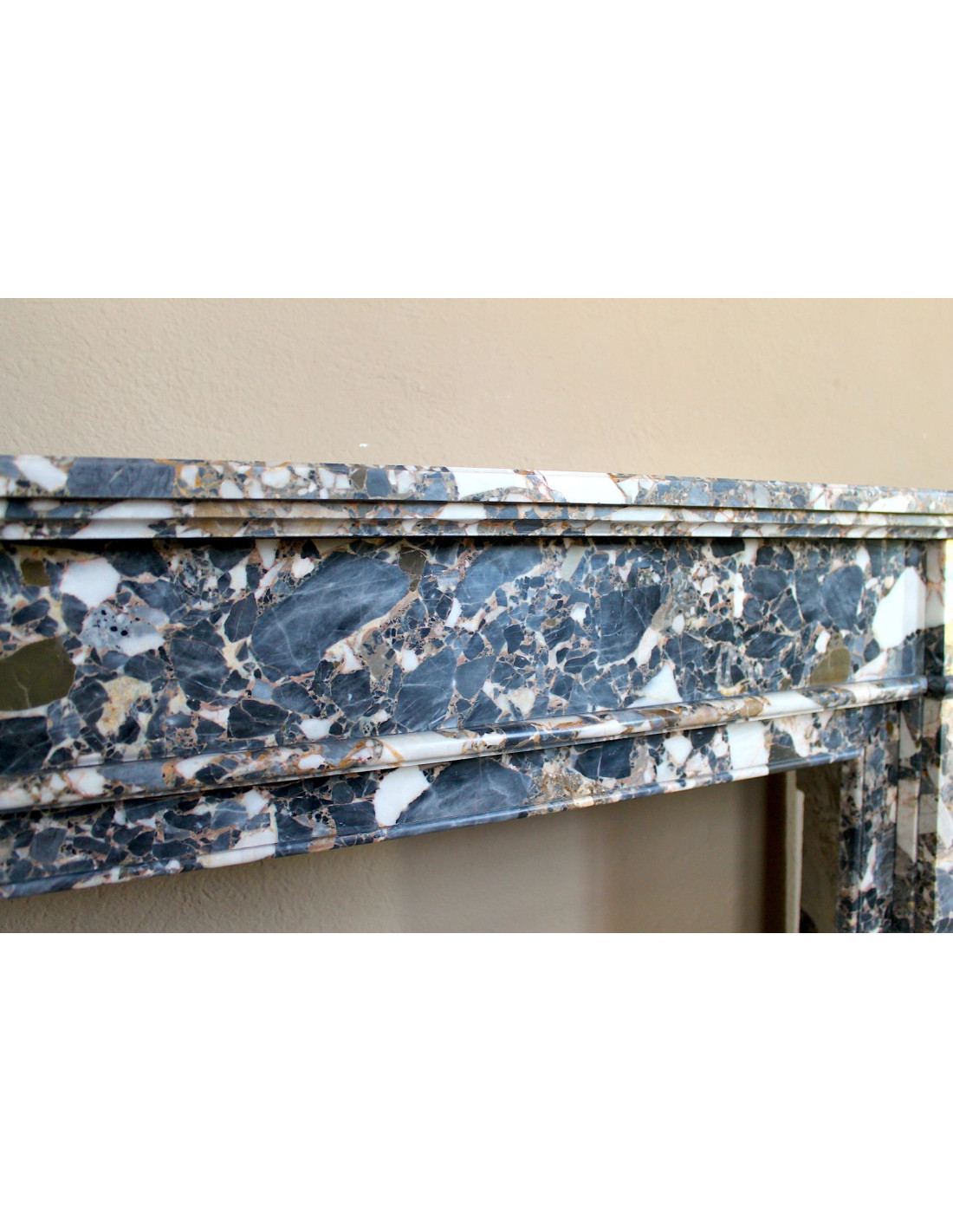
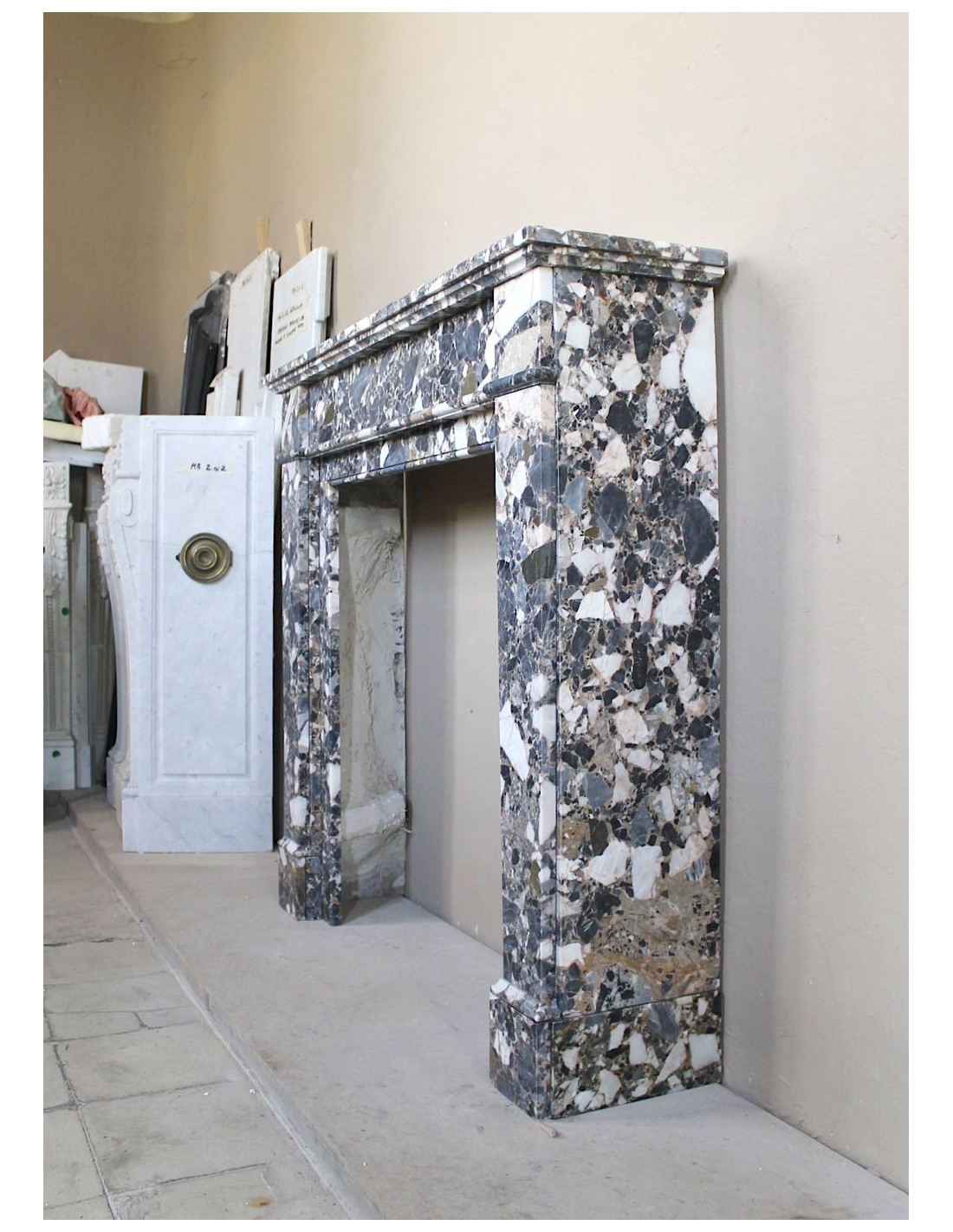
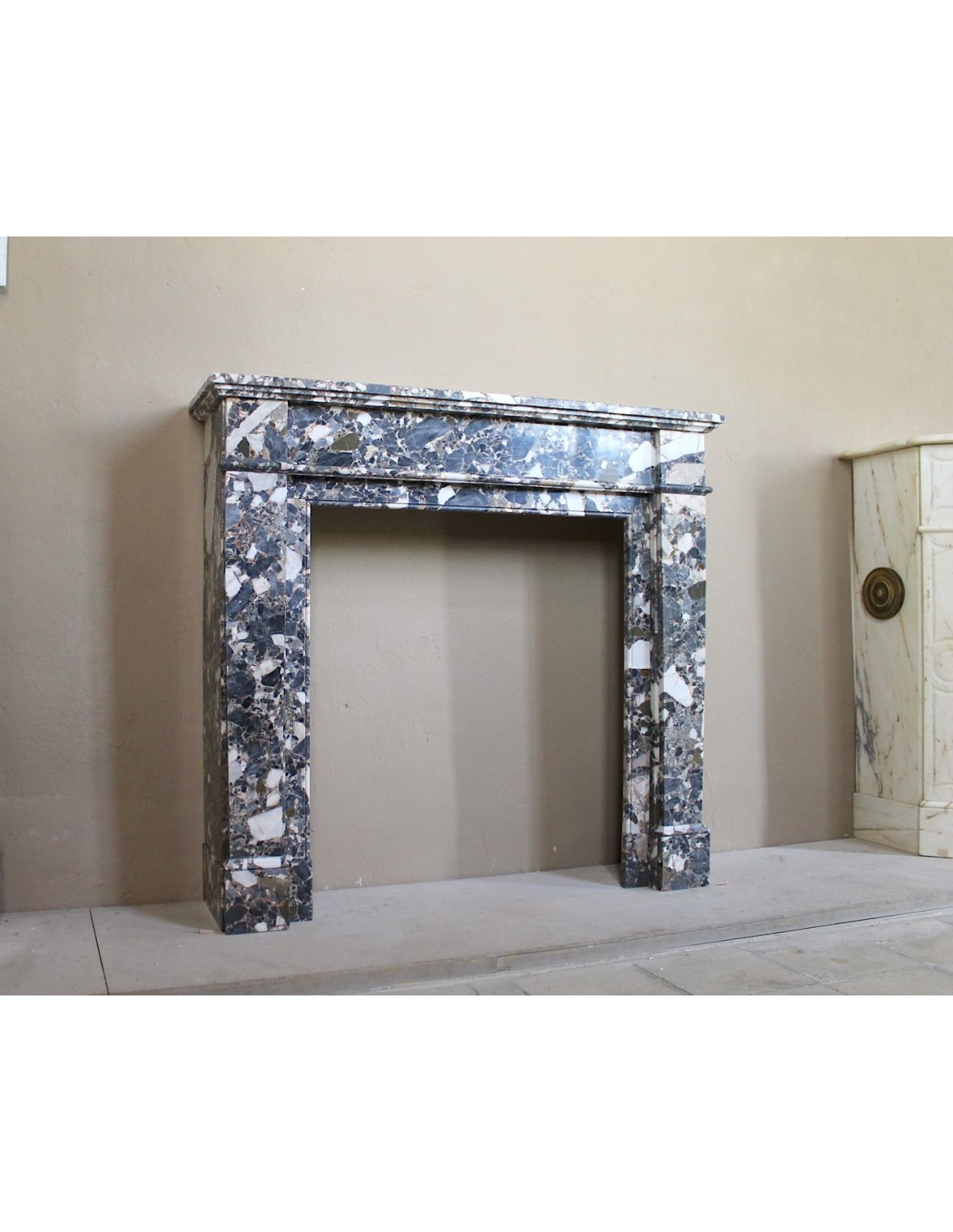
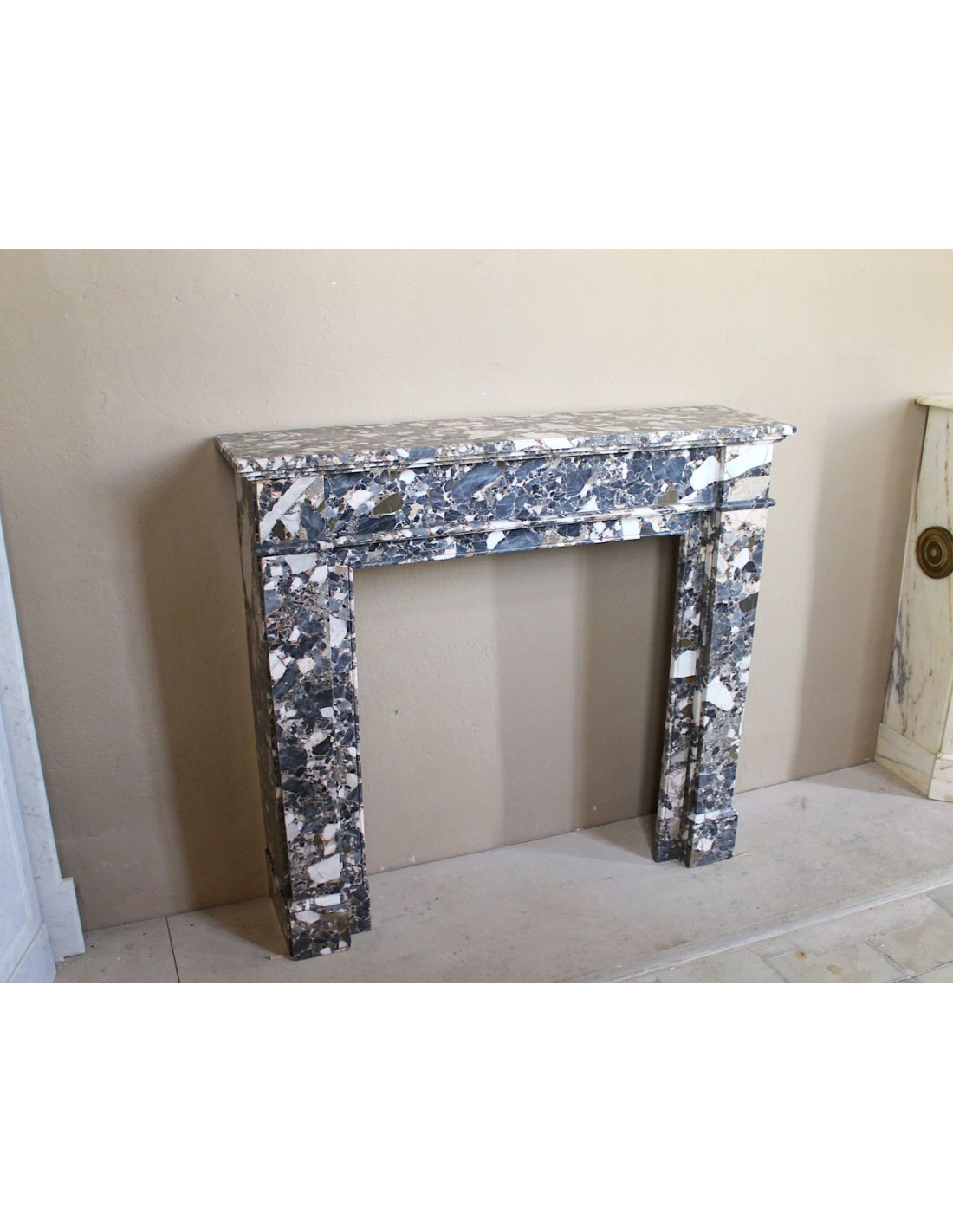
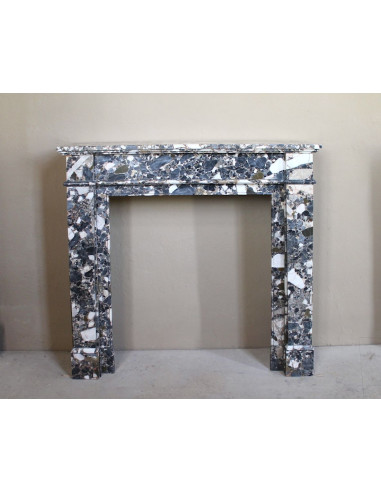
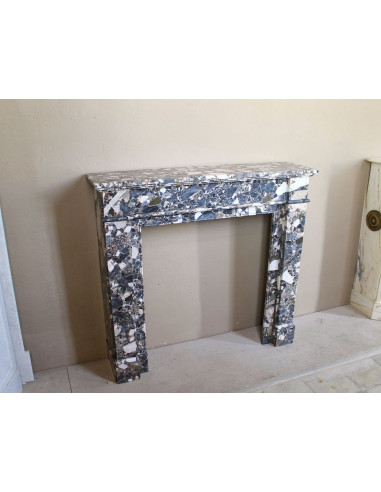
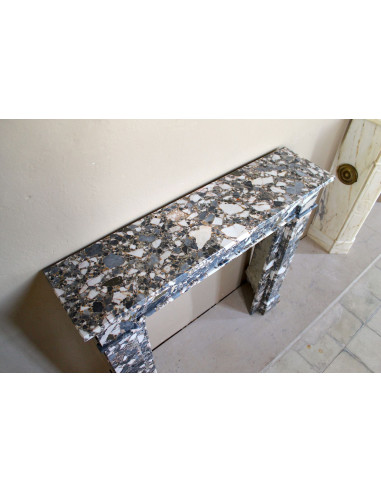
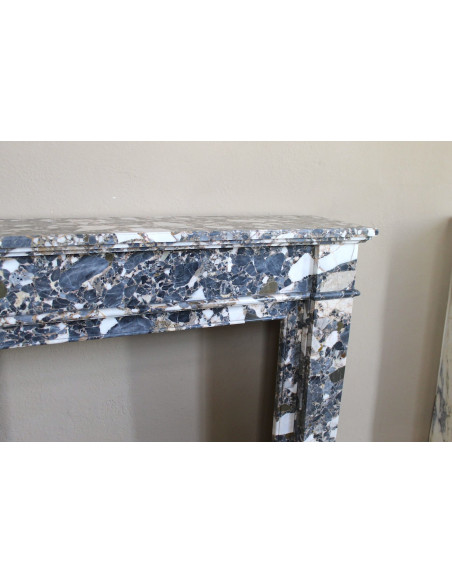
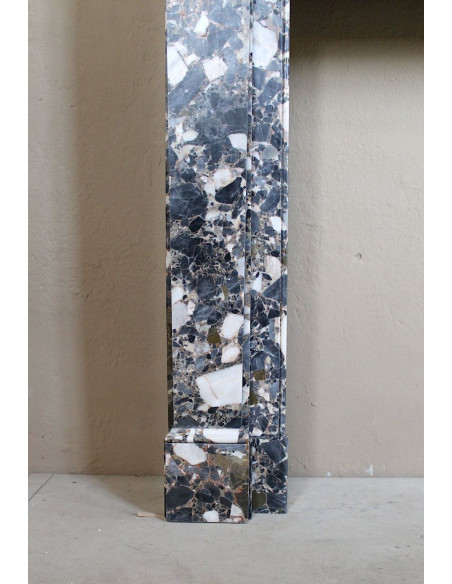
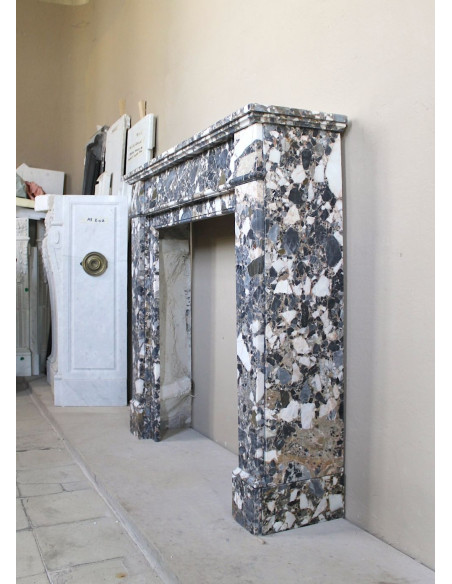
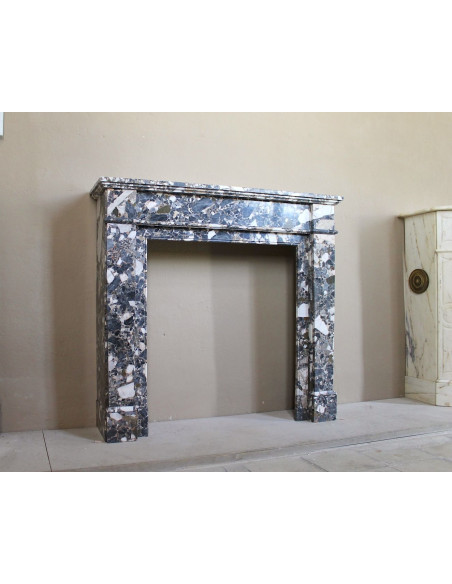
MY FIRST IMPRESSION OF THIS ANTIQUE FIREPLACE MANTEL... was its BLACK color — or rather, since its surface is actually crossed by a remarkable variety of colors, black is certainly the most striking and DOMINANT of them. In short, at first glance this fireplace appears black. And that is significant, because among Louis XVI and Neoclassical antique marble fireplaces, finding a predominantly black example is rather like finding a needle in a haystack.
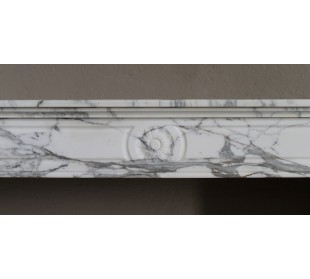
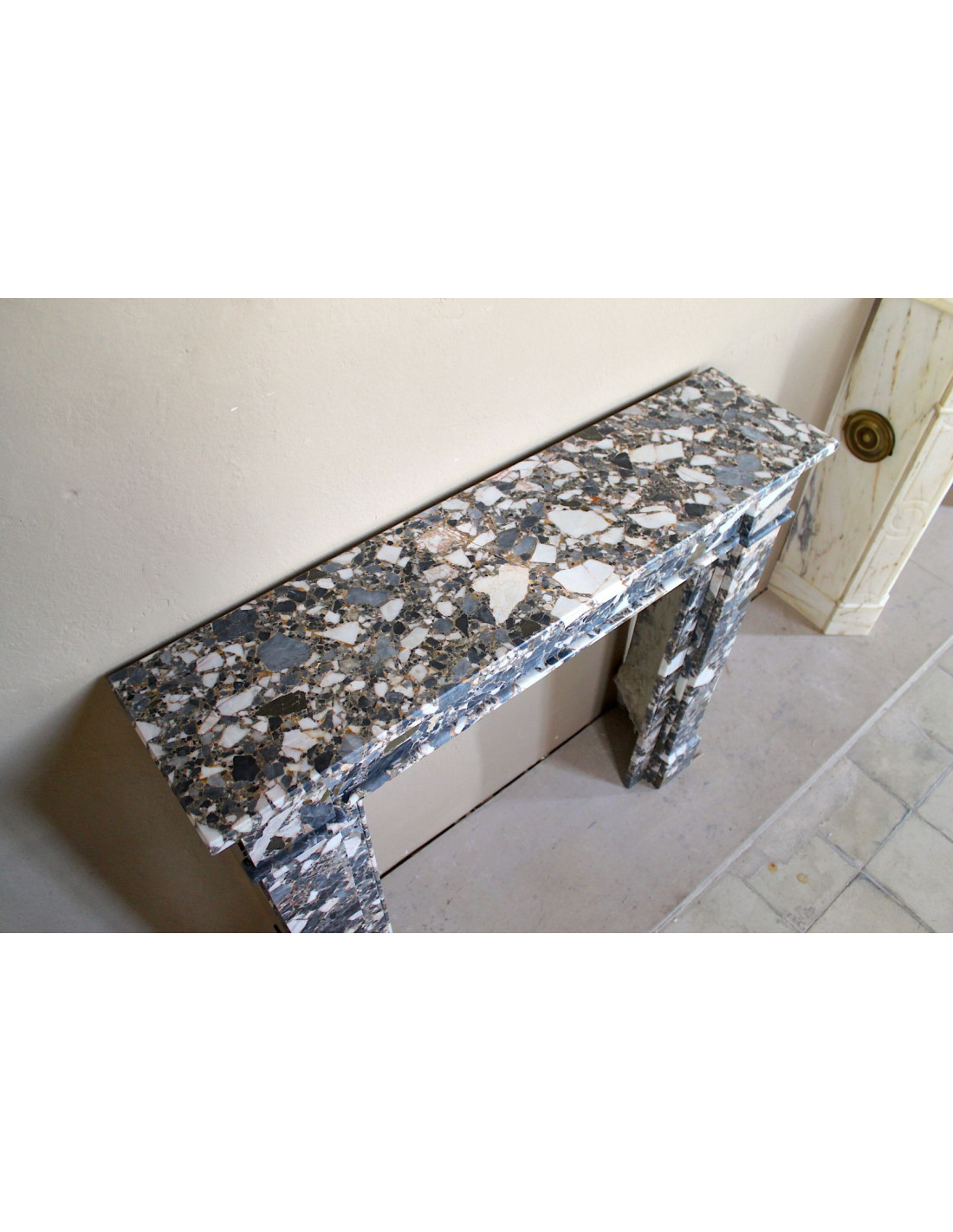
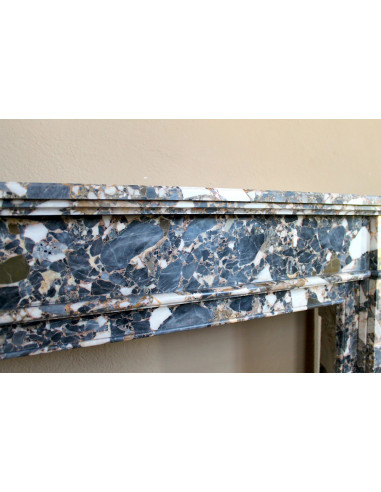
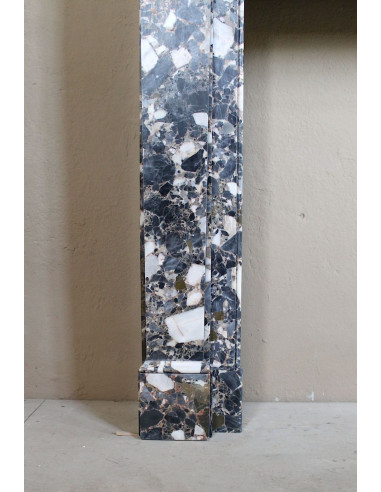
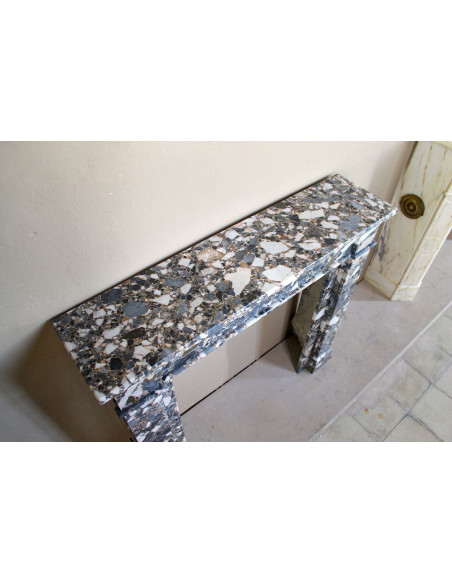
Since an important part of my job when describing our antique fireplaces is trying to identify the marble from which they were carved, let me tell you what we have here. The white areas — exceptionally white, in fact — appear to consist almost entirely of calcium carbonate, perhaps as pure as the marble Michelangelo Buonarroti used for his Pietà. As for the black areas, I believe their color comes primarily from BLACK MICA (ALSO KNOWN AS BIOTITE).
But things become considerably more complicated when we try to identify the dozens of smaller, multicolored mineral components scattered throughout the marble slabs of this remarkable antique fireplace surround. Suddenly we find ourselves dealing with names such as... GNEISS, CALCITE CRYSTALS, PYROXENES, AMPHIBOLES, PYRITE, ANTANTIDE, FELDSPARS, MANGANESE and — LAST BUT CERTAINLY NOT LEAST — TITANIUM!
AND FACED WITH THIS TORRENT OF WORDS THAT ARE ALMOST A FOREIGN LANGUAGE TO ME, I HOPE YOU WILL FORGIVE ME IF I DO NOT GO ANY FURTHER INTO THE SUBJECT, OK?! THANK YOU — TOO KIND...
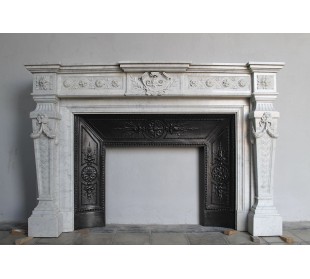
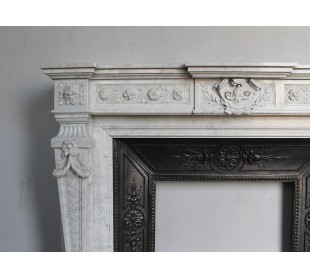
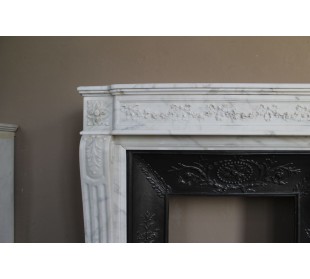
THIS ANTIQUE MARBLE FIREPLACE DATES FROM THE FINAL DECADES OF THE 19TH CENTURY, AT THE DAWN OF THE BELLE ÉPOQUE — AND SOMEHOW IT COULD HARDLY HAVE BELONGED TO ANY OTHER PERIOD. IT WAS DISCOVERED ON RUE DU FAUBOURG-DU-ROULE IN PARIS (THE PRIVATE OWNER WHO SOLD US THE FIREPLACE TOLD US THAT THE STREET AND THE HOUSE WERE BUILT DURING BARON HAUSSMANN’S TRANSFORMATION OF PARIS).