
SHARE ON:
Note: this fireplace will be viewable at our showroom starting from 18/10/2025.
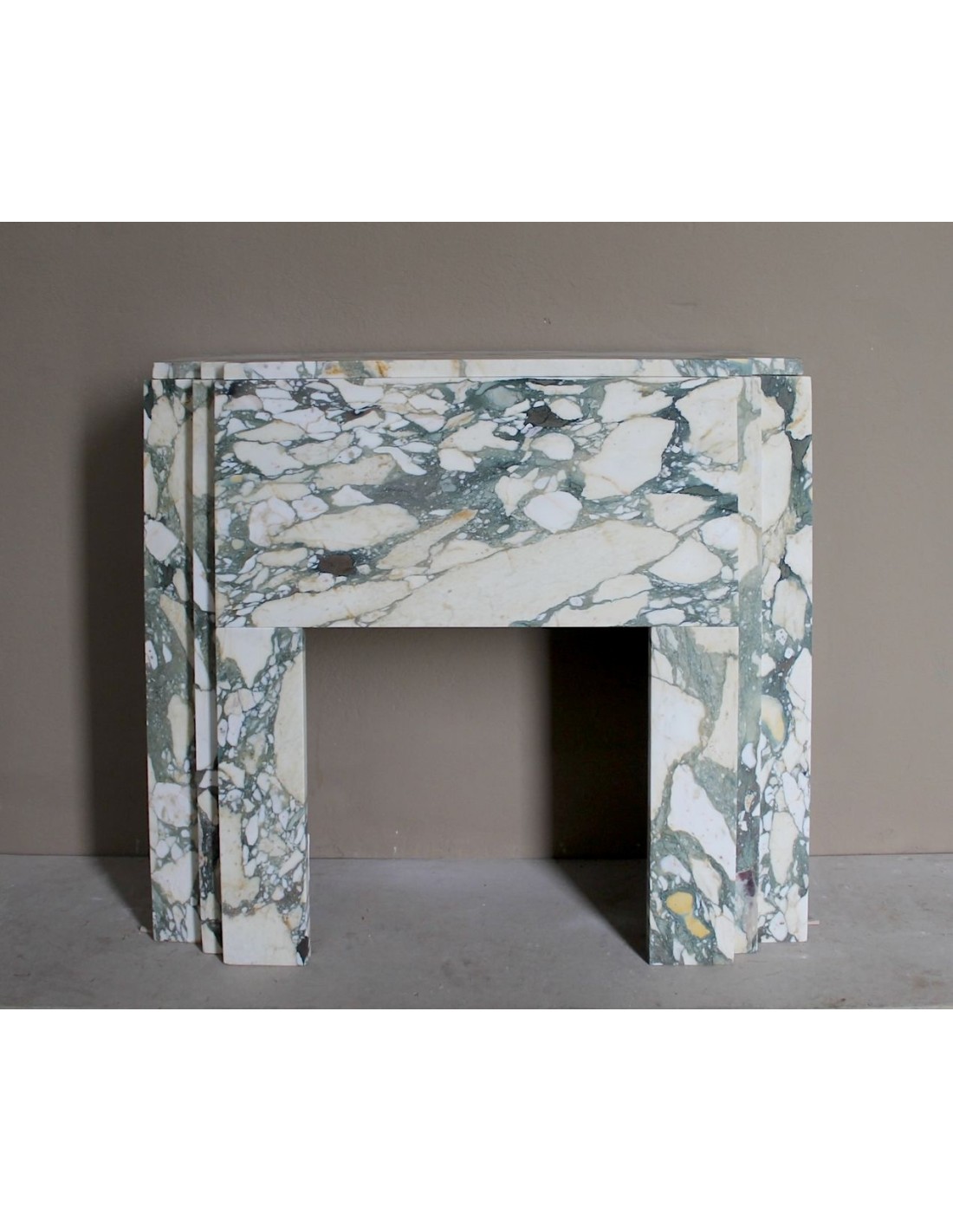
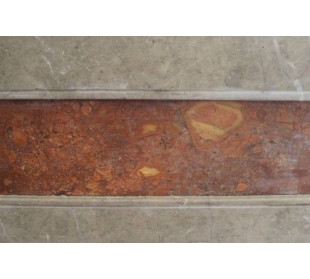
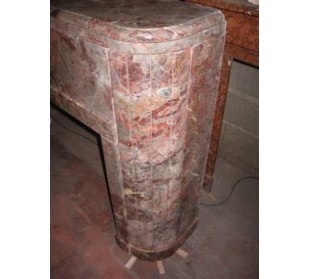
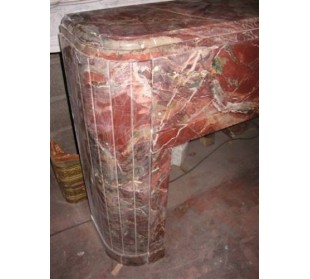
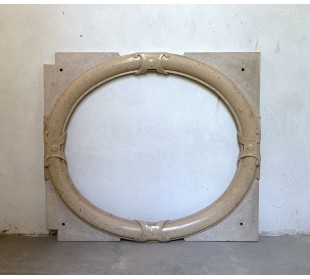
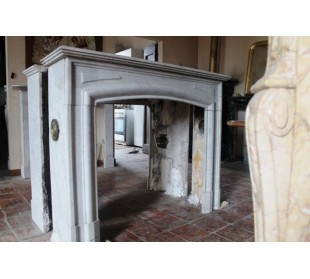
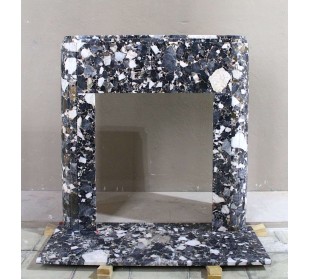
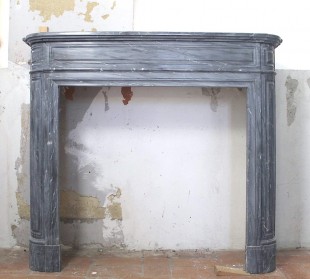
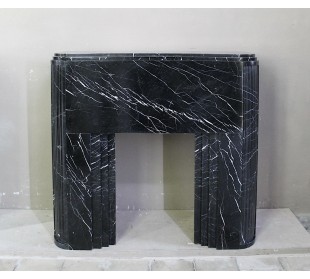
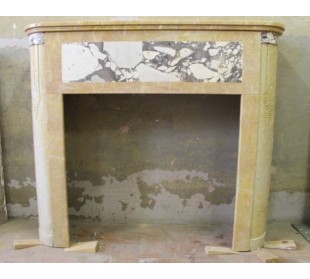
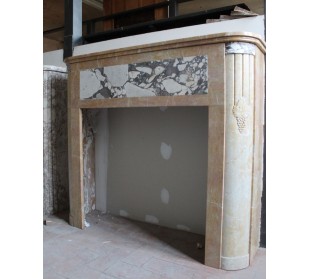
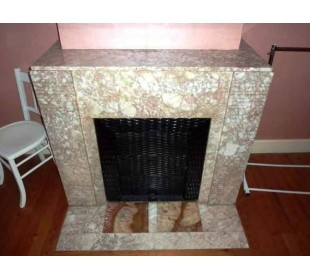
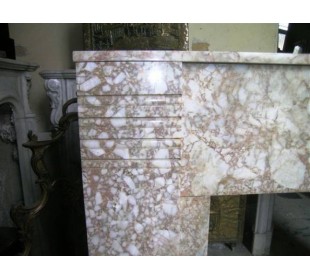
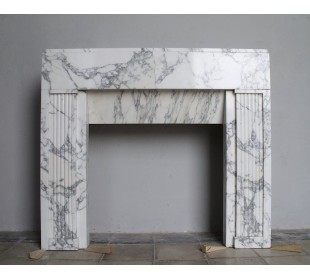
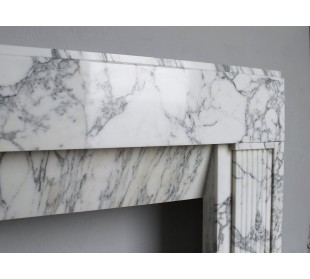
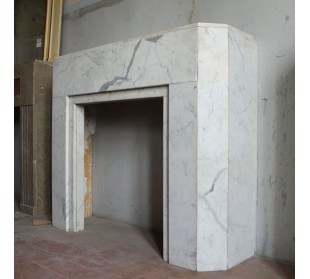
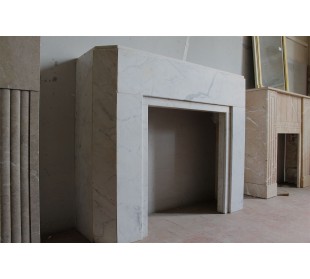
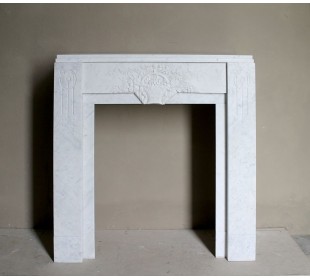
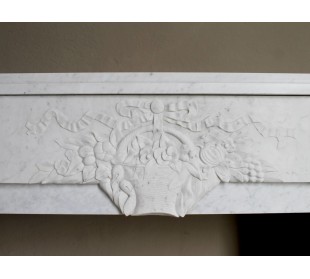
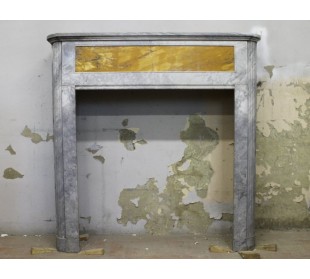
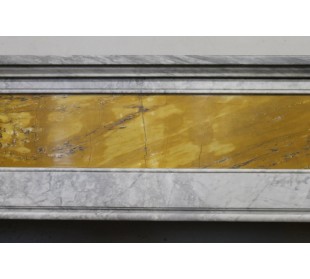
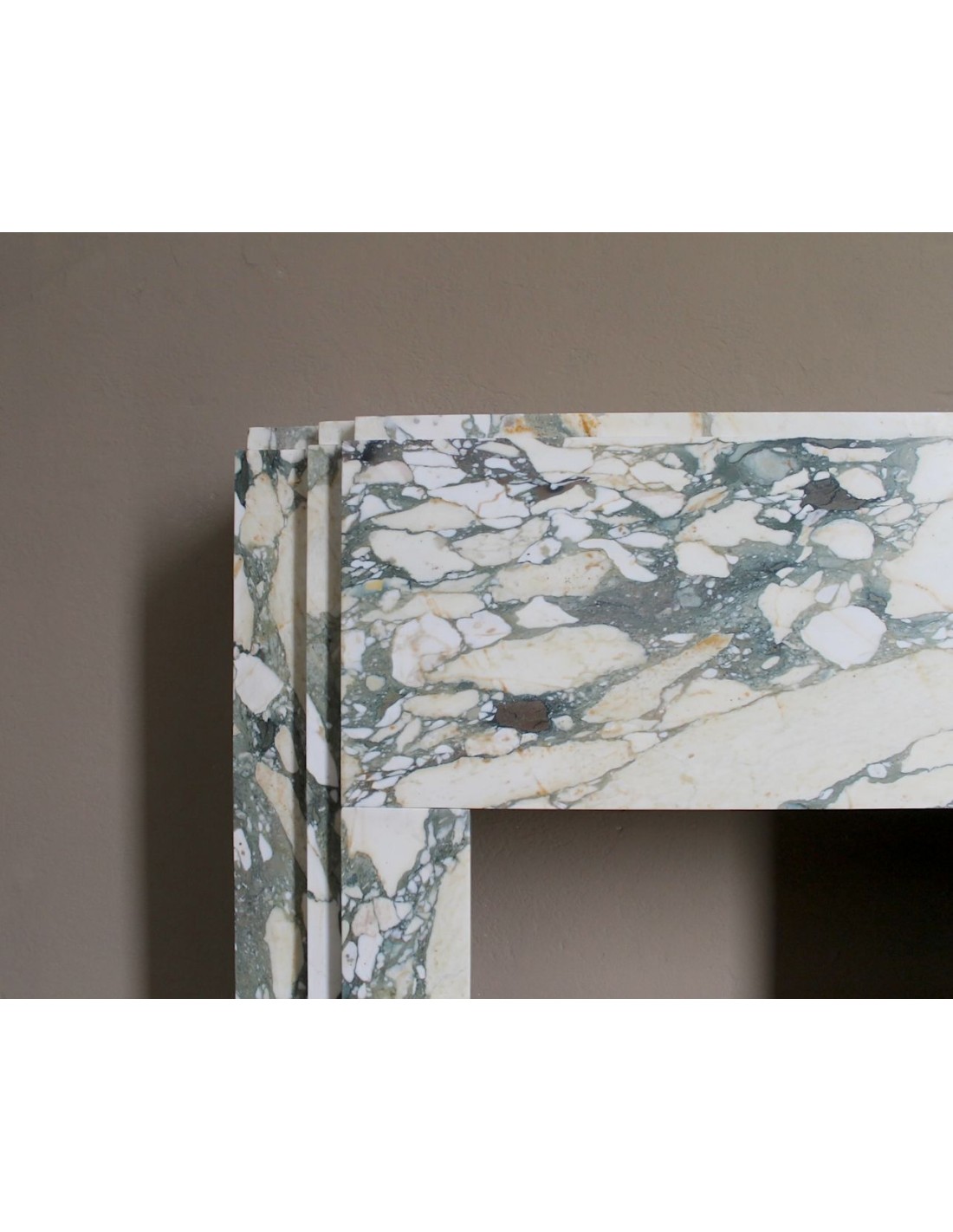
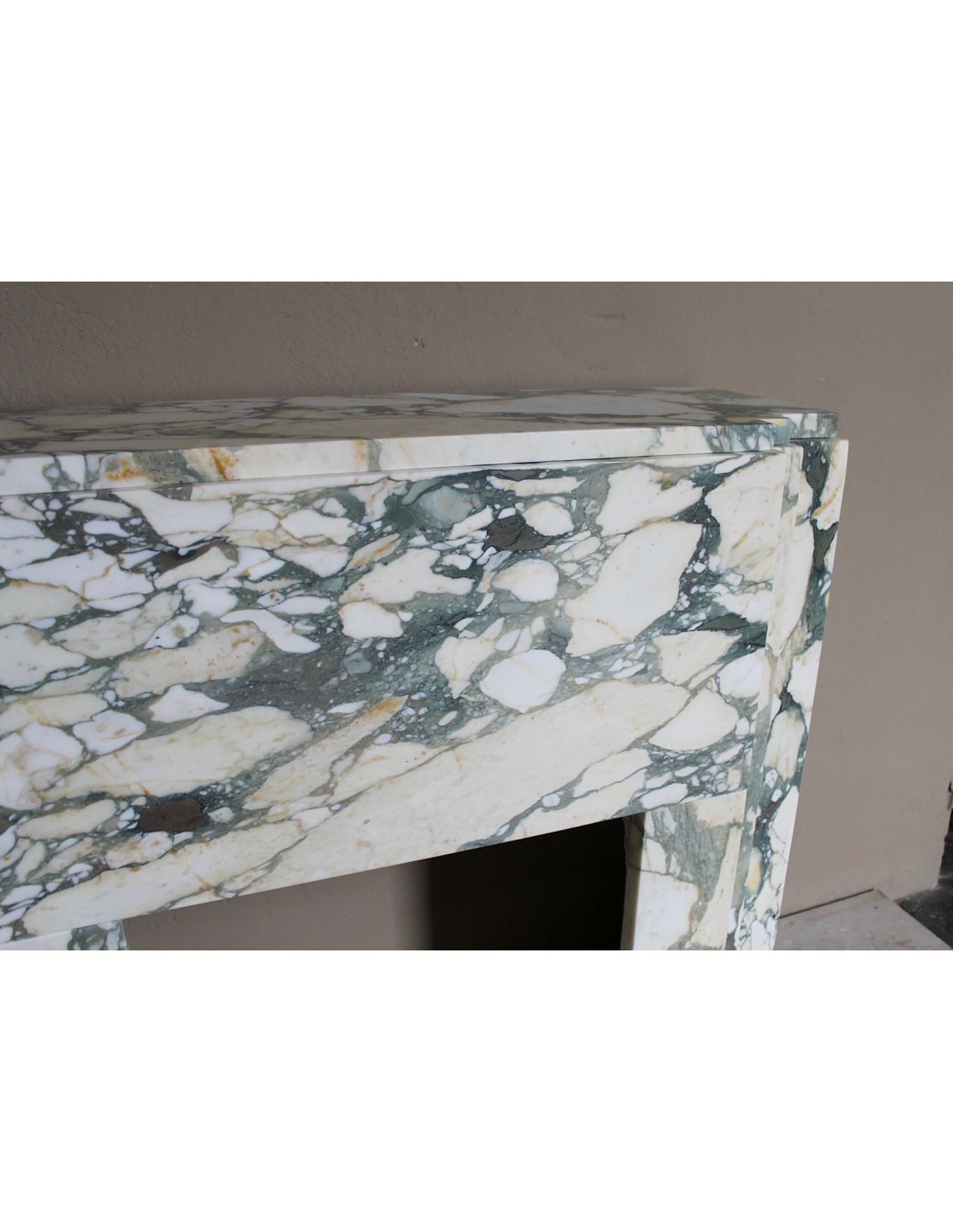
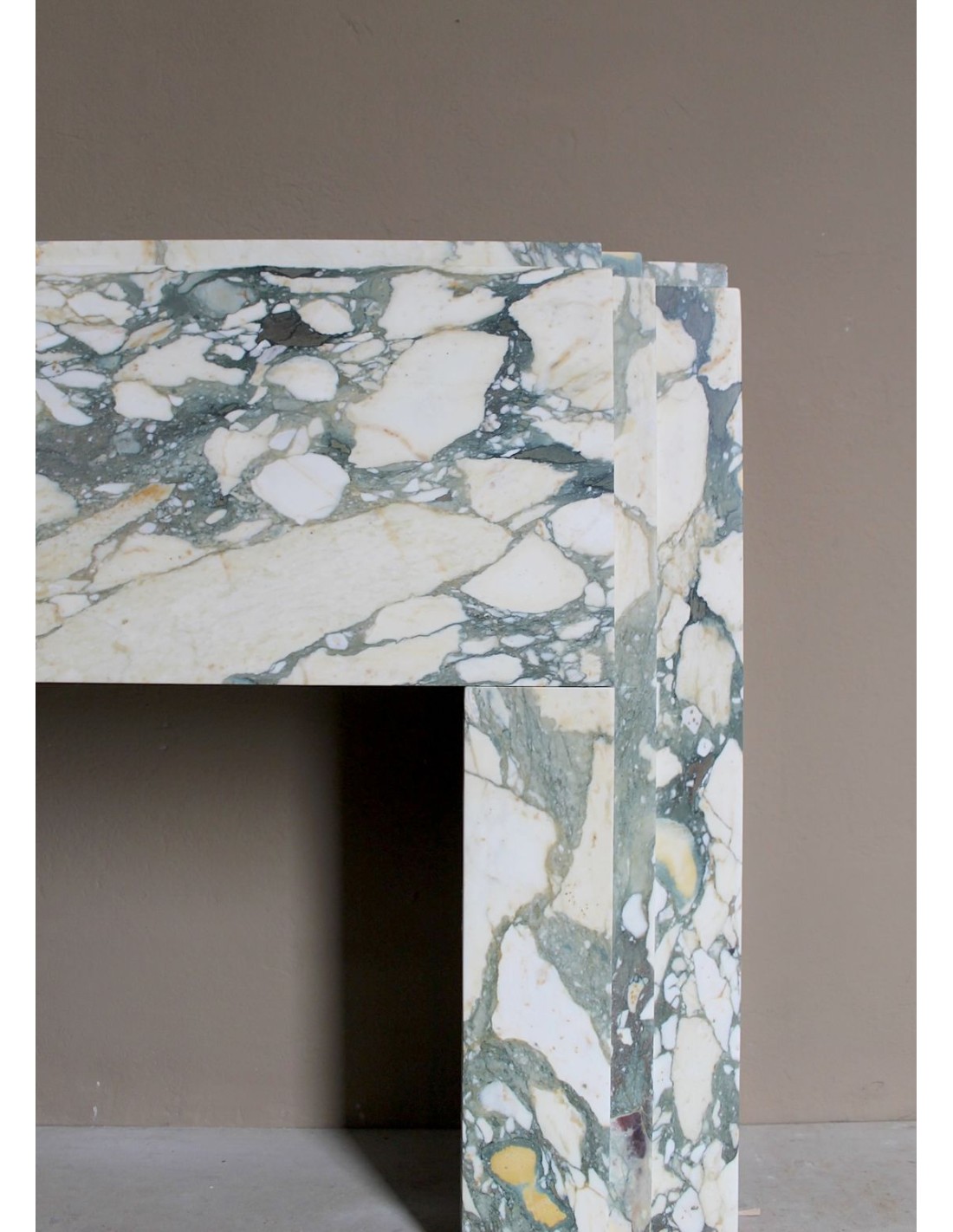
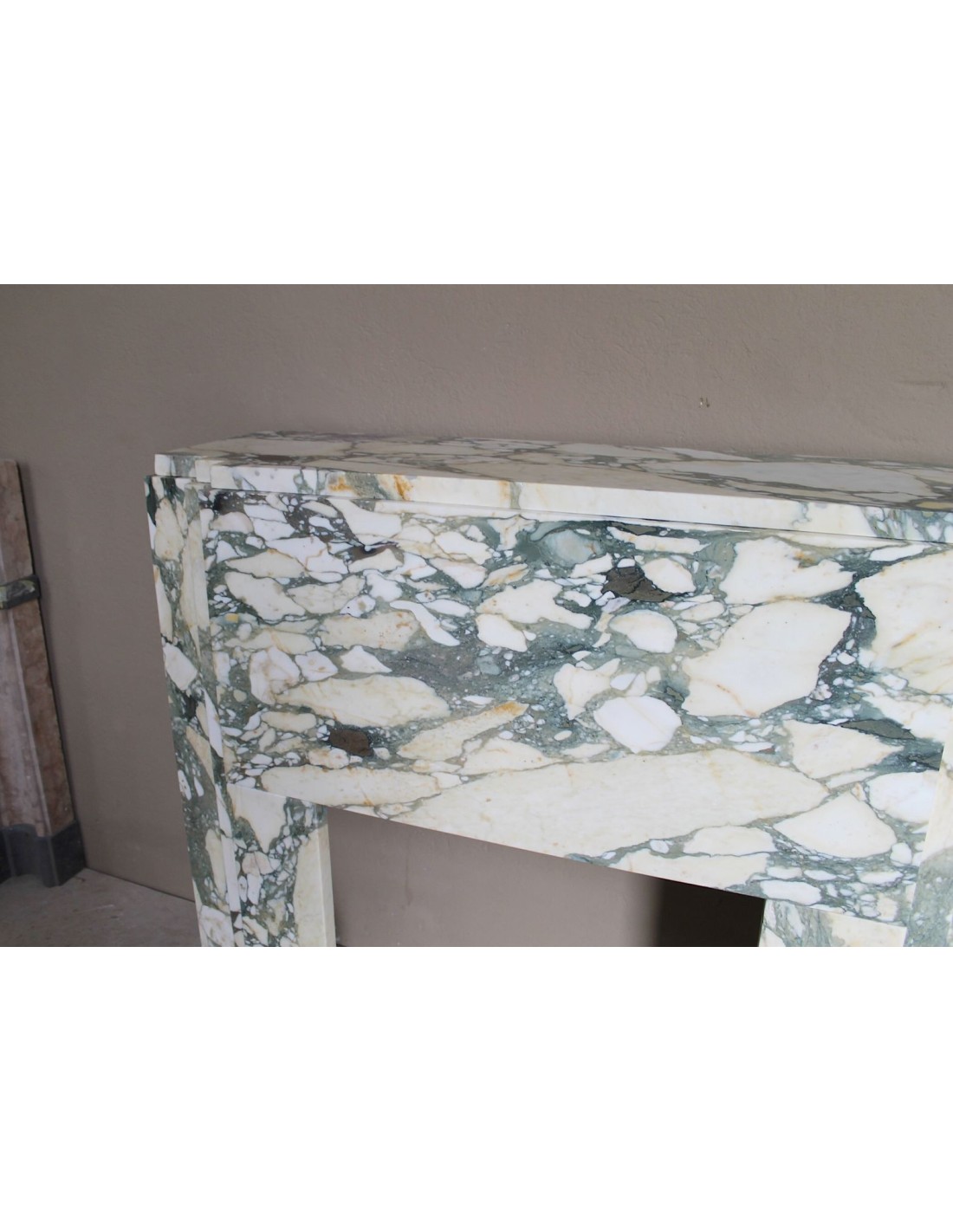
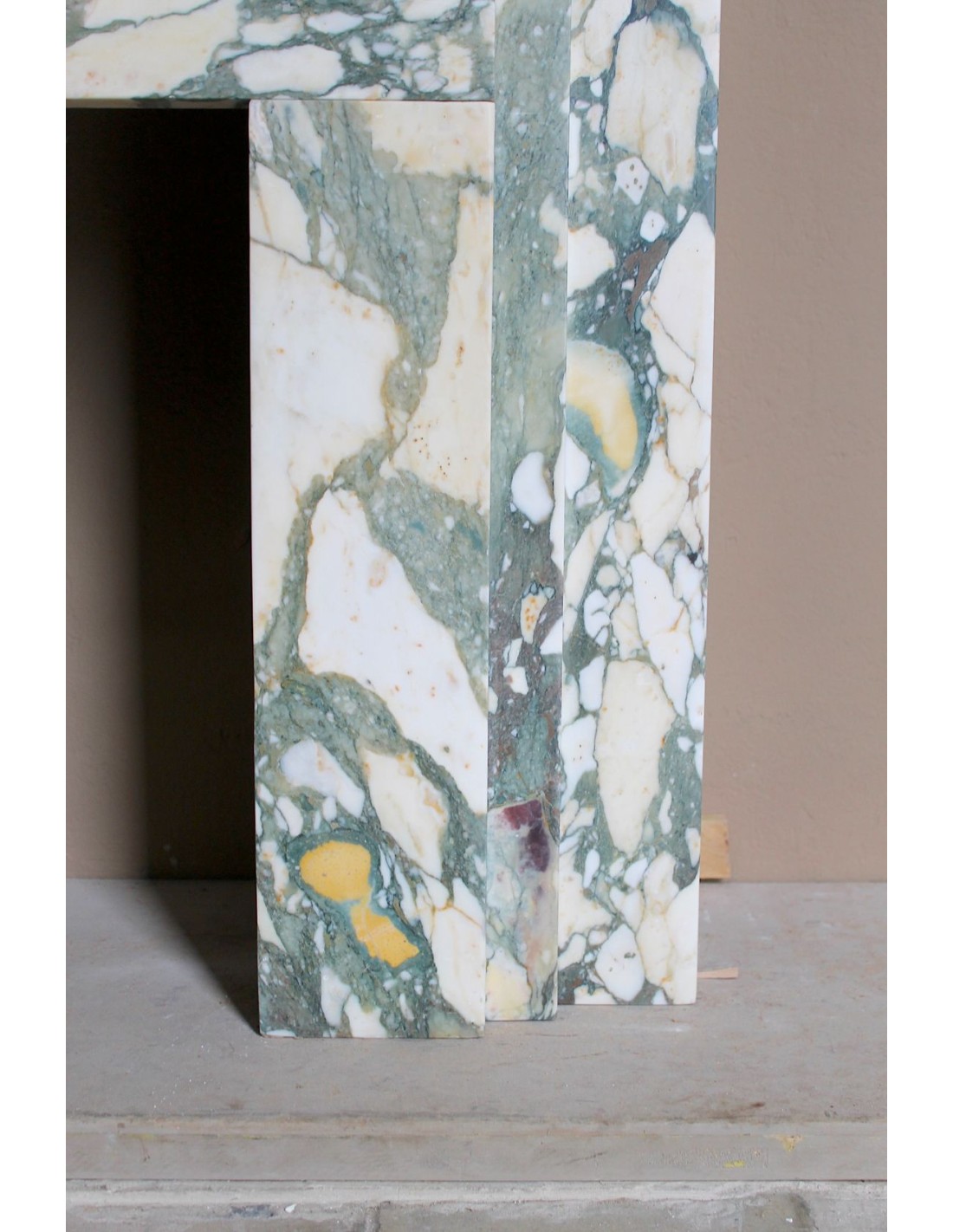
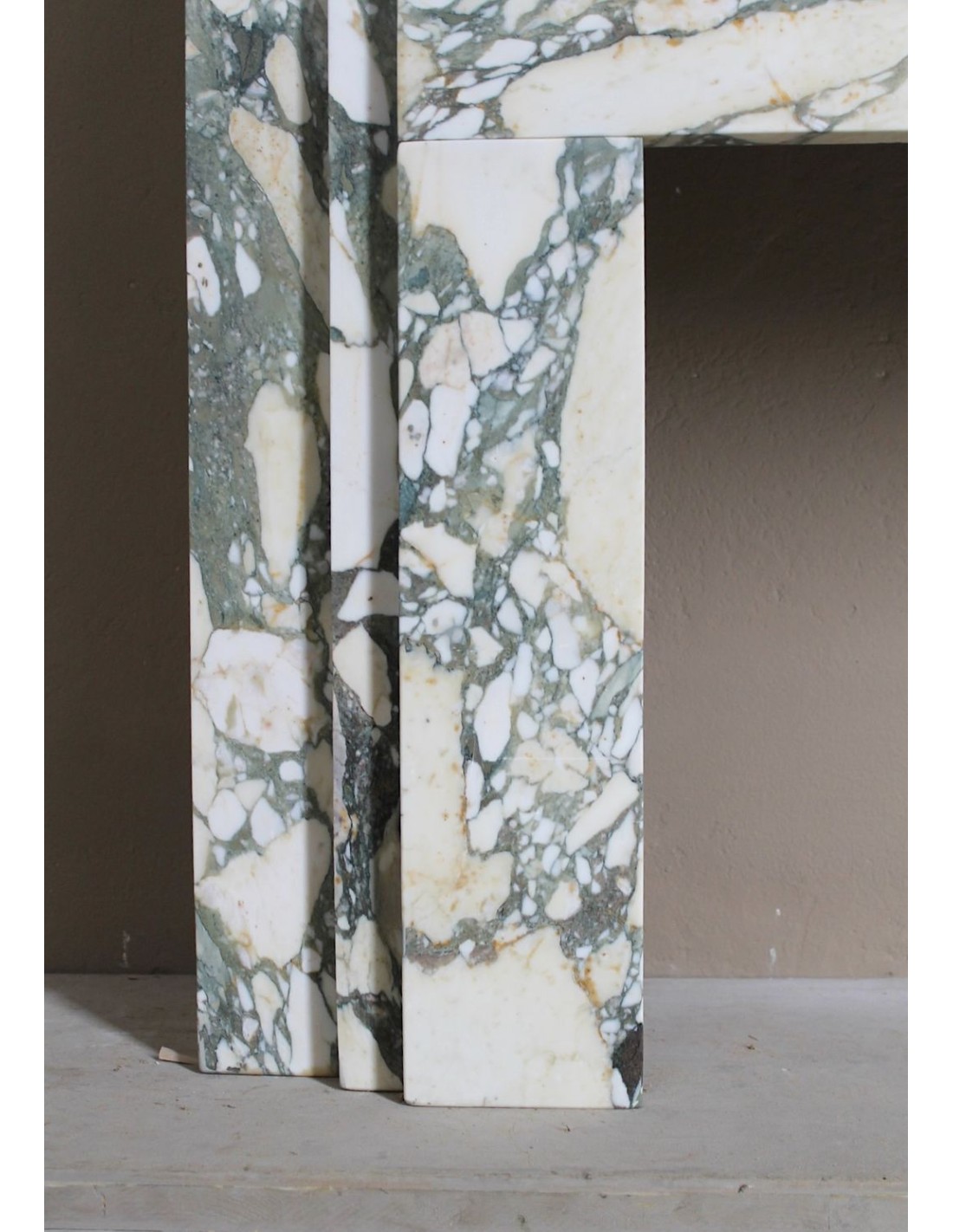
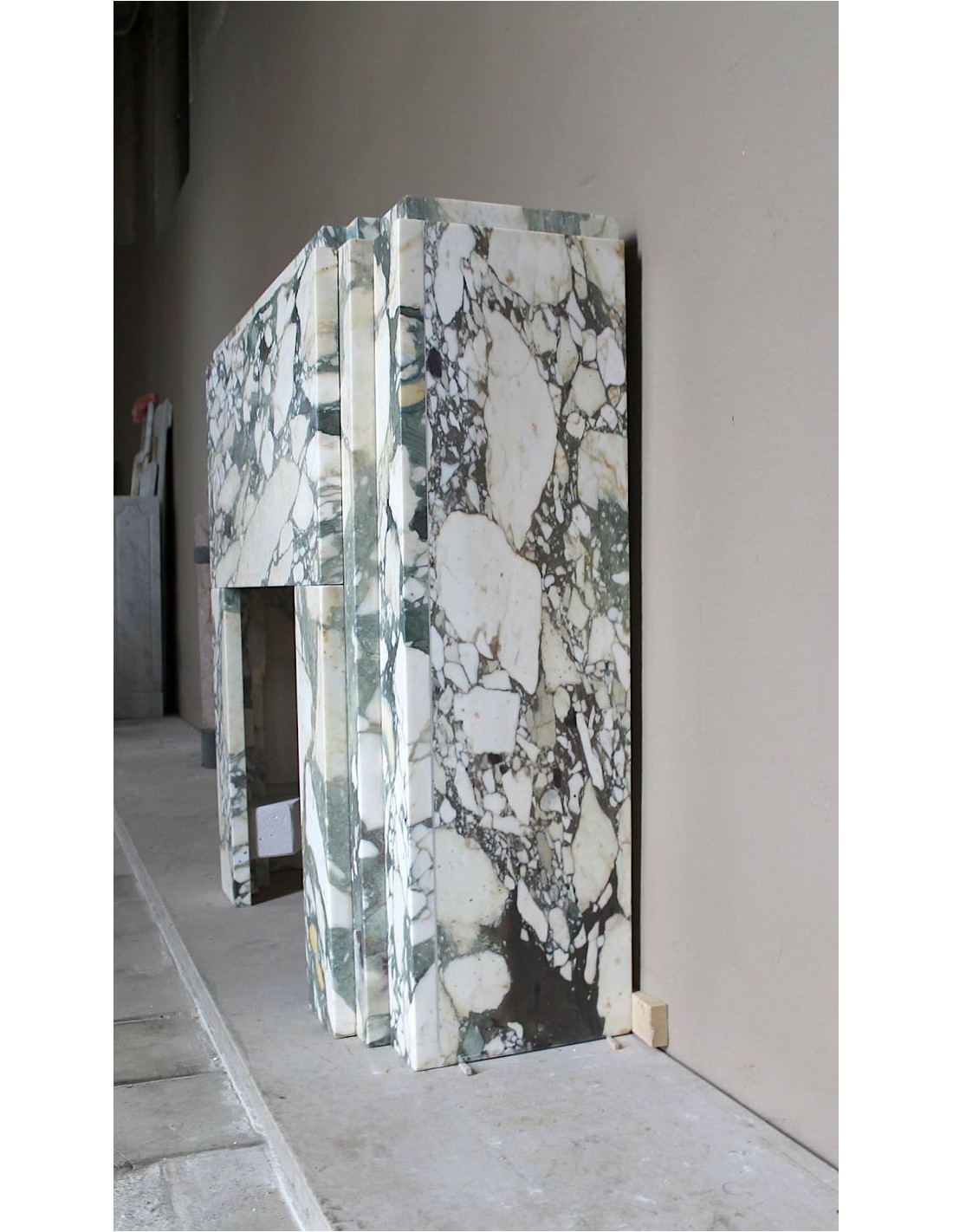
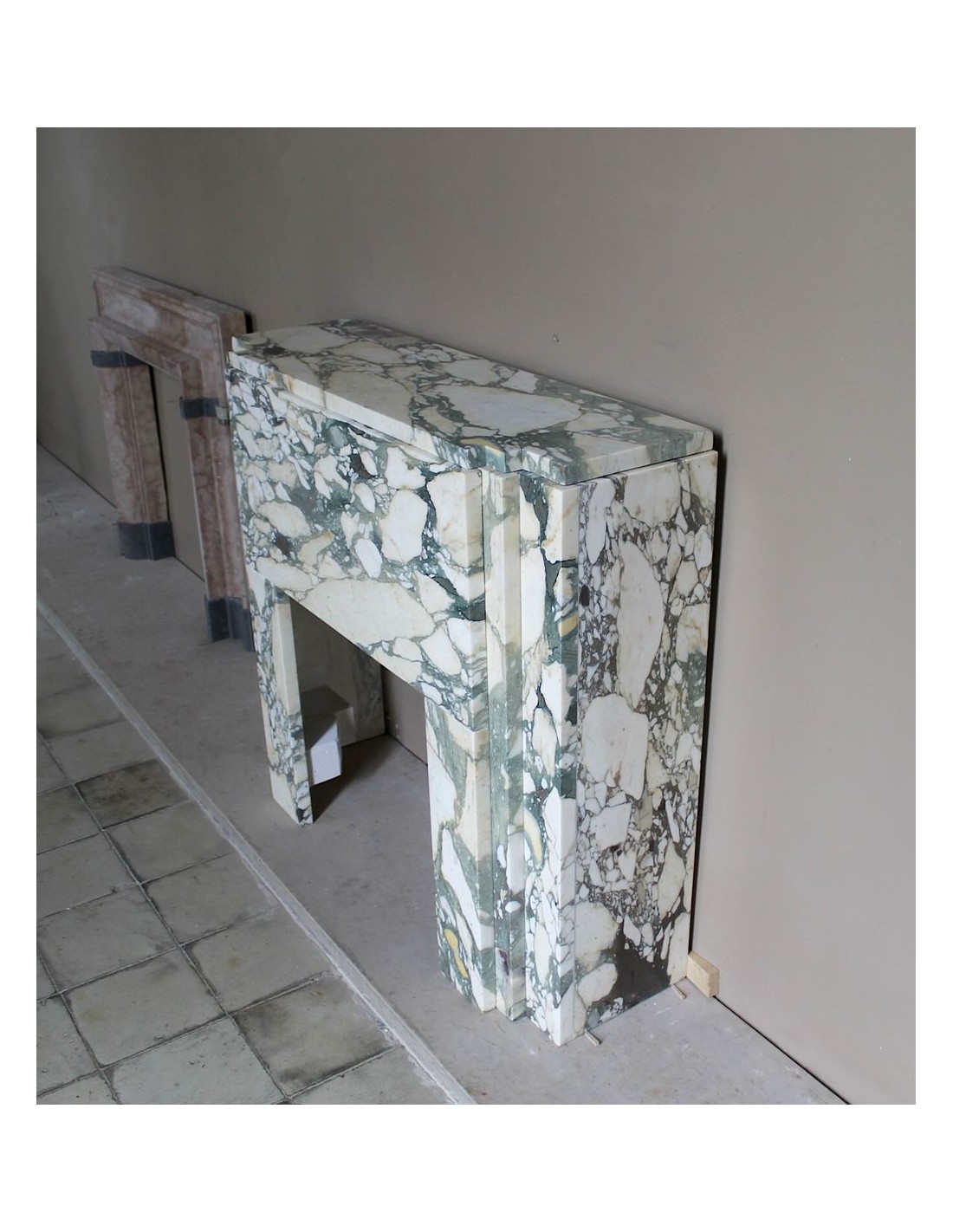
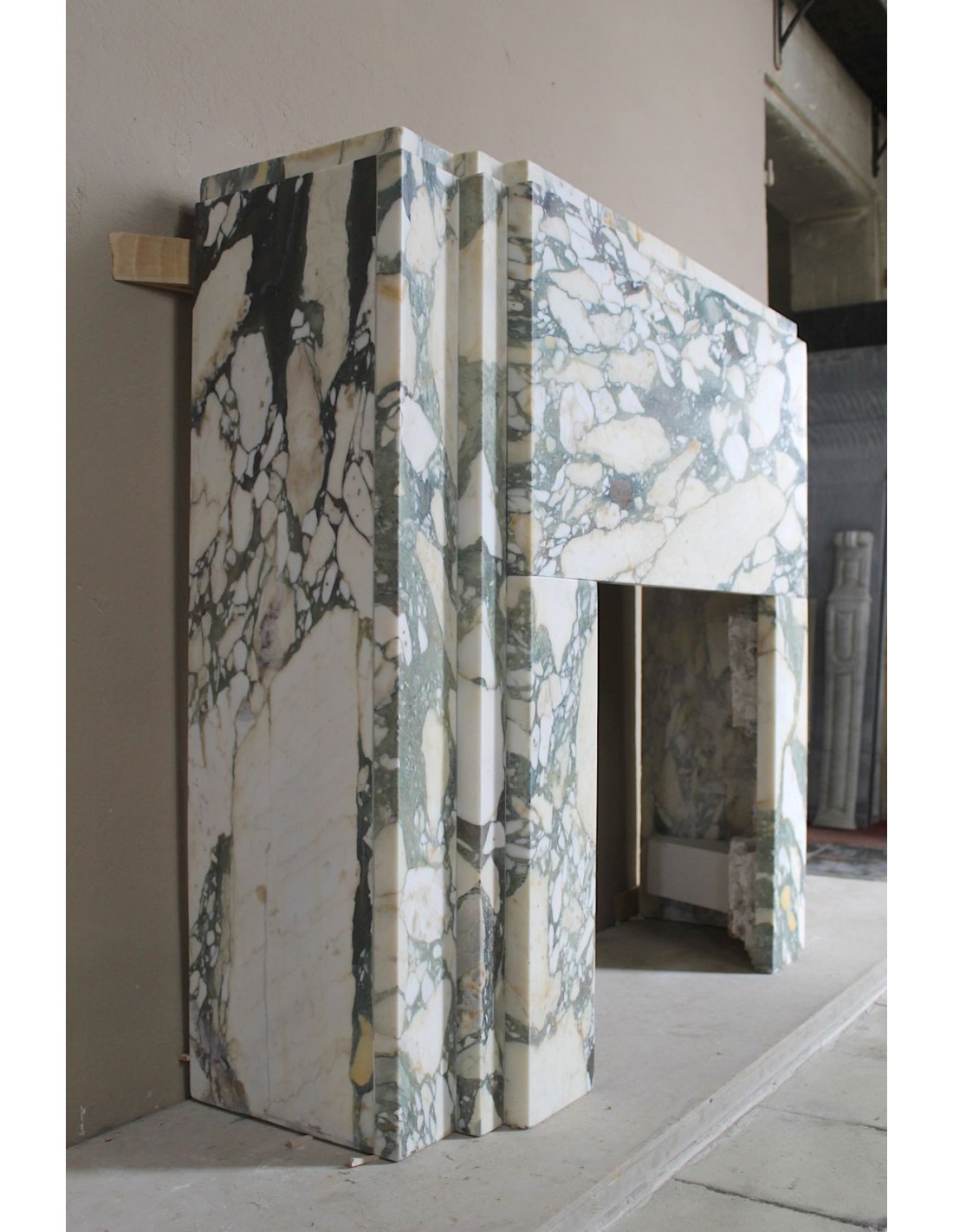
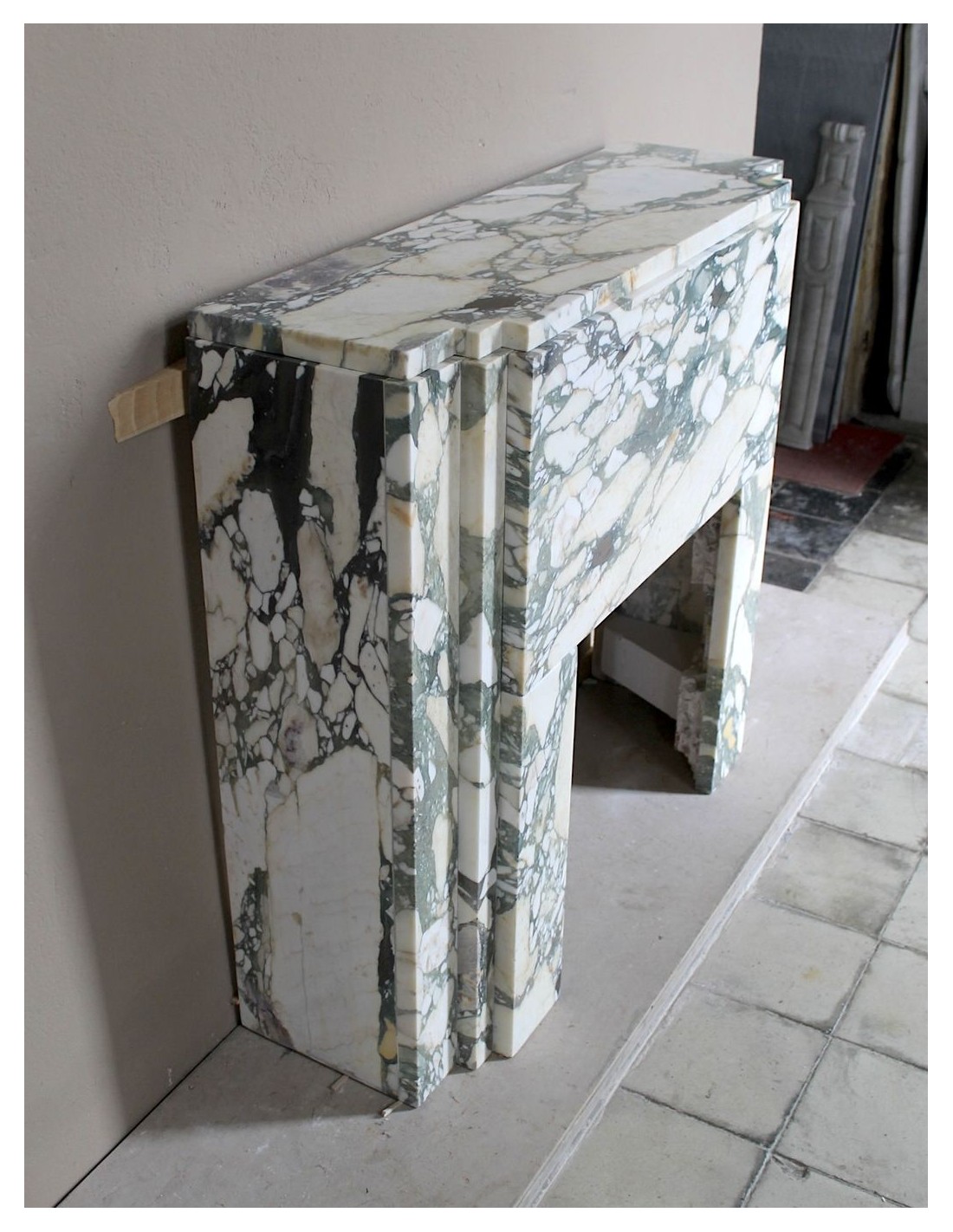
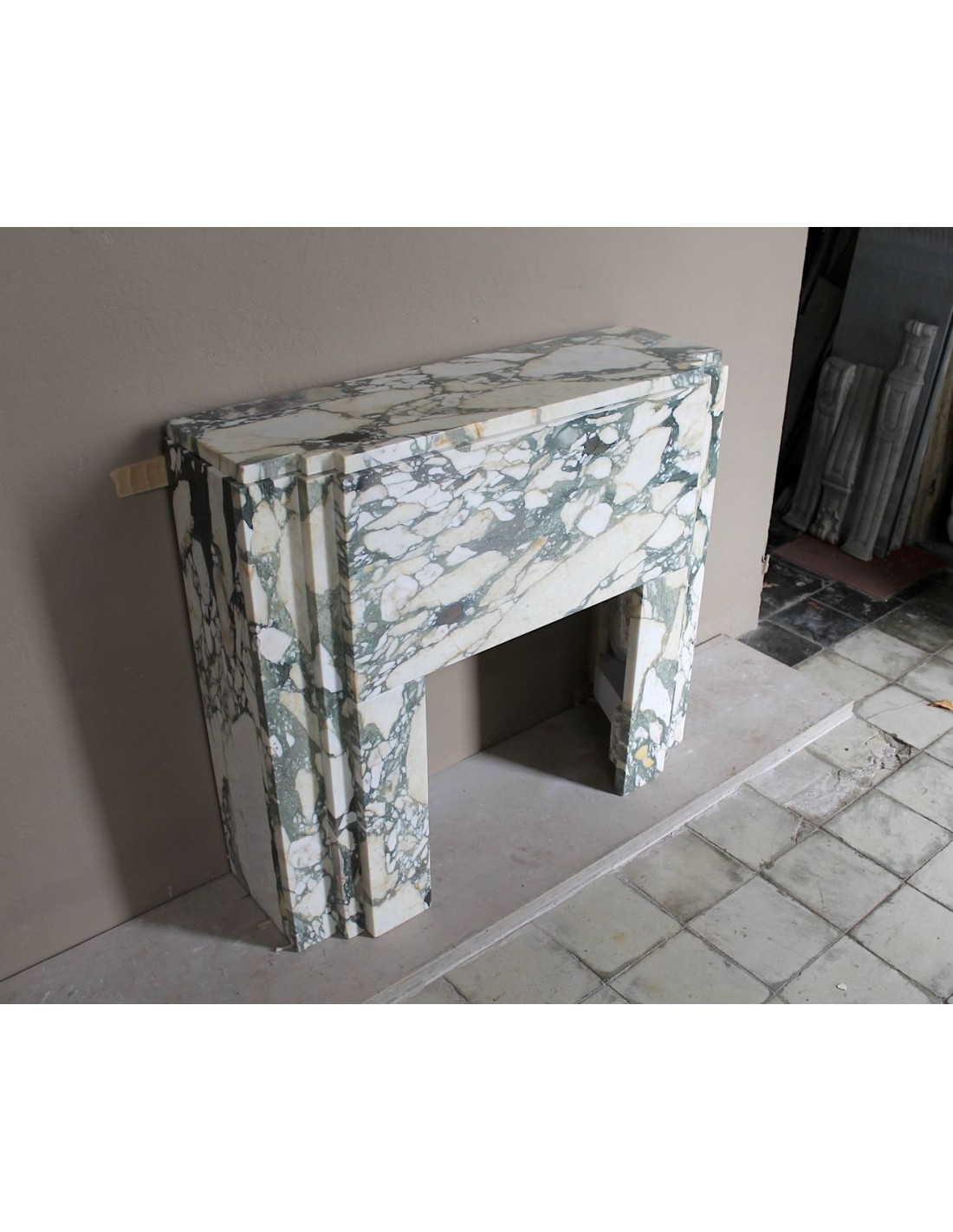
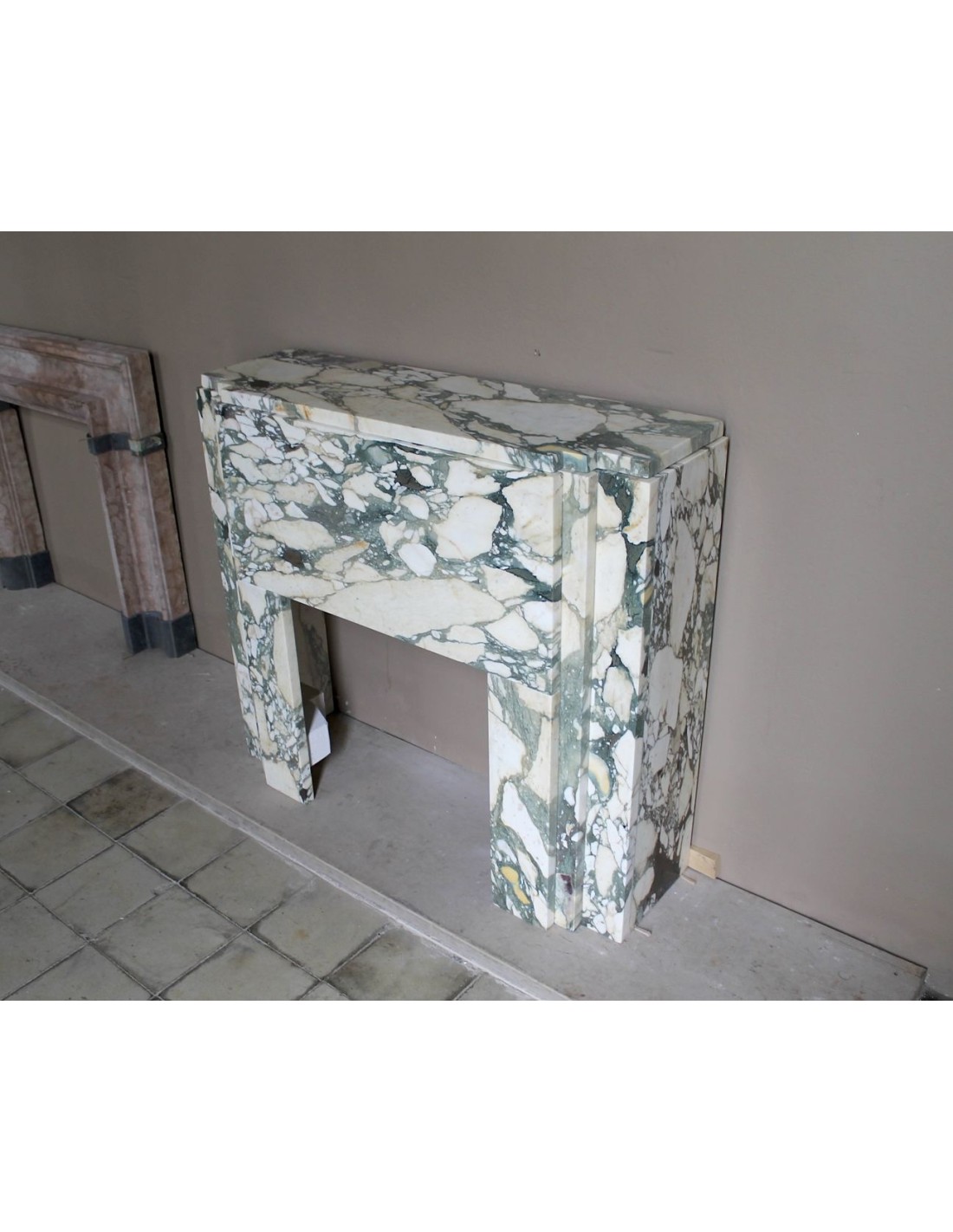
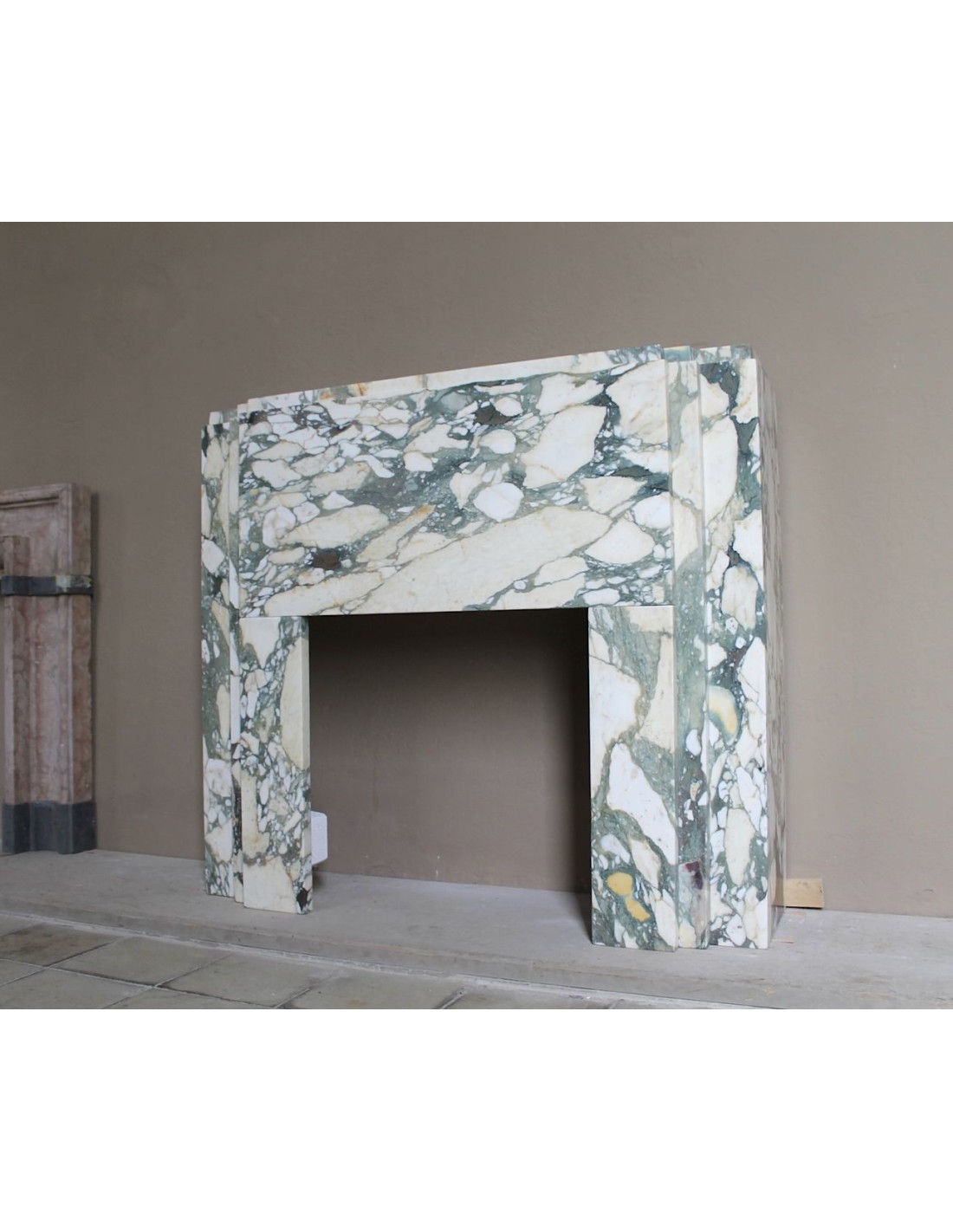
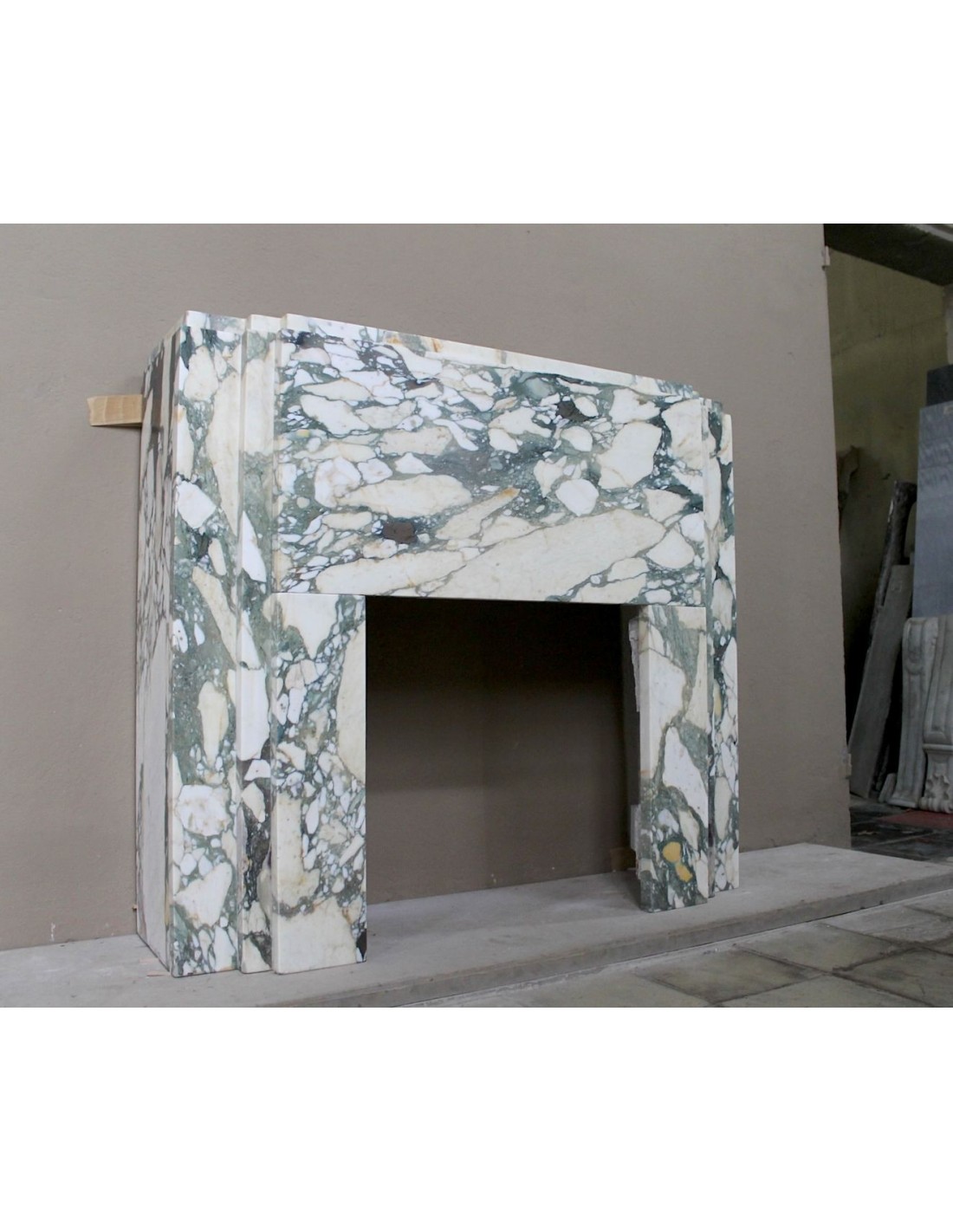
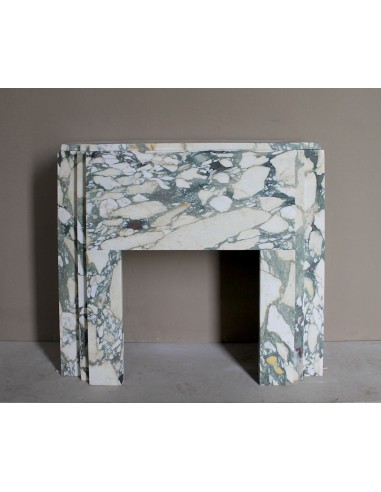
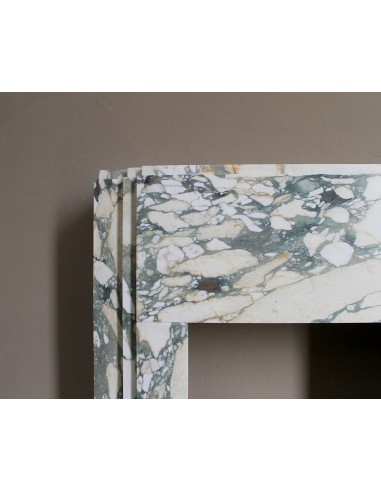
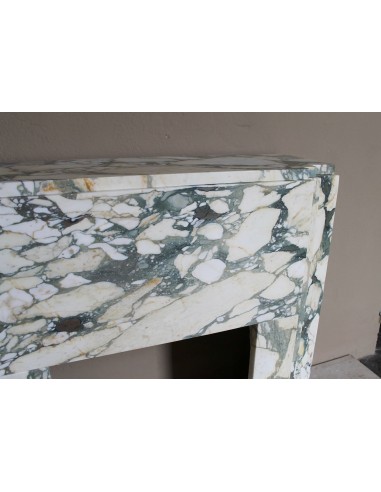
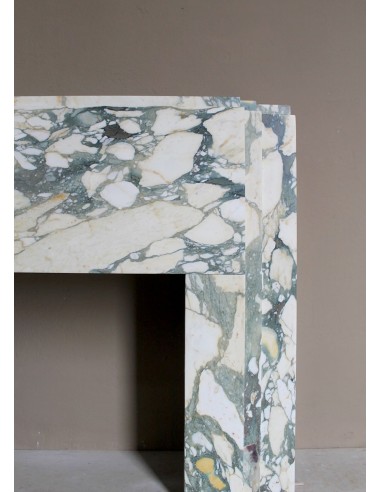
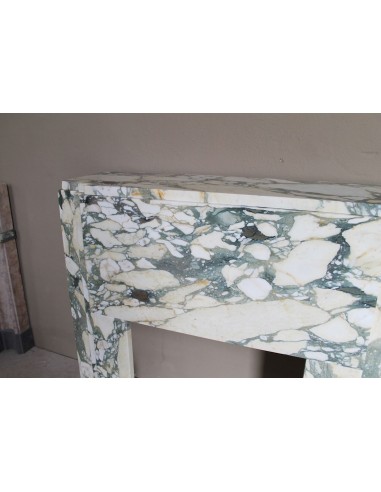
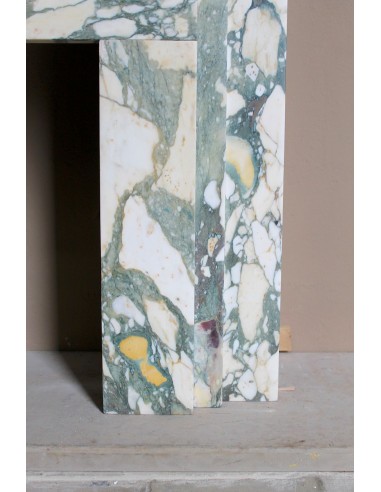
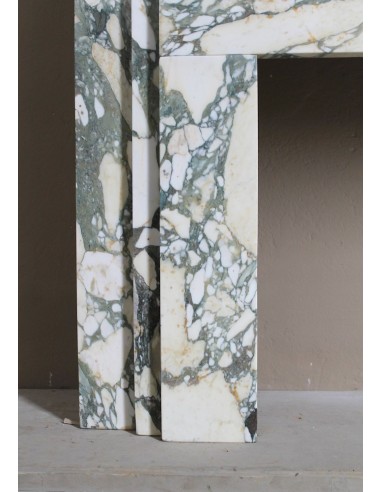
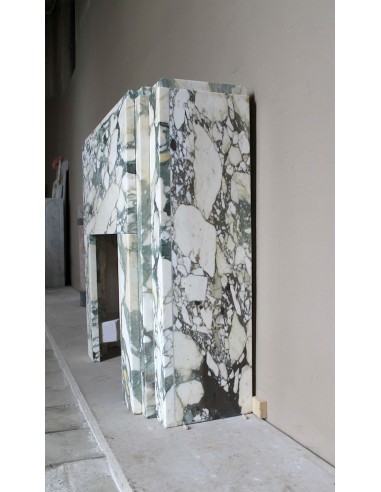
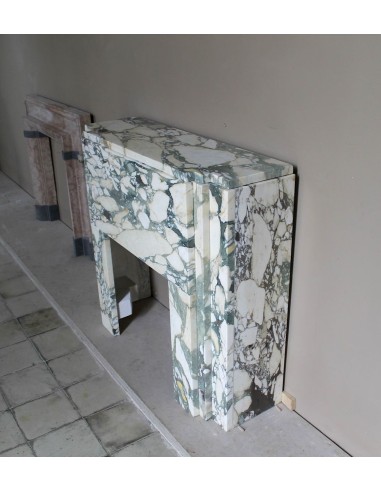
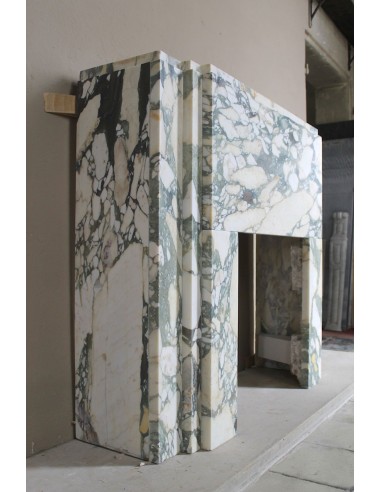
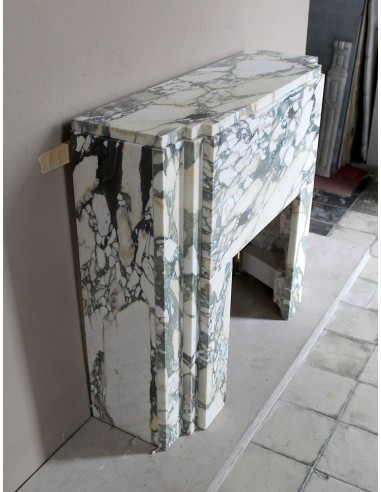
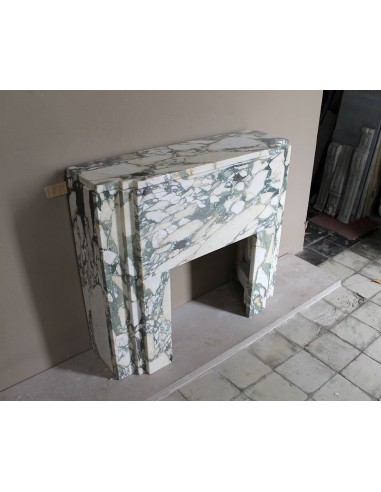
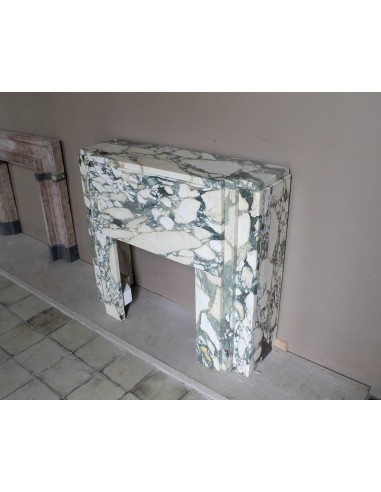
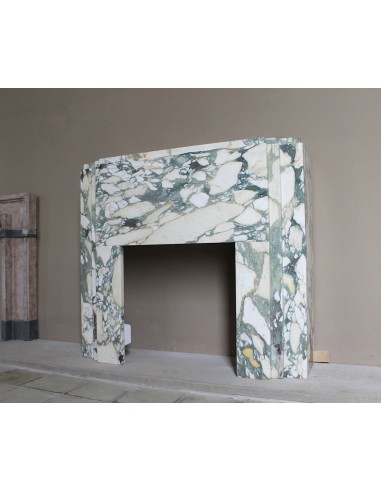
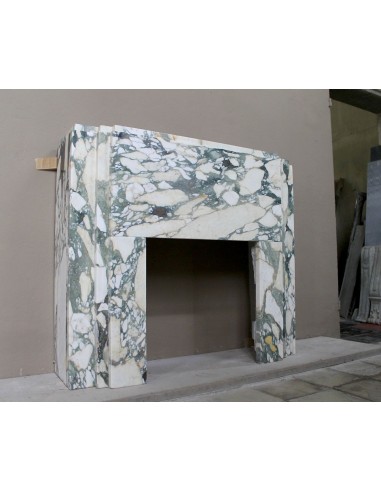
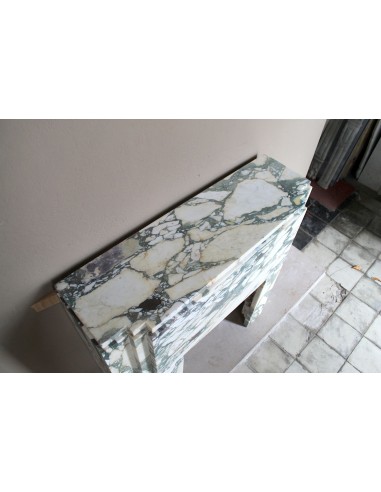
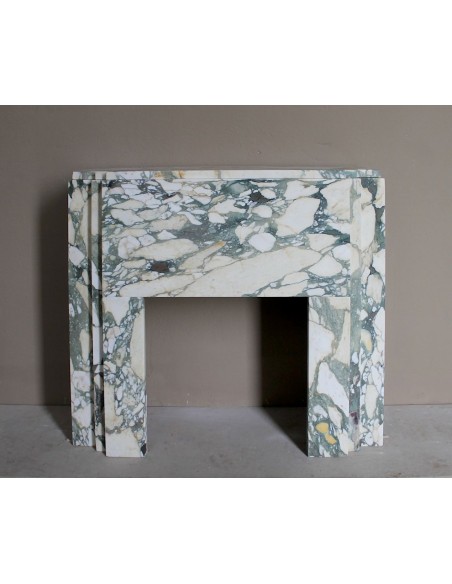
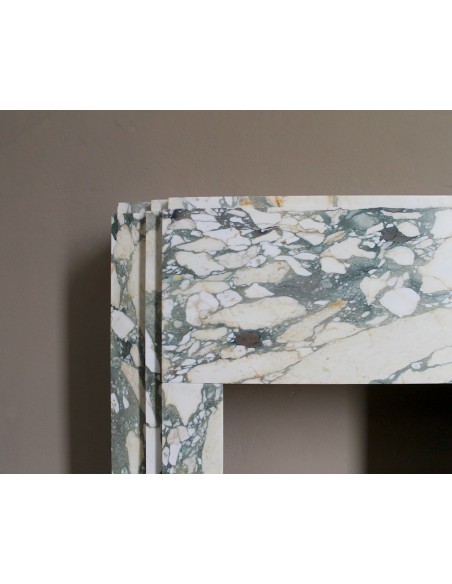
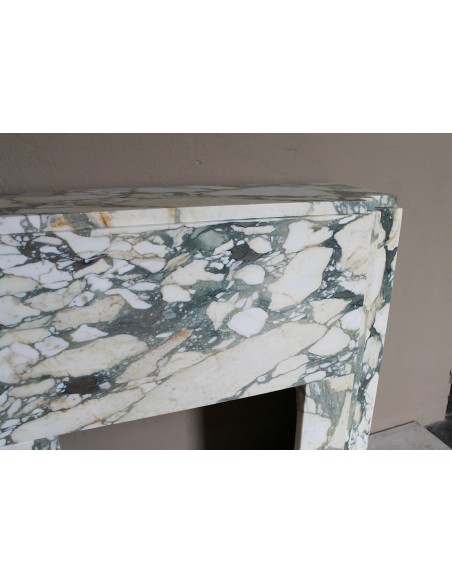
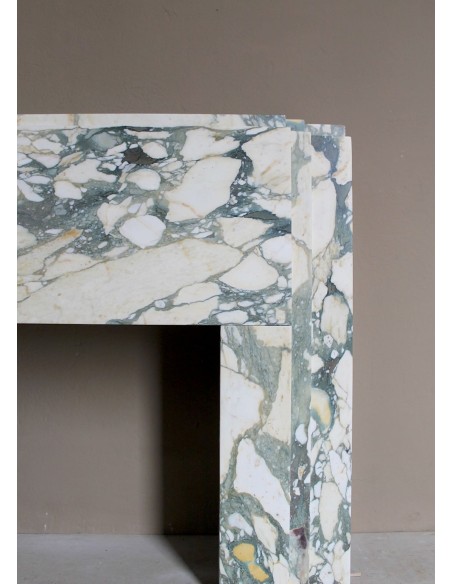
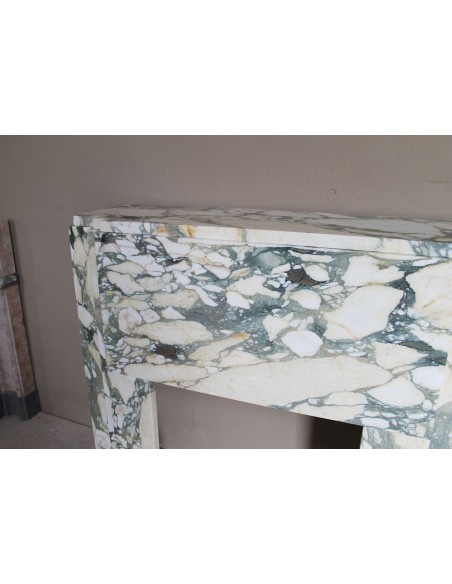
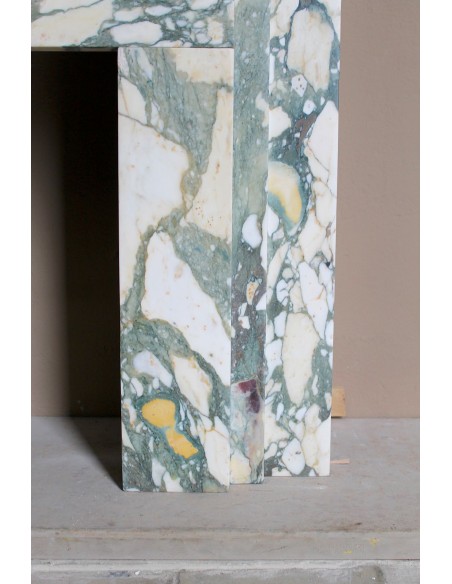
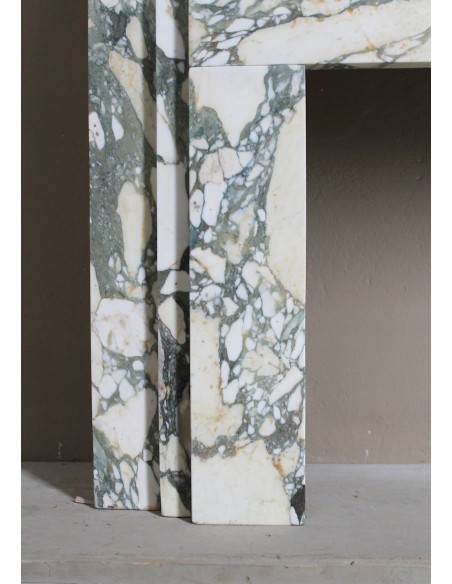
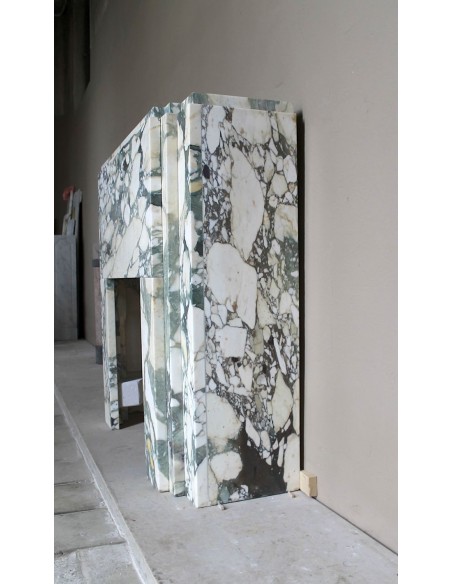
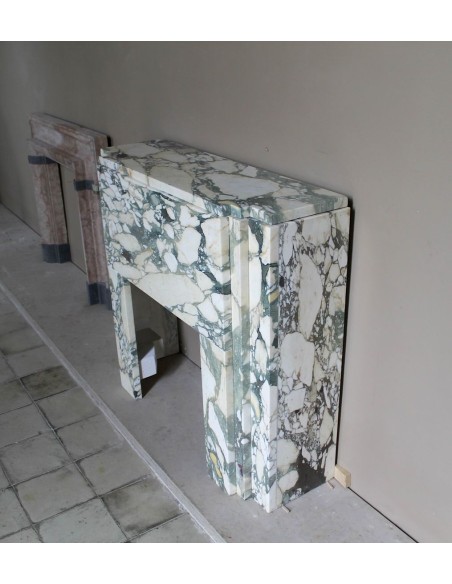
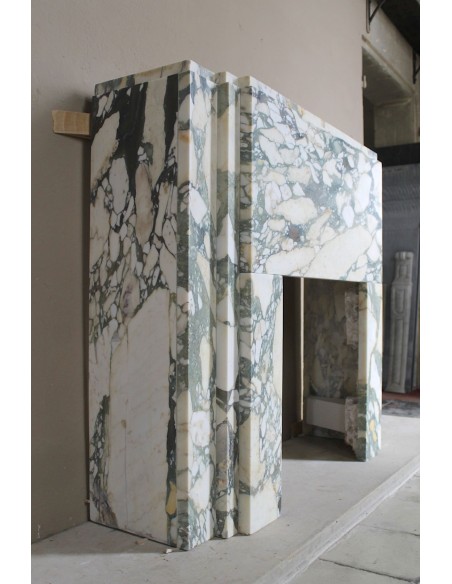
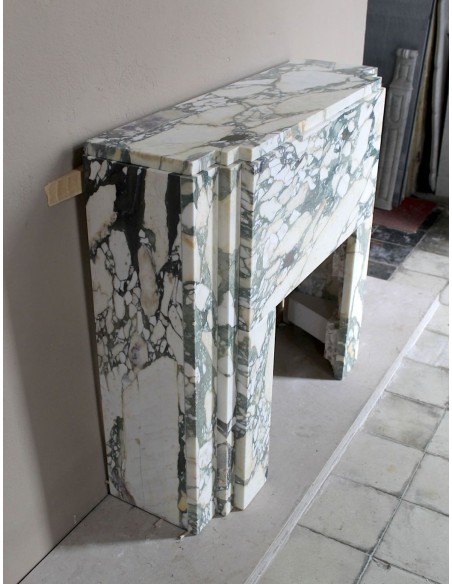
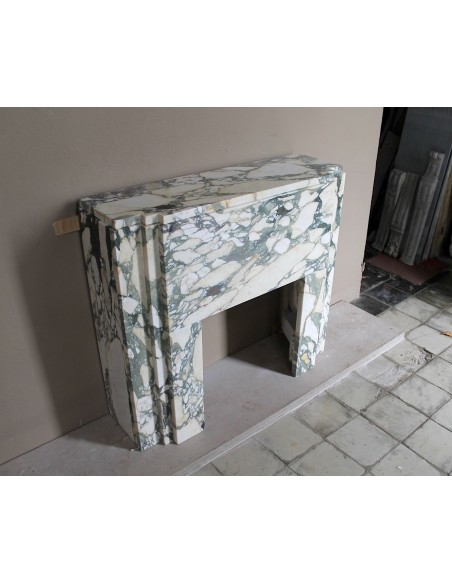
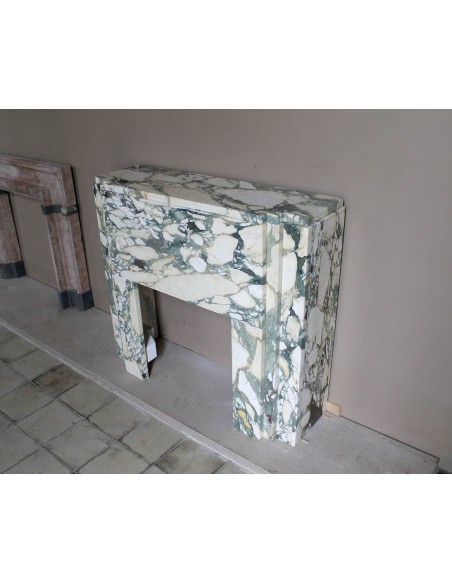
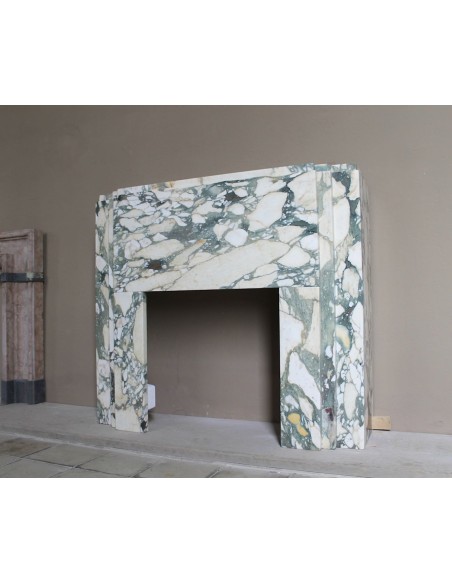
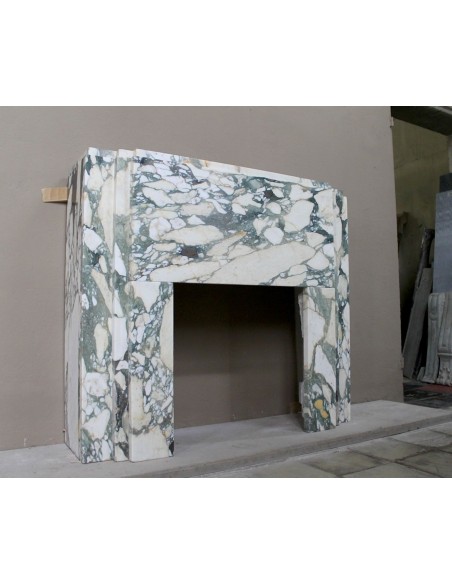
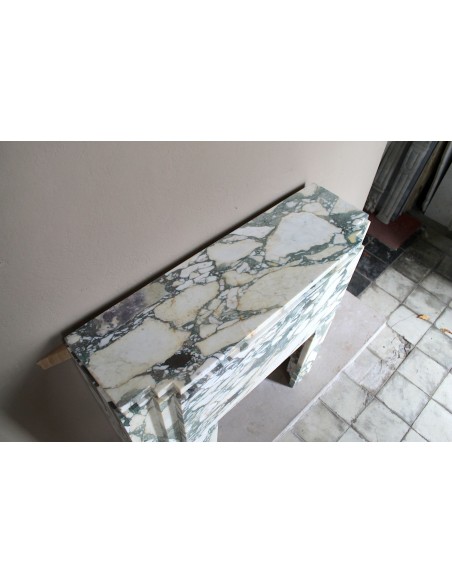
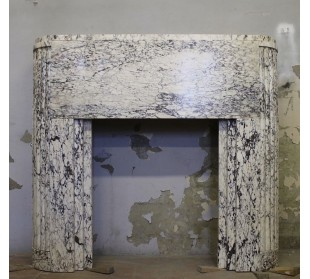
HALF A CENTURY SPENT SEARCHING FOR BEAUTIFUL FIREPLACES, THINKING I’D SEEN IT ALL... AND THEN, SUDDENLY, THIS INCREDIBLE ART DECO FIREPLACE IN THE LEGENDARY VERDE SERRAVEZZA MARBLE APPEARS BEFORE ME (OR AM I DREAMING?!).
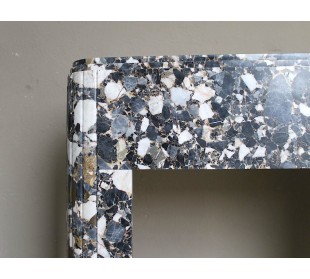
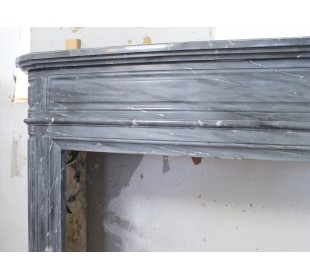
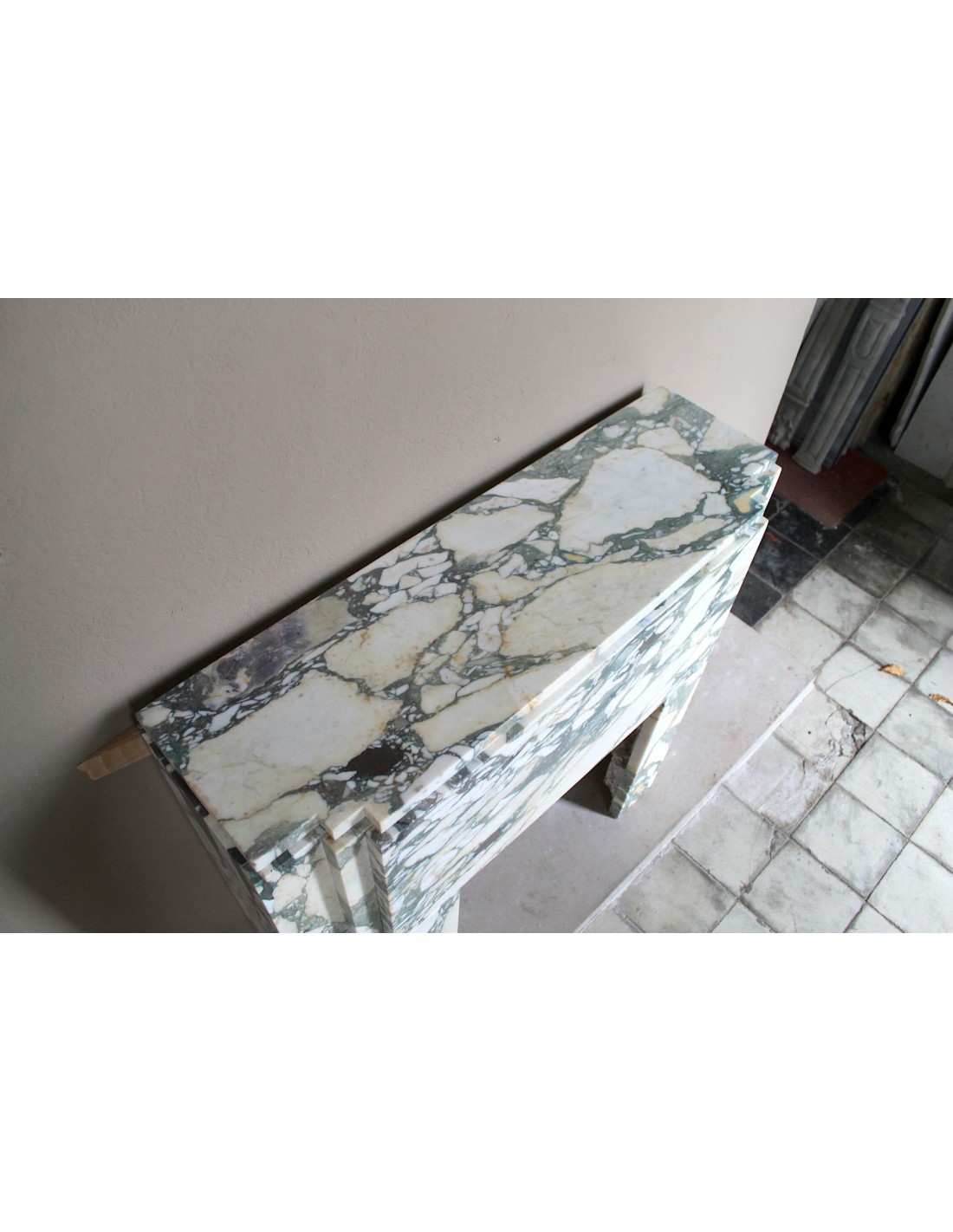
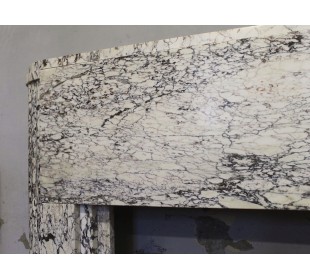
This precious marble, described by some as downright “luxurious”, contains a metamorphic mineral called chlorite, which — you guessed it — is green in color. But there's more: being metamorphic, meaning it transforms under pressure, moisture, etc., chlorite gives the marble its many beautiful shades of green. It moves from lighter tones (like olive green) to the deepest petrol green, and in between, you’ll find a full spectrum of greens with no two spots alike.
What’s truly fascinating is the way these varied greens blend with bright white clasts (my inner Jiminy Cricket is interrupting: “Say it plainly, will you? ‘Clasts’ are just stones. So for heaven’s sake, write ‘stones’ for your future clients. Thank you.”)...
Ahem — with brilliant white stones, made of noble, pure calcium carbonate — the same mineral that makes up the finest marble of the Apuan Alps: Statuario Carrara.
This fireplace was dismantled in Montparnasse, one of Paris’s most youthful and artistic districts, comparable only to Montmartre in its concentration of artists. It’s no surprise that such a creative atmosphere inspired locals to enjoy unique works like this deeply modernist Art Deco fireplace.
Montparnasse was the meeting point and home of the likes of Picasso, Modigliani, Hemingway, and countless others drawn to its vibrant cultural life and artistic freedom — a perfect haven for creative souls.
PARIS, LATE BELLE ÉPOQUE ERA (1920s–1940s)
Have you noticed? In recent years, everything seems to get branded with eco- or bio-... and fireplaces haven’t escaped this marketing trick.
(No names — I don’t fancy getting sued — but there’s even a company advertising fireplaces with a nod to Geppetto, yes, Pinocchio’s father, simply because “Geppetto” rhymes with biocaminetto. Never mind that the “real” Geppetto was so poor that the only fire in his house... was painted on the wall!)
The truth is, most modern fireplaces — often made in China, India, or Pakistan, then rebranded and sold in Europe — are far from ecological. Their manufacturing involves chemical processes (to speed things up, of course), especially in polishing and assembly, resulting in toxic sludge harmful to both humans and the planet.
Side note #1: Where do you think all that sludge ends up in places like China? (Or even in Italy, for that matter — ask the Camorra...)
And then there’s the tragic issue of child labor, still all too common in some of these countries where saving on costs is everything.
Side note #2: Do you honestly think there’s strong labor regulation in places like Bangladesh? (And sadly, we could name a hundred other neglected countries...)
Let’s be honest: this too is a form of ecology — maybe moral ecology, but isn’t that just as important?
Well, in our own small way, we can make a difference — by encouraging people to choose the most eco-friendly fireplace of all: the antique one.
An antique fireplace is made of marble or stone that has already been quarried. It requires no further extraction. Our Apuan Alps, already scarred by millennia of quarrying, certainly don’t need more wounds. And the same applies to all extraction zones worldwide, especially in so-called emerging countries, where landscapes and ecosystems are often ravaged beyond repair.
Another green point in favor of antique fireplaces is that they were assembled using entirely natural materials, especially gypsum, rather than modern plastic or silicone adhesives. Their carvings were done by hand, without generating the chemical waste produced by modern machines (like CNC pantographs), which create liquid industrial waste that often ends up illegally dumped into the sea or abandoned quarries because legal disposal is too expensive...
So yes — we can truly say that the antique fireplace is ecological, and even was ecological, at the time it was built!