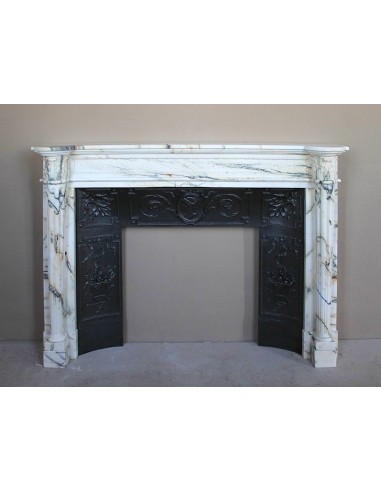
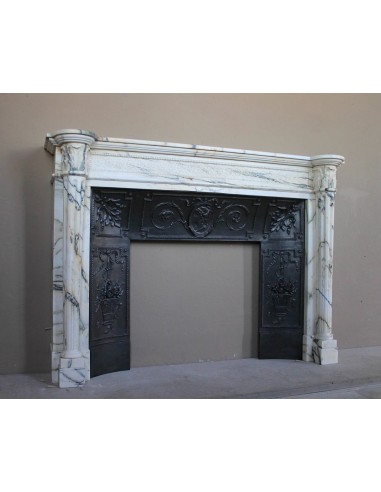
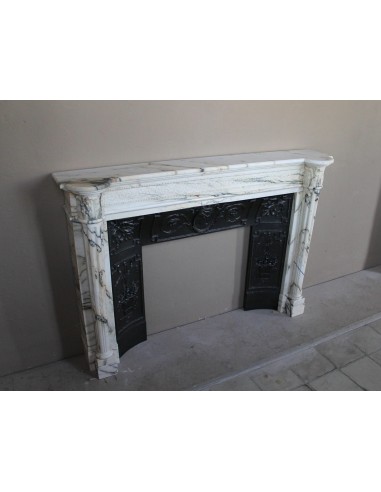
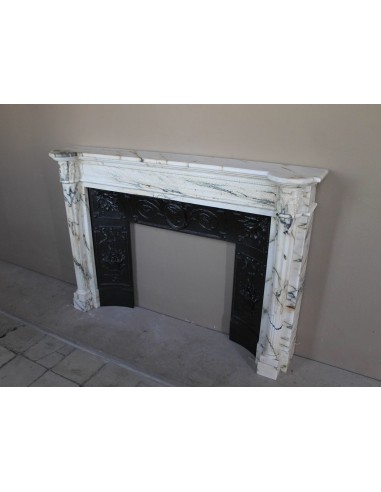
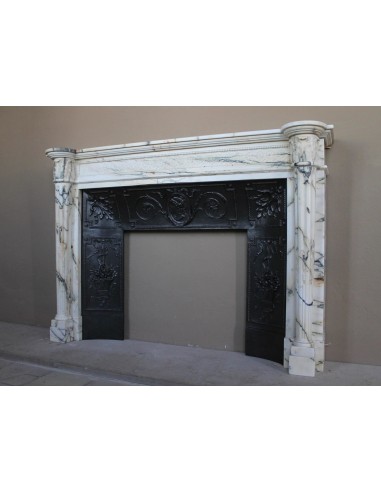
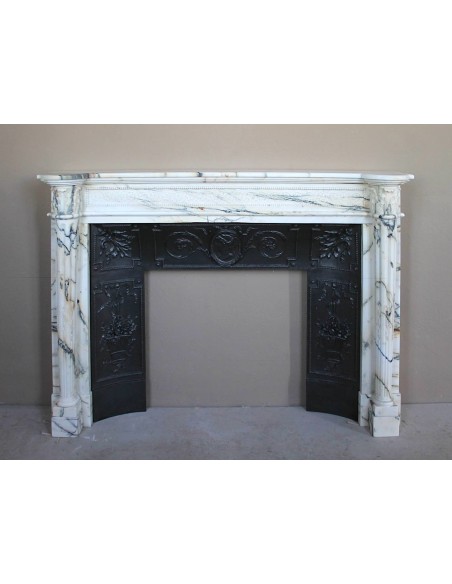
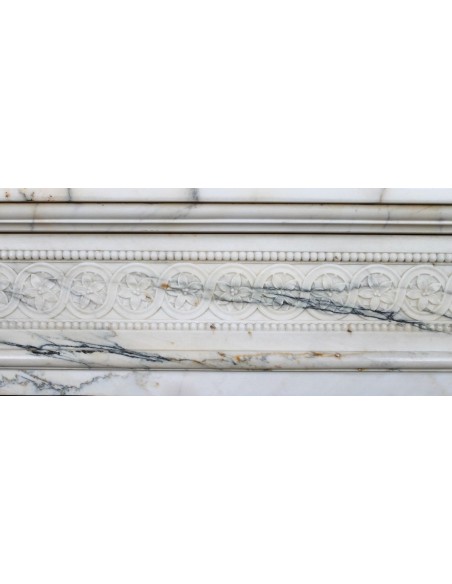
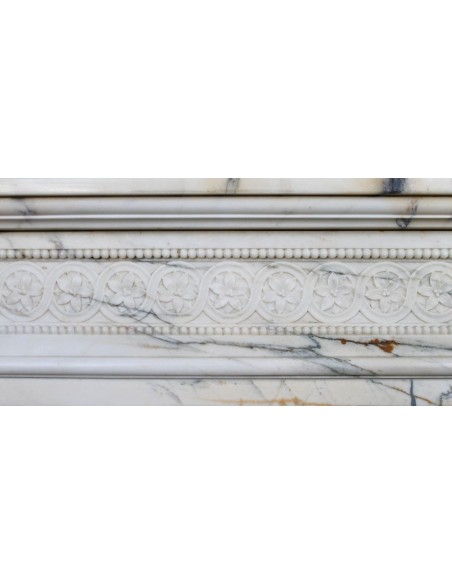
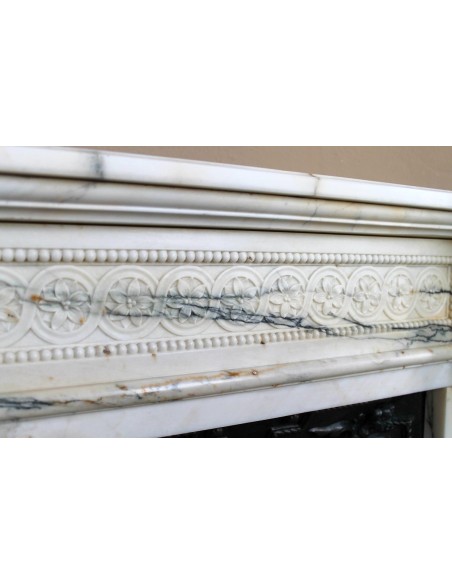
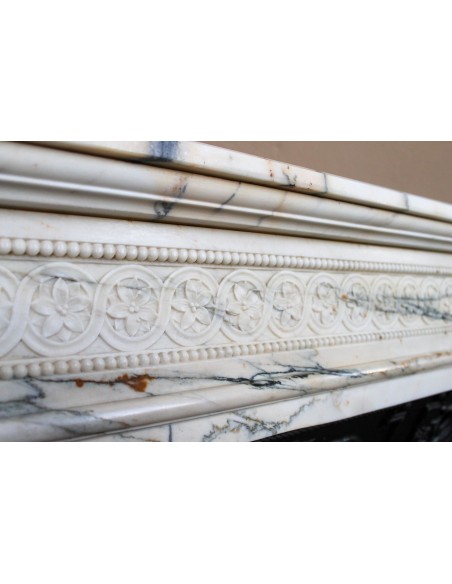
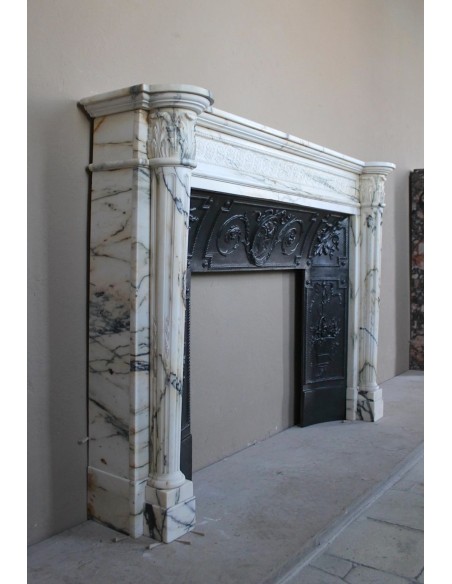
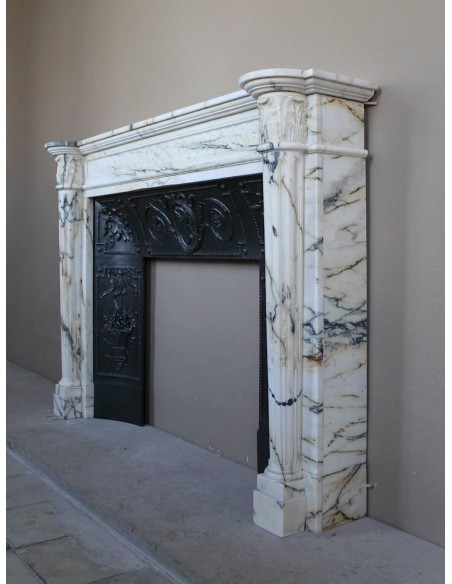
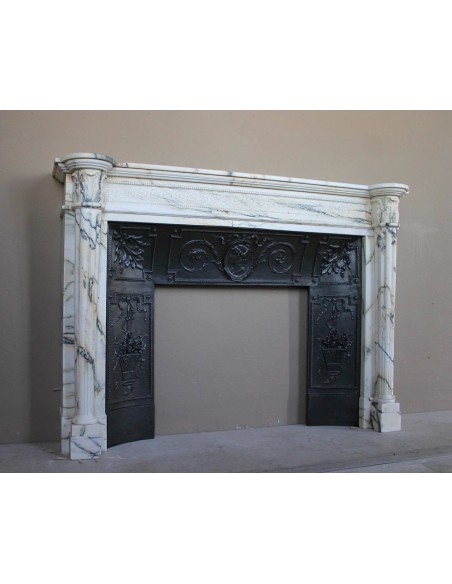
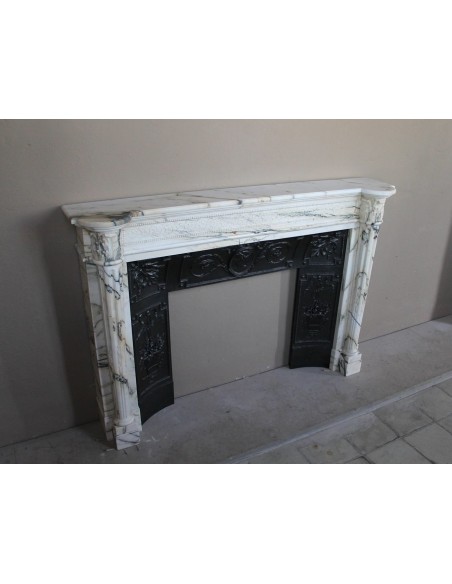
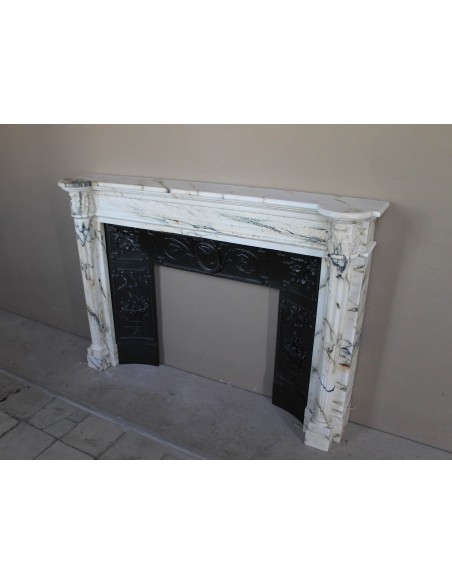
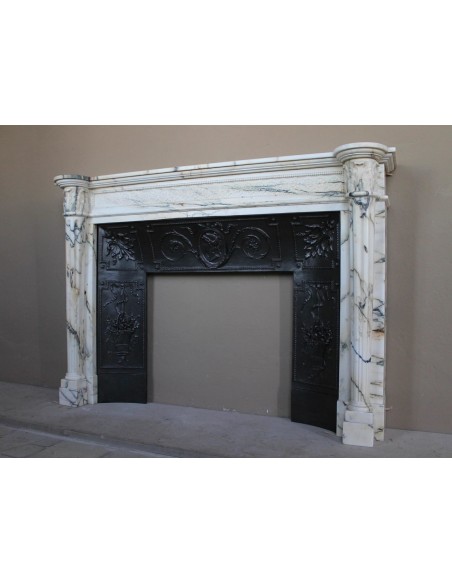
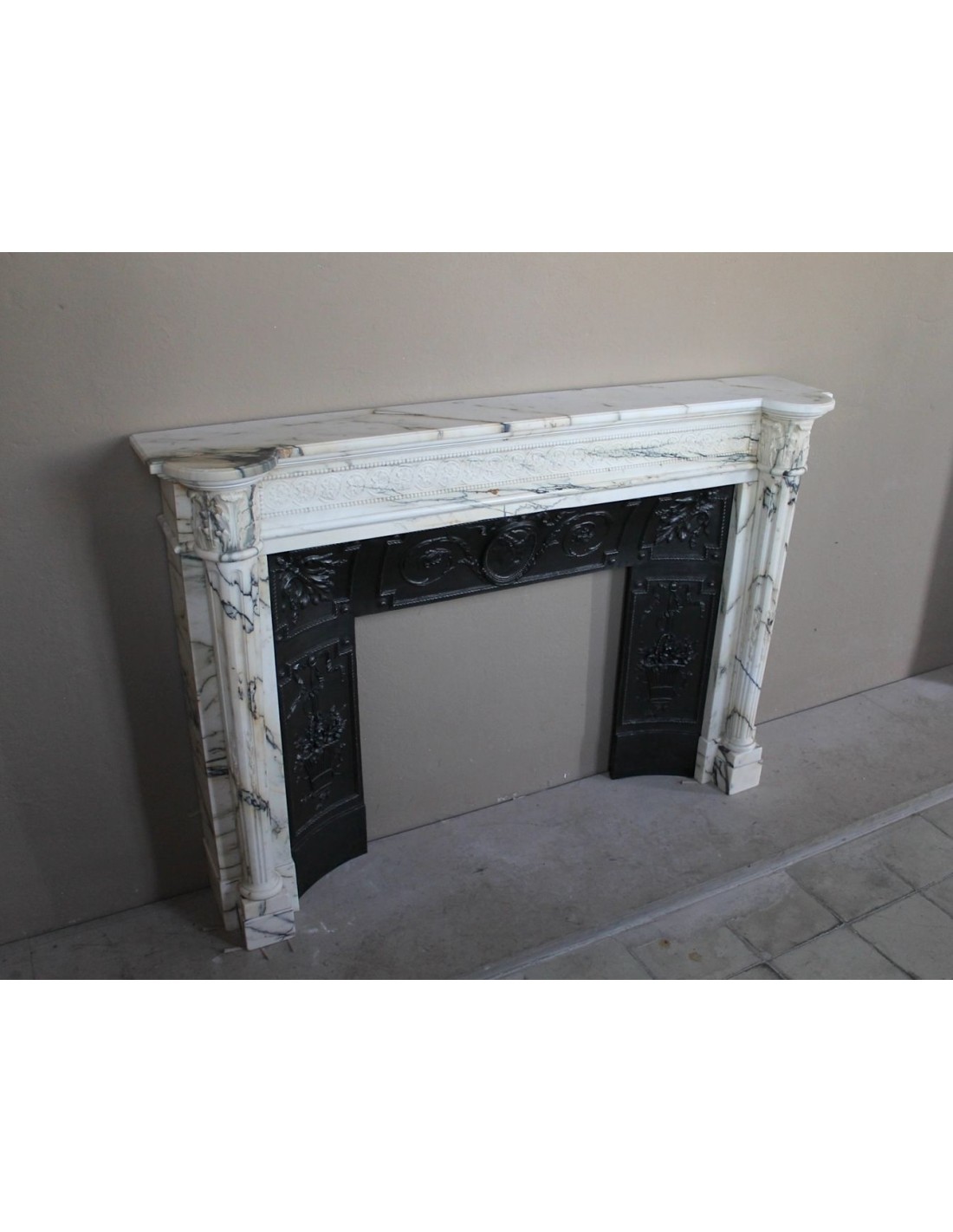
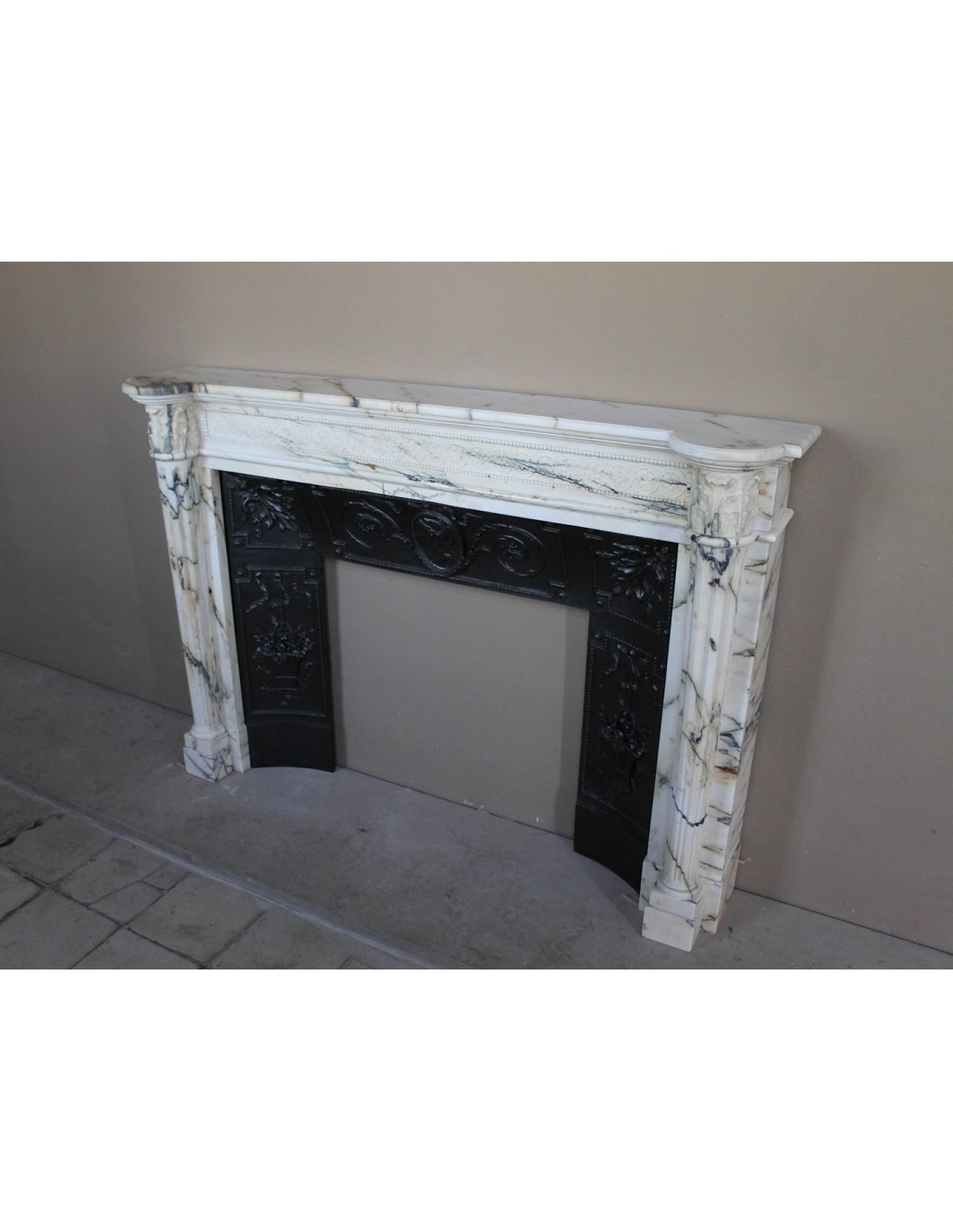
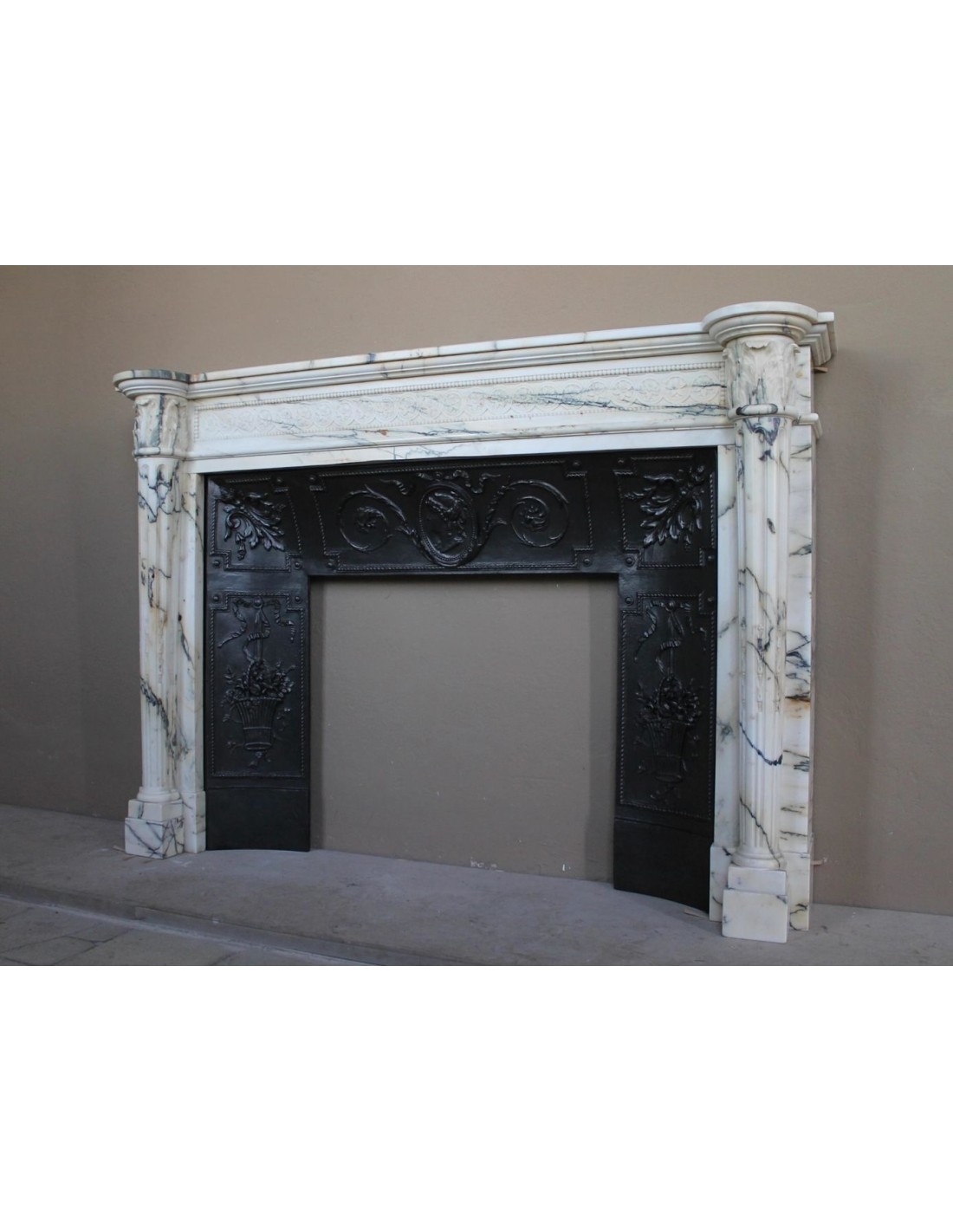
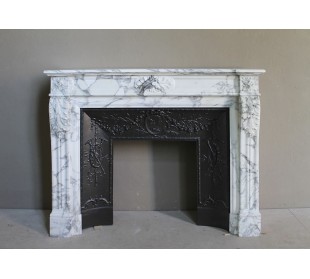
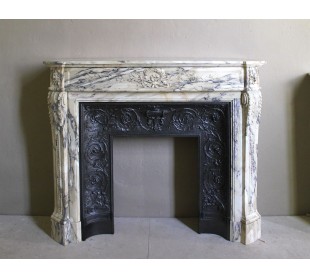
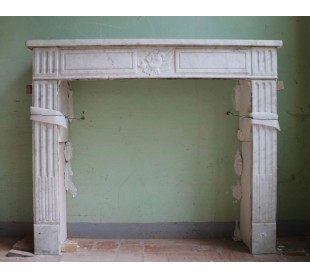
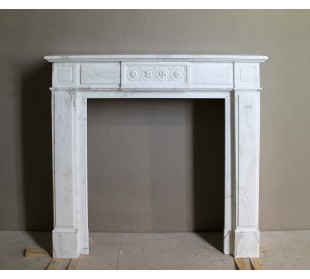
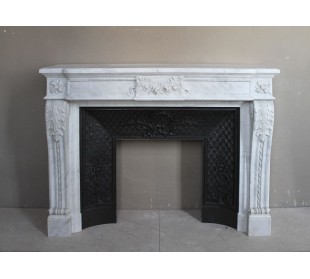
It had been more than two months since this fireplace—“stol…” ahem… acquired by us in Montmartre—had arrived at our warehouse. As it came from a construction site, it was completely dismantled into several parts and covered in dust. Yet even then it already conveyed to anyone who looked at it its refinement, its uniqueness—in short, its Beauty.
Now that we have restored it (to be truthful, it only required a necessary yet affectionate maquillage), it has finally been placed on display, and I can now enjoy examining, one by one, its many beauties and meanings.
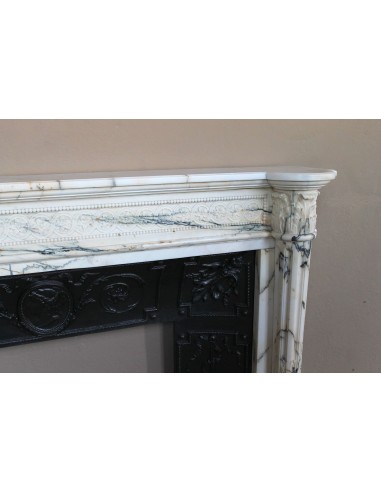
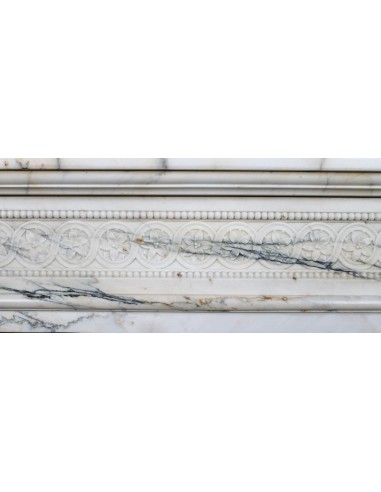
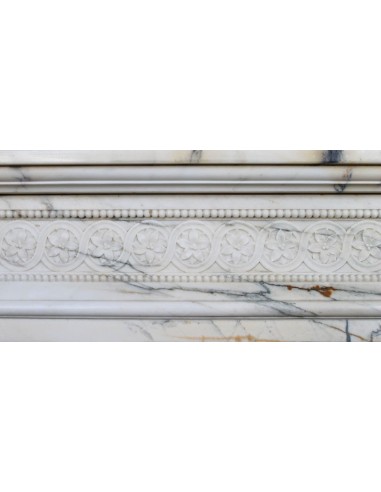
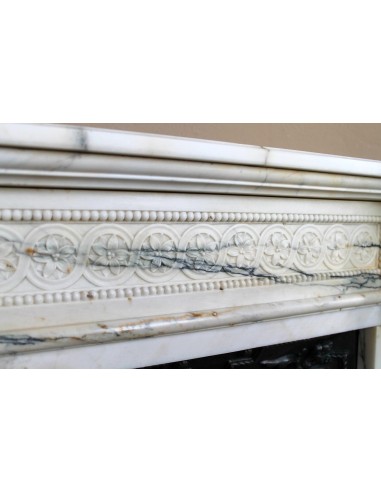
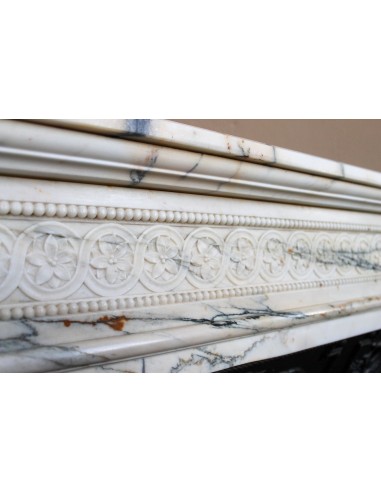
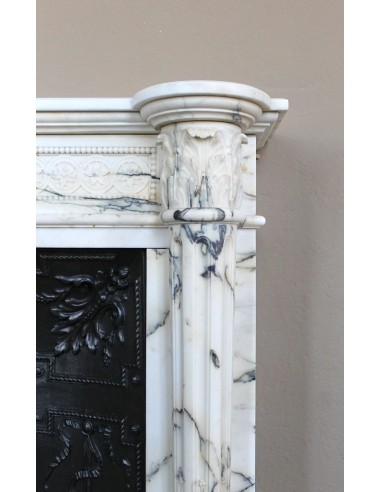
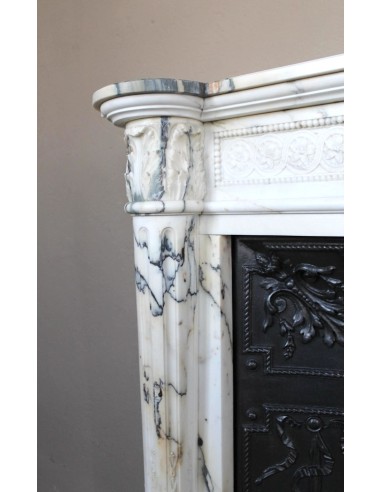
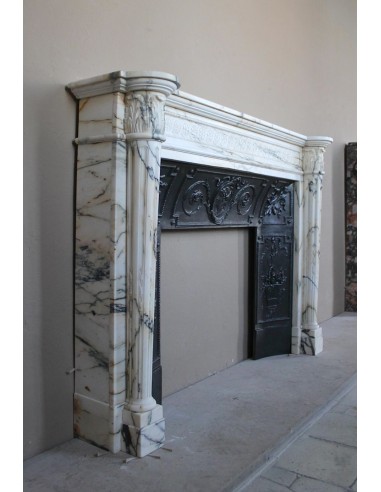
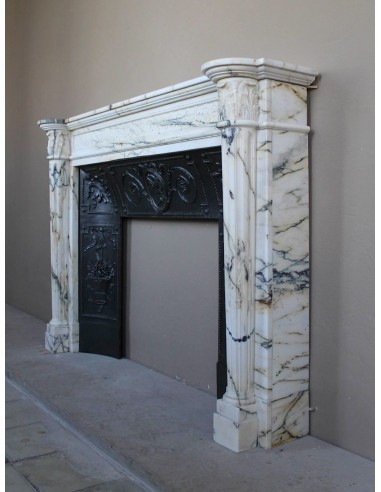
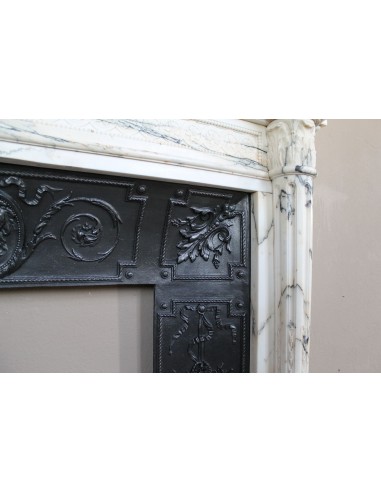
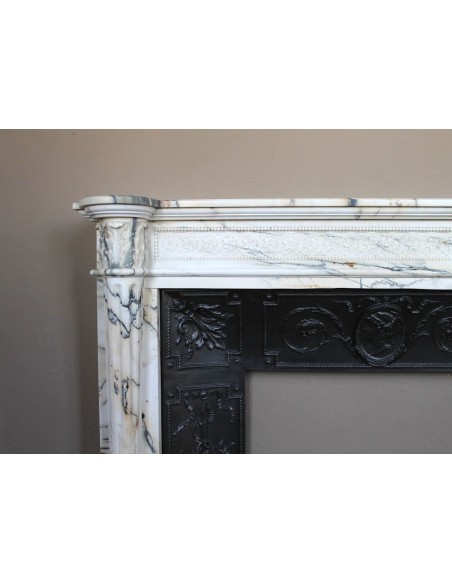
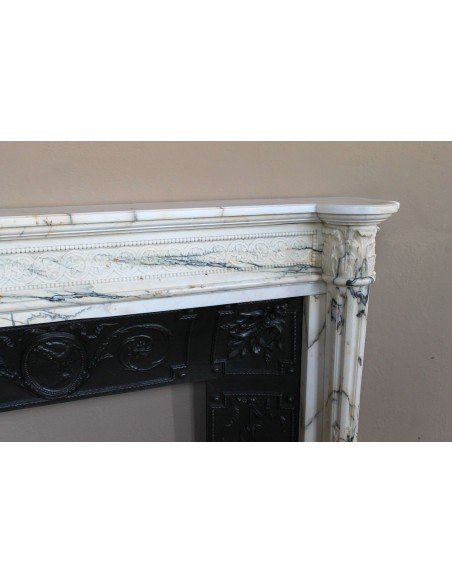
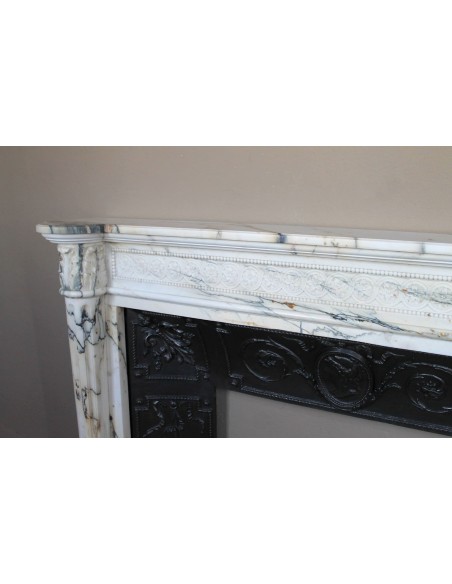
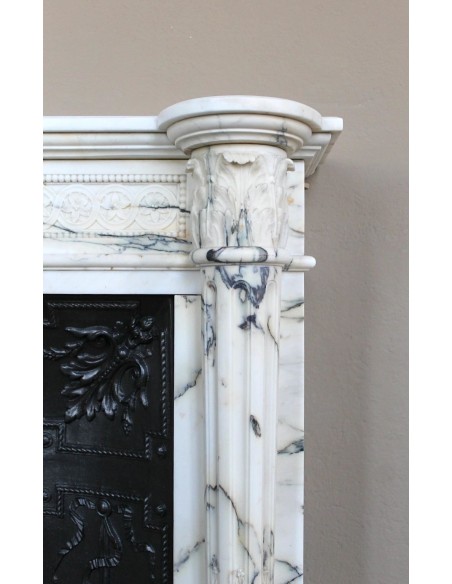
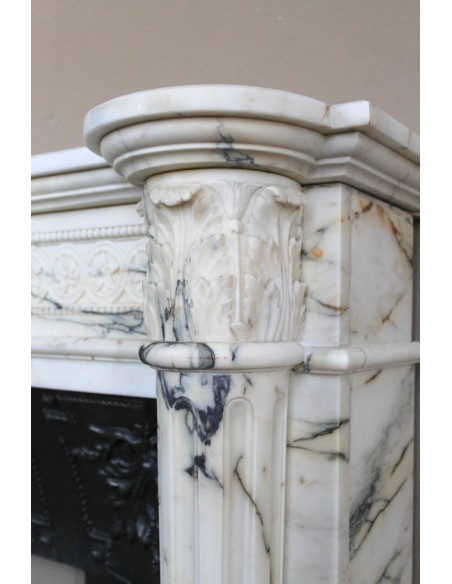
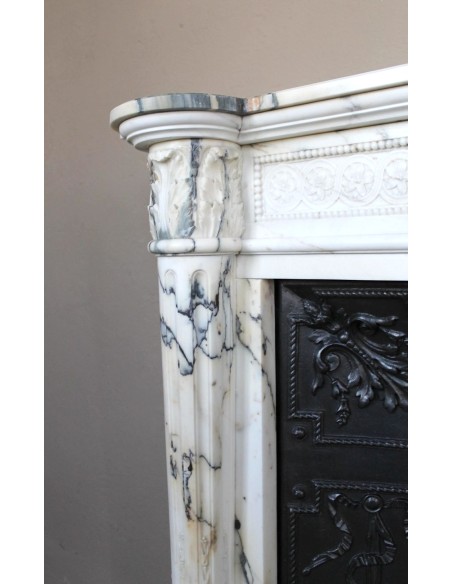
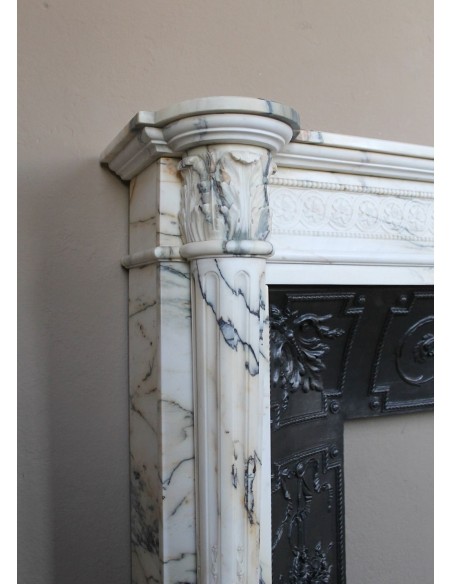
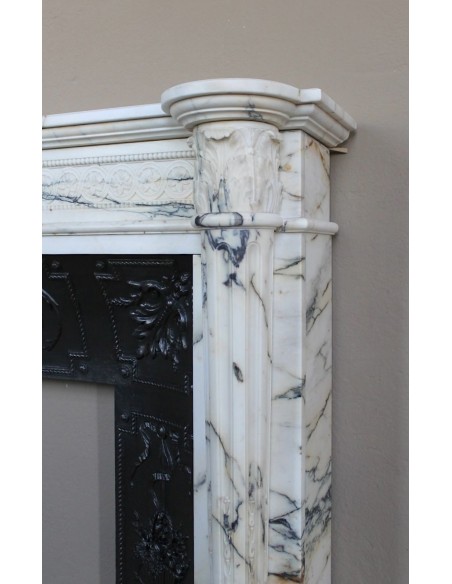
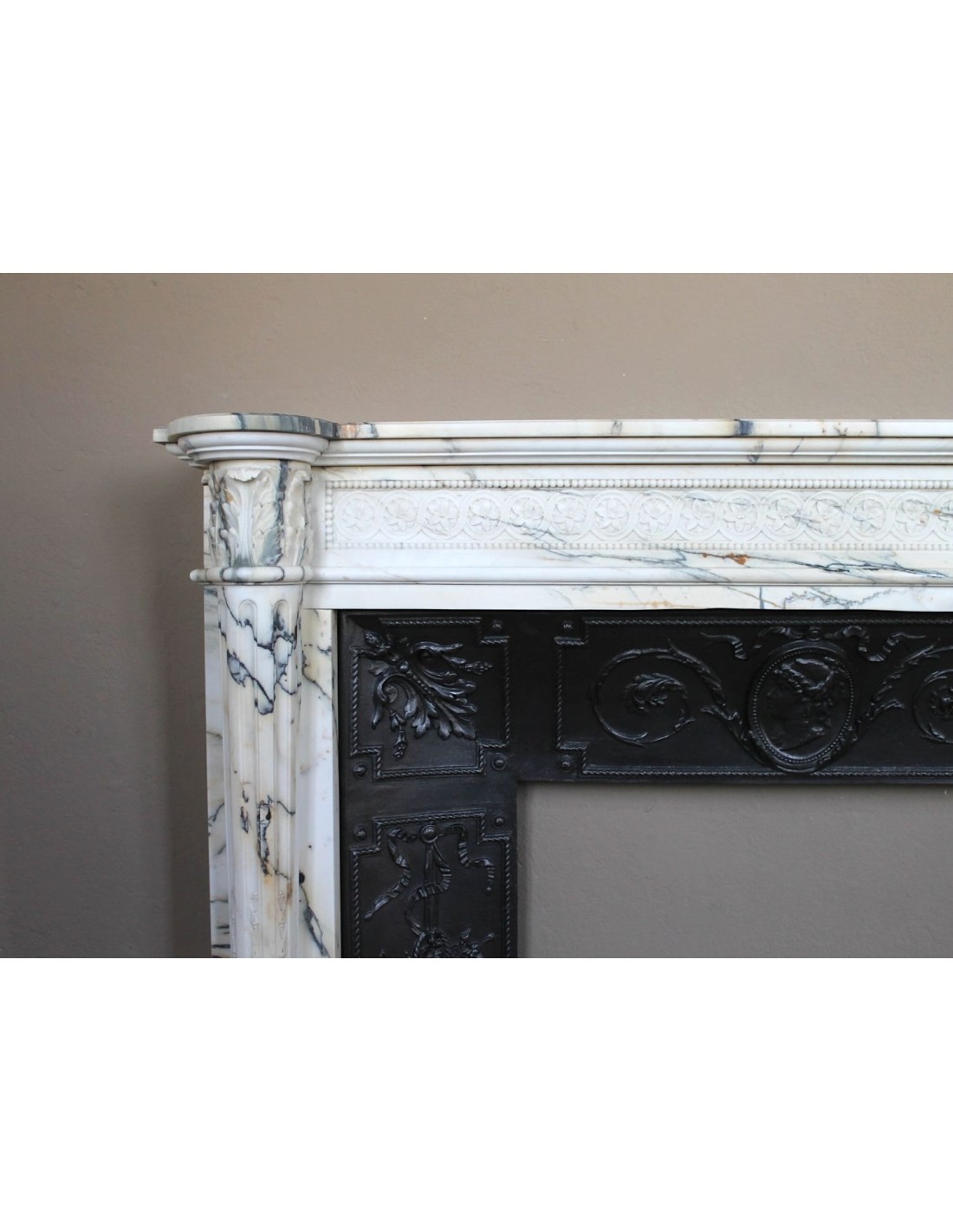
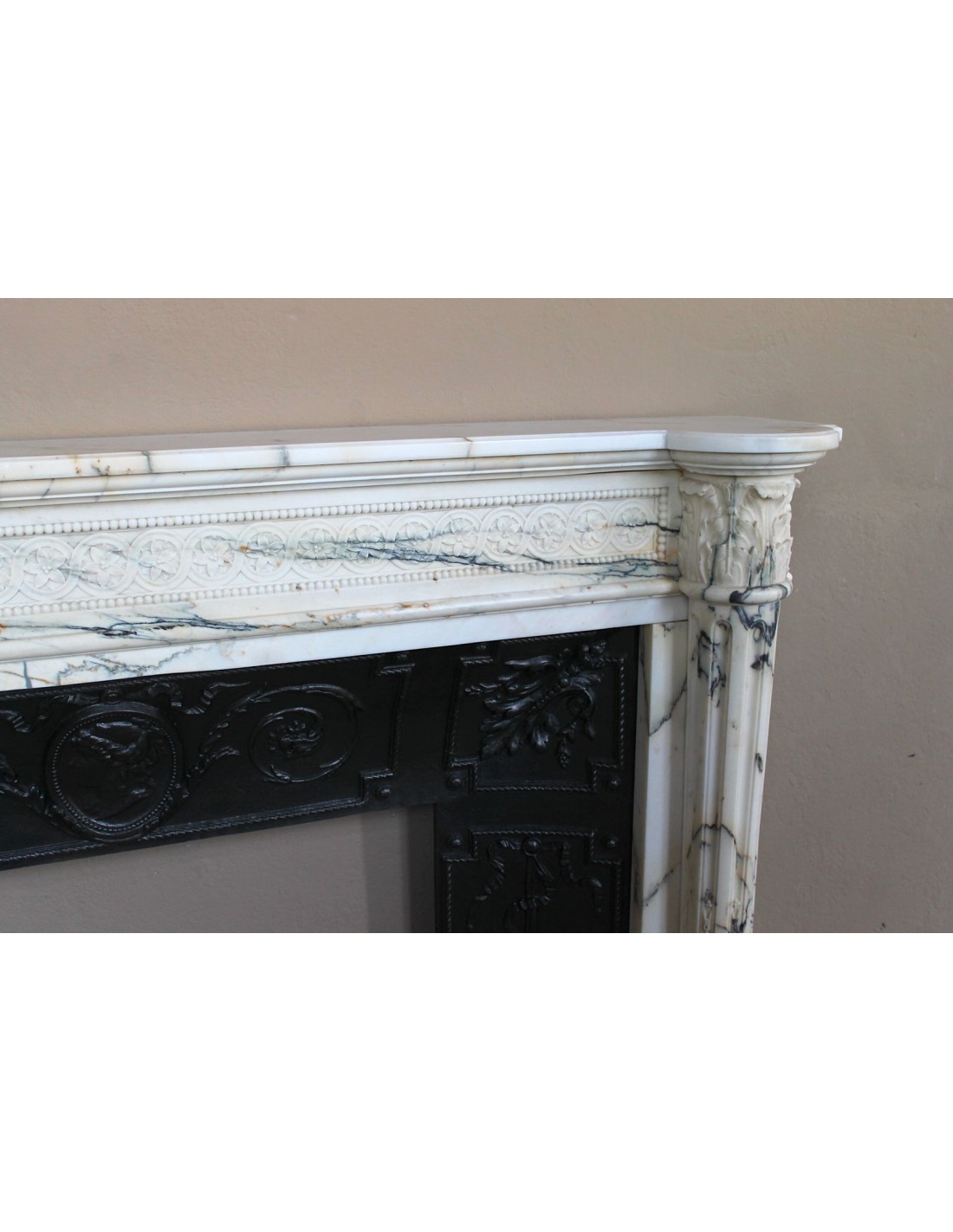
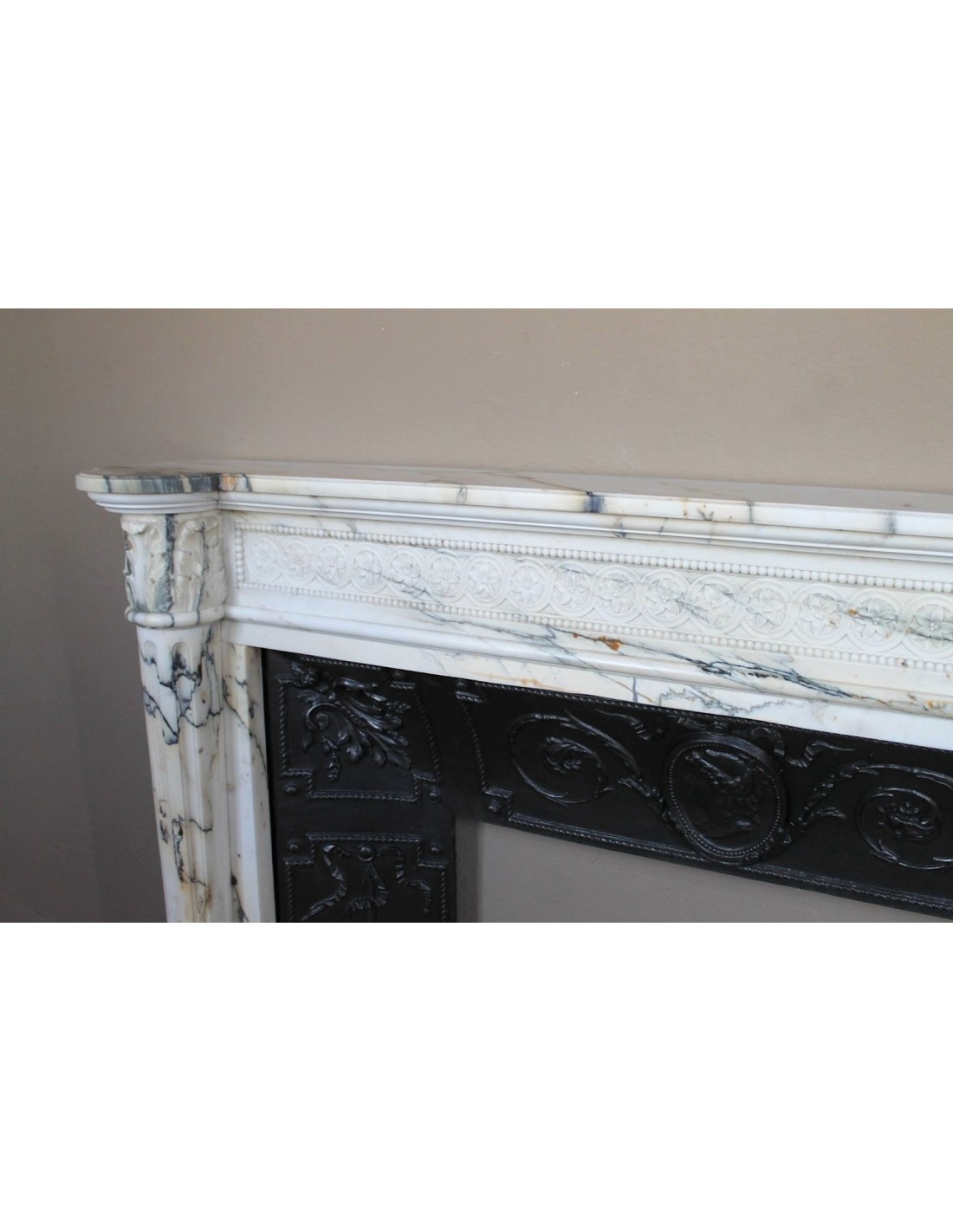
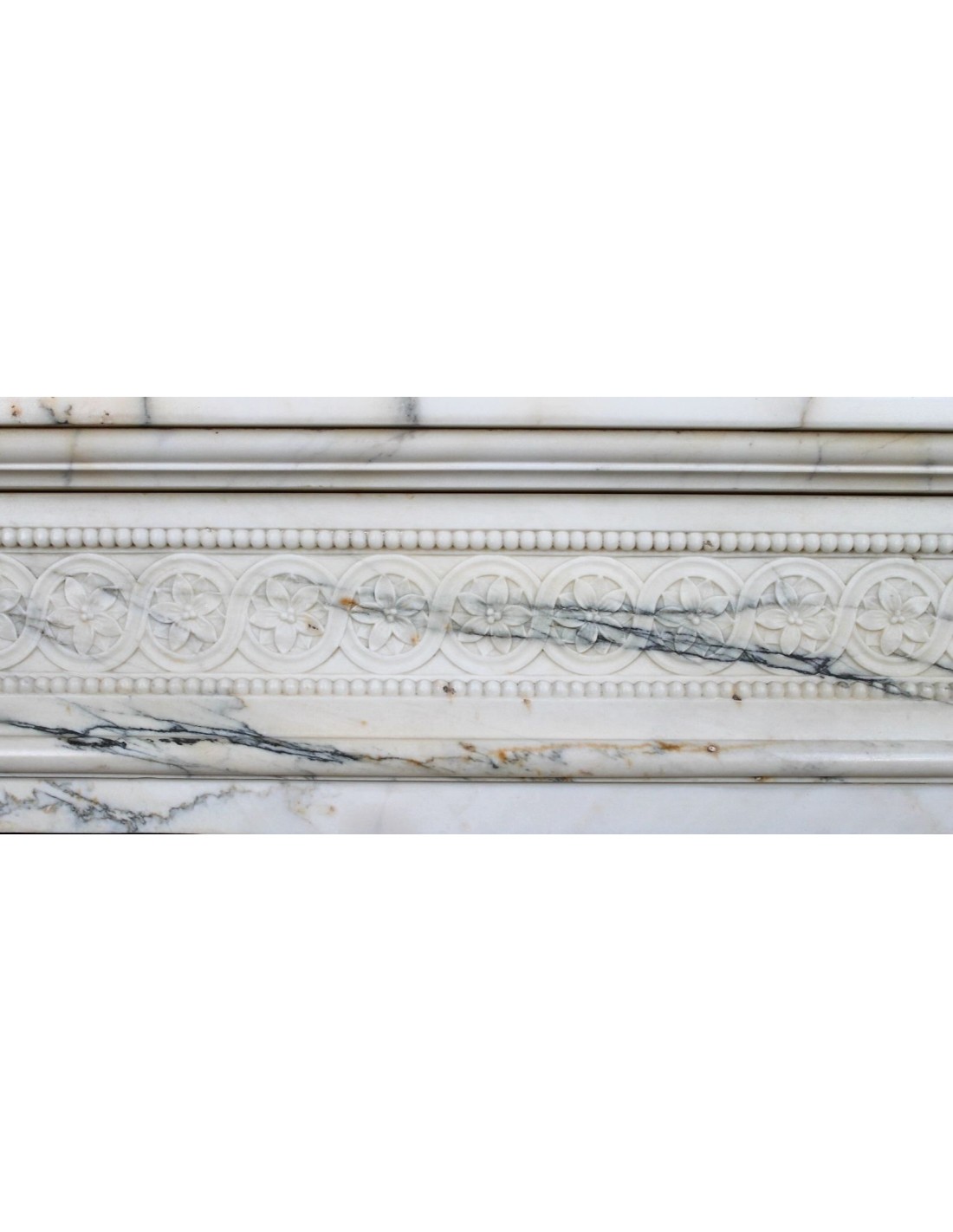
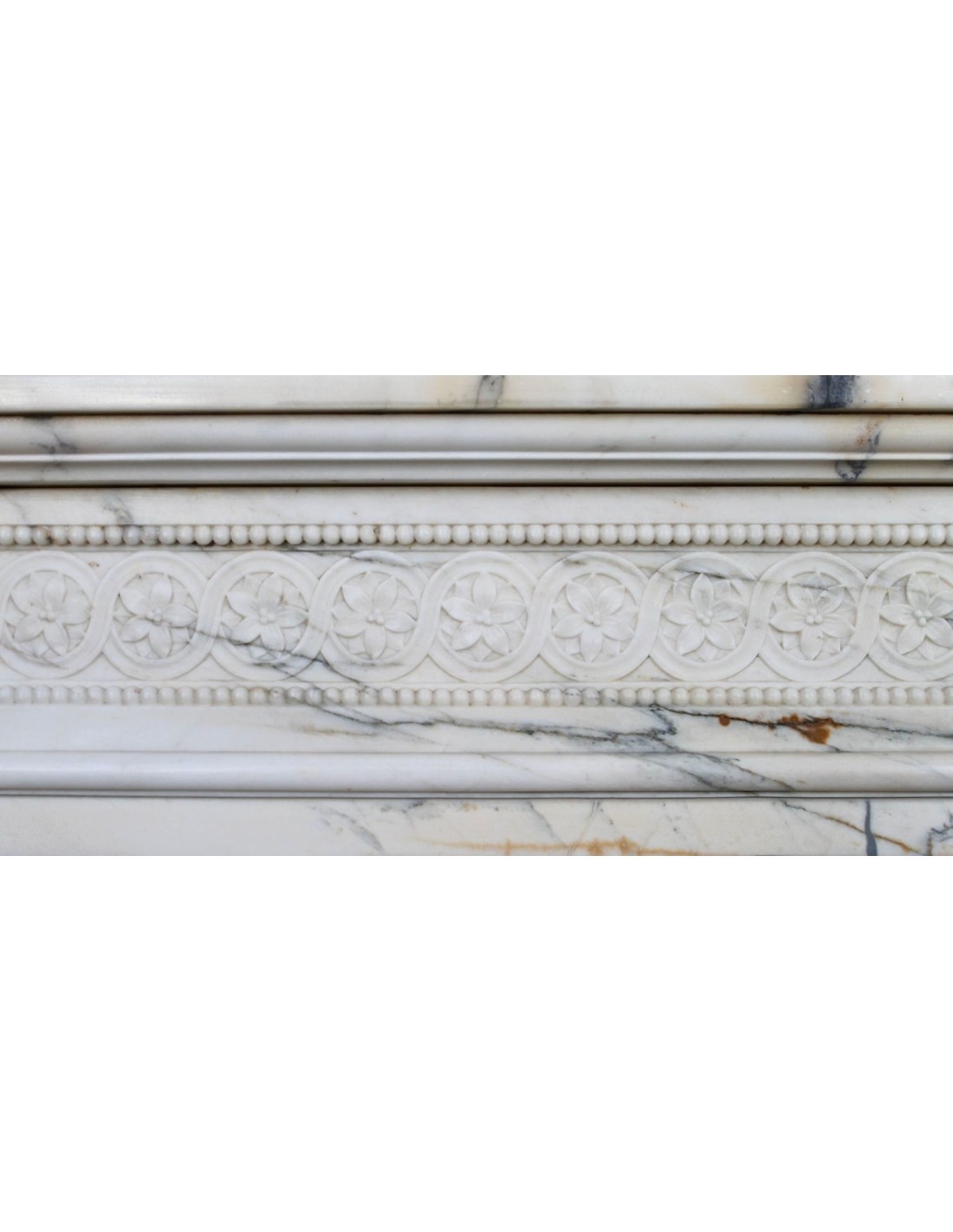
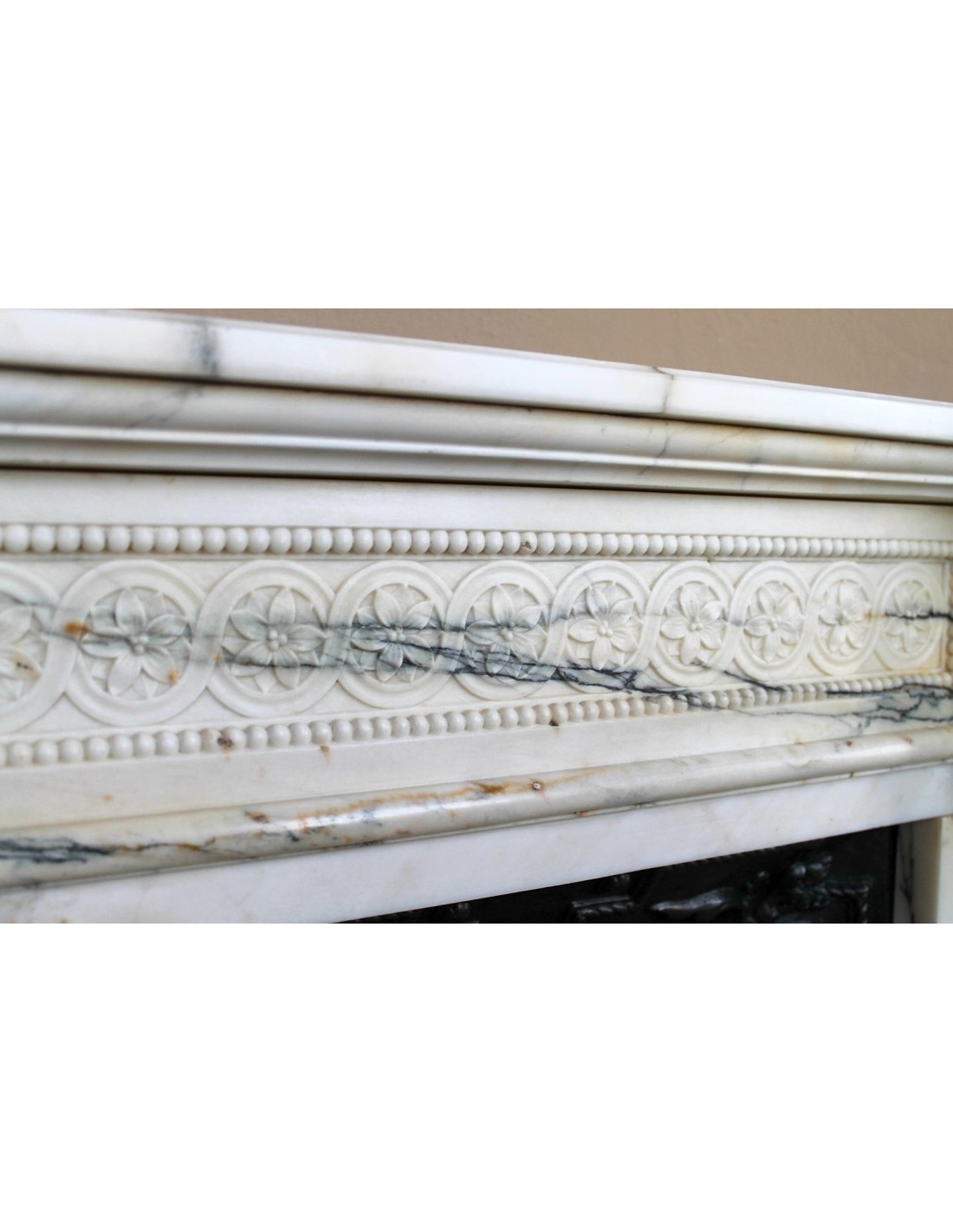
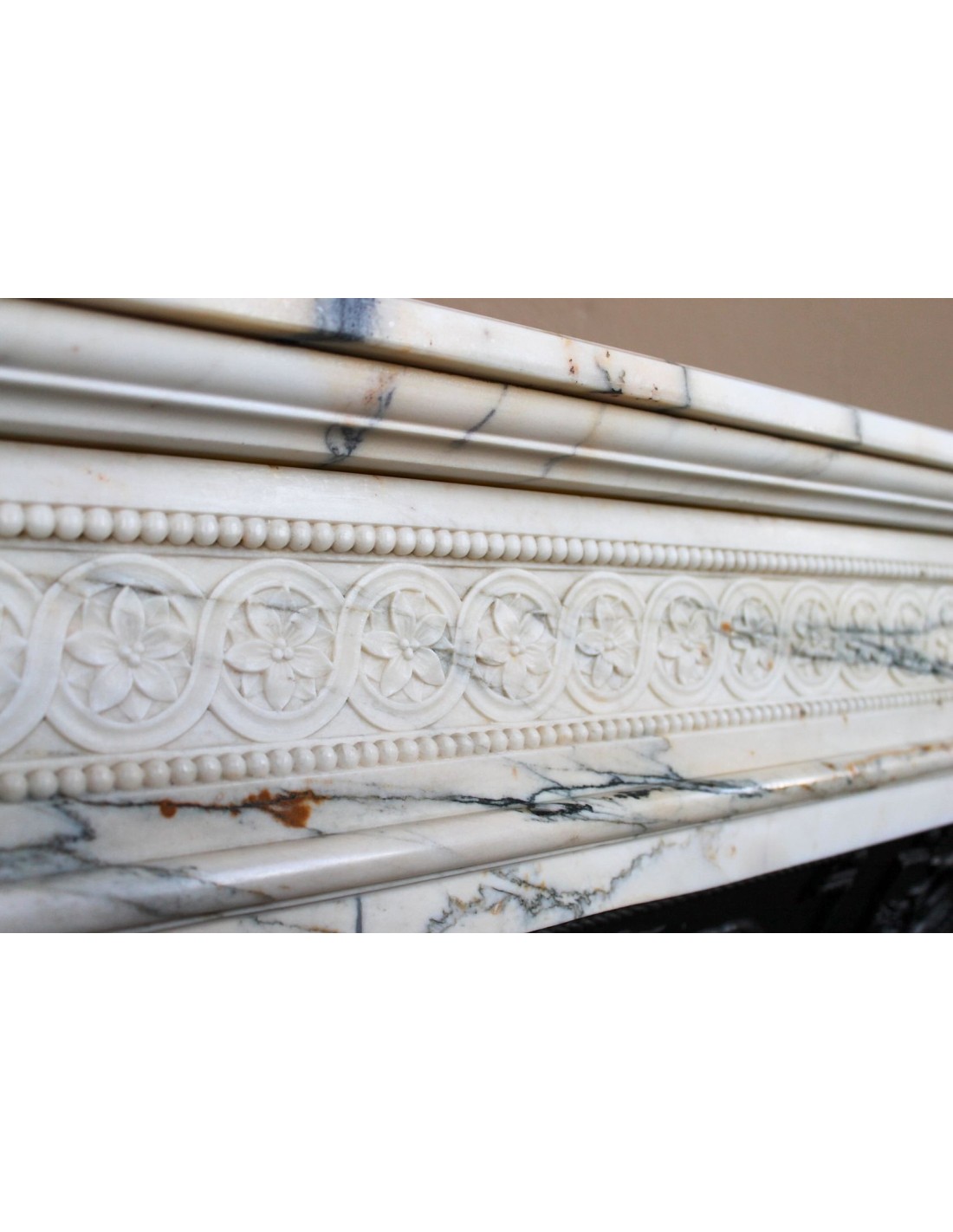
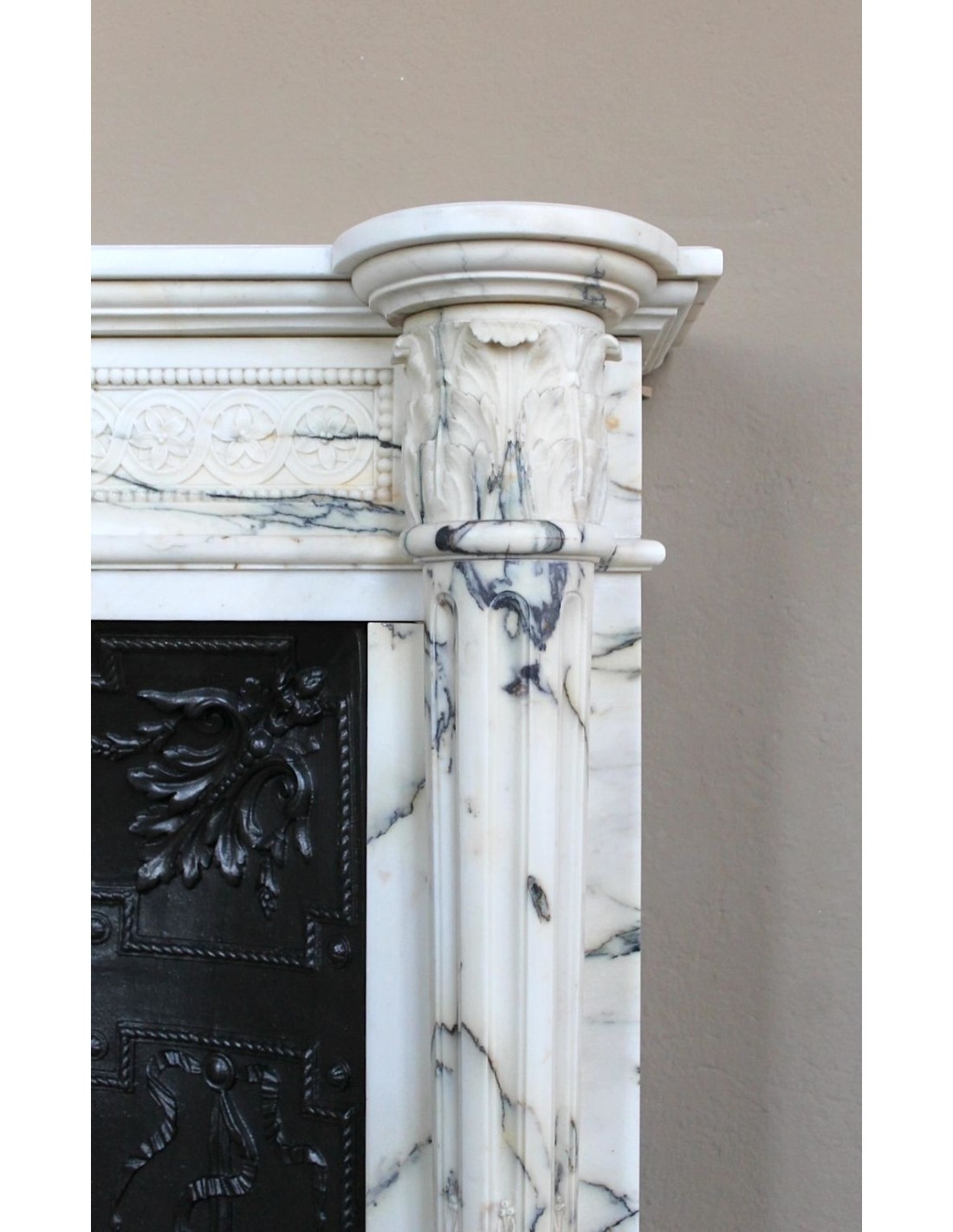
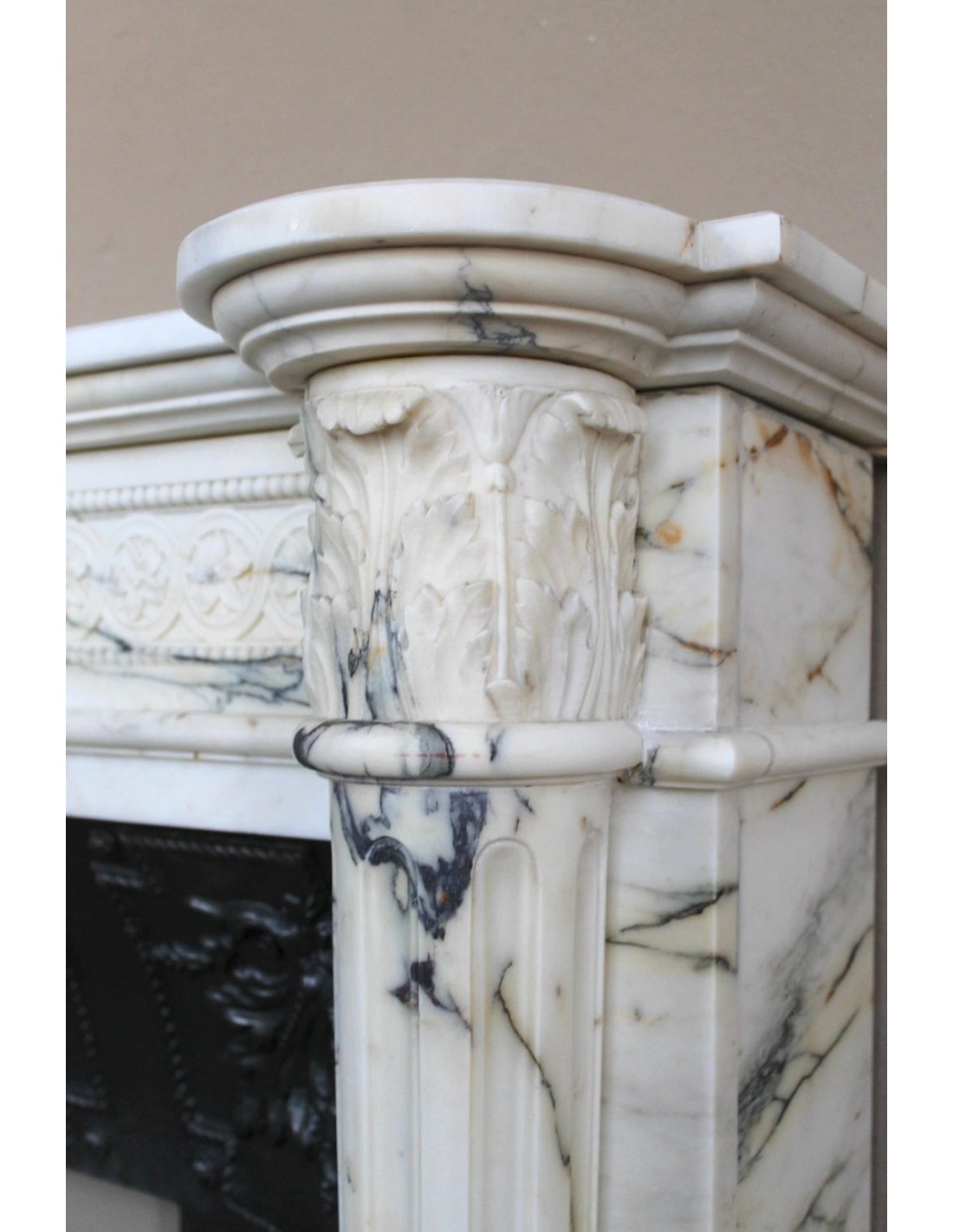
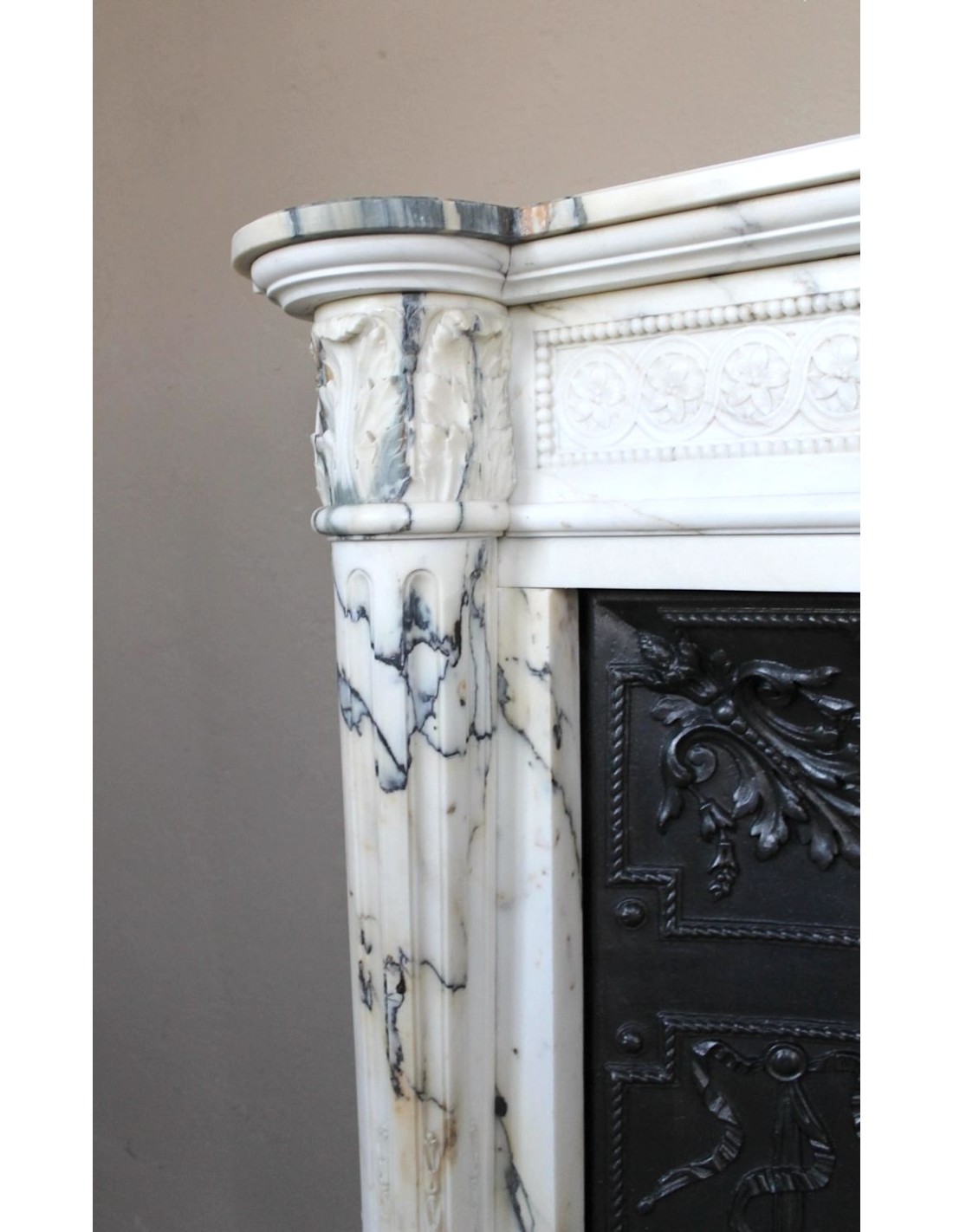
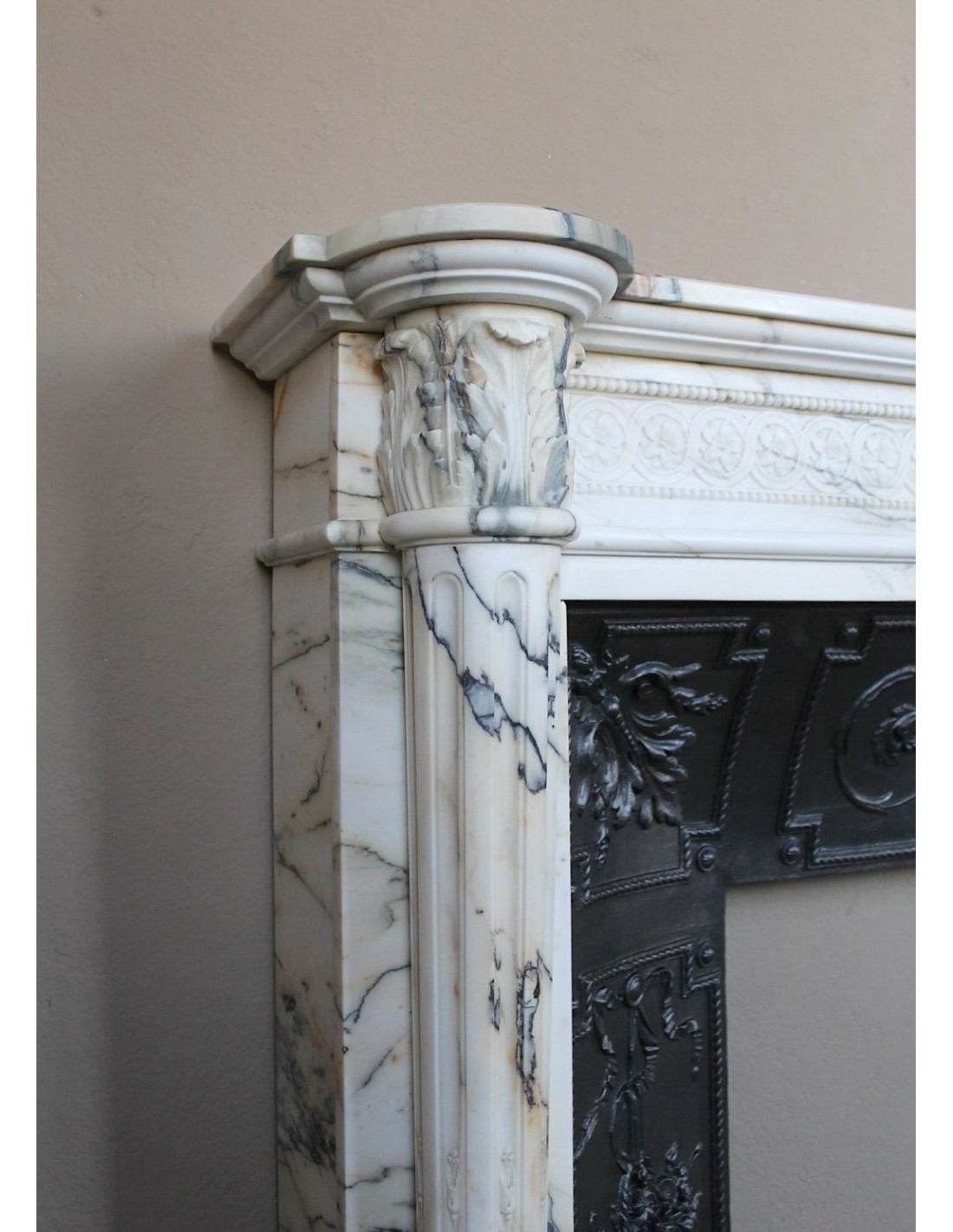
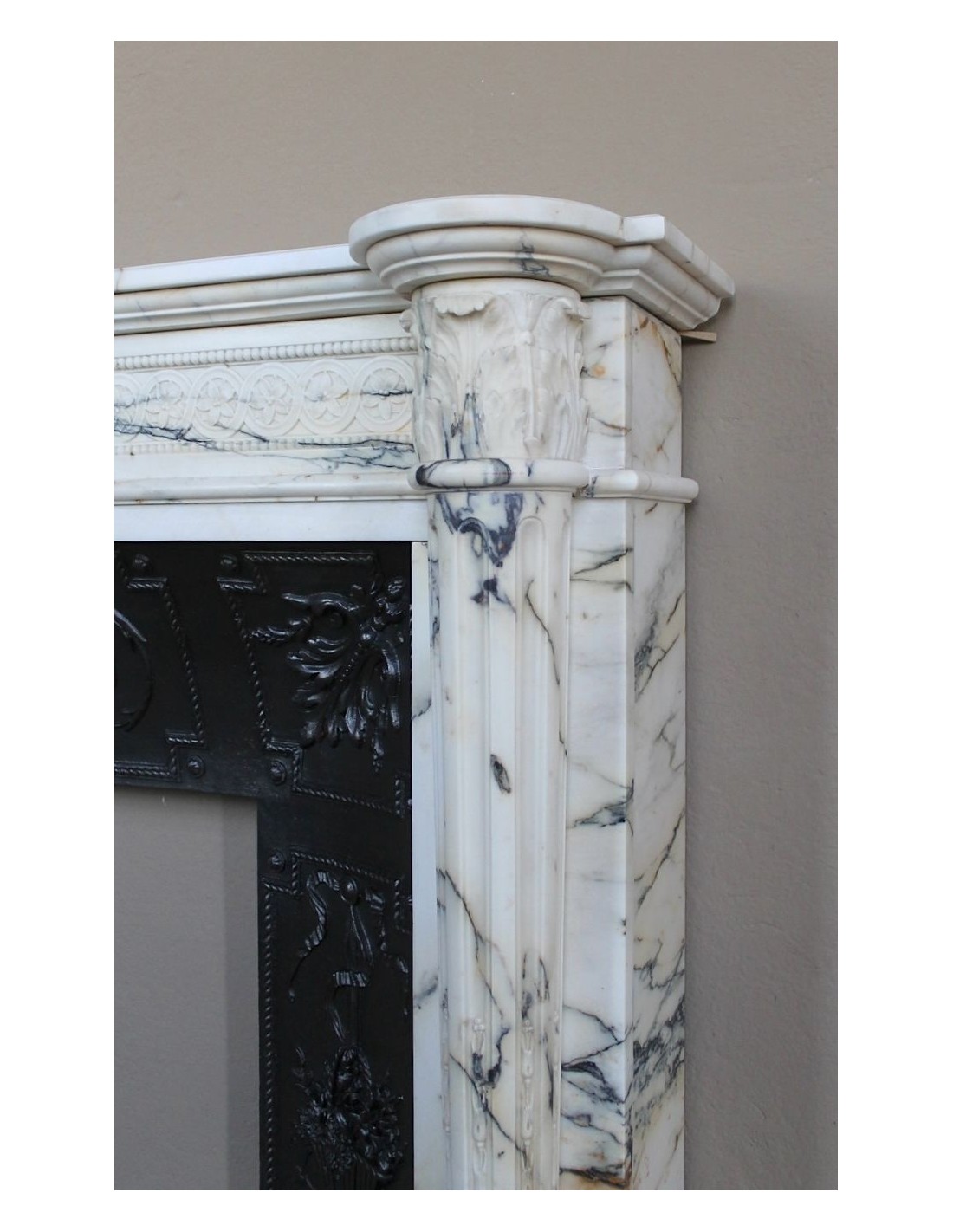
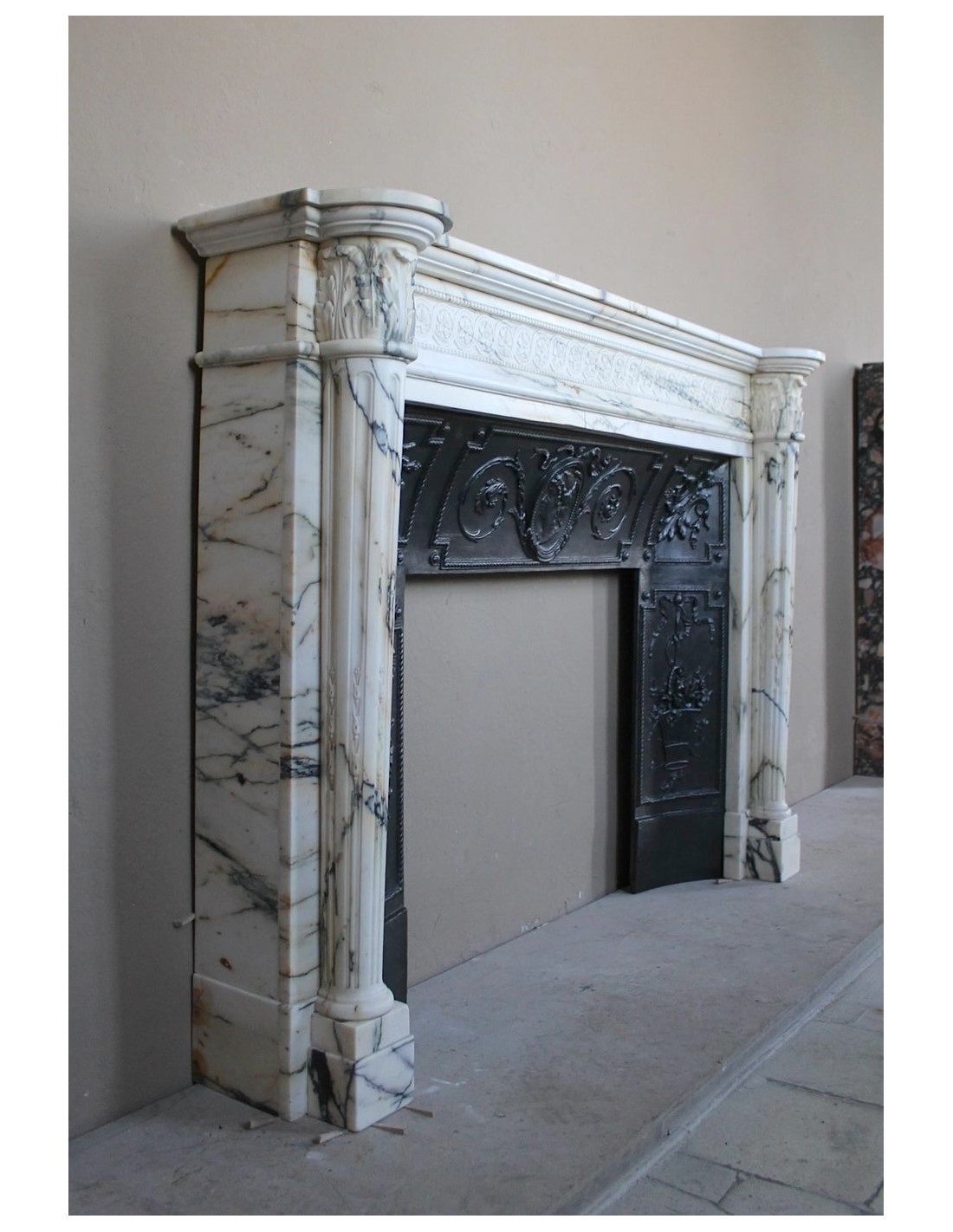
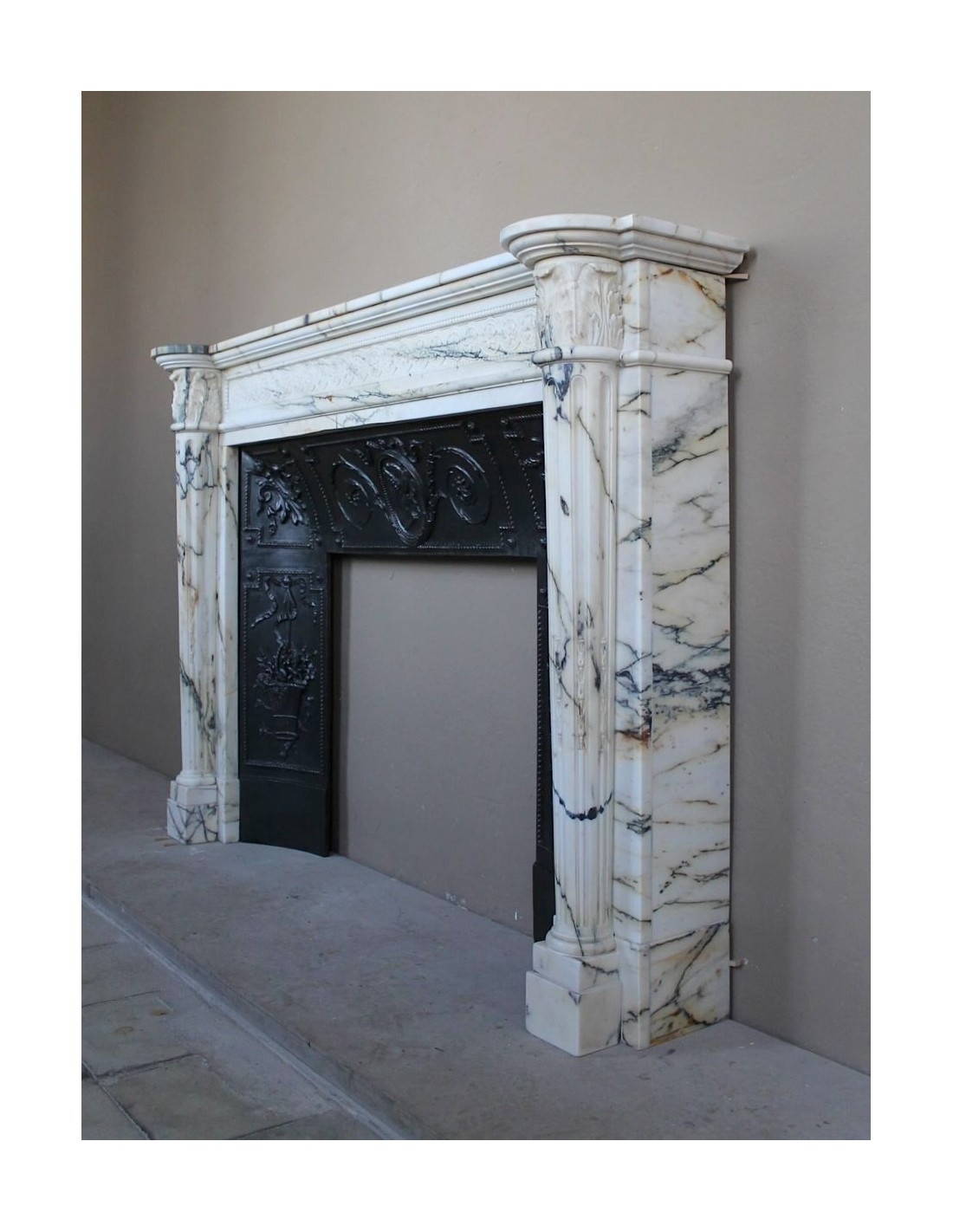
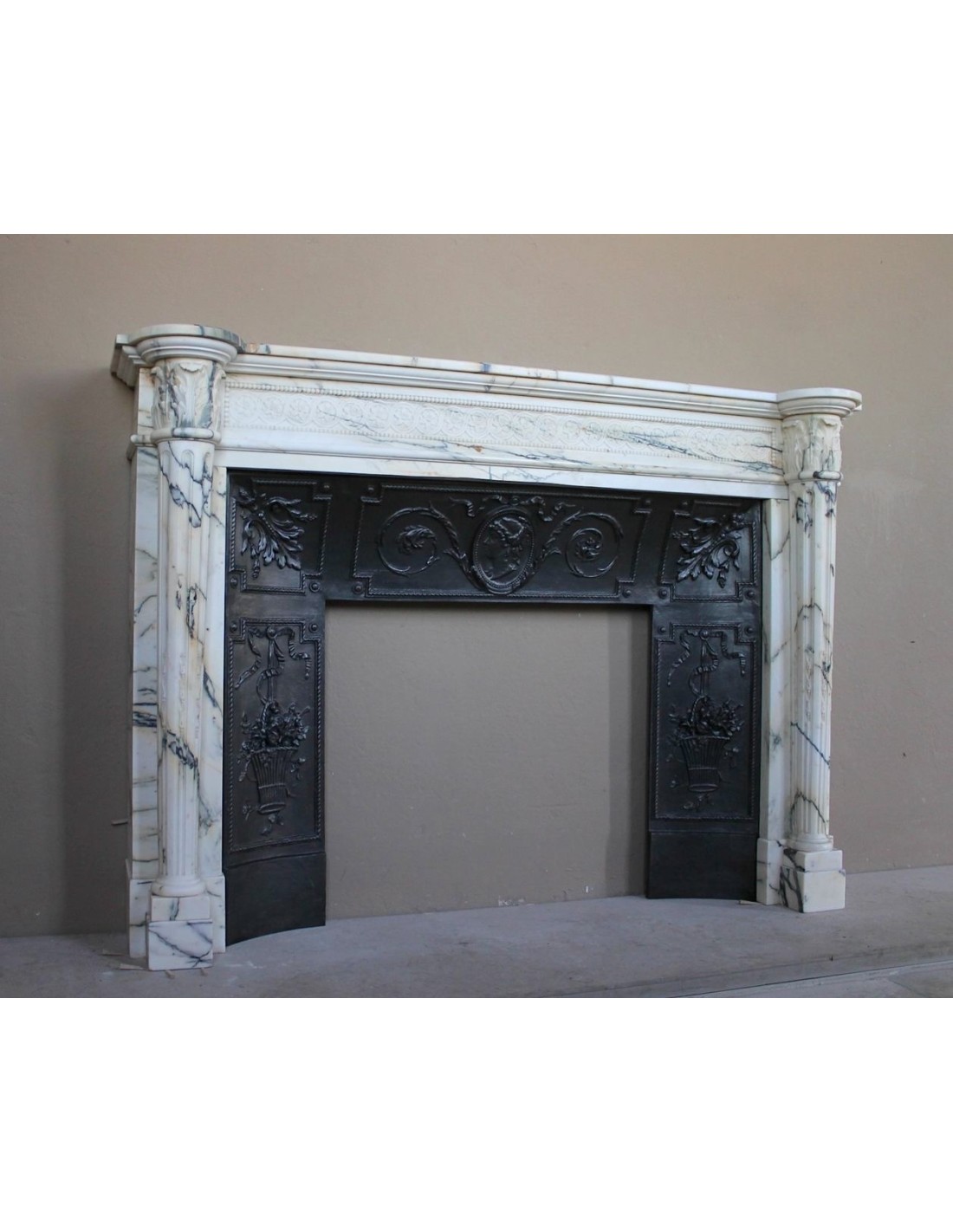
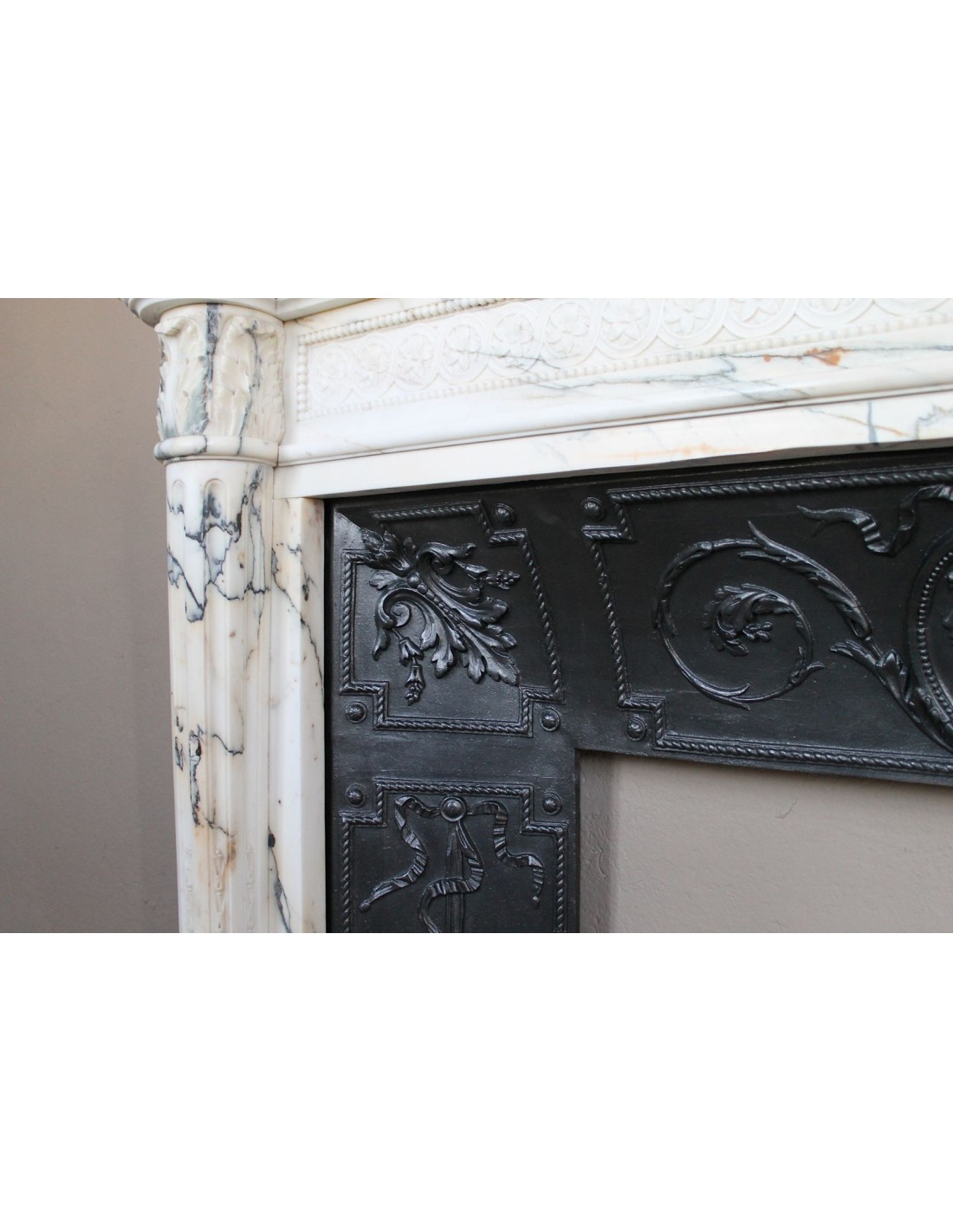
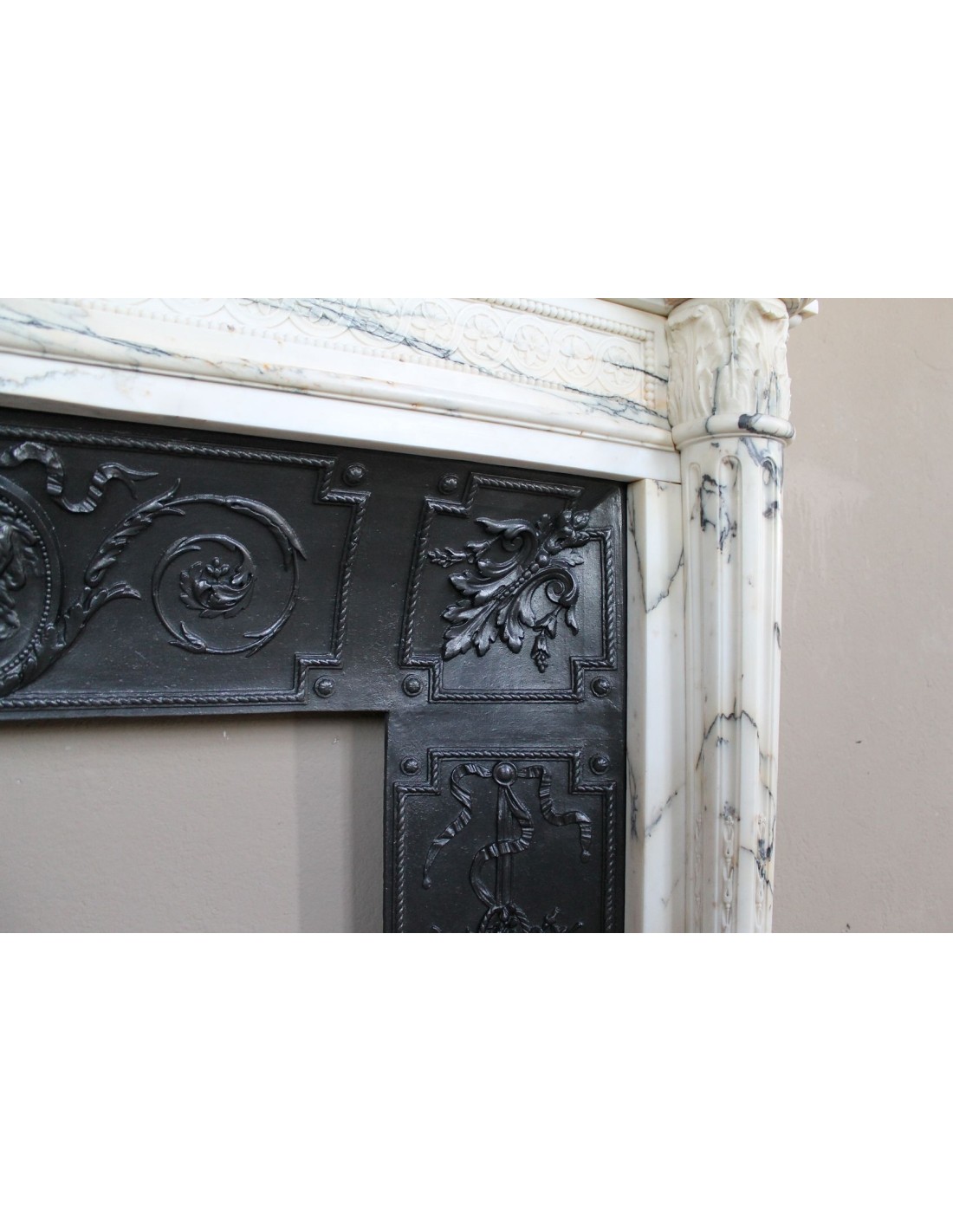
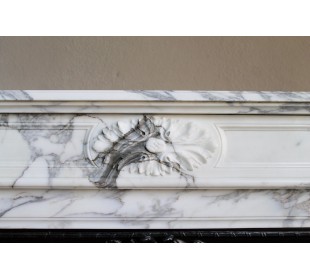
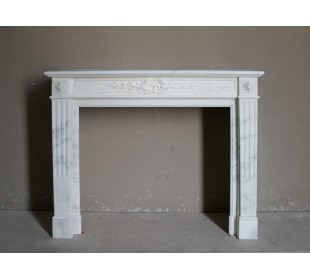
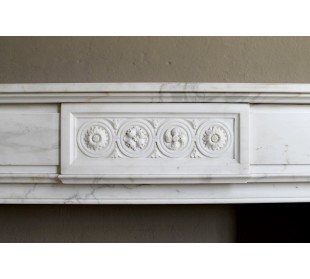
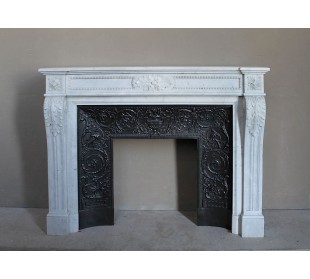
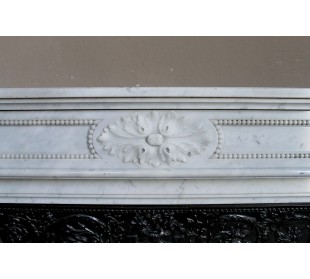
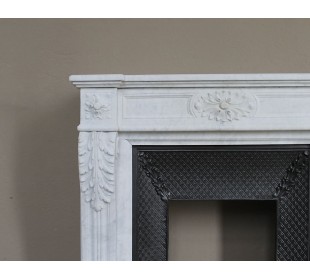
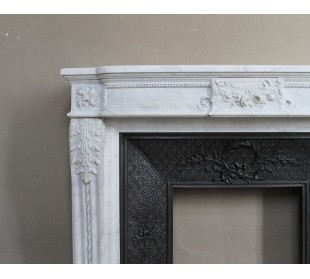
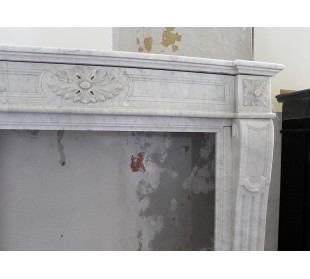
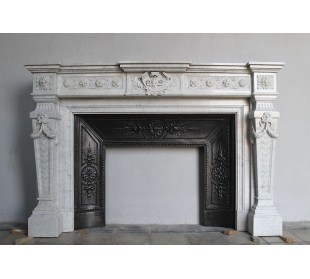
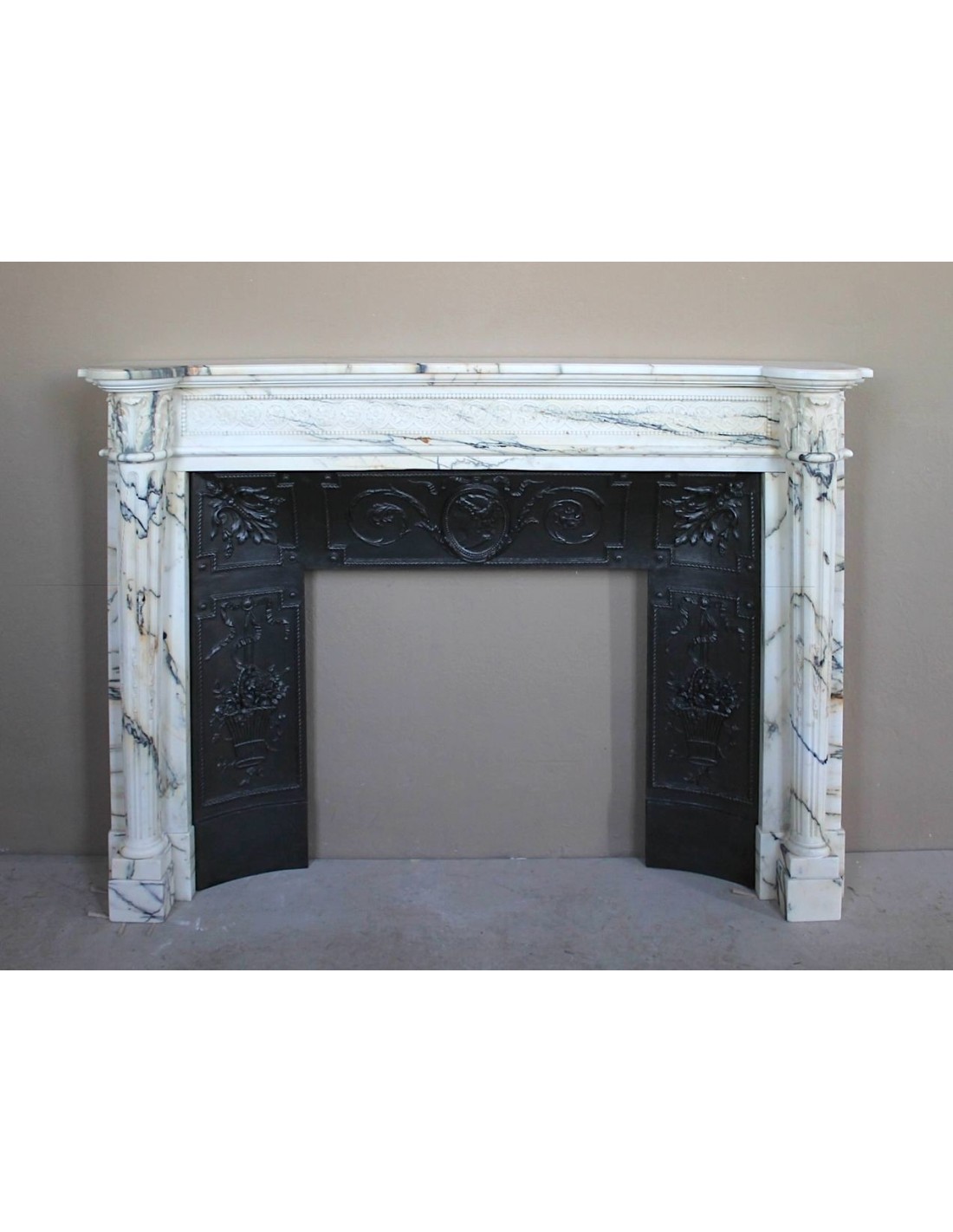
Let us begin with the decorative element that gives this fireplace its very name: that Cosmatesque work stretched across the front, rich in circles intertwined with one another, each containing a small wildflower. Since these round little flowers appeared to Parisians very similar to the round “Macaron” biscuits they adore, the French decided to give this sweet name to this particular fireplace model as well.
BUT THIS FIREPLACE OWES EVERYTHING (ARCHITECTURE EXCLUDED) TO ITALIAN ART—from its sculpture (executed in Lunigiana, at the foot of the Apuan Alps) to its extremely refined and equally Italian marble.
This intertwining of circles with internal designs was invented by some of the most important mosaicists in world history, the very Roman Cosmati, whose family dominated the art of mosaics for about three hundred years. I write this simply to give Caesar what belongs to Caesar—that is, to attribute to Roman Italy this stylistic merit that the French have been claiming as their own for the past few centuries.
Well then, now that justice has been done, let us examine the various interesting parts of this fireplace:
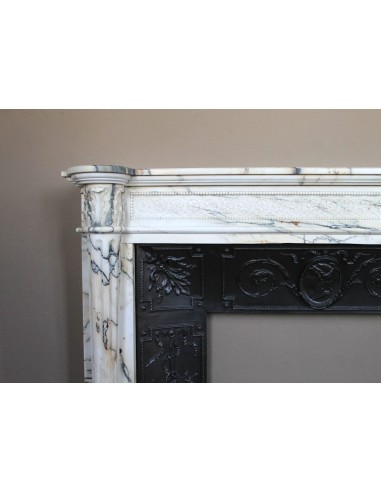
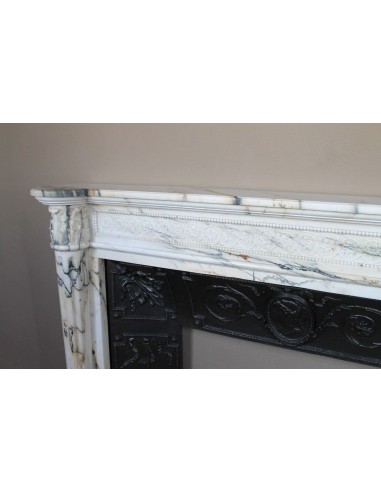
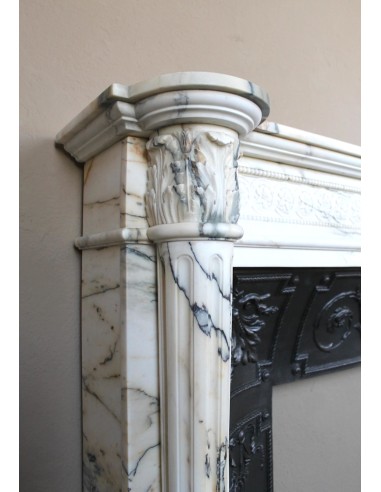
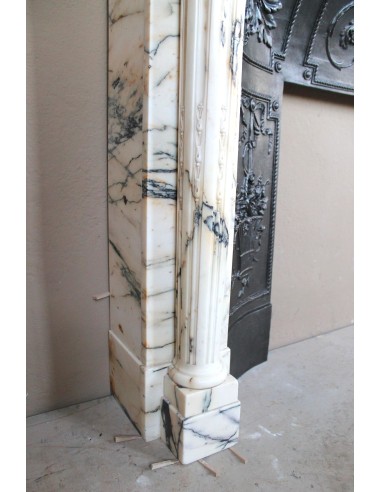
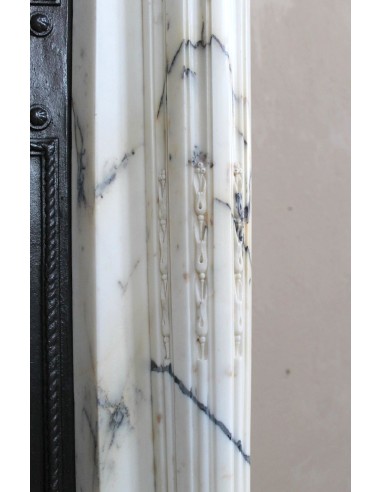
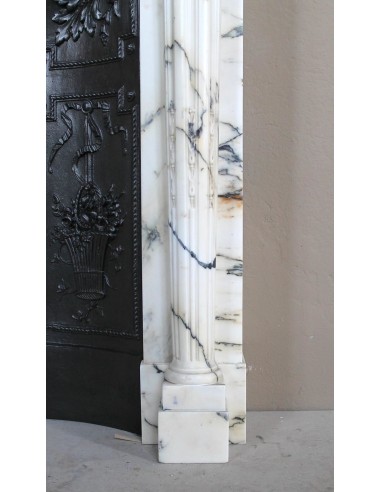
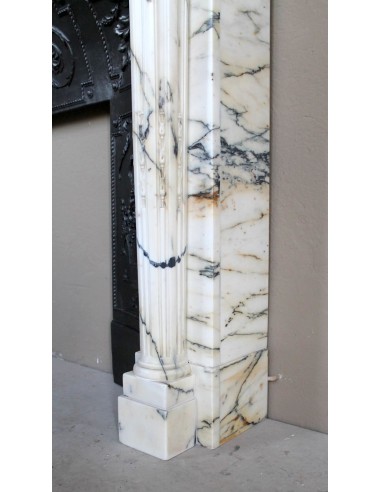
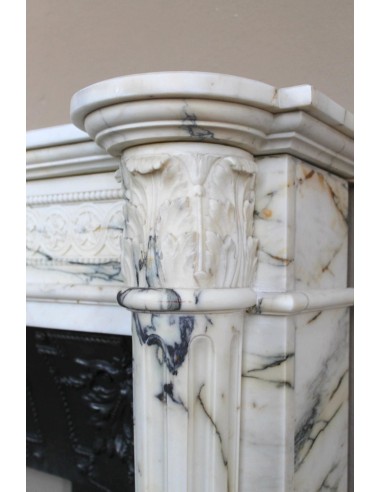
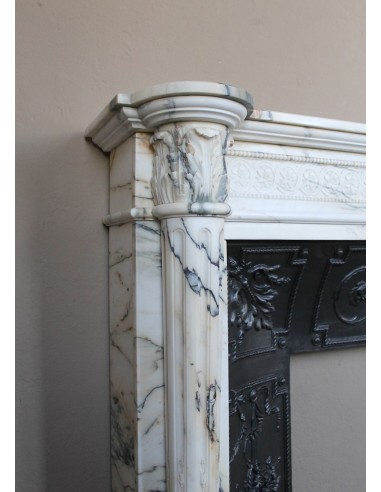
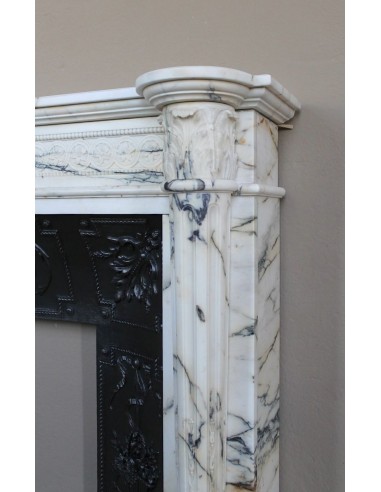
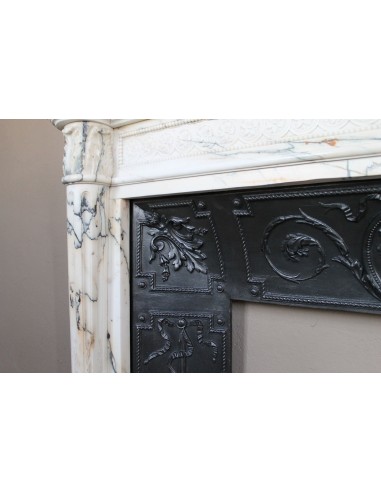
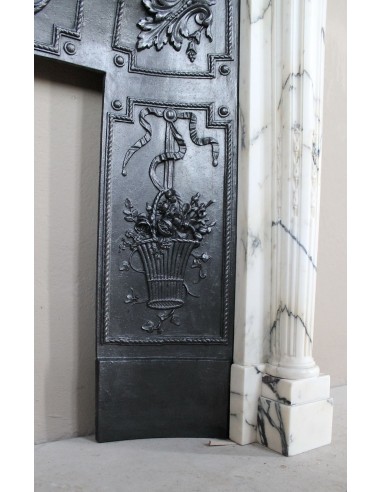
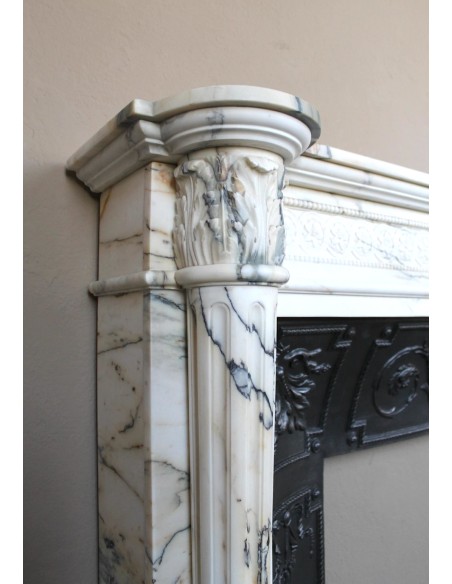
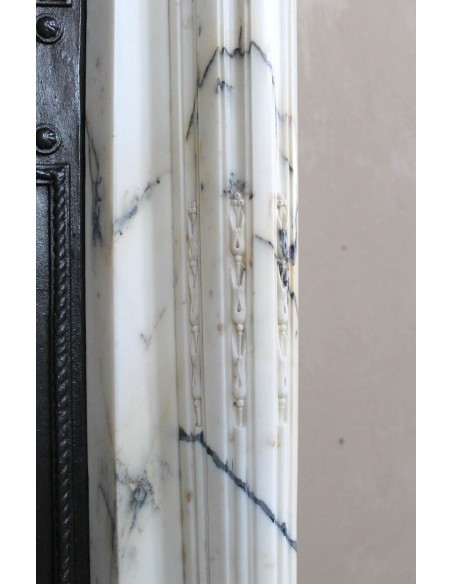
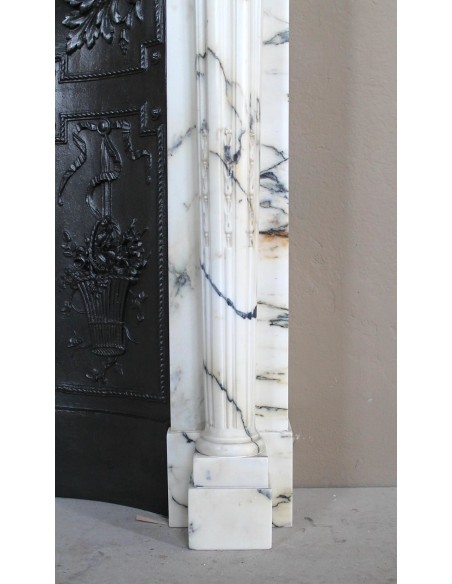
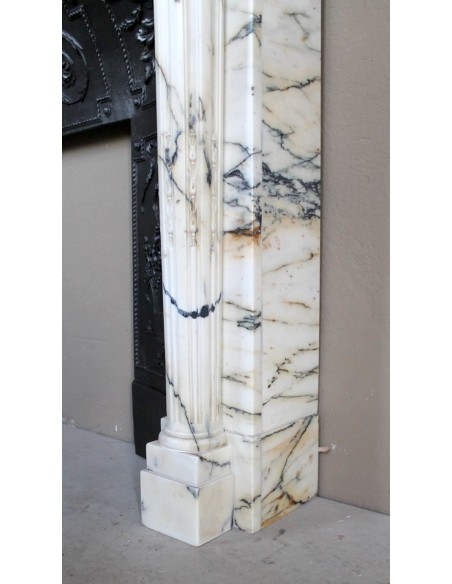
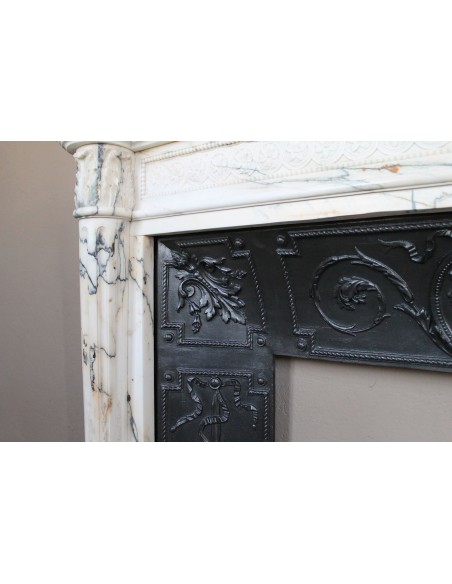
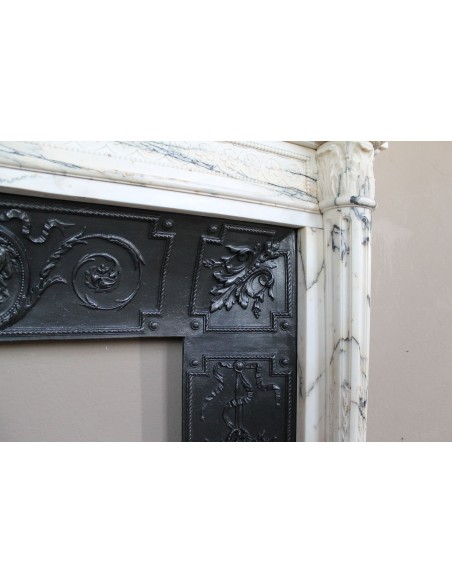
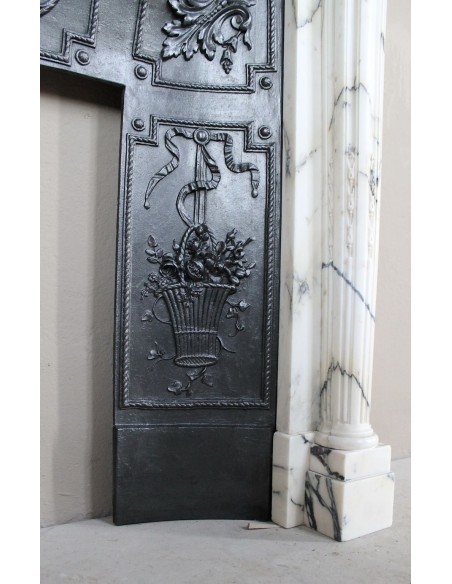
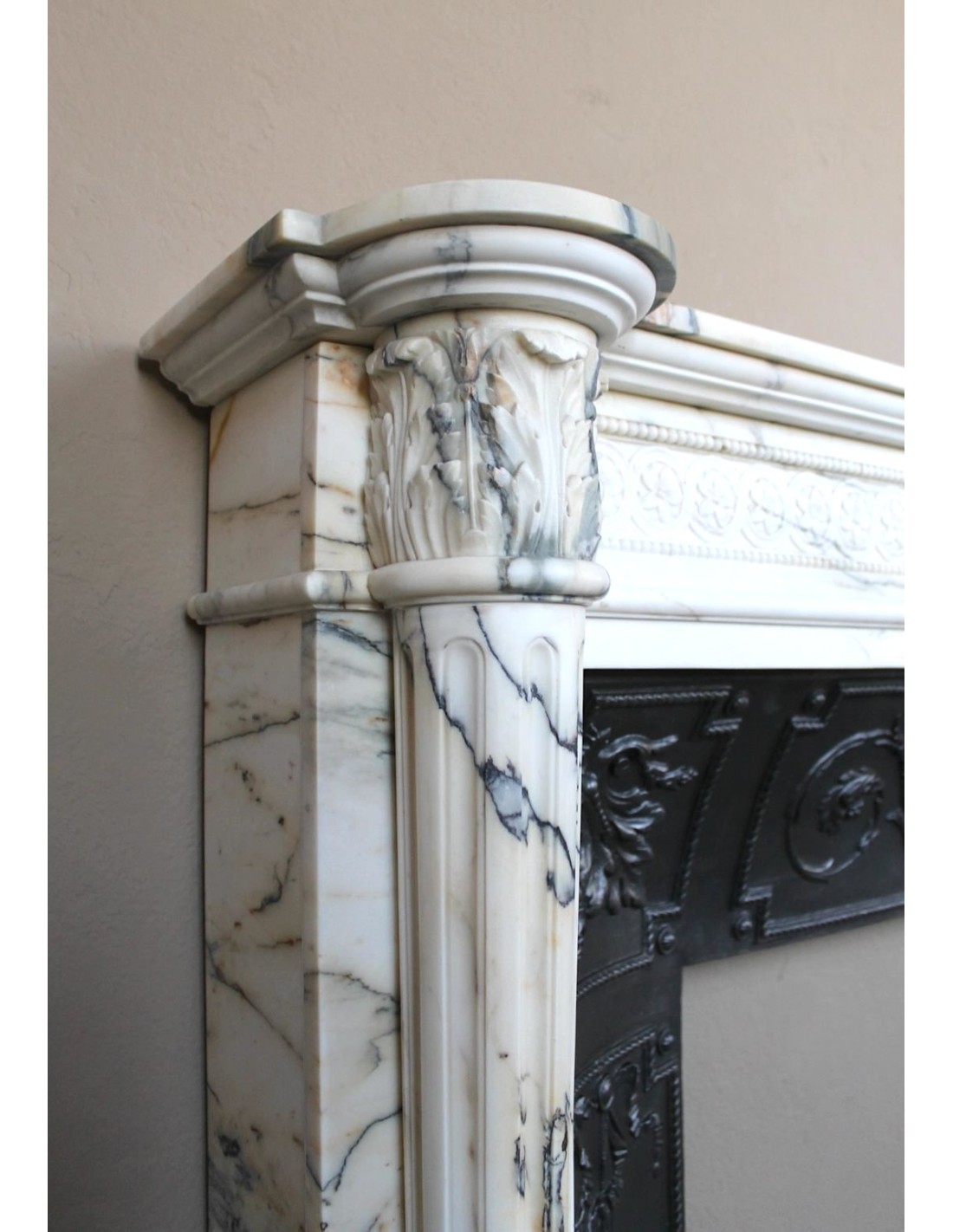
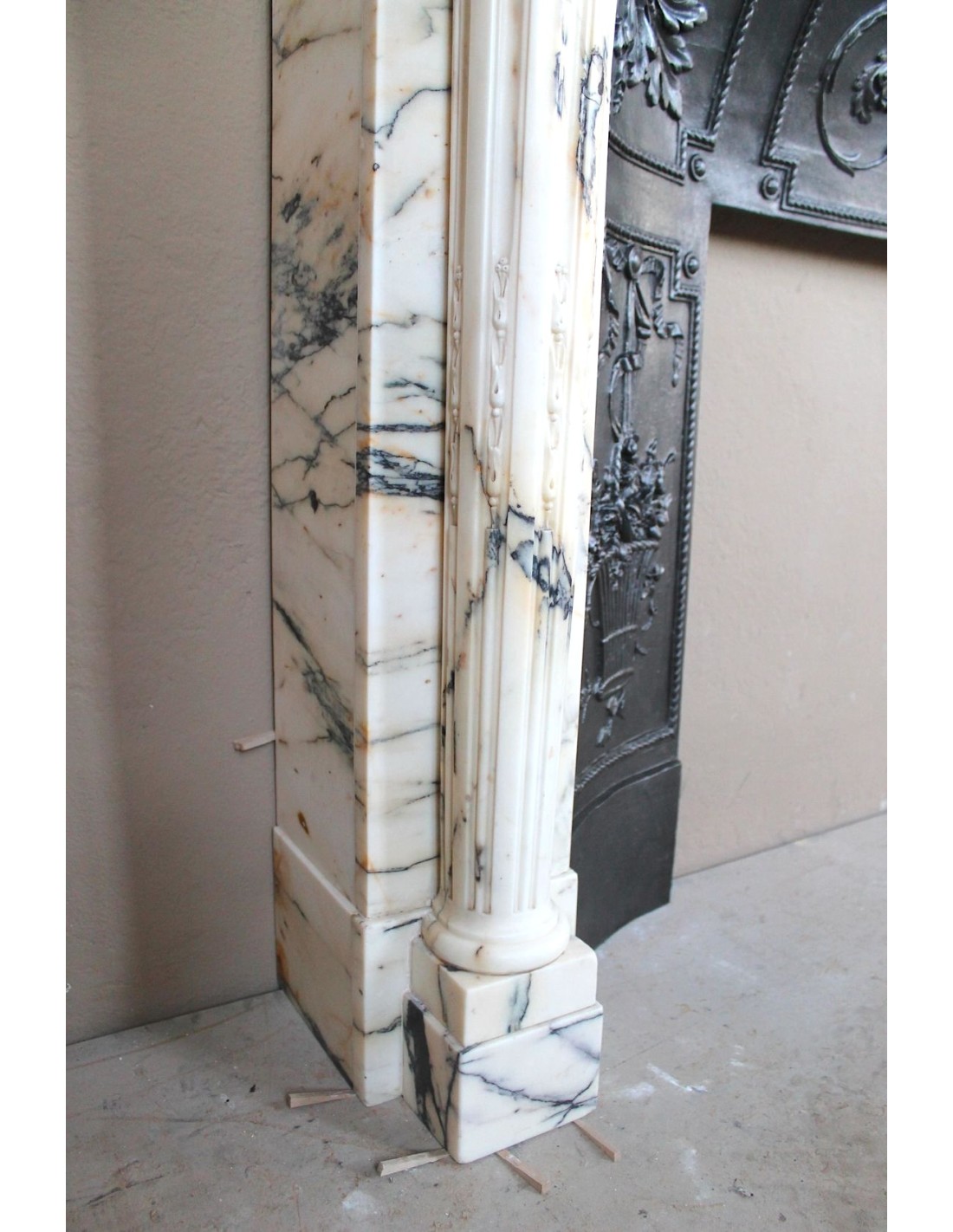
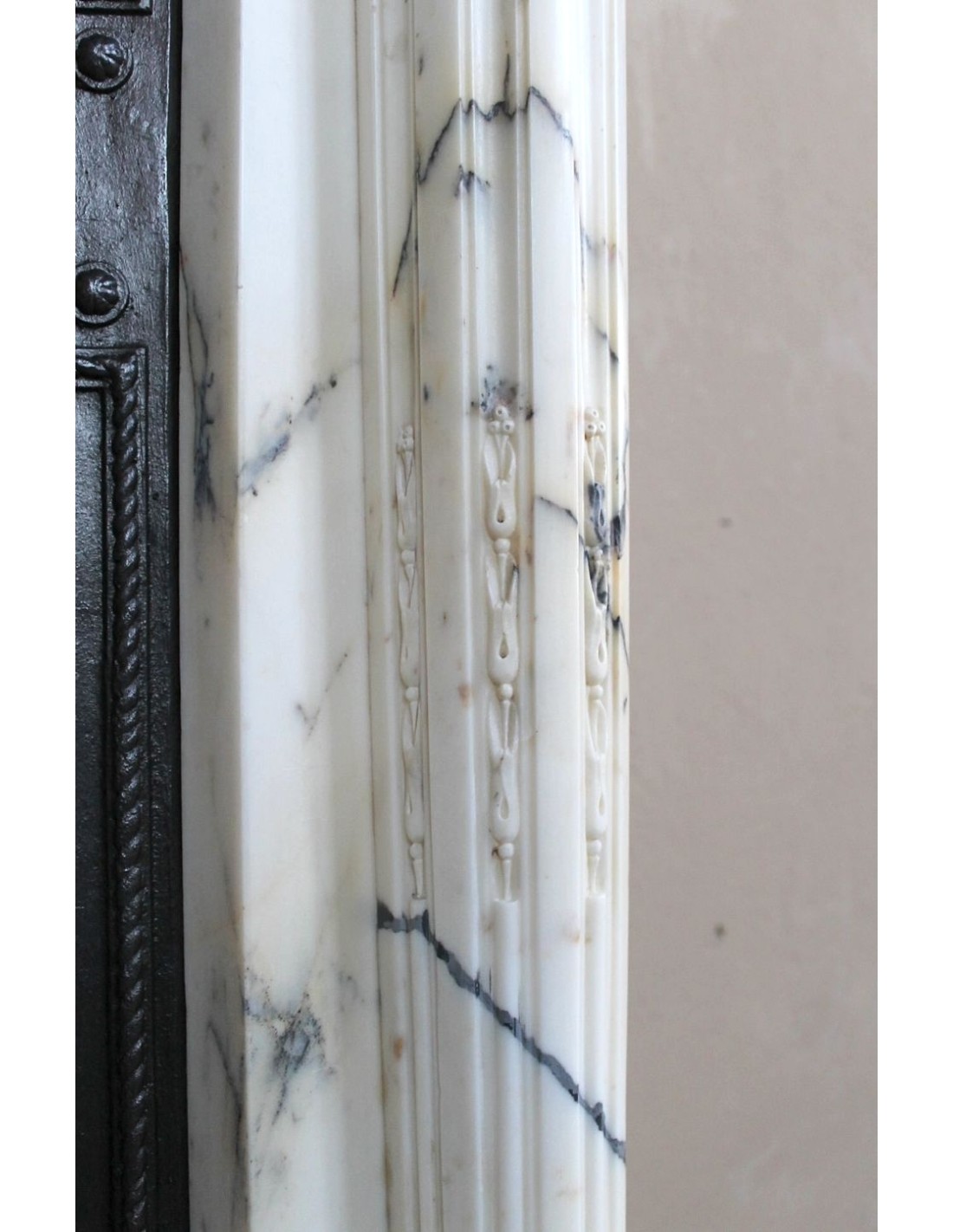
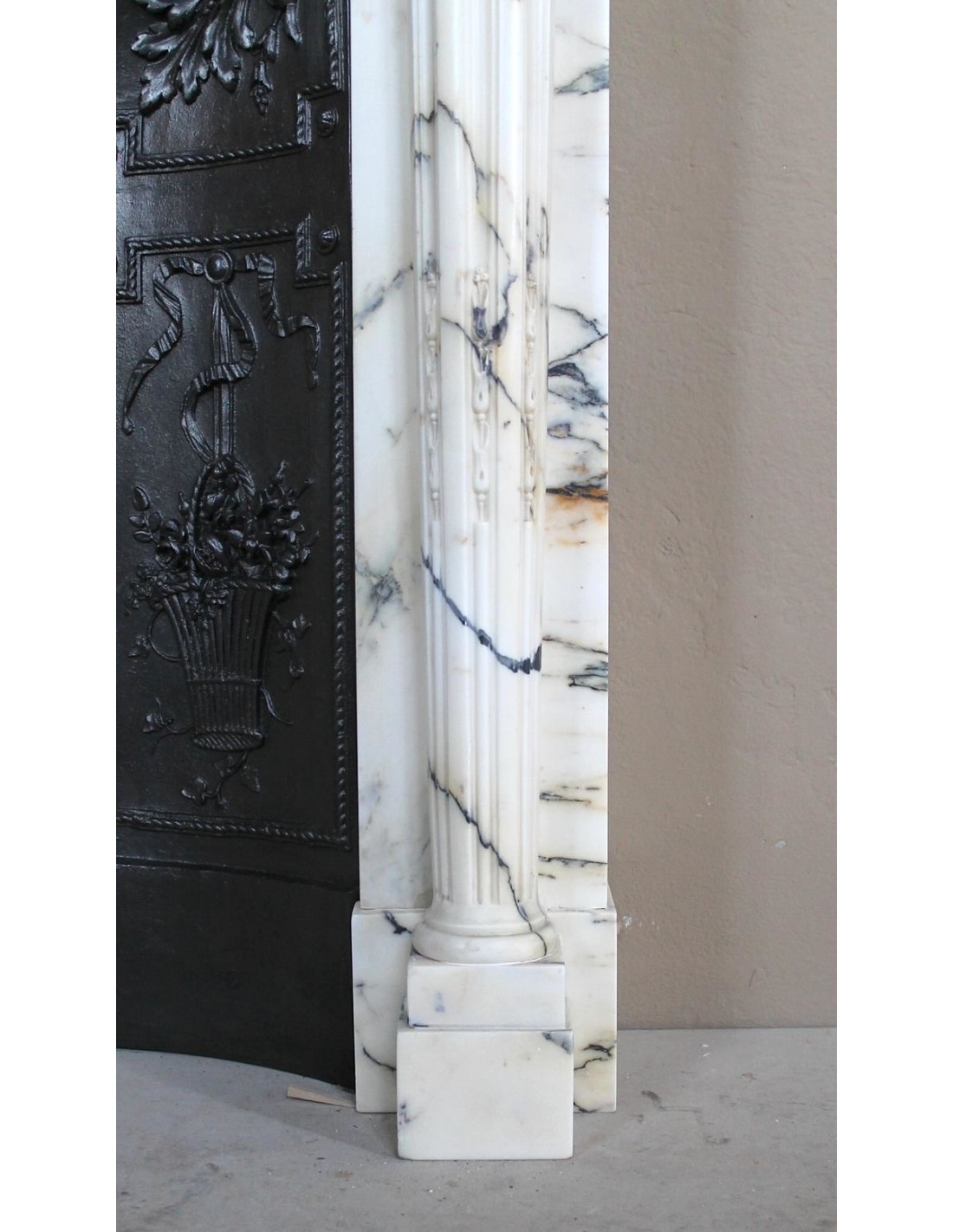
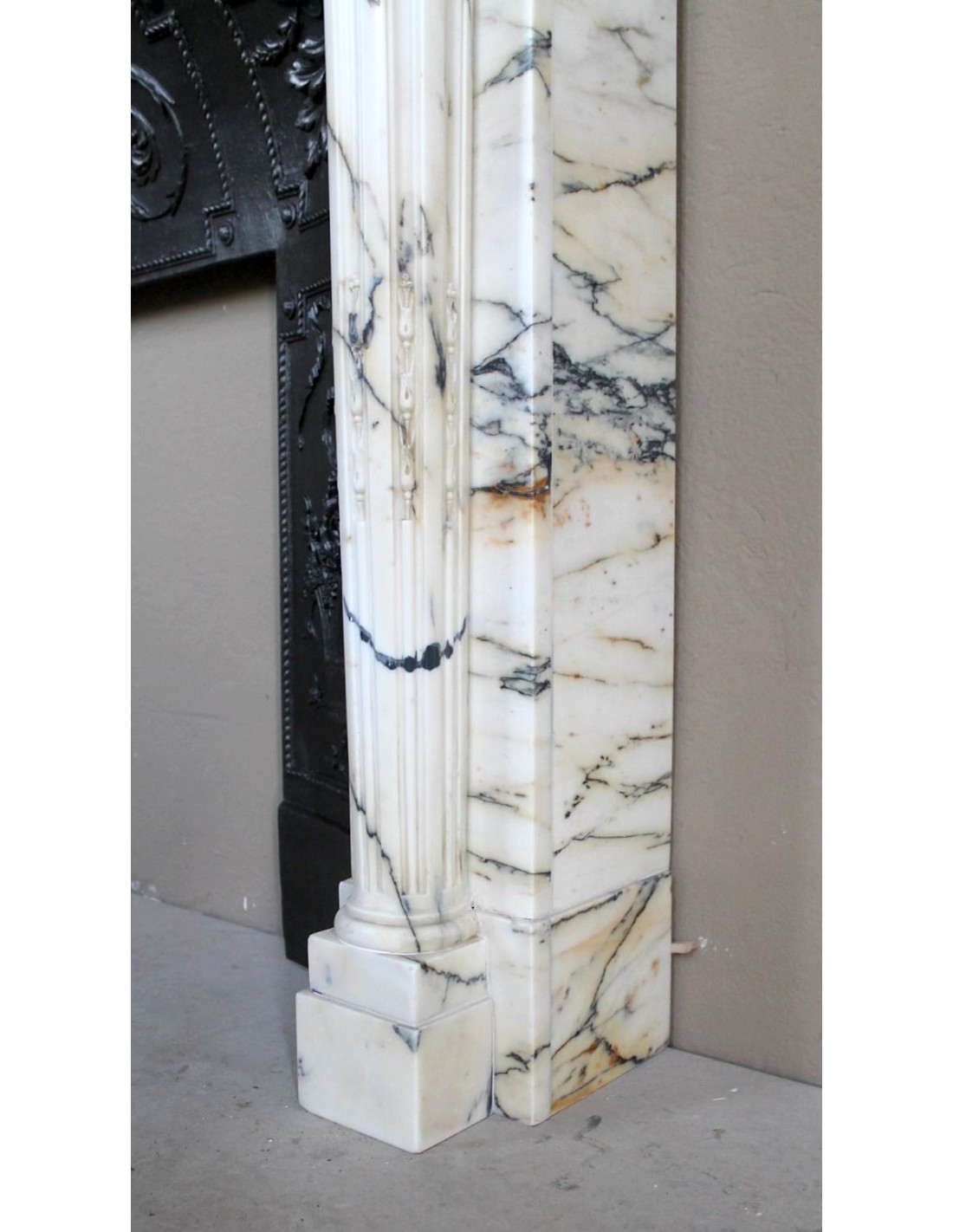
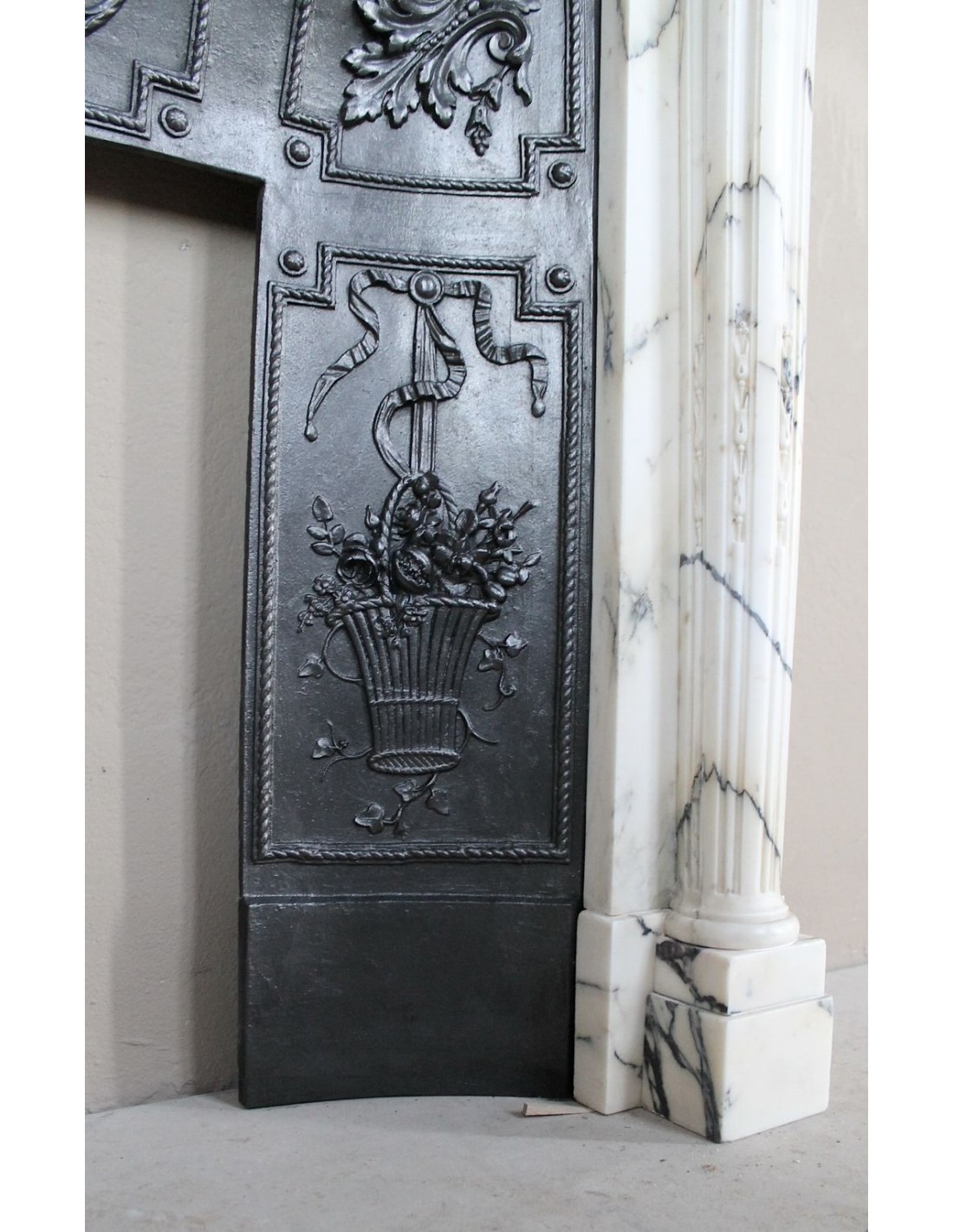
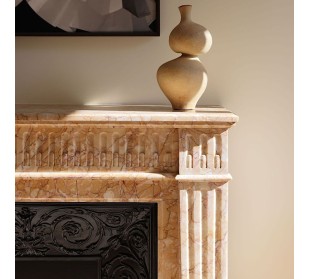
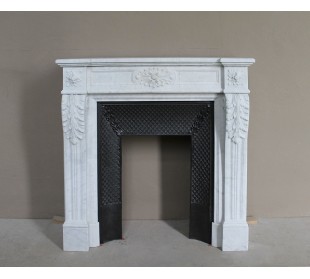
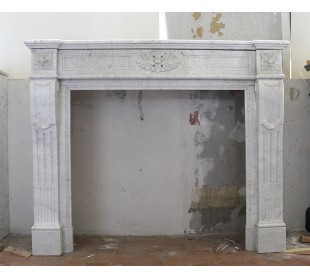
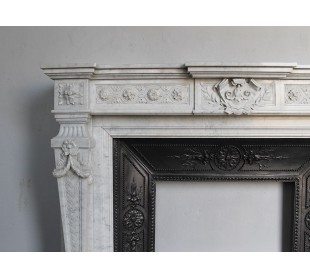
A) Let us start with its Doric columns (which widen from bottom to top), elegant and finely fluted with double grooves, crowned with sculptures of acanthus leaves forming precious capitals. Their elegance is immediately apparent.
B) A lotus flower (a flower universally regarded as a symbol of perfection and infinity) is carved within each circle on the front.
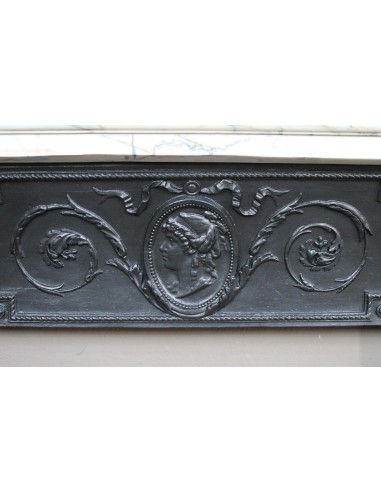
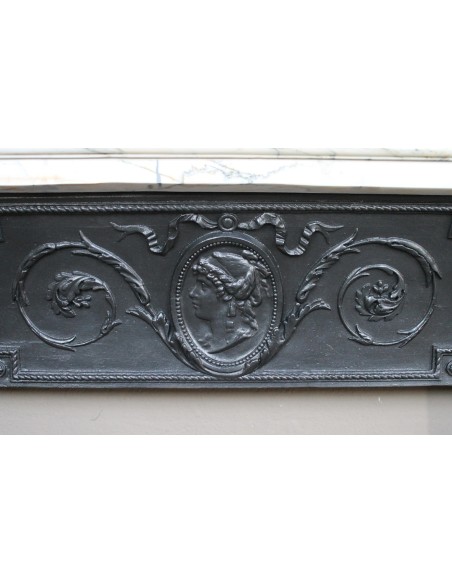
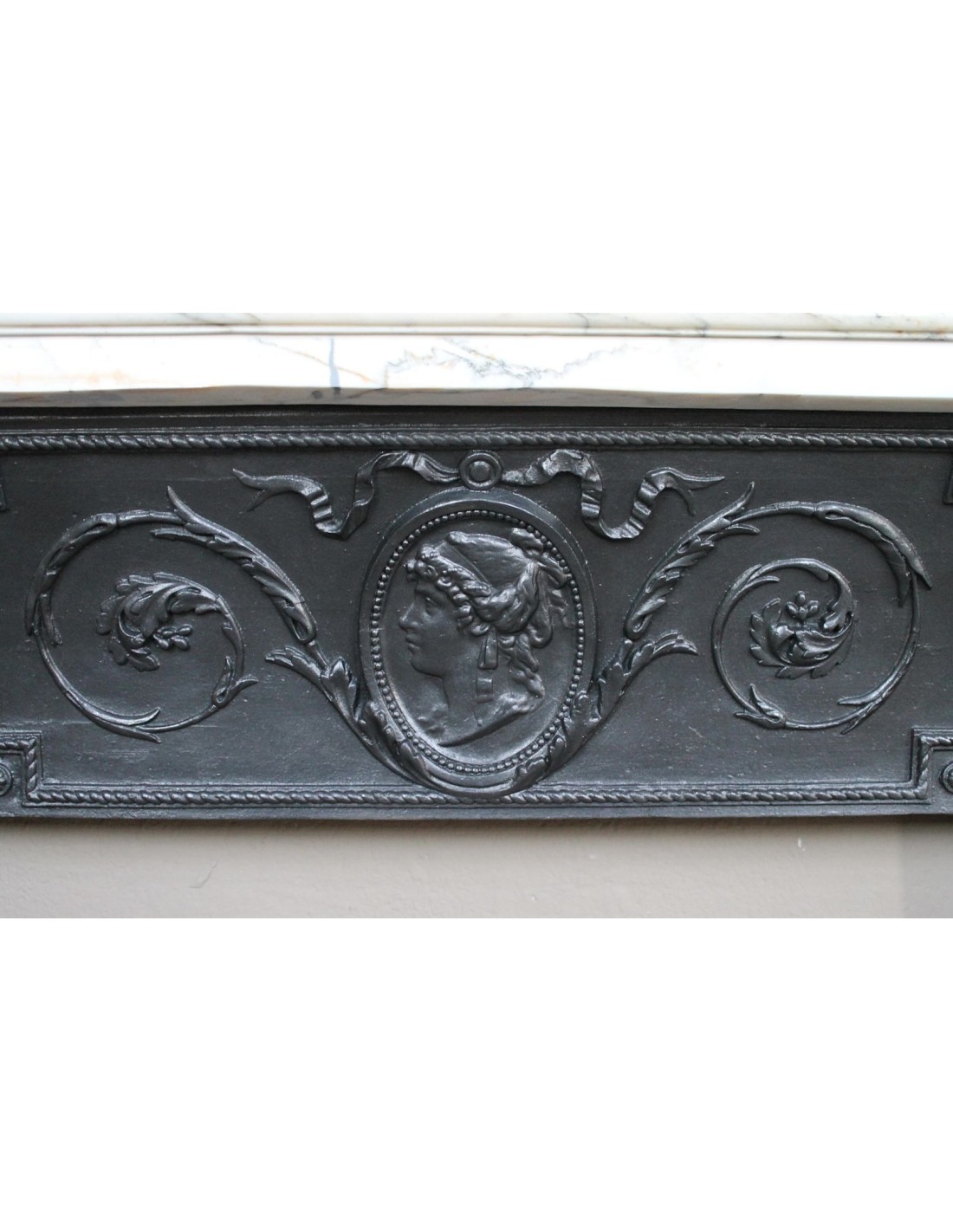
C) Even in its artistic cast iron insert we find decorative and symbolic elements, such as:
D) The profile of Diana, the Roman goddess of the hunt, the forests, wild animals, the moon, virginity, and protector of women during childbirth;
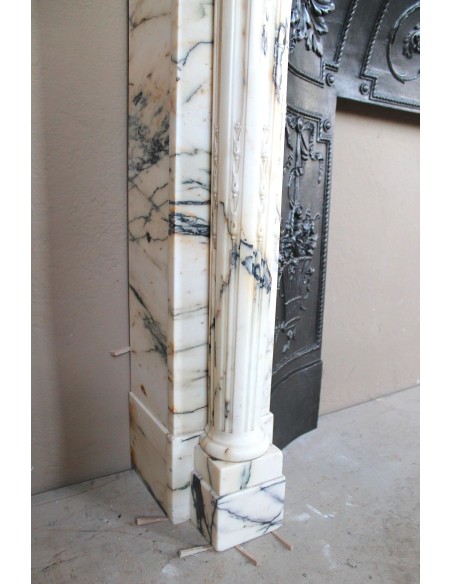
E) A pair of “panier fleuri” at the base of its natural bands—baskets overflowing with flowers which, in this case, represent a wish of abundance, wealth, and happiness for the family that will gather around this hearth;
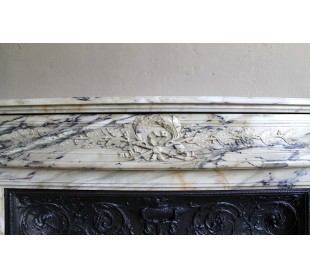
F) Its fascinating marble, Paonazzetto, was the favorite of Augustus (the emperor famous for the saying: “Augustus found Rome a city of bricks and left it a city of marble”), and it was used in many Roman monuments as well as in numerous statues and busts belonging to the Roman emperors themselves.
G) ITS STYLE IS CLEARLY NEOCLASSICAL (LOUIS XVI), ITS DATE OF BIRTH CAN BE PLACED IN THE NAPOLEON III PERIOD (ABOUT 1850–1870), AND ITS STATE OF CONSERVATION IS NOT MERELY GOOD—IT IS EXCELLENT.