A Brief Introduction:
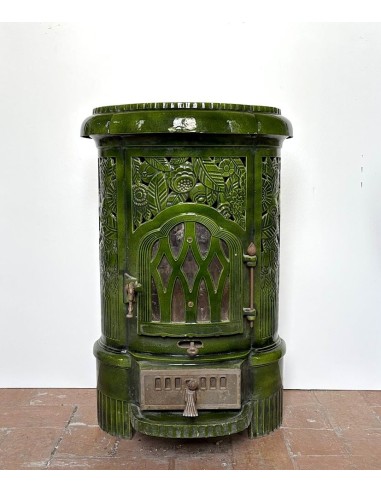
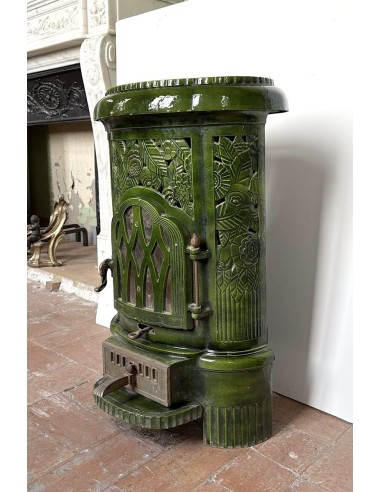
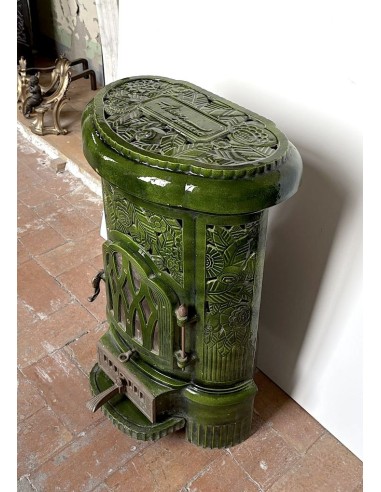
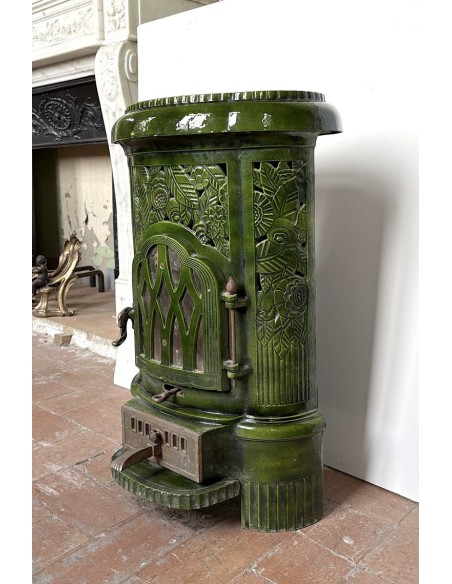
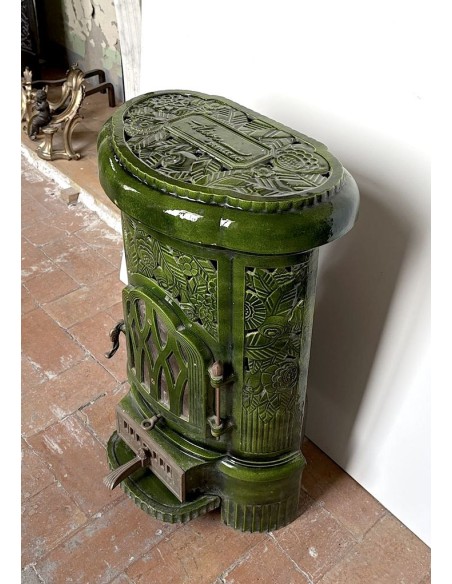
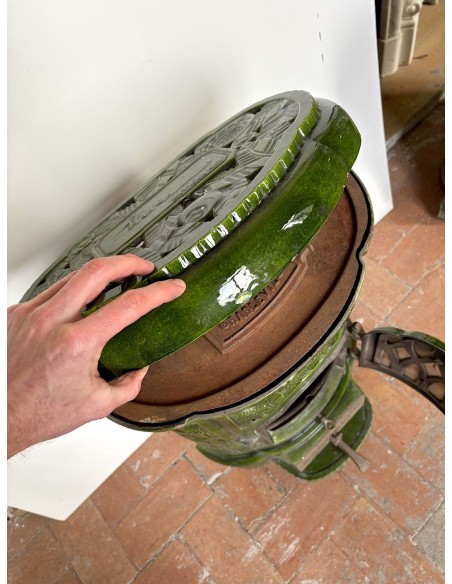
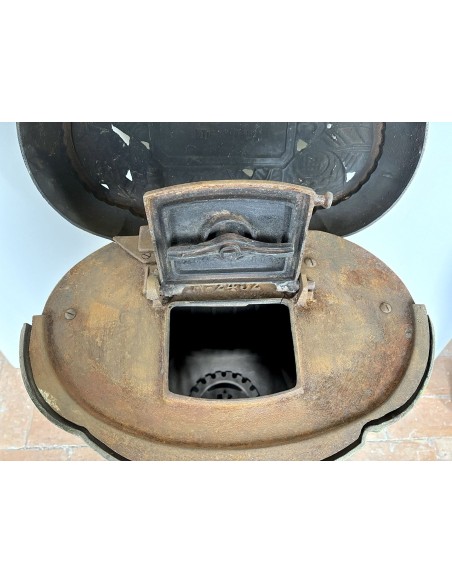
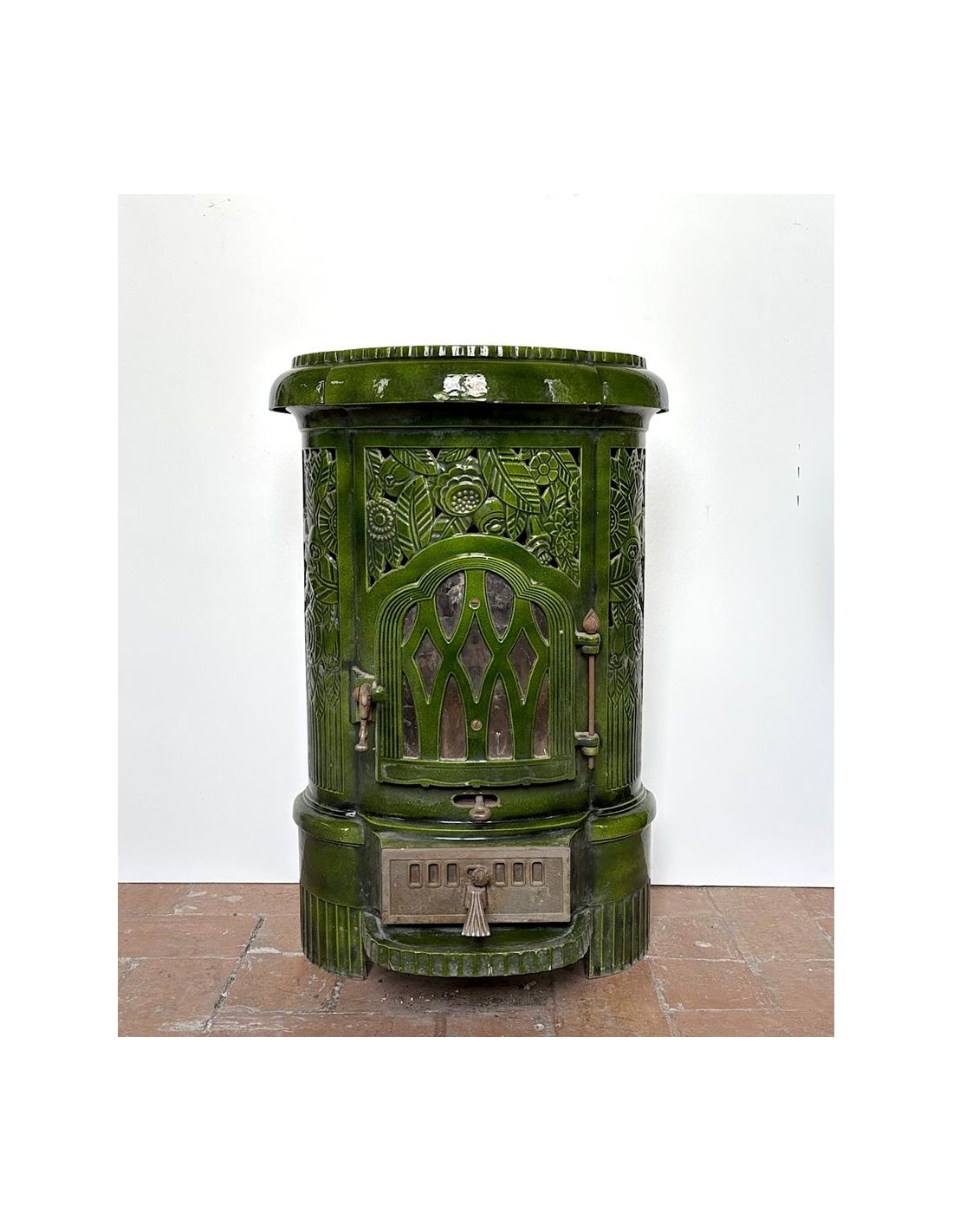
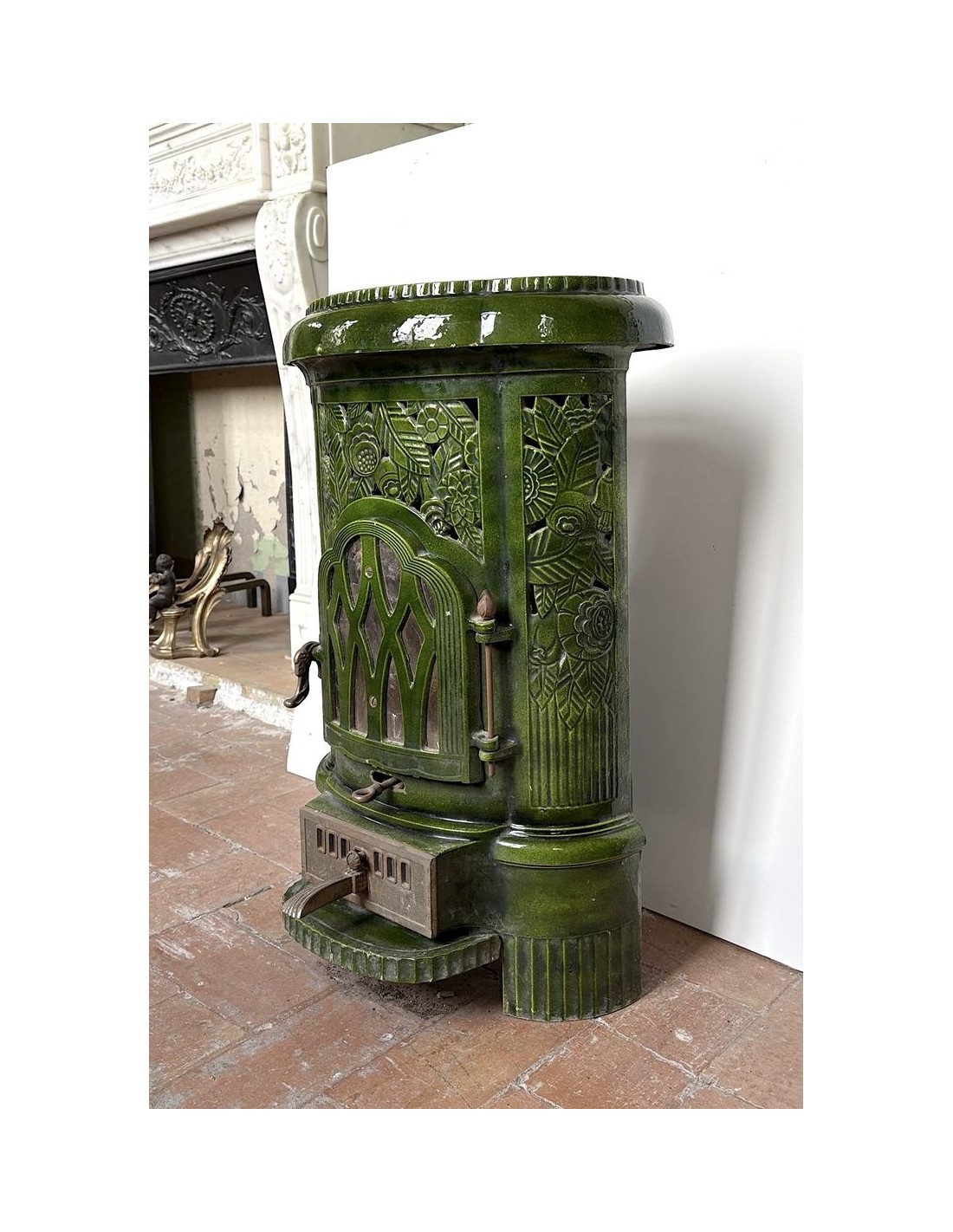
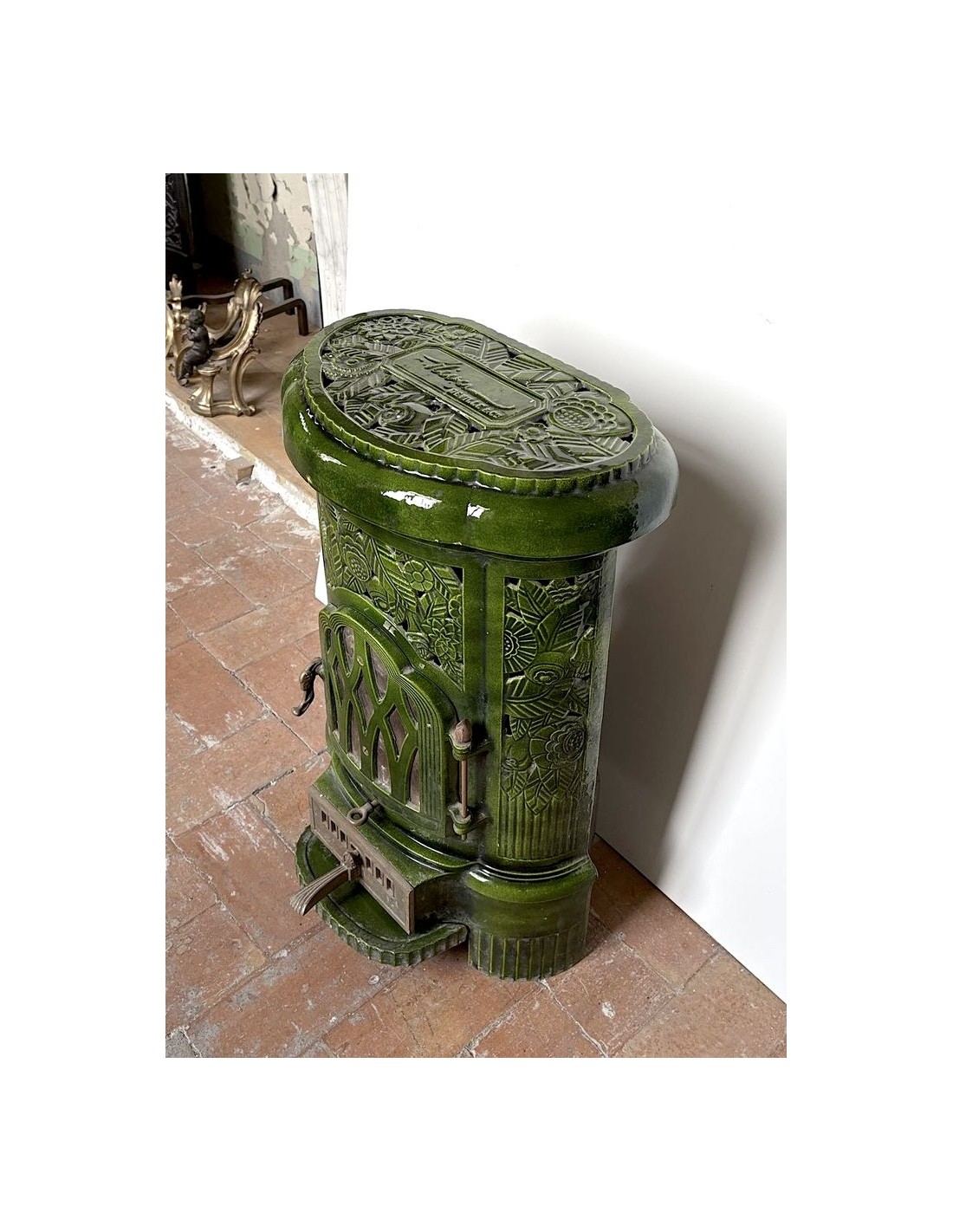
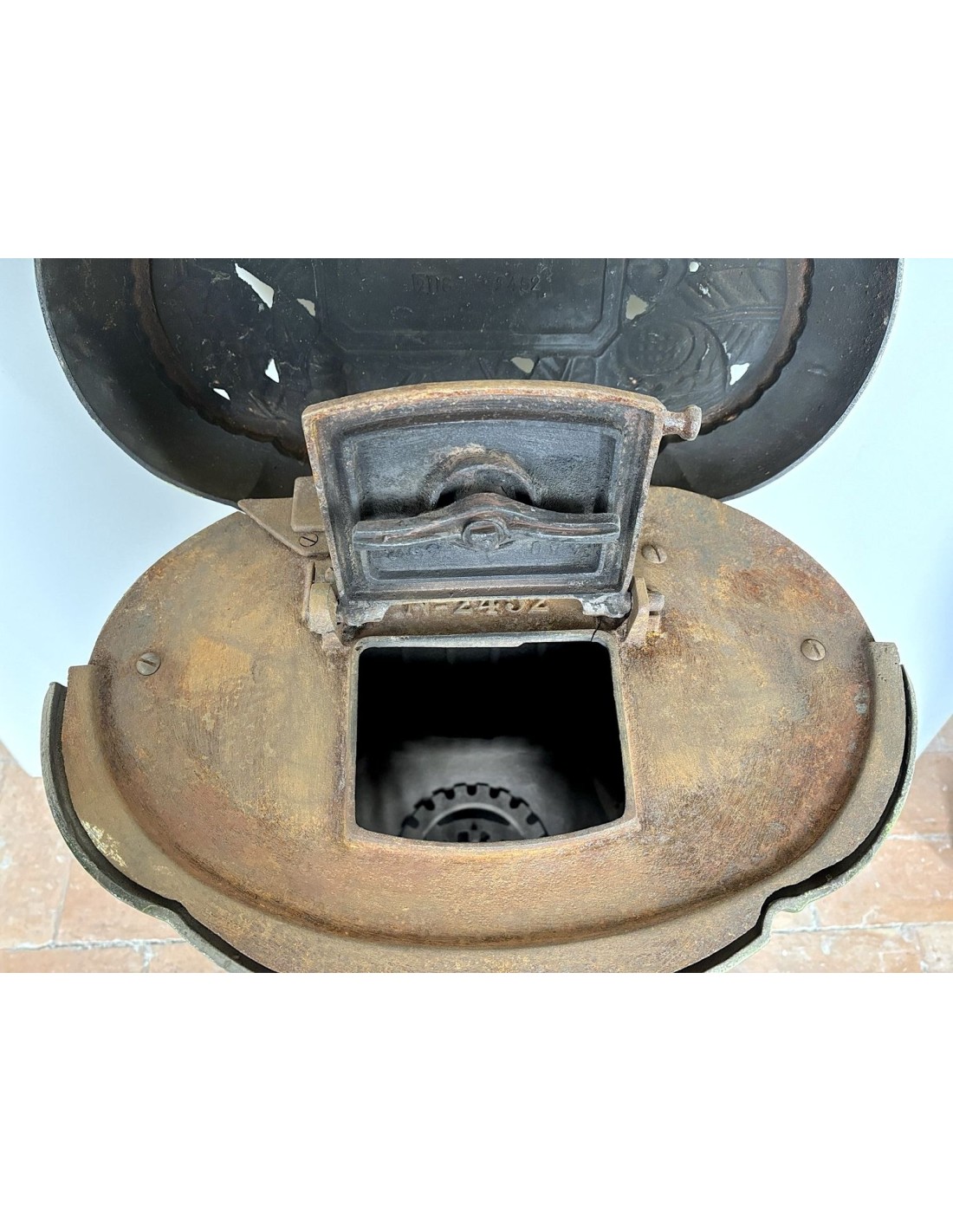
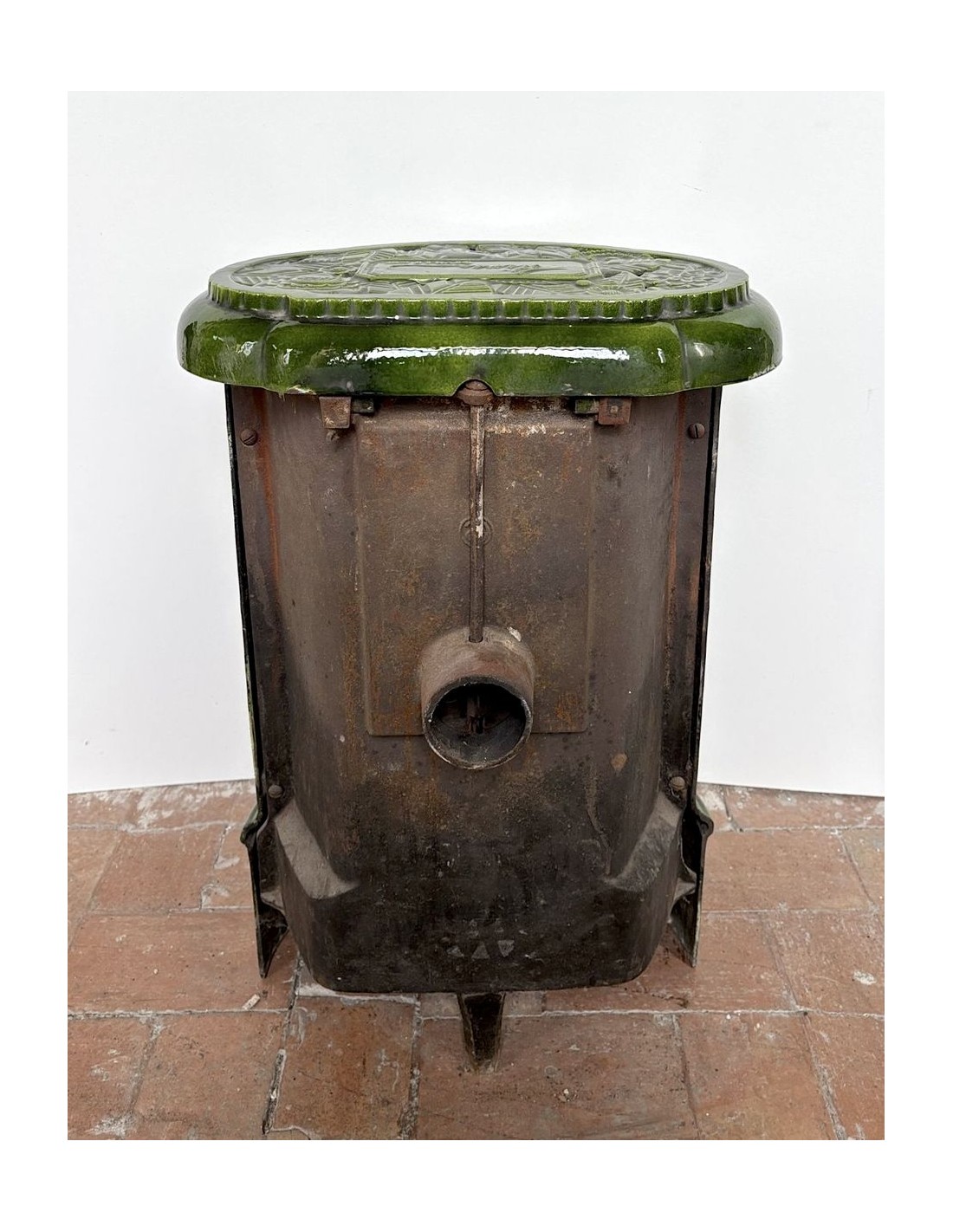
From the early nineteenth century onwards, small stoves such as this one were produced to be fitted inside the firebox area of the many French fireplaces — typically one in every room.
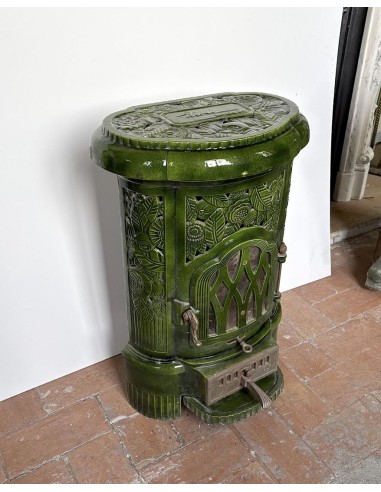
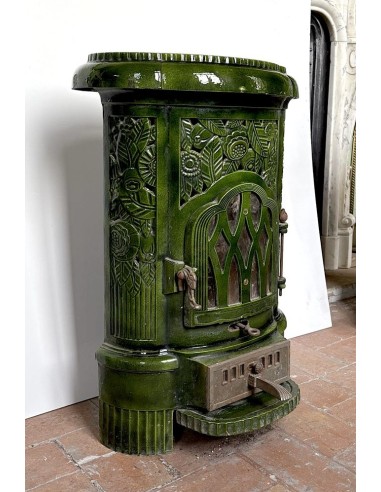
Only later, towards the end of the nineteenth century and the early Belle Époque period, did the design of these little stoves begin to evolve. Their proportions became wider and slimmer, acquiring a new elegance altogether. The transformation was so significant that these later models became known as Salamandres.
But let us return to the present example.
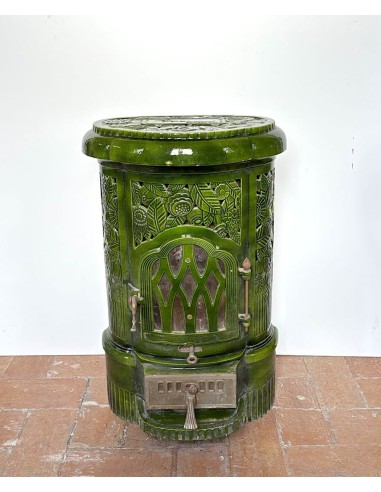
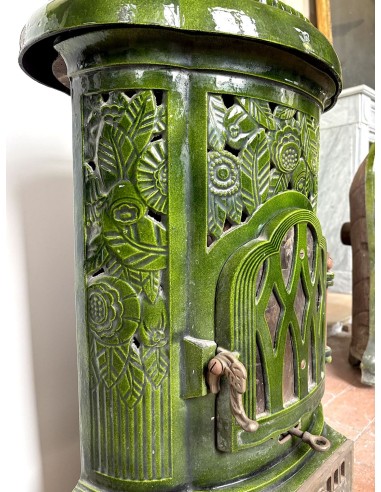
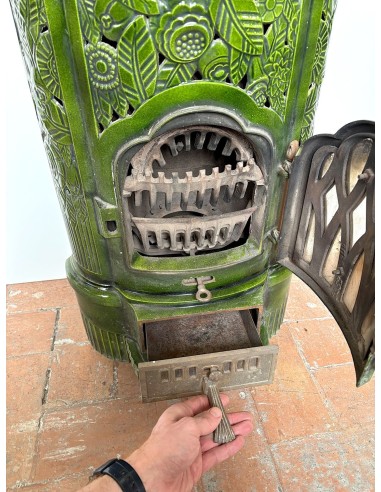
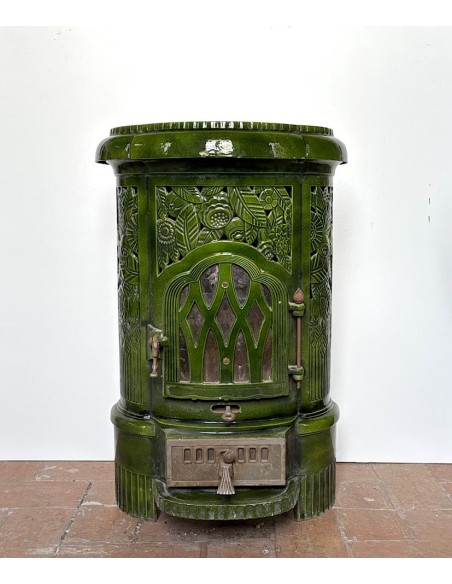
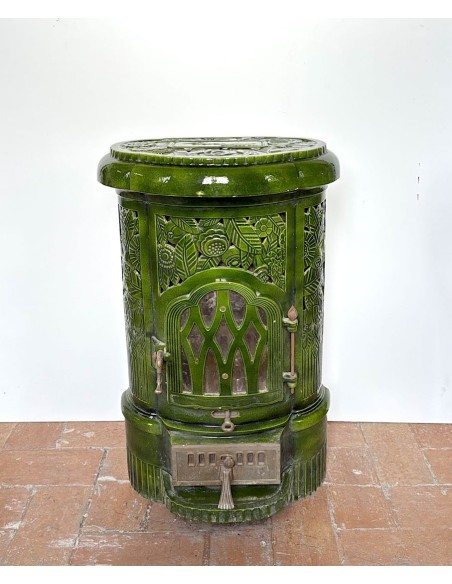
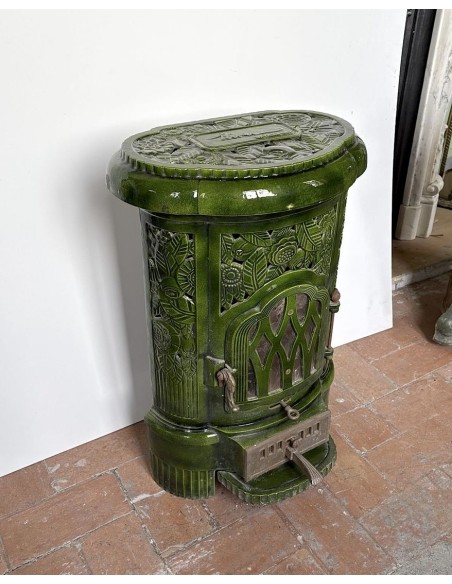
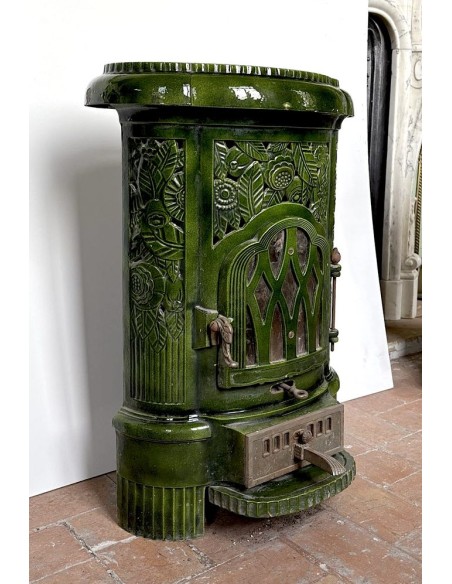
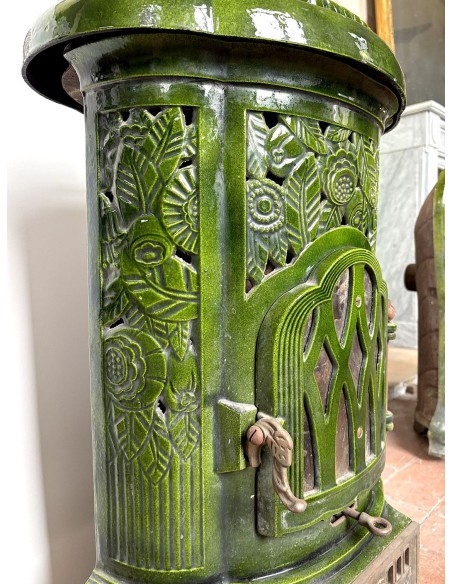
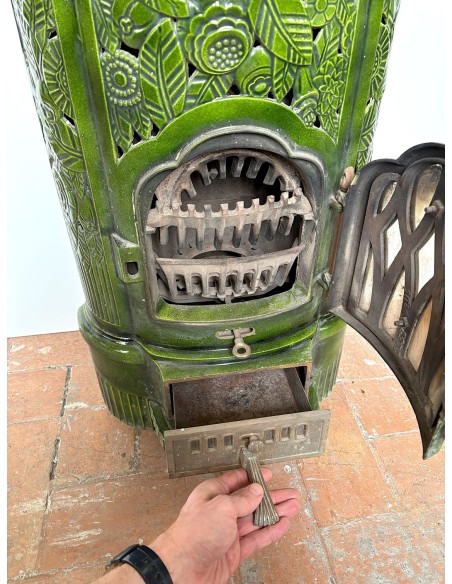
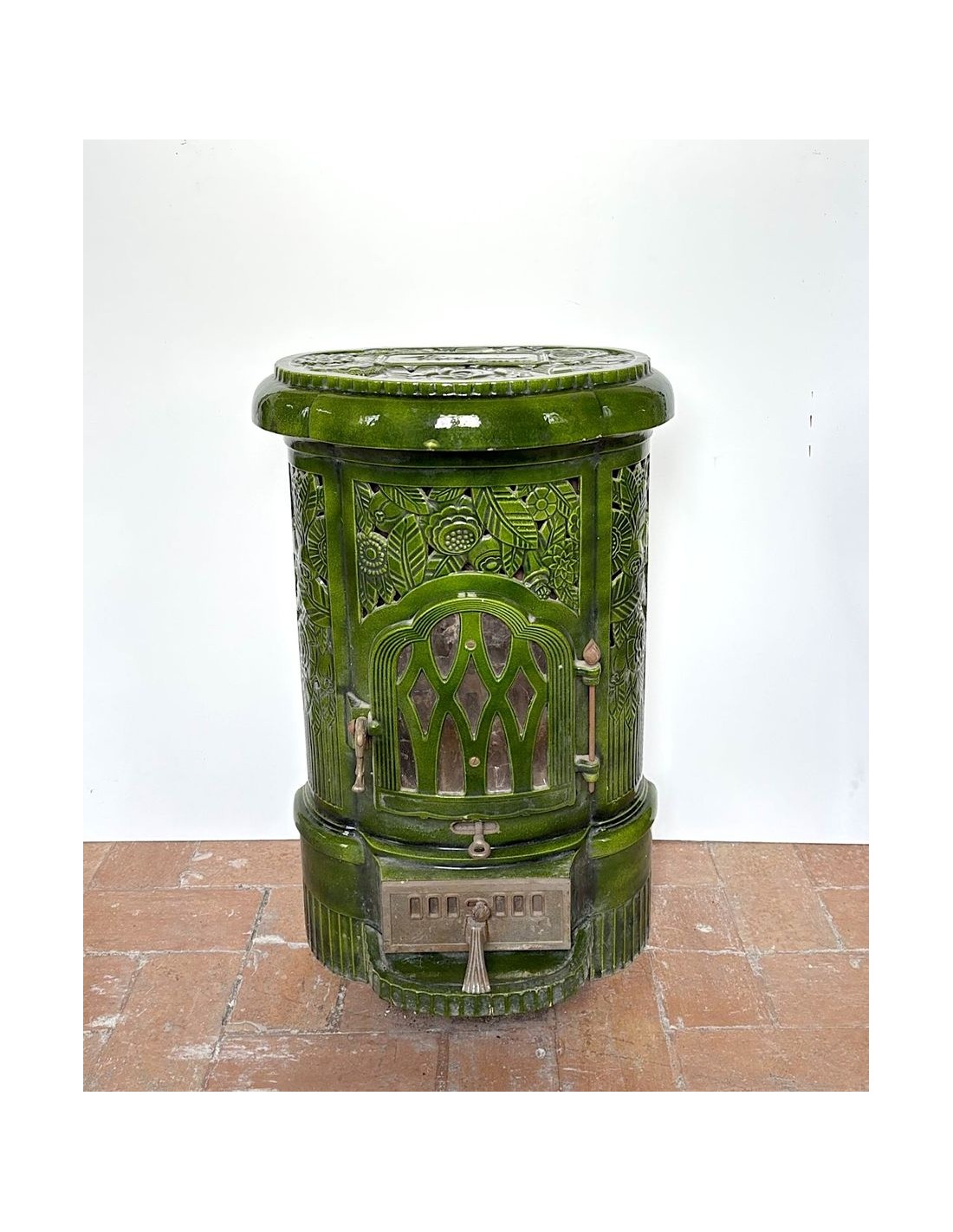
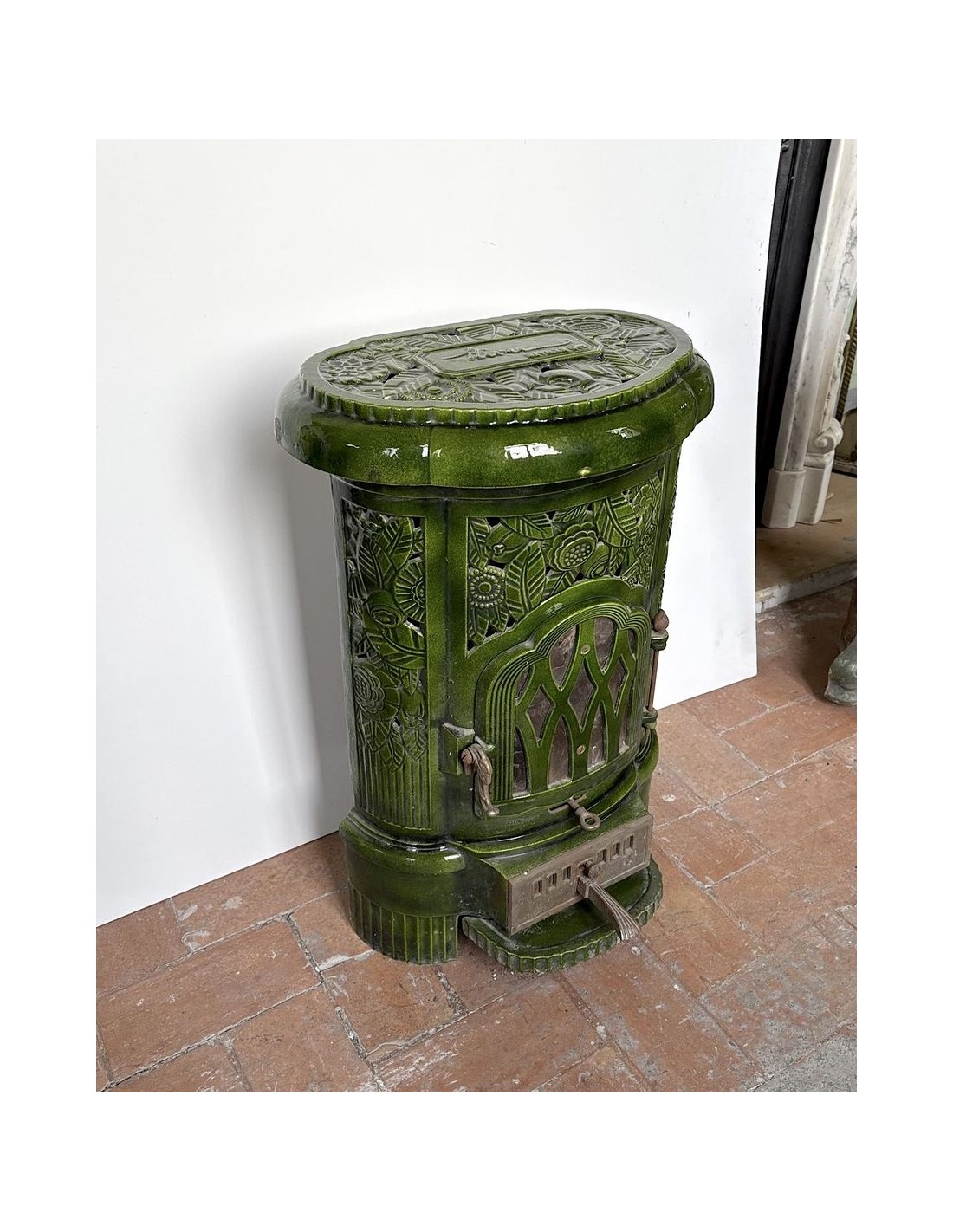
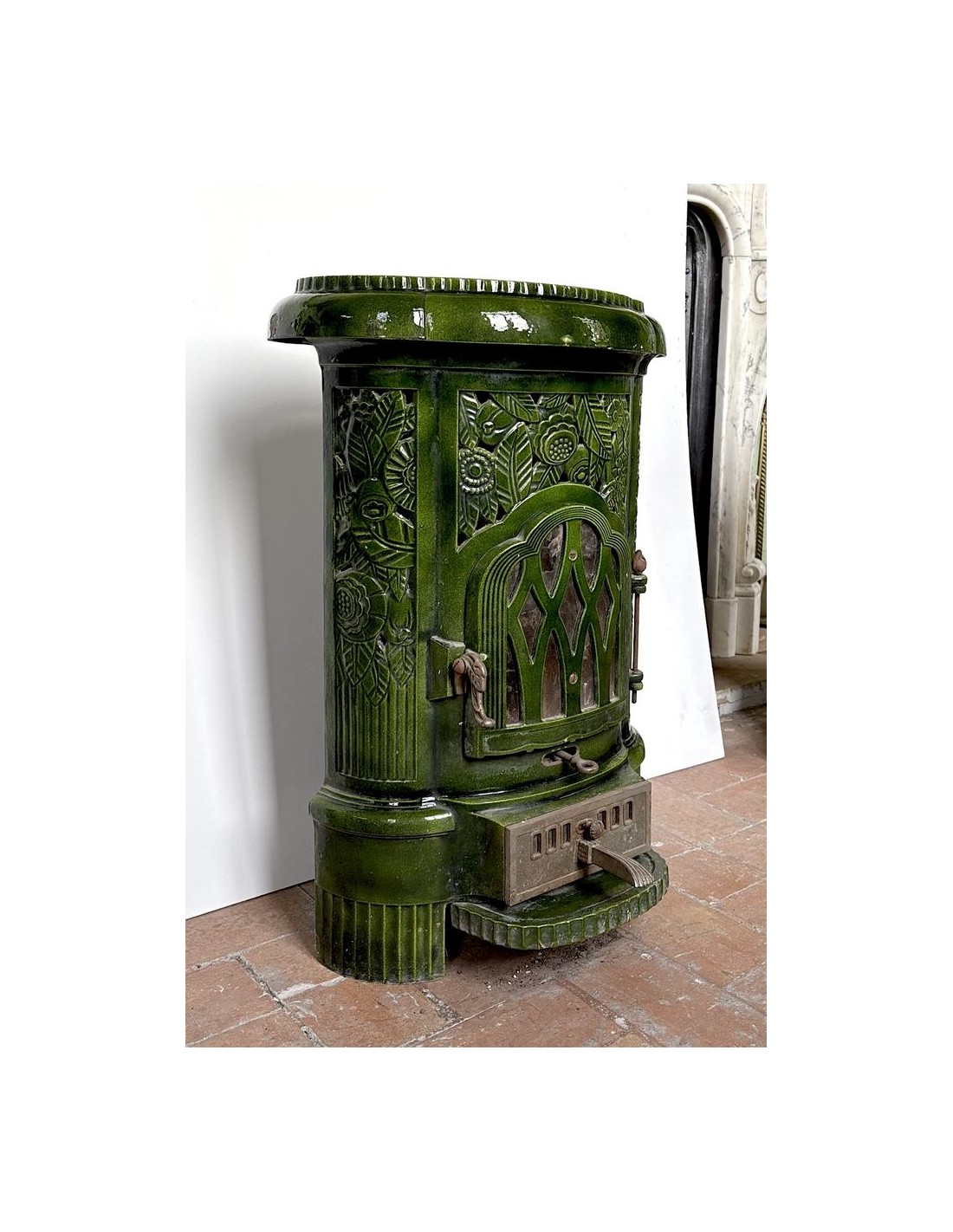
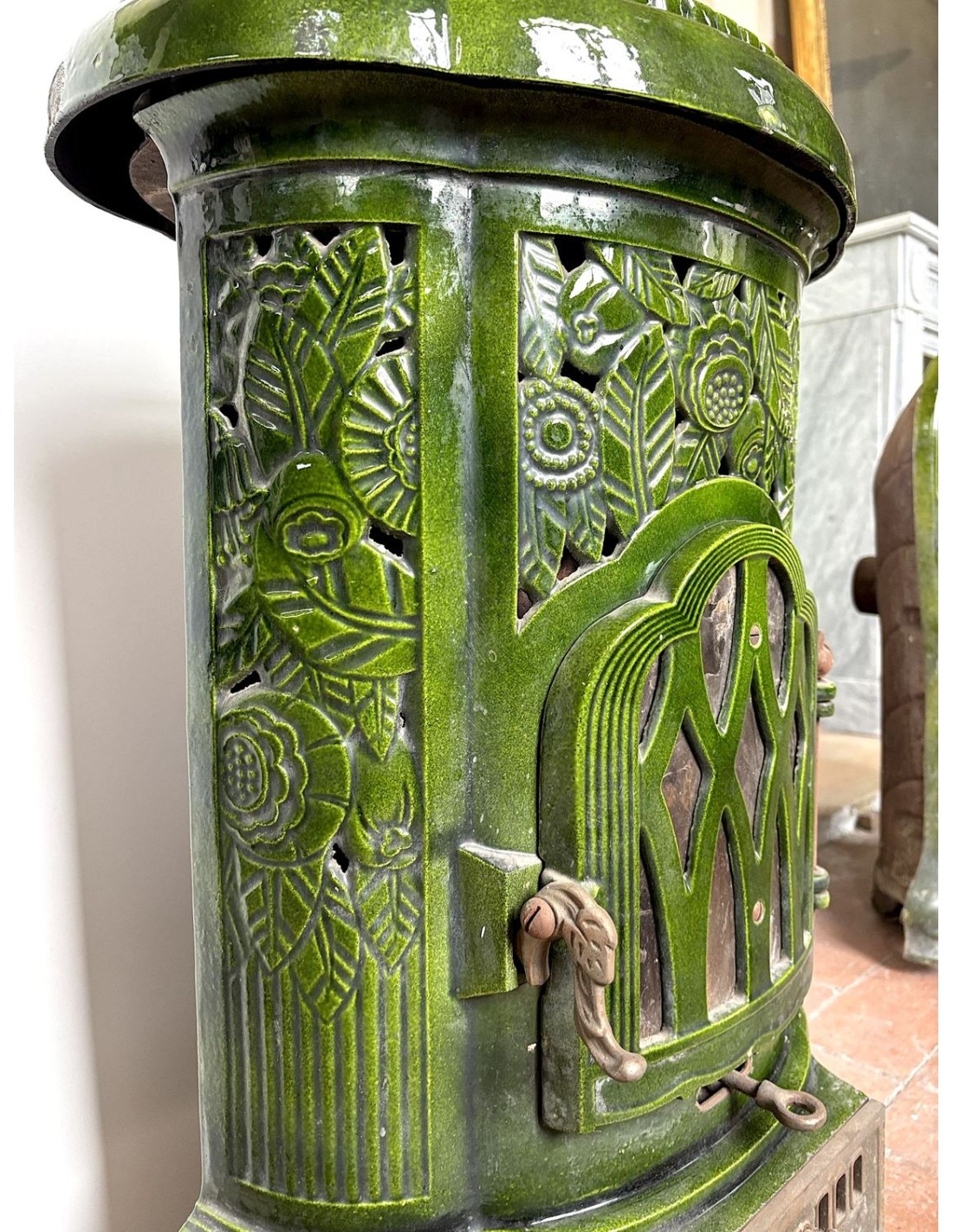
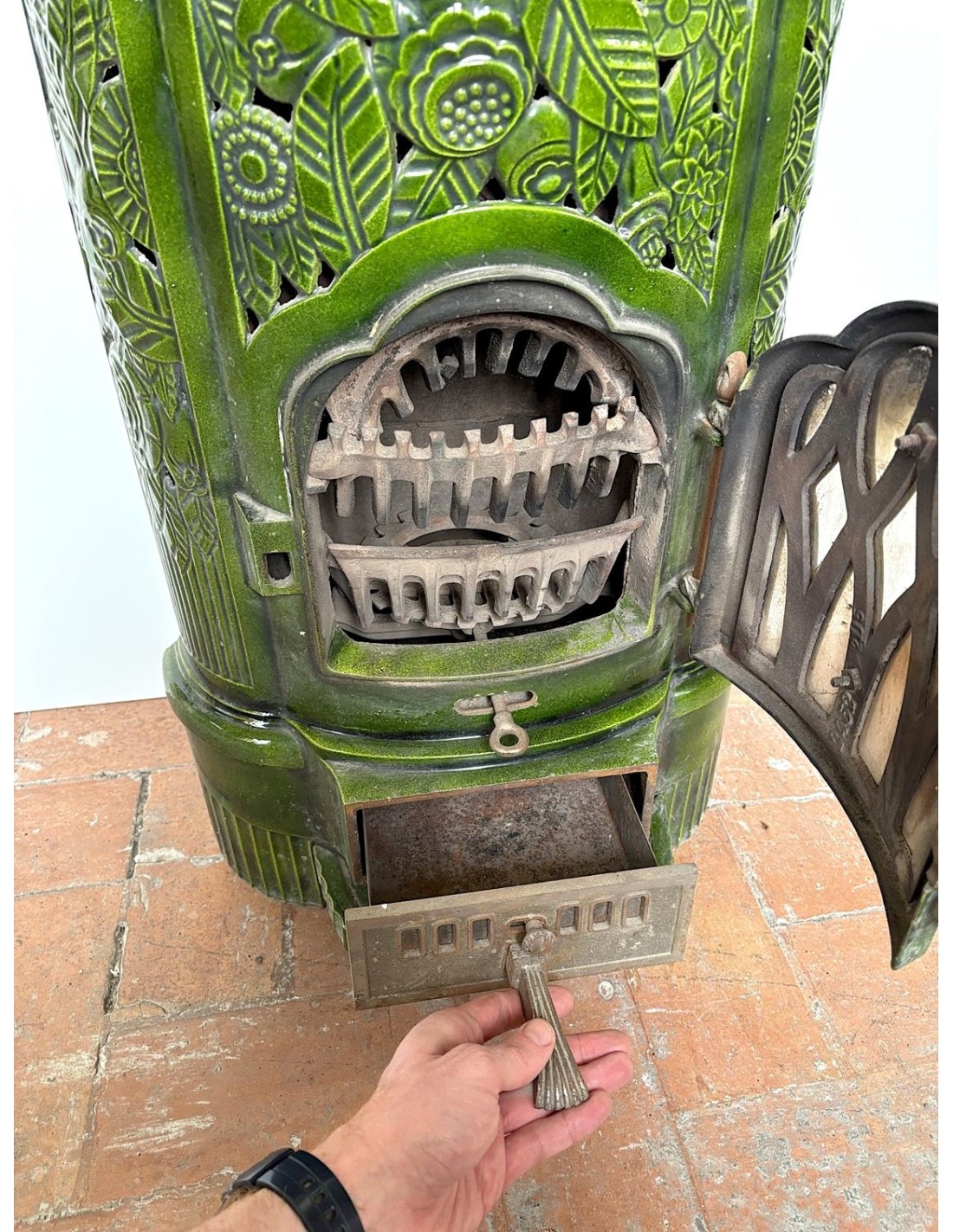
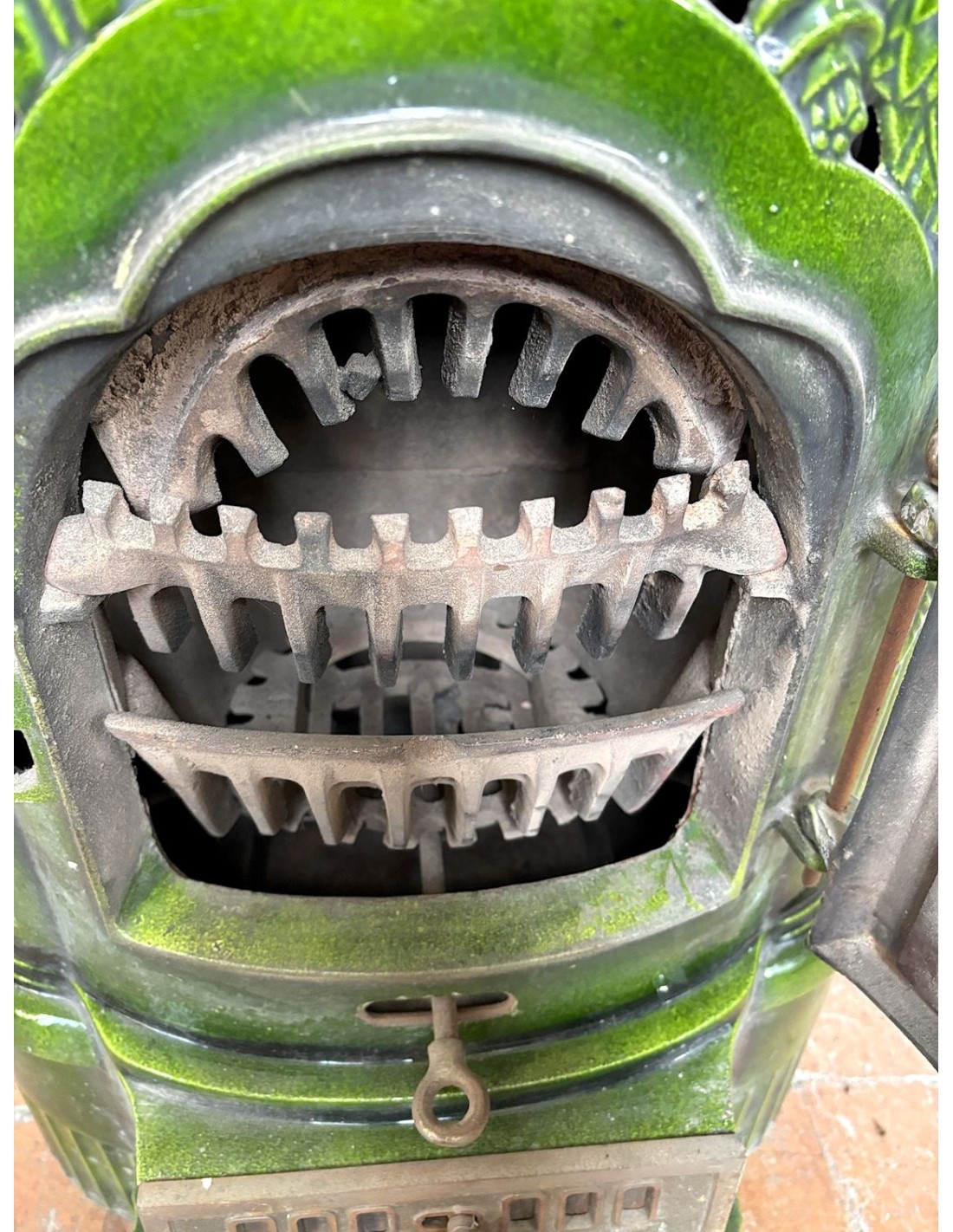
The translucent panels are not made of glass — considering the quality of glass available at the time, they would likely have shattered at the first lighting — but rather of mica, a mineral whose name derives from the Latin word meaning “to shine”.
Mica naturally separates into extremely thin sheets, is entirely fire-resistant and perfectly transparent, allowing a wonderfully clear view of the flames. In short, a truly remarkable material.
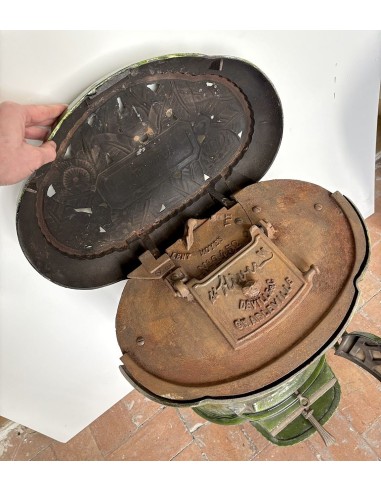
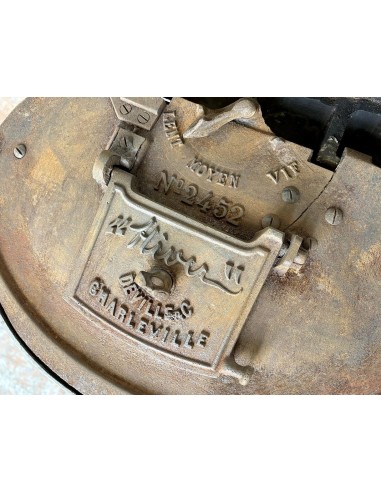
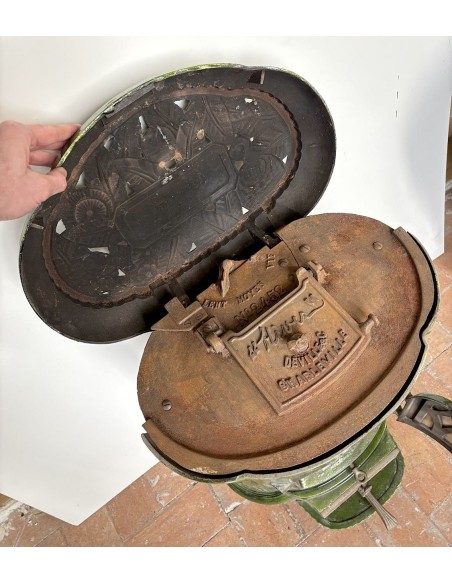
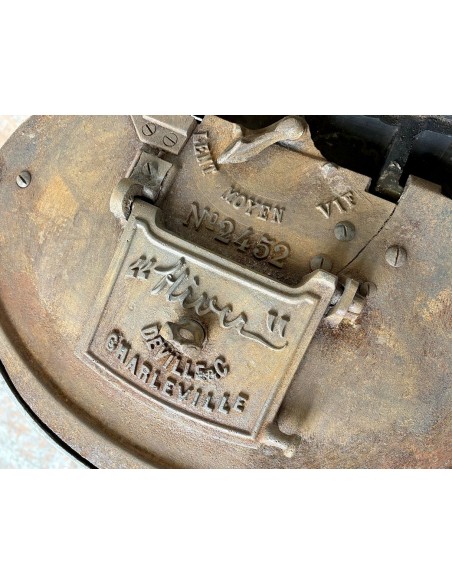
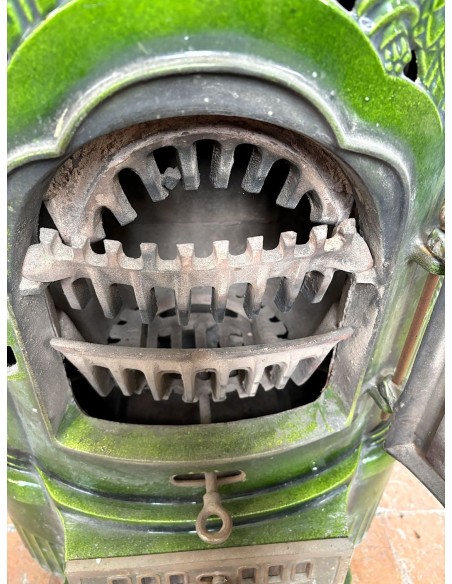
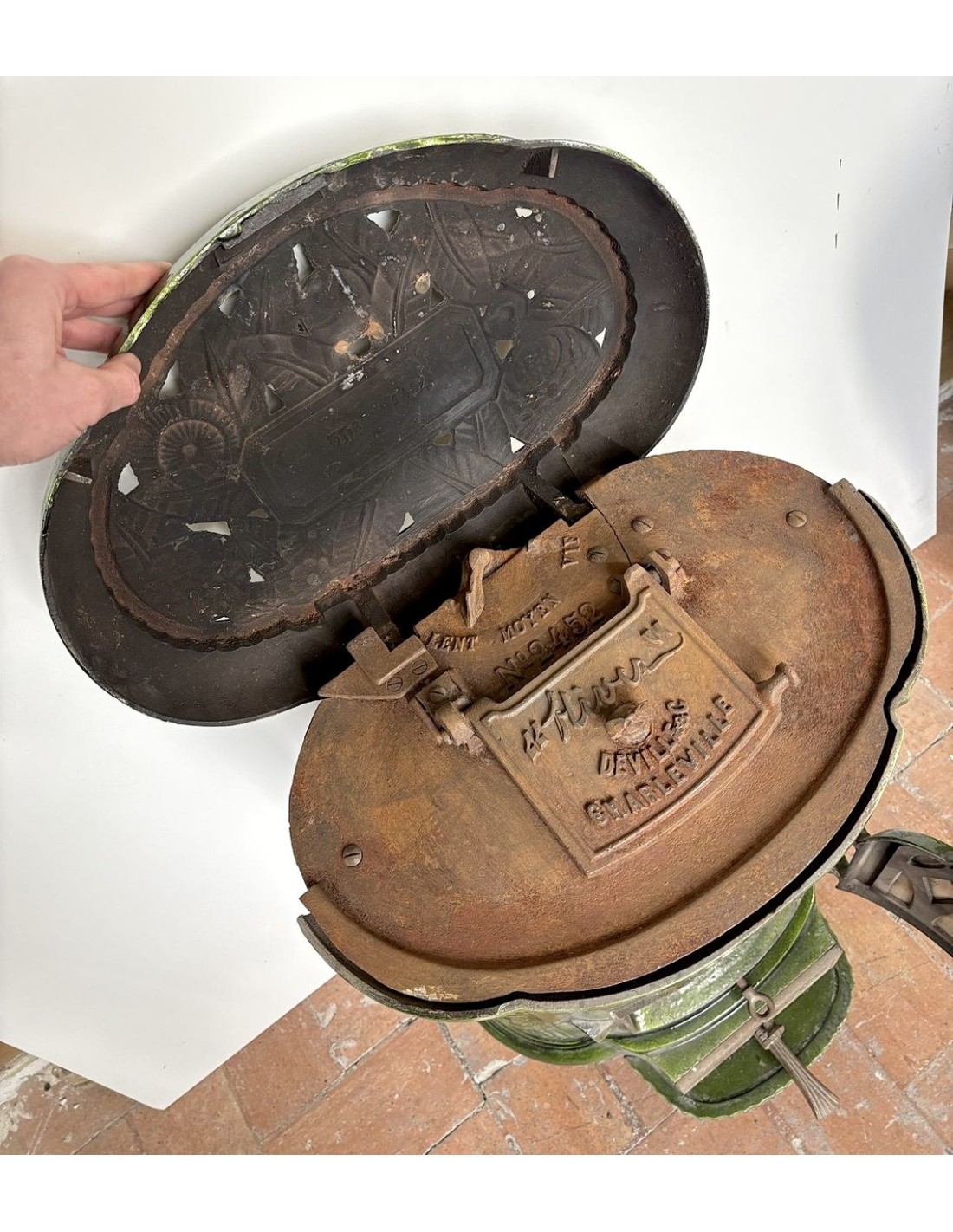
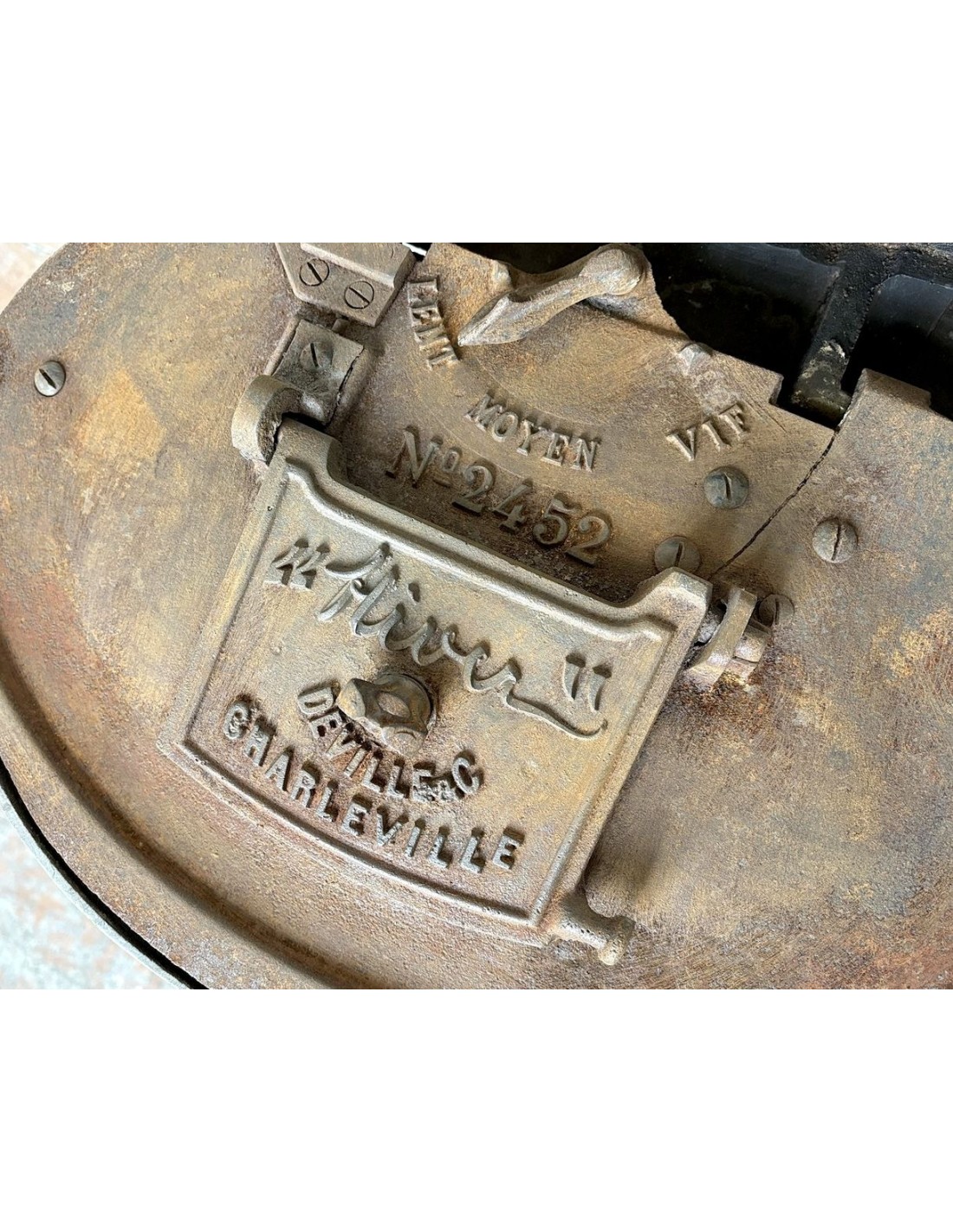
Despite its venerable age, this antique stove already features a mechanism allowing the airflow to be regulated without the need to open any door. The controls, naturally, are labelled in French: LENT, MOYEN, VIF.
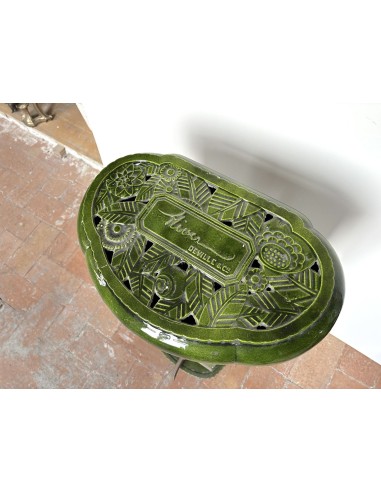
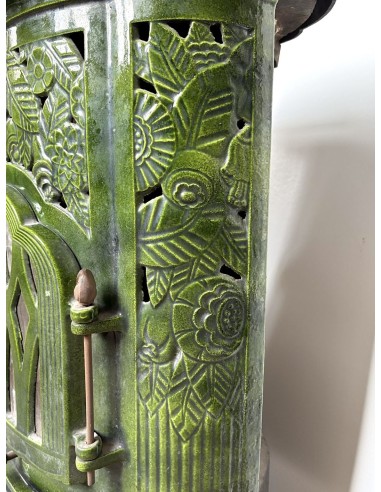
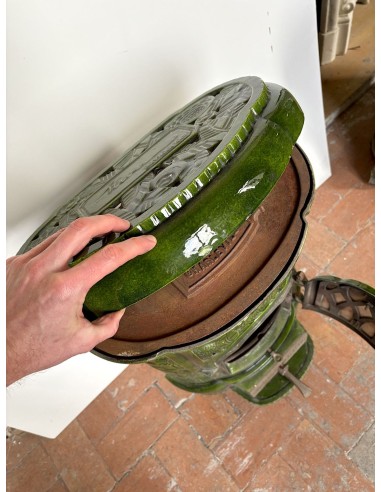
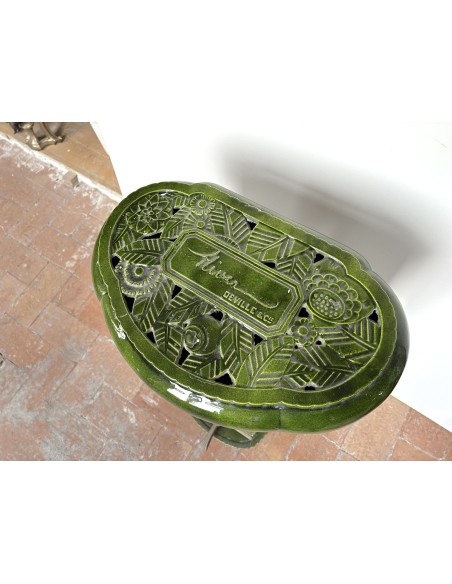
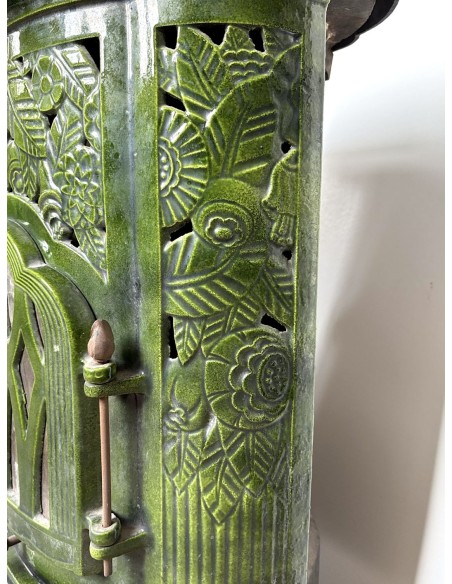
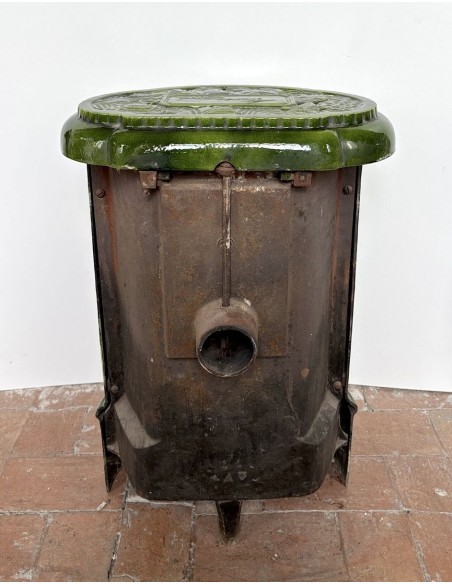
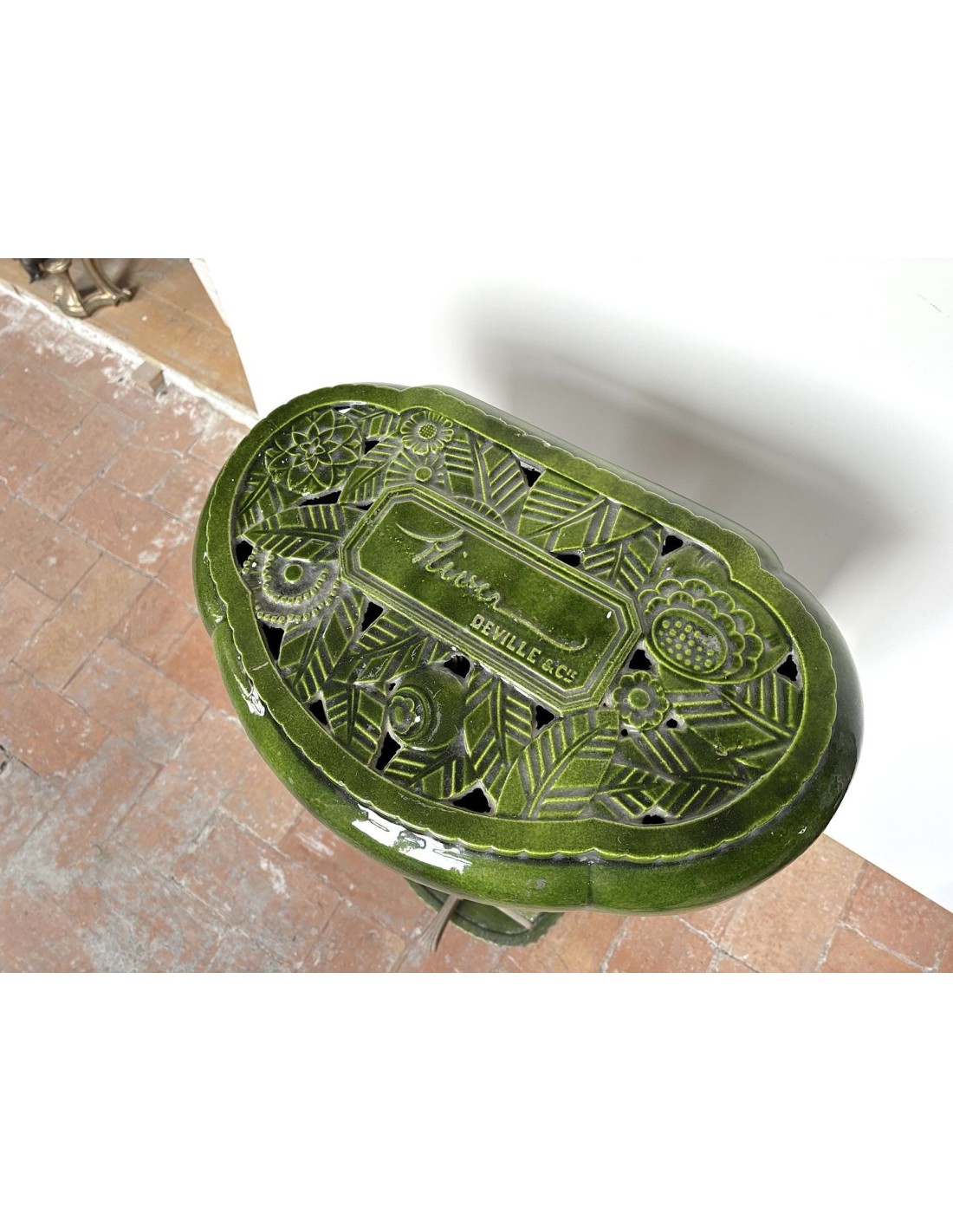
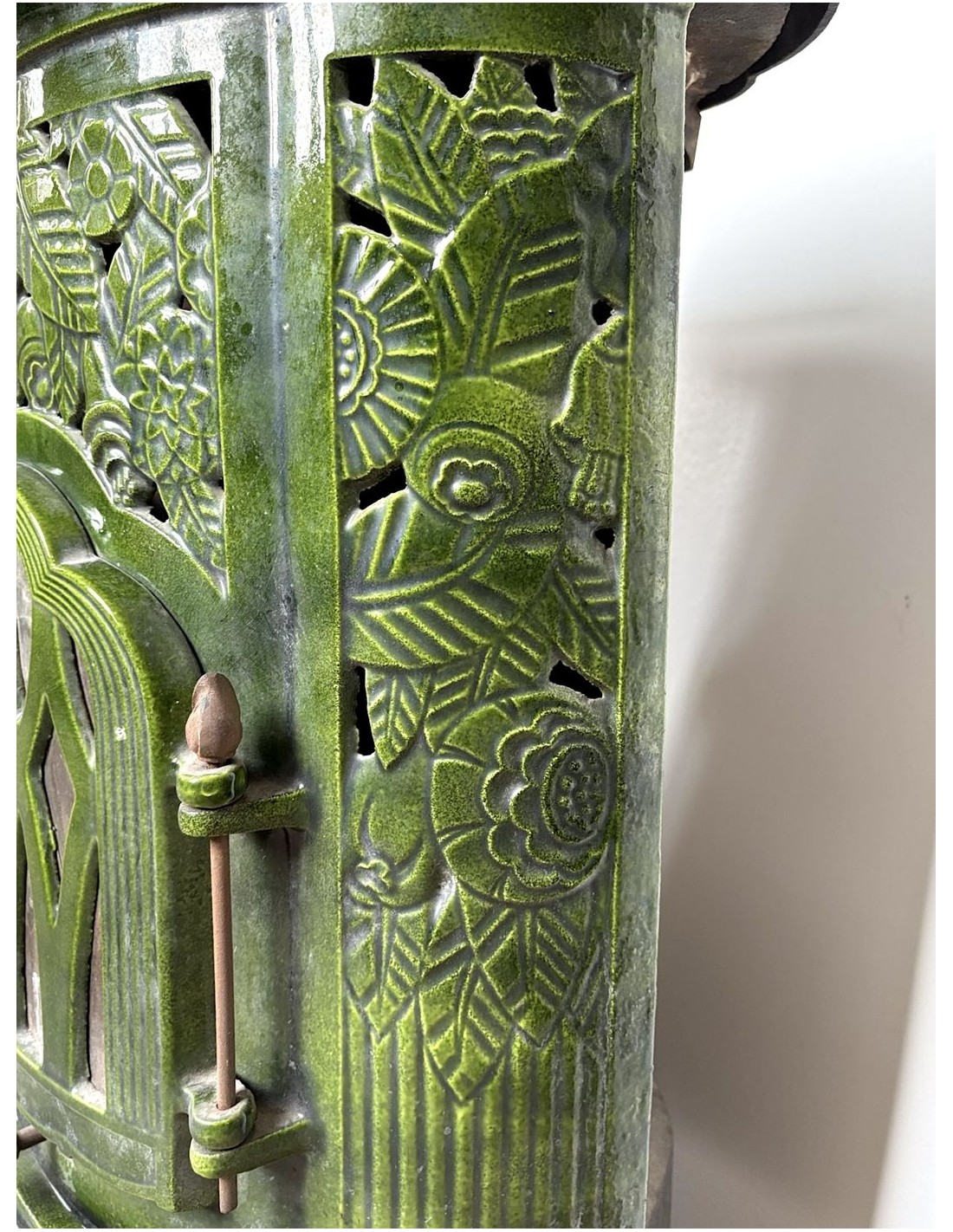
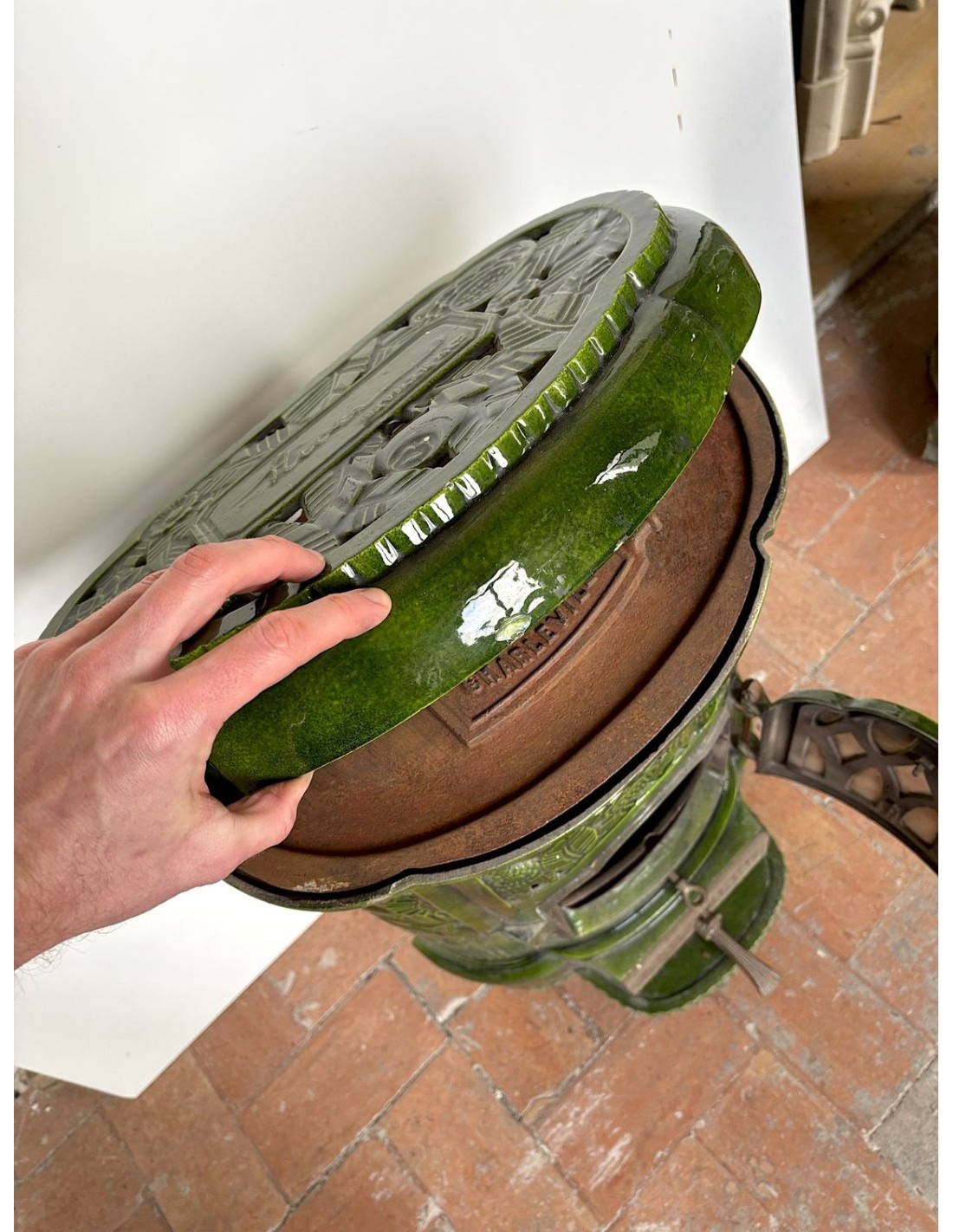
The piece remains in excellent overall condition. To the naked eye, the enamel appears virtually flawless. Naturally, under close inspection one may find the slightest traces of wear — hardly surprising for a Salamander stove that is approximately… one hundred and fifty years old.