ON HOLD

SHARE ON:
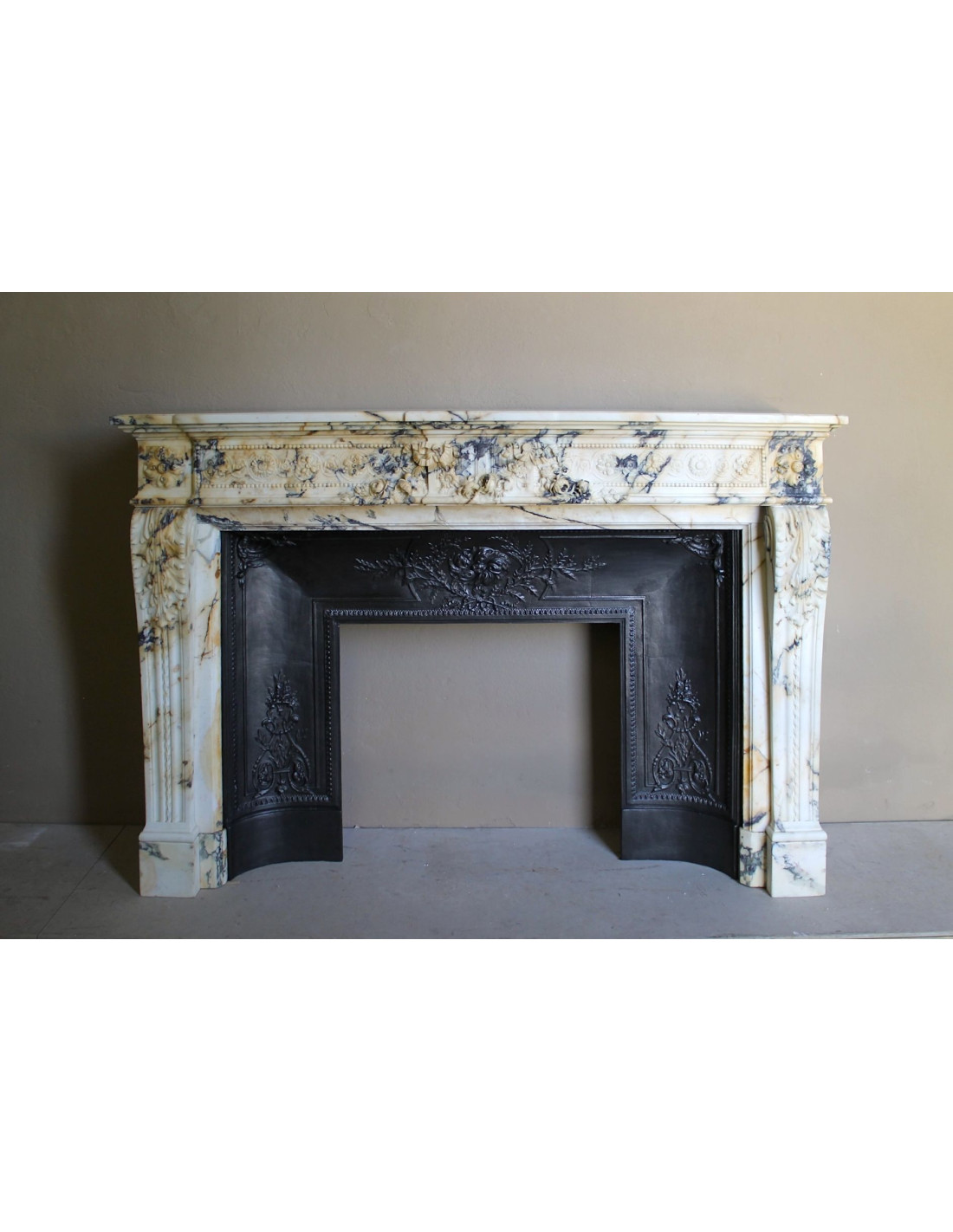
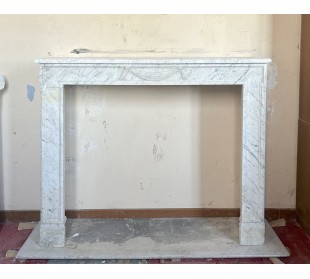
I have been waiting for your arrival for a very long time, my beloved "Macaron".
And this time, I have no intention of letting you go too quickly.
In fact, I have decided to dedicate one of the longest descriptions I have ever written to you.
I know that many readers will probably give up after a few paragraphs.
But those who stay until the end will discover the fascinating story behind this remarkable Louis XVI antique fireplace mantel—a story whose origins stretch back not merely centuries... but several millennia.
You don't believe me?
Allow me to explain.
Let us begin with what is now known as the "Paris Rosette."
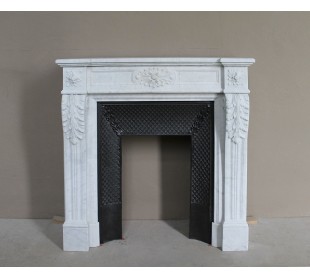
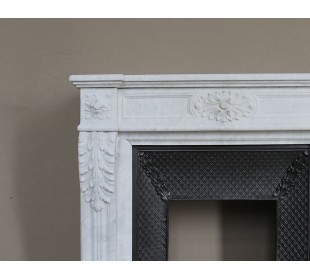
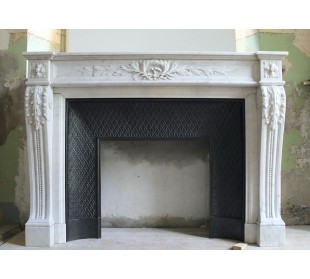
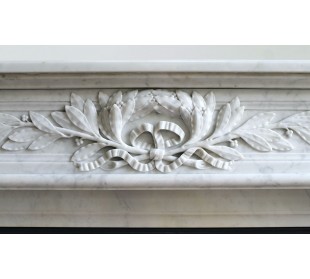
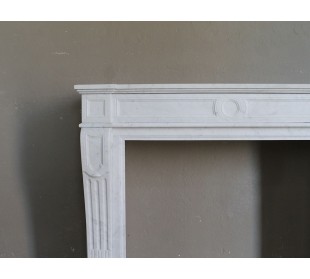
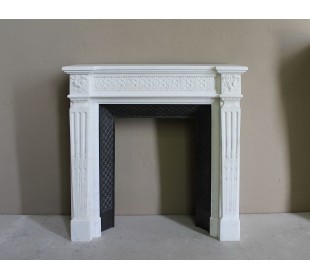
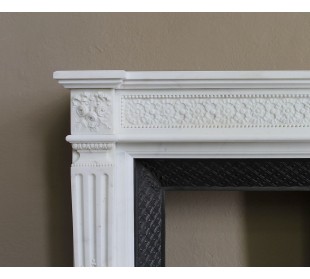
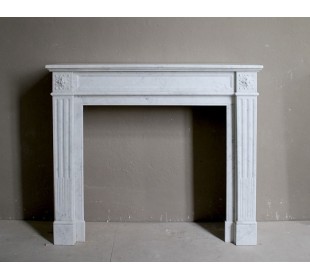
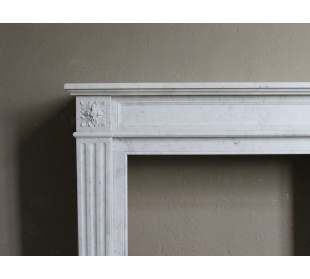
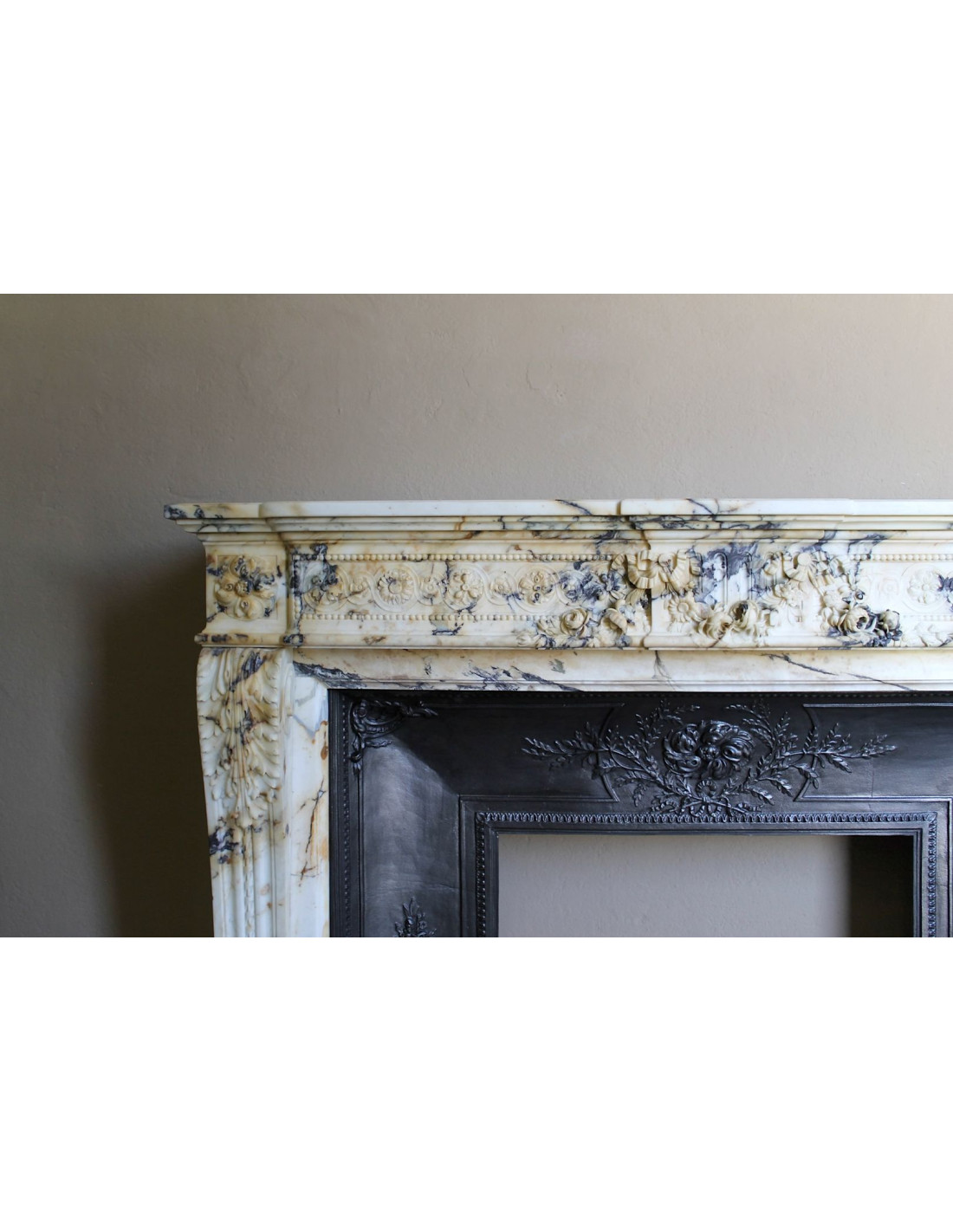
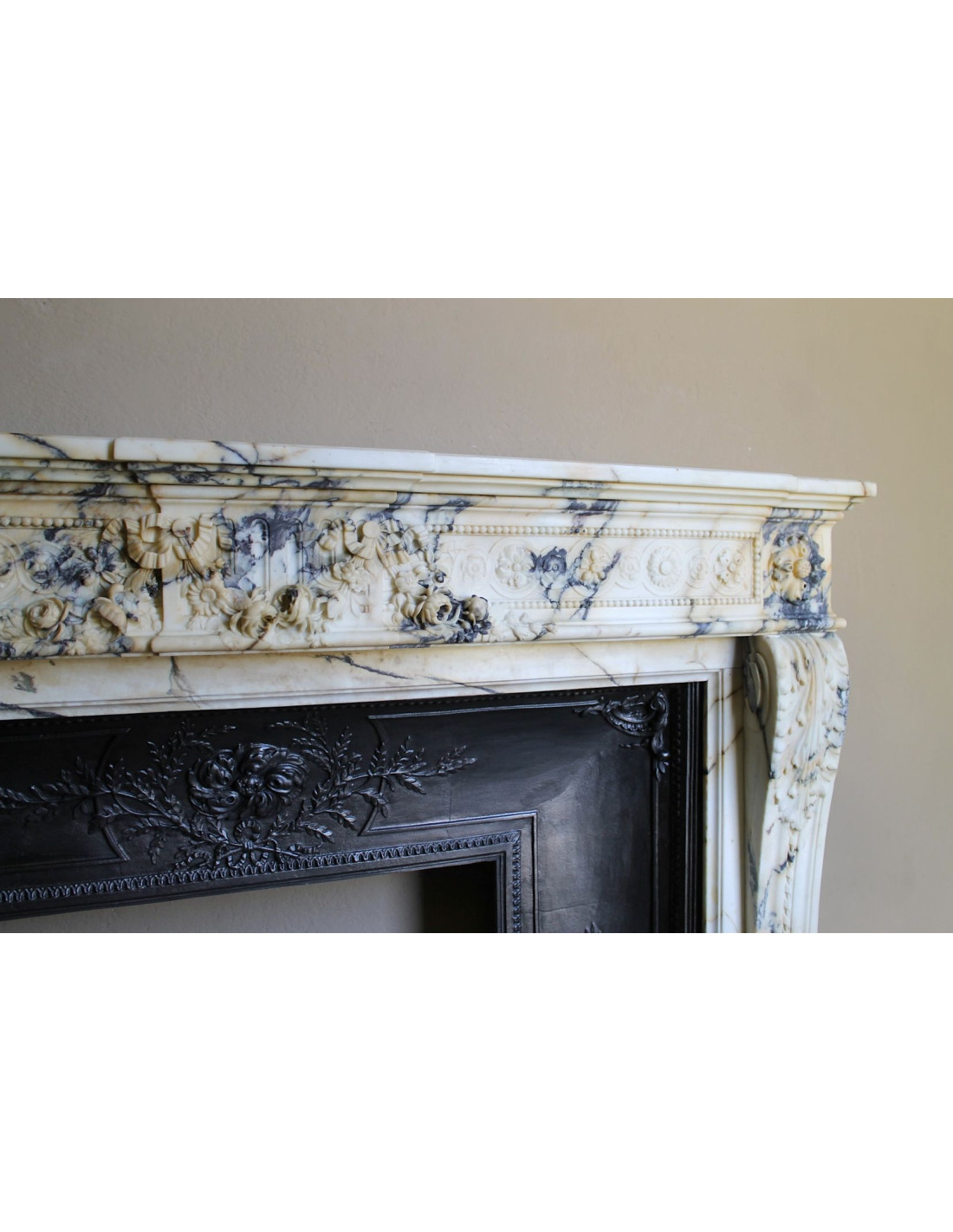
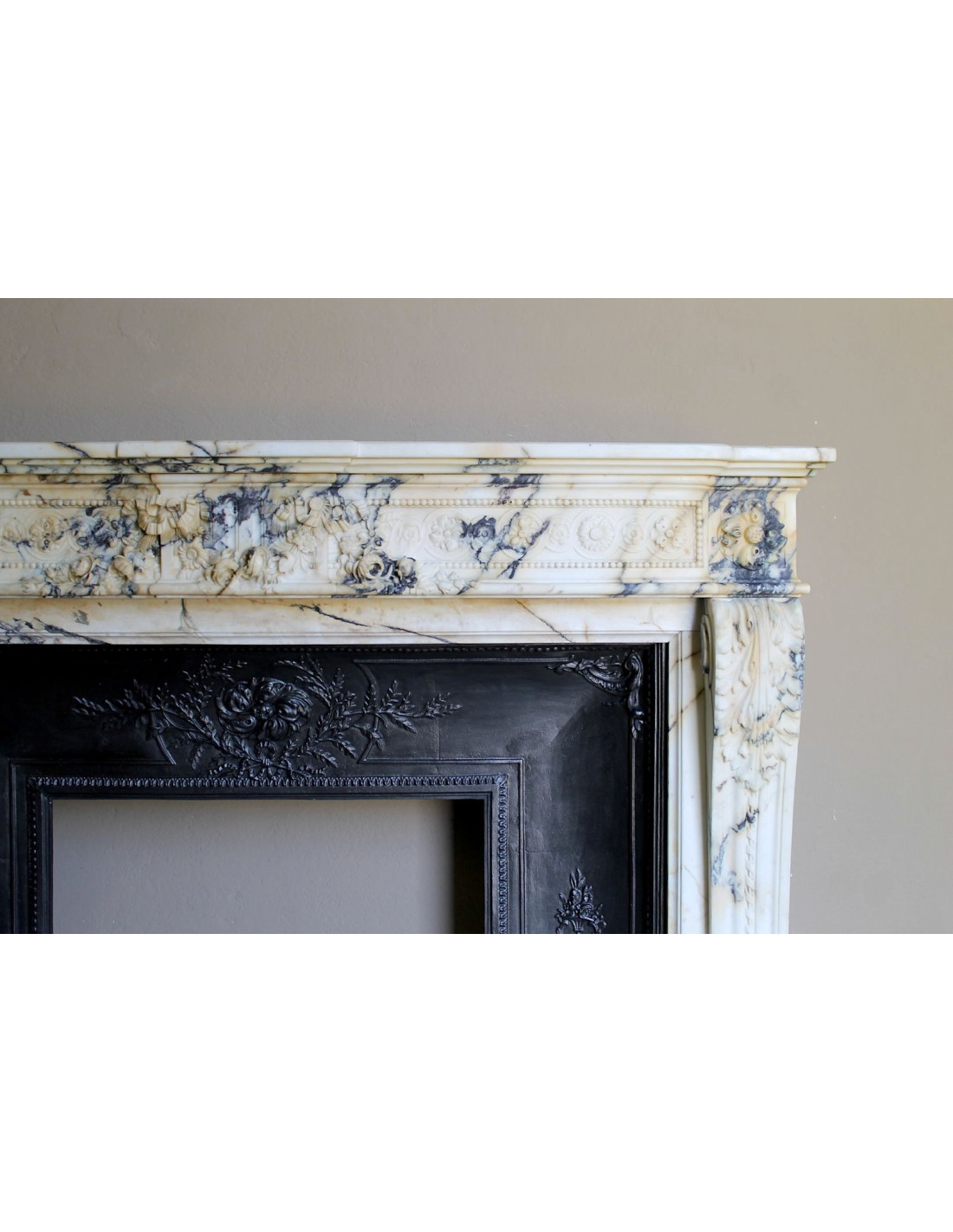
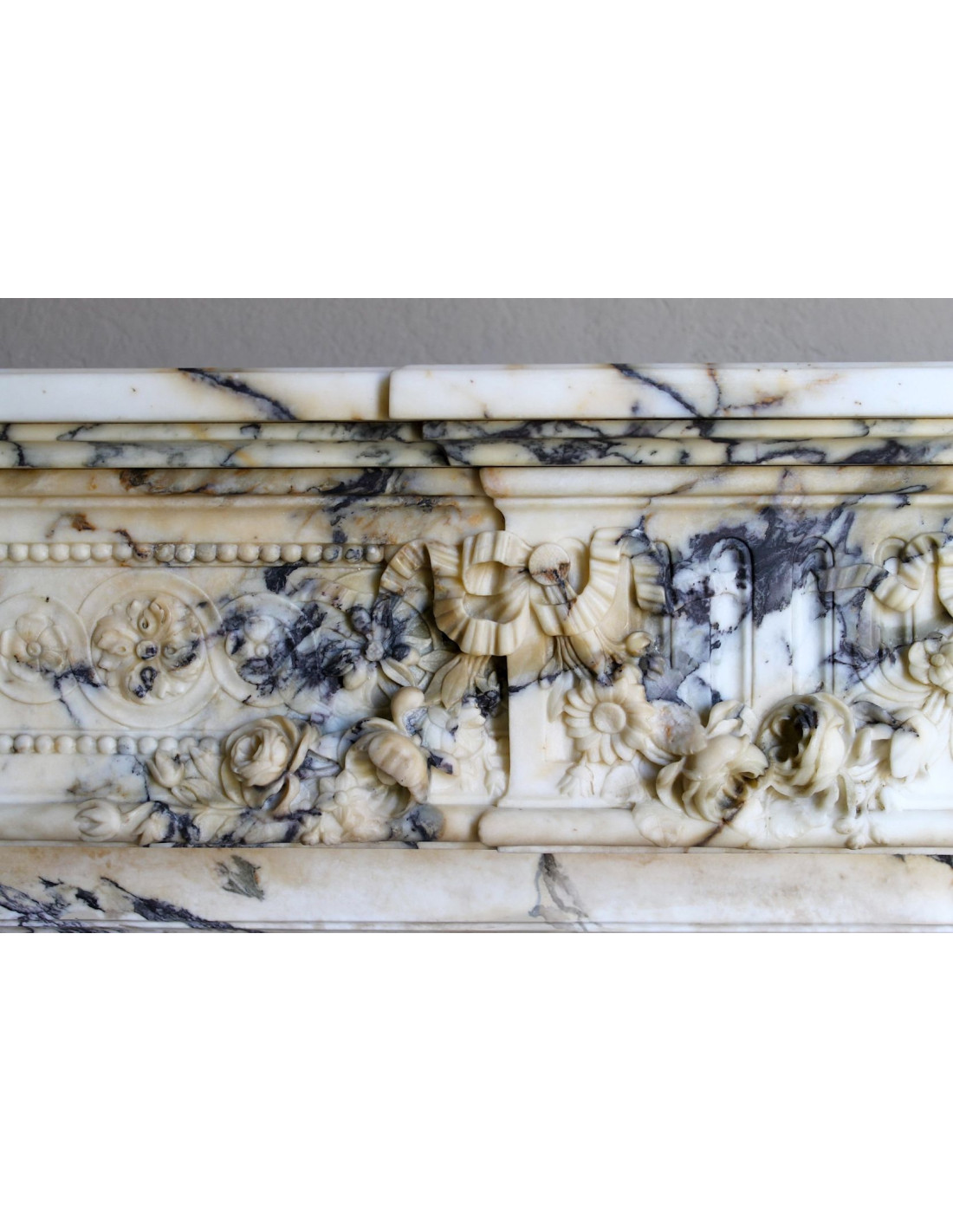
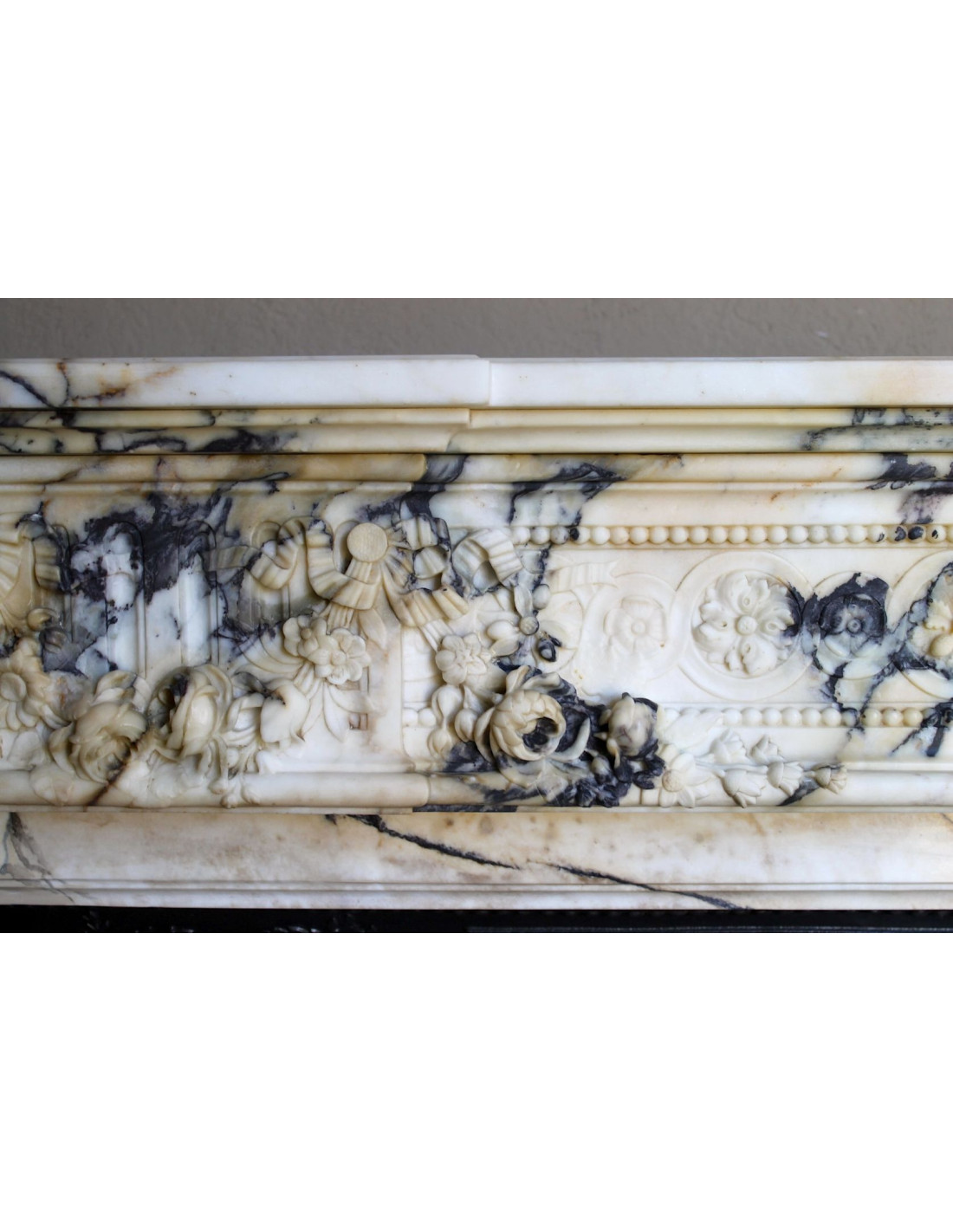
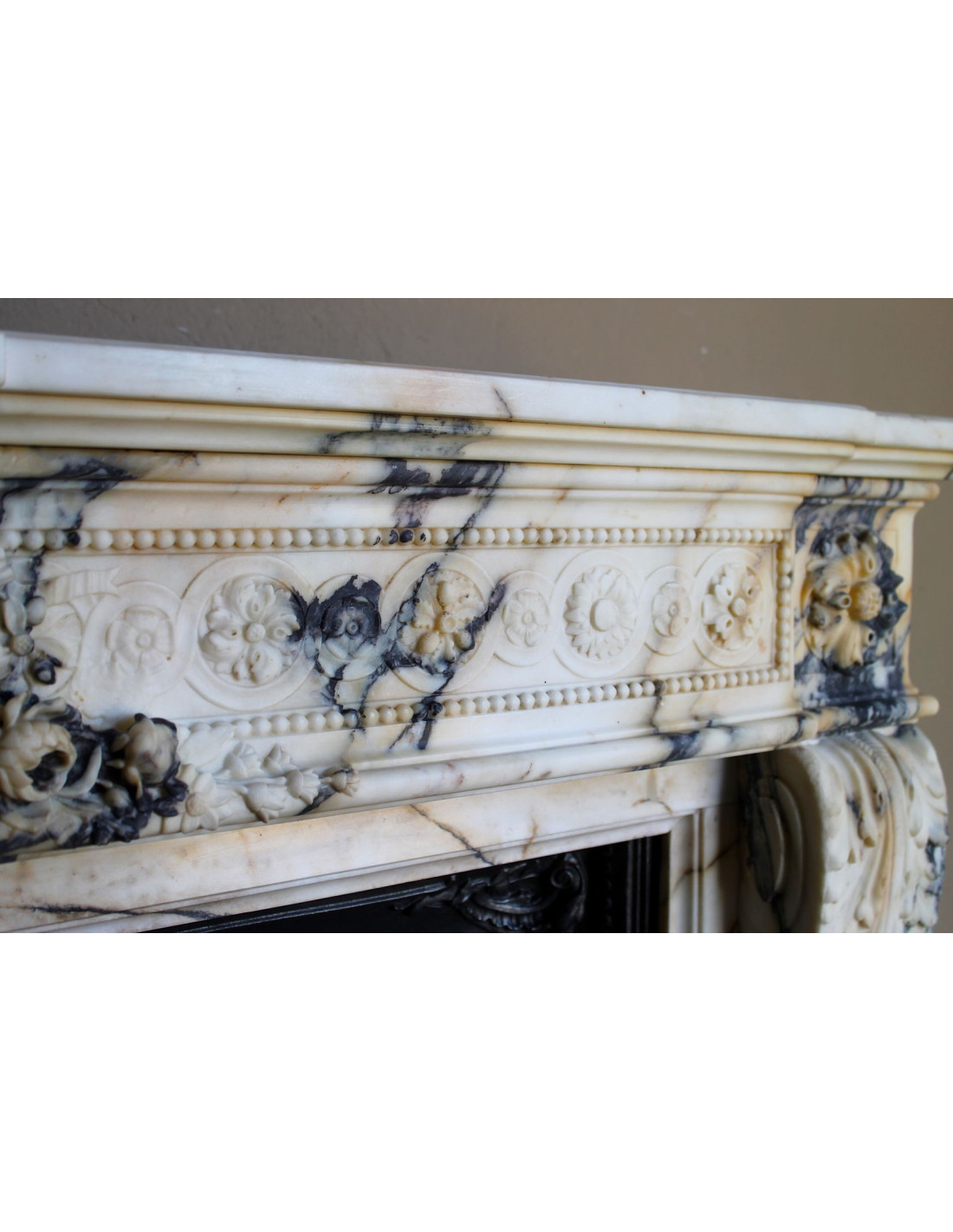
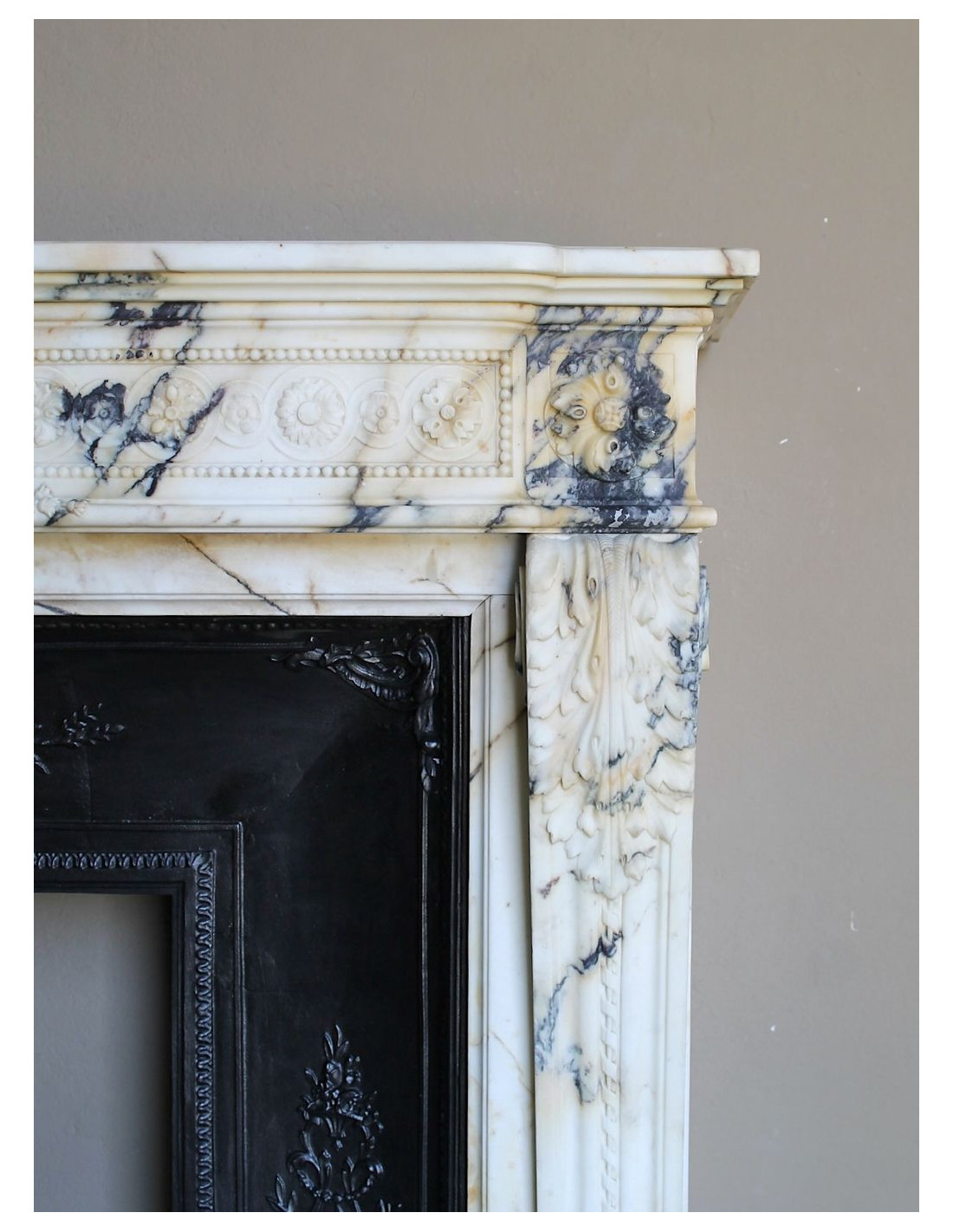
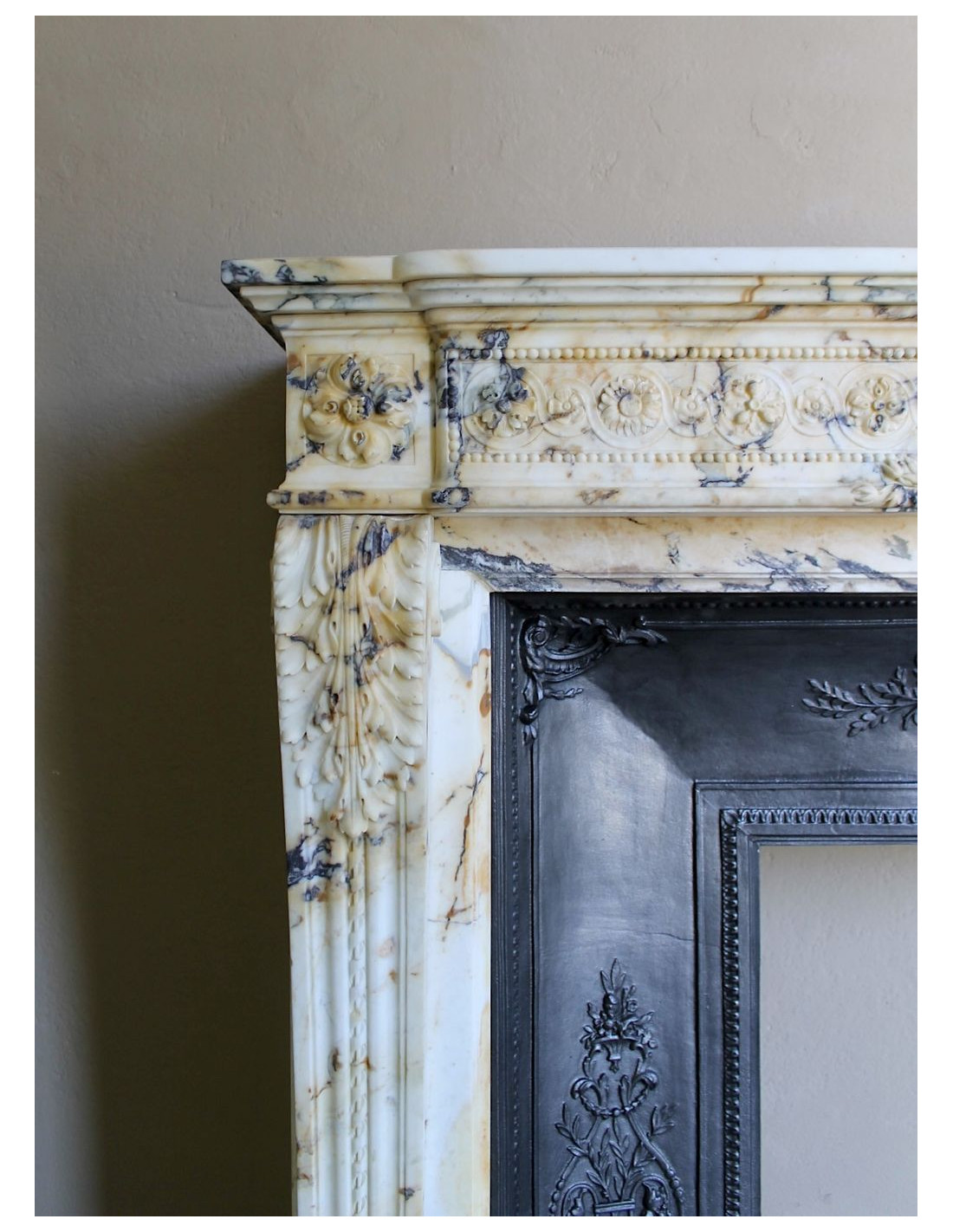
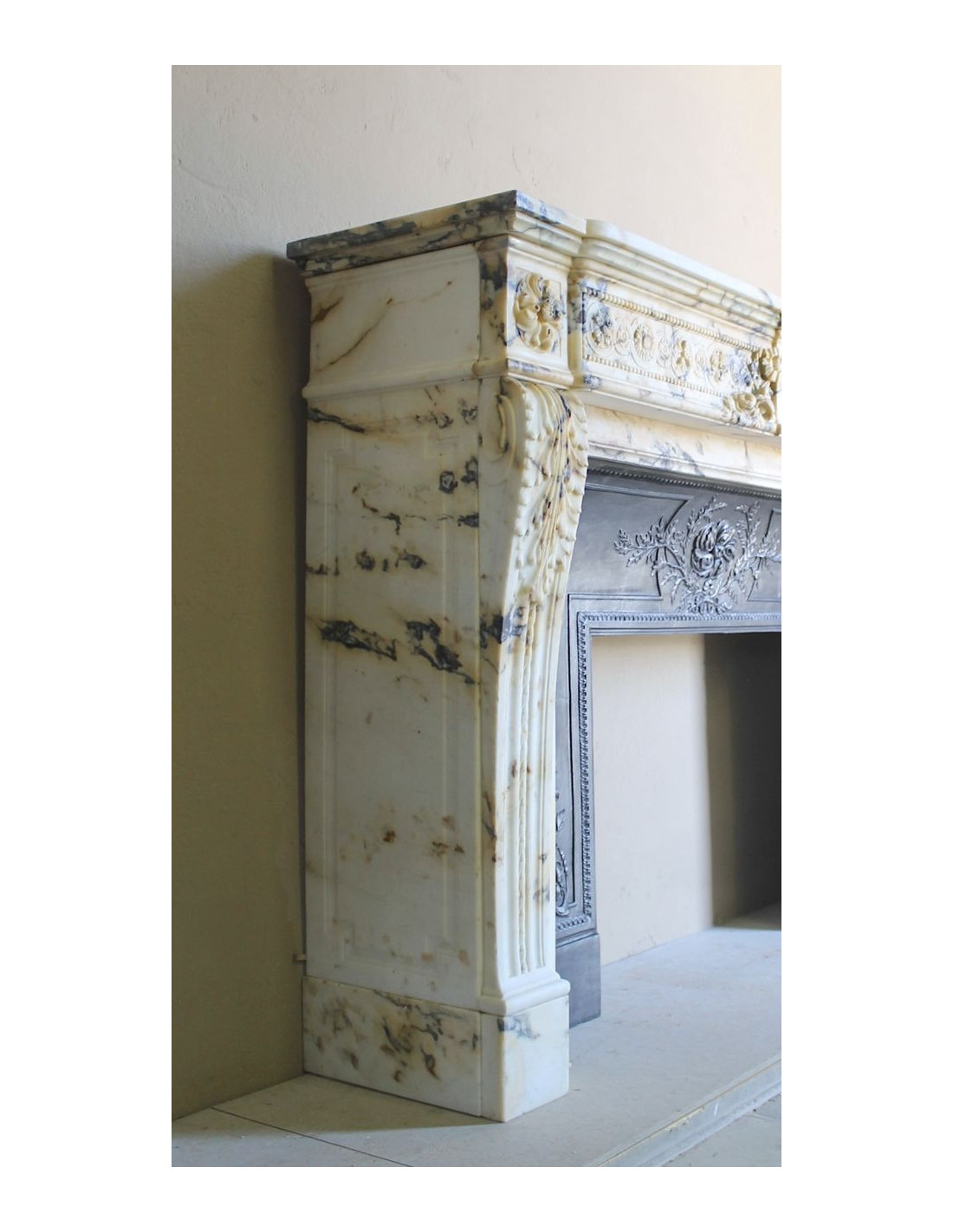
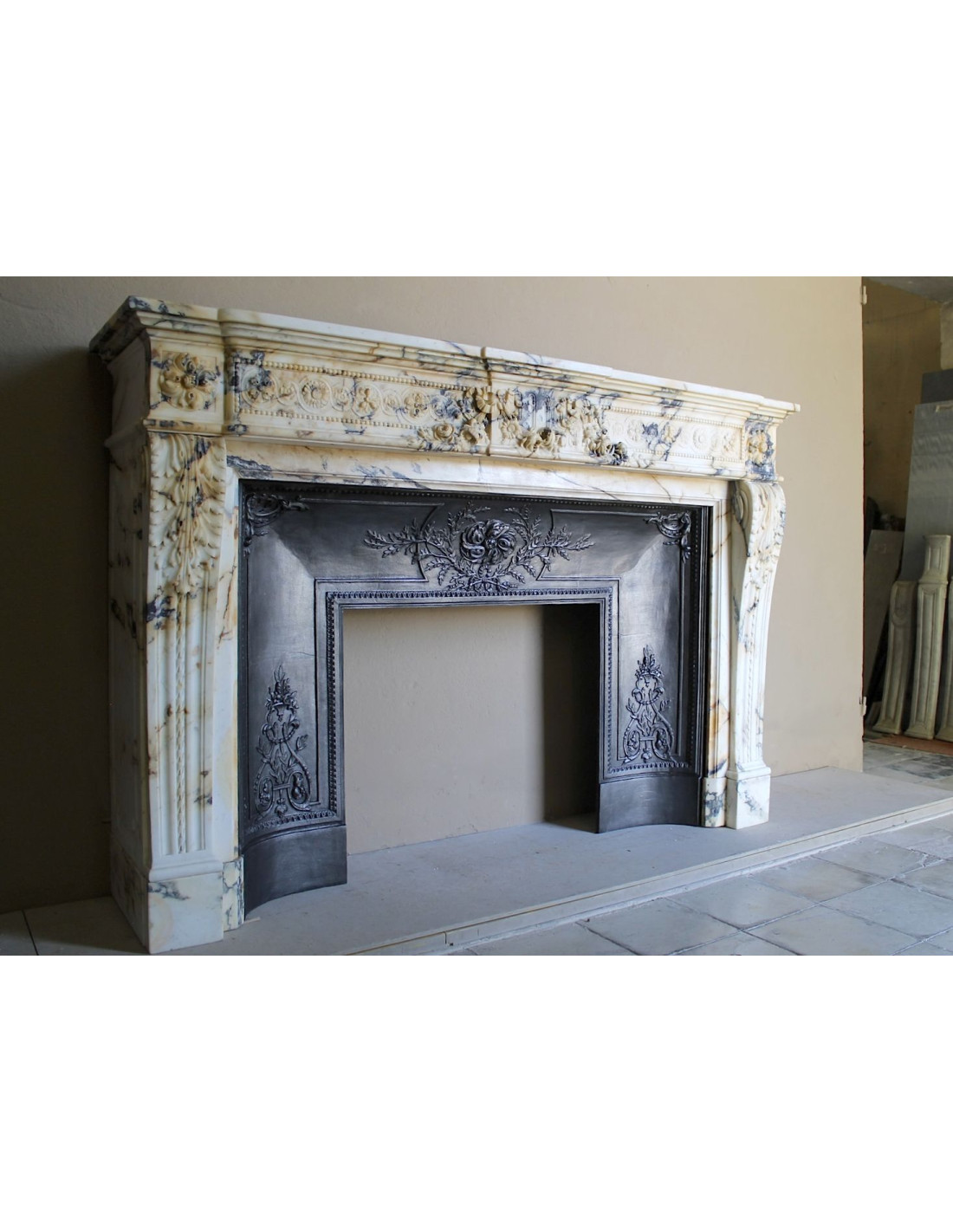
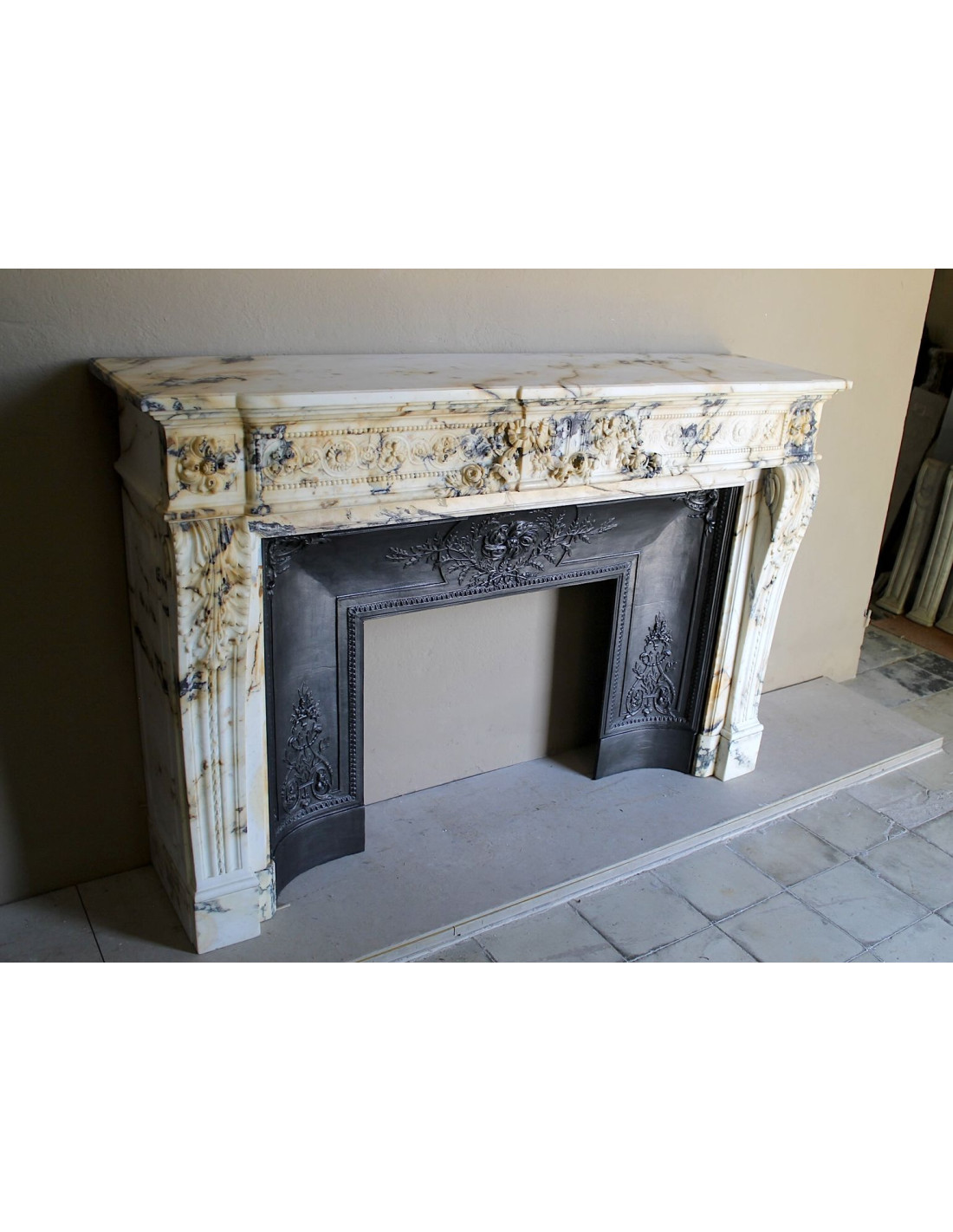
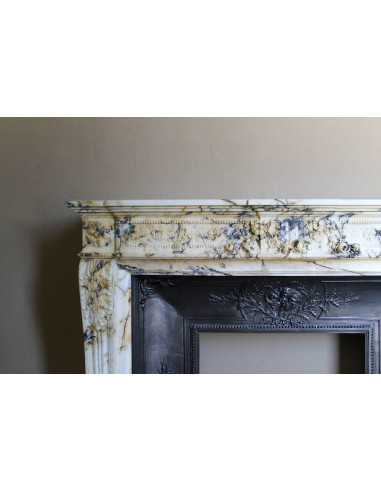
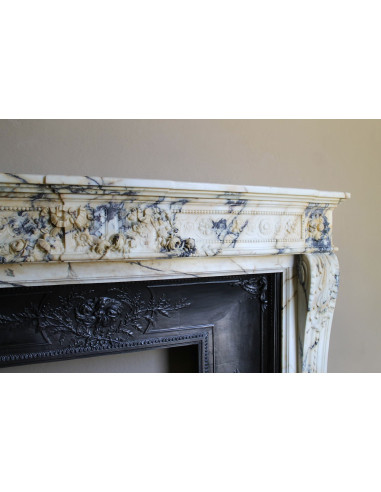
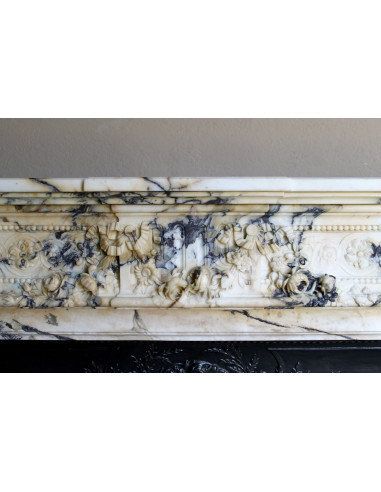
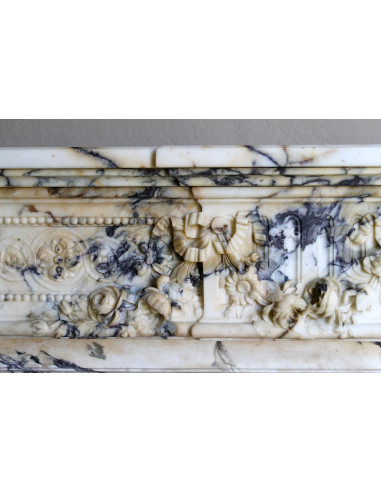
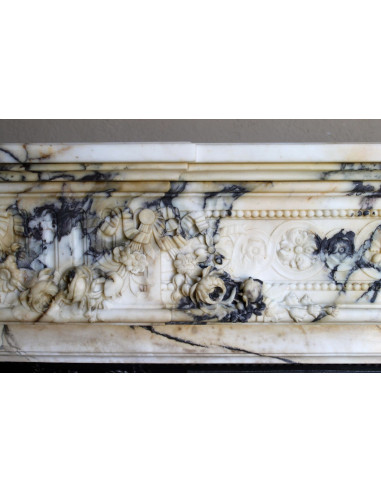
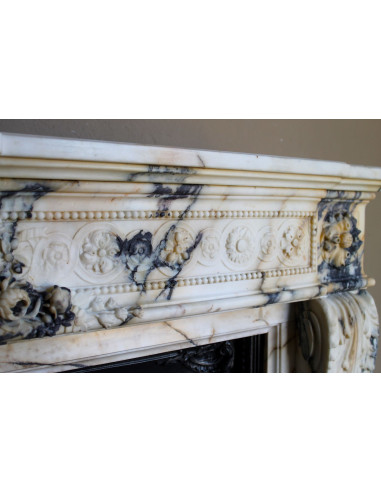
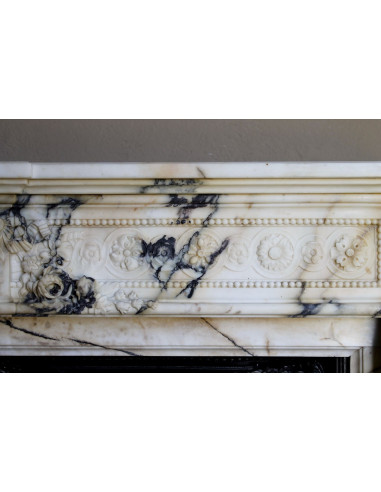
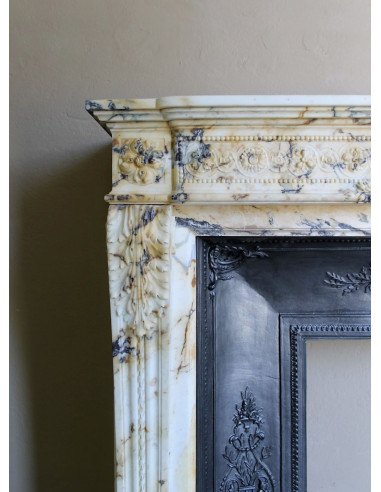
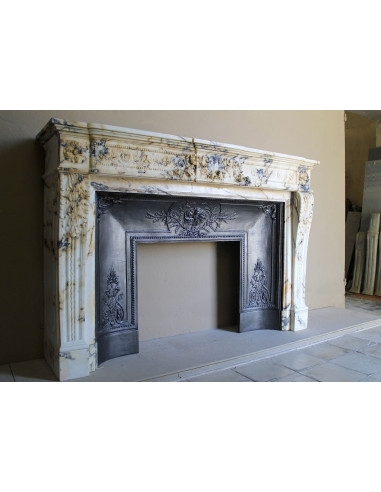
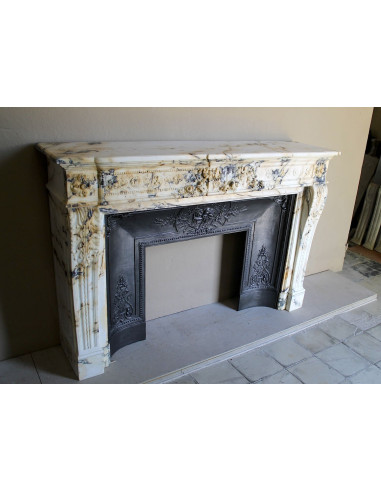
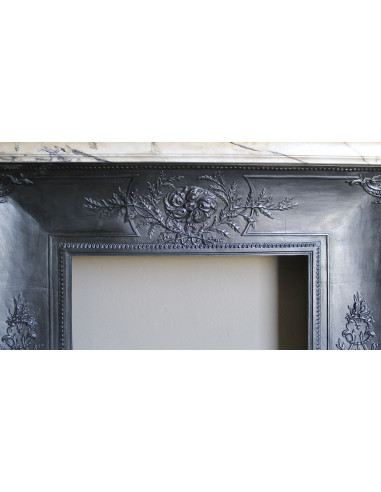
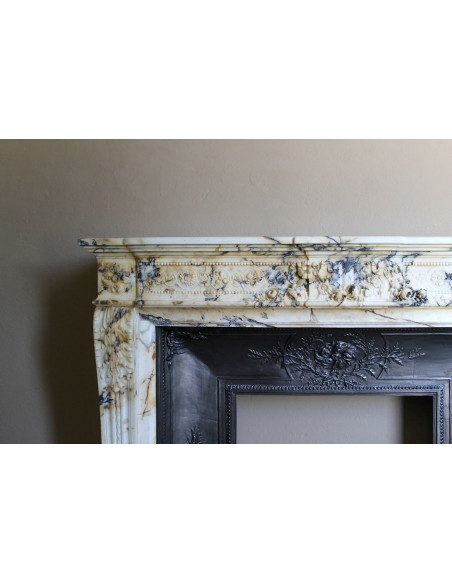
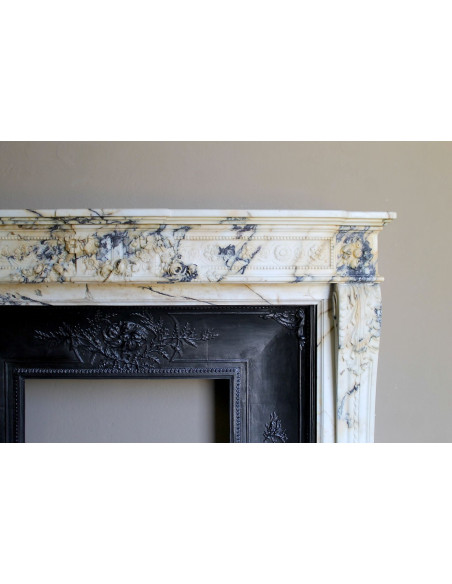
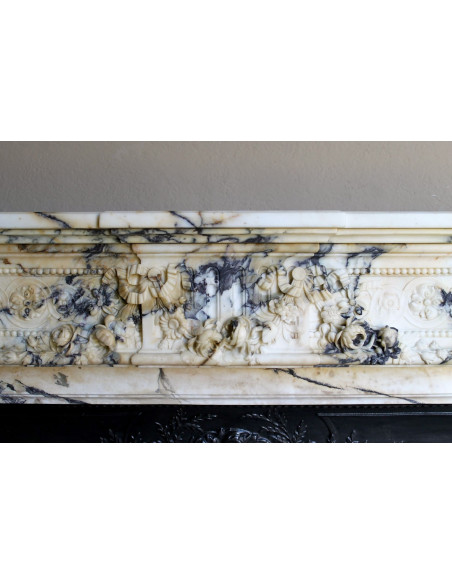
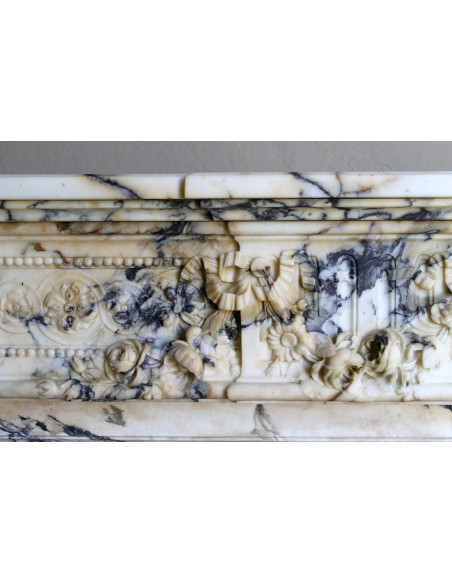
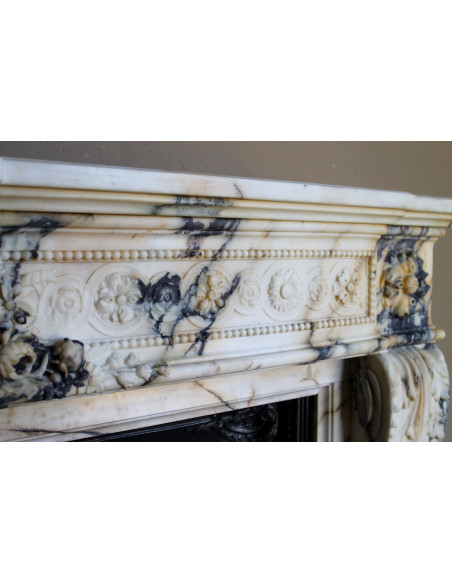
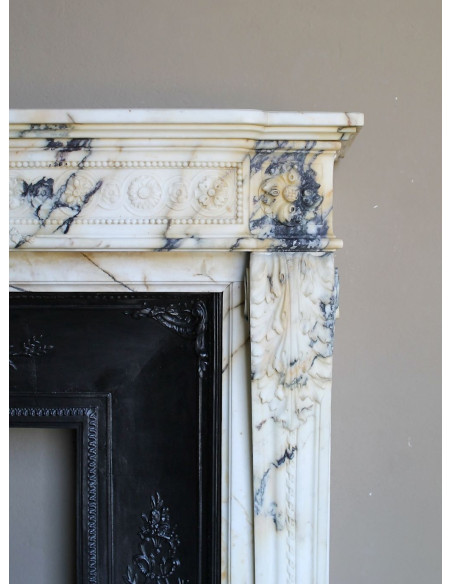
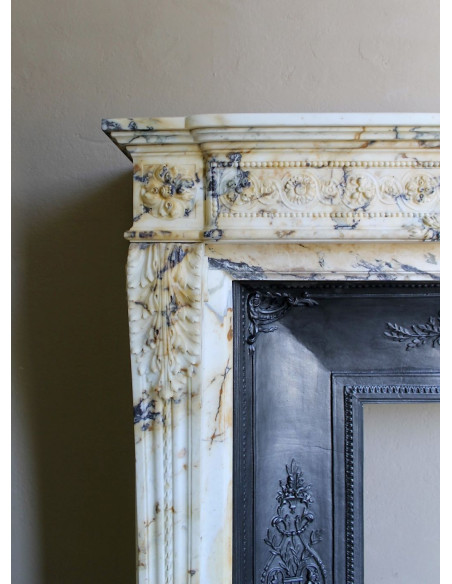
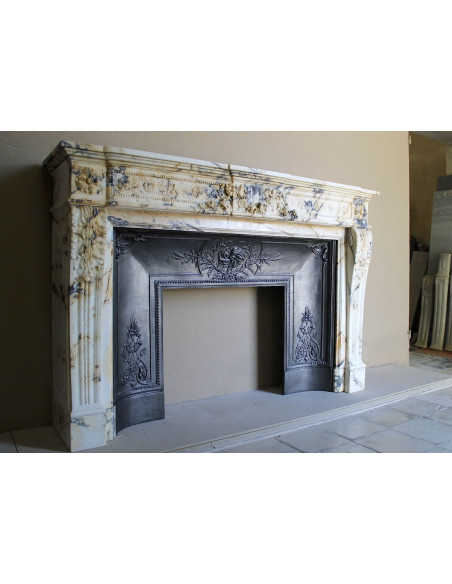
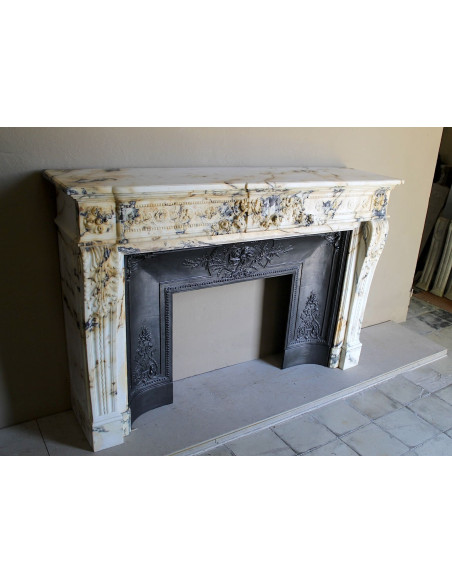
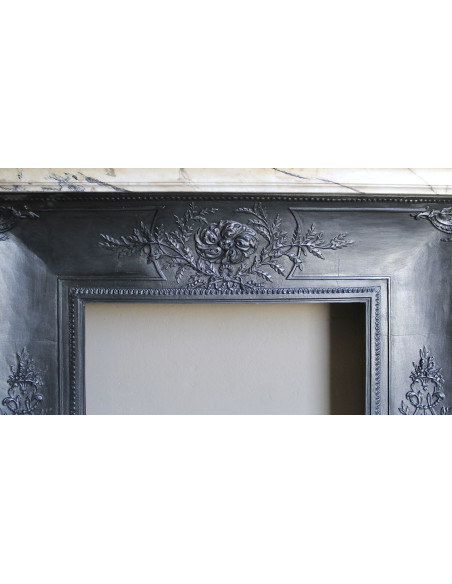
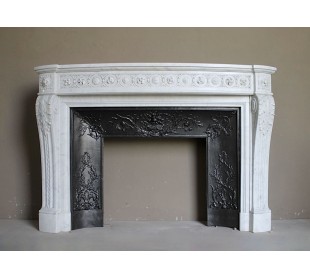
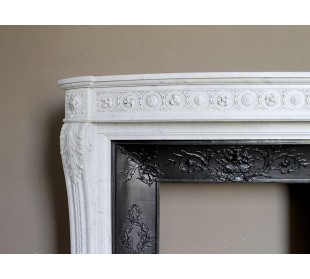
You will find one on each side of the frieze, framed within a square panel, while smaller versions reappear among the floral decorations that enrich the rest of the composition.
Yet this seemingly simple ornament has an extraordinary history.
Its origins can be traced back to ancient Mesopotamia, where archaeologists discovered what is widely regarded as one of the earliest decorative motifs ever created, carved into clay tablets thousands of years before Christ.
One could hardly ask for a more distinguished pedigree.
The only real difference between the Mesopotamian rosette and the one adorning our fireplace mantel is that the ancient example was circular, whereas the Parisian interpretation was elegantly enclosed within a square frame—perfectly suited to the balanced geometry of Neoclassical design.
What did it symbolize?
No one can answer with absolute certainty.
Without a time machine, we can only rely on the interpretations of historians.
Most believe it represented good fortune, while others suggest it symbolised protection and prosperity, particularly for the harvest.
From Mesopotamia, our journey continues to the Byzantine Empire, whose artistic traditions profoundly influenced medieval Europe before eventually flourishing in Italy, particularly in Rome and Ravenna.
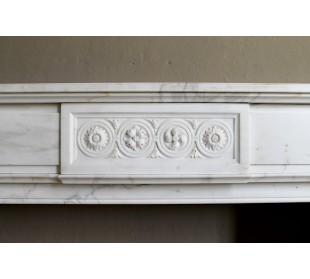
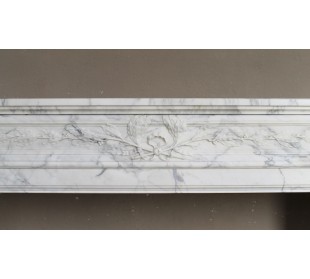
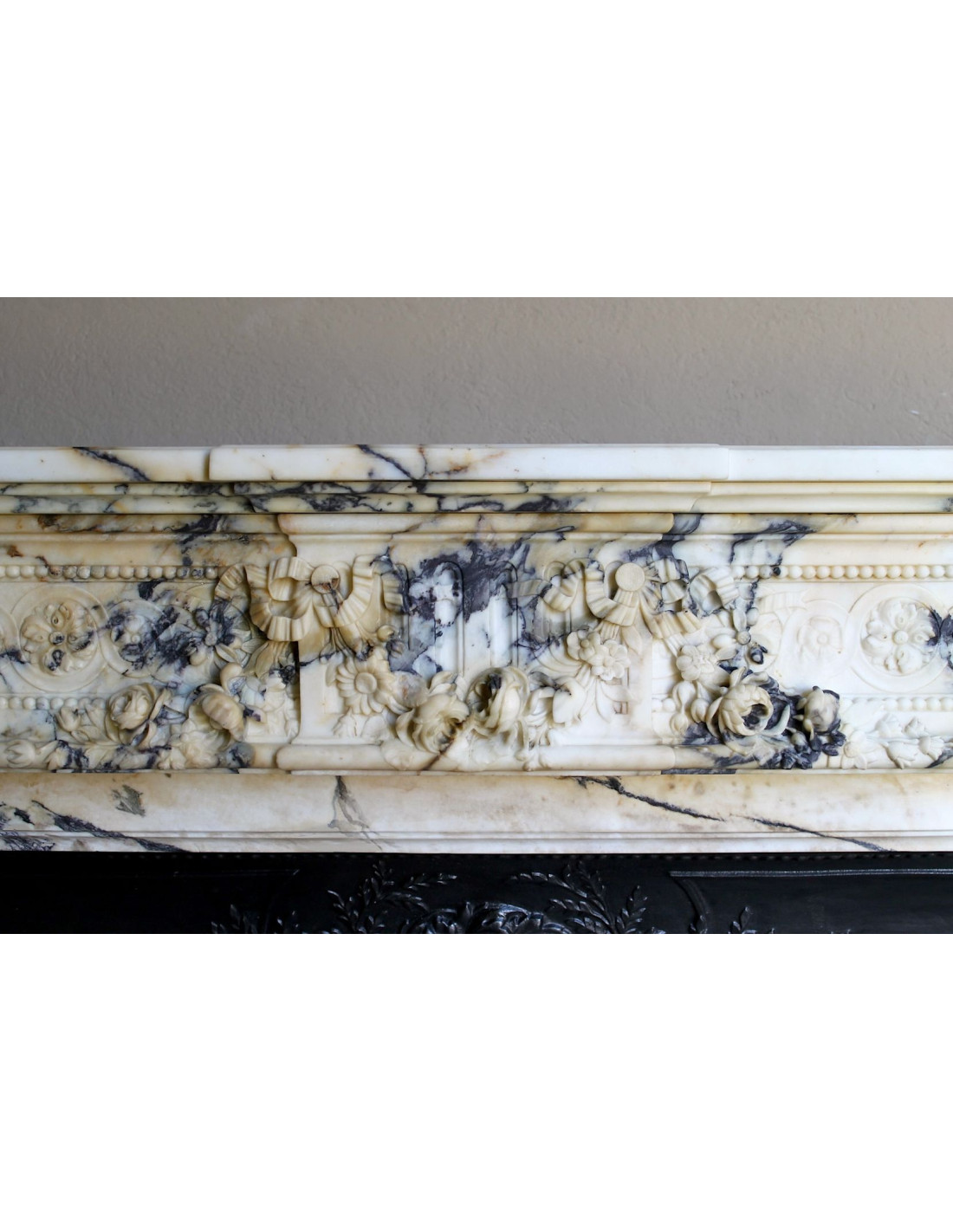
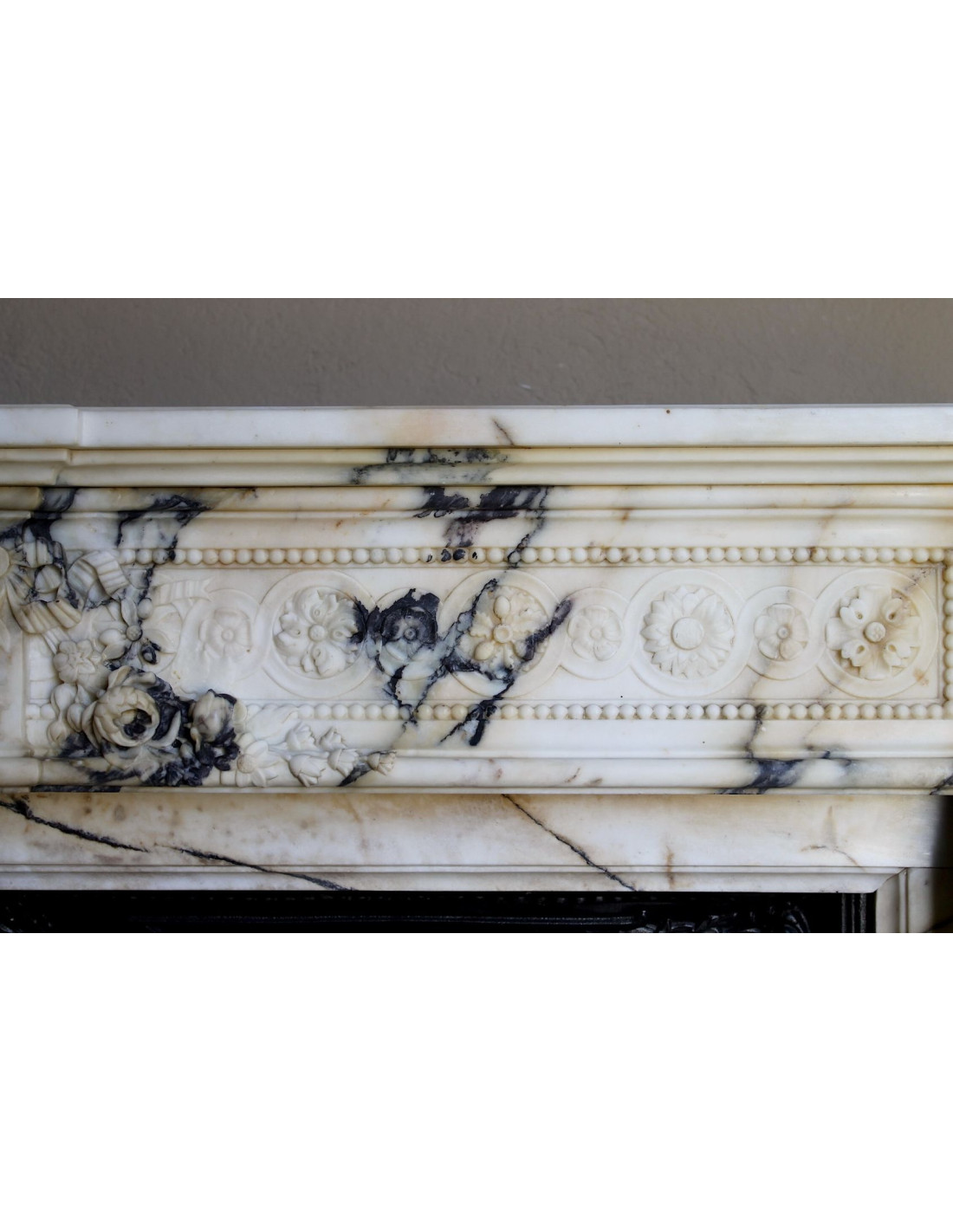
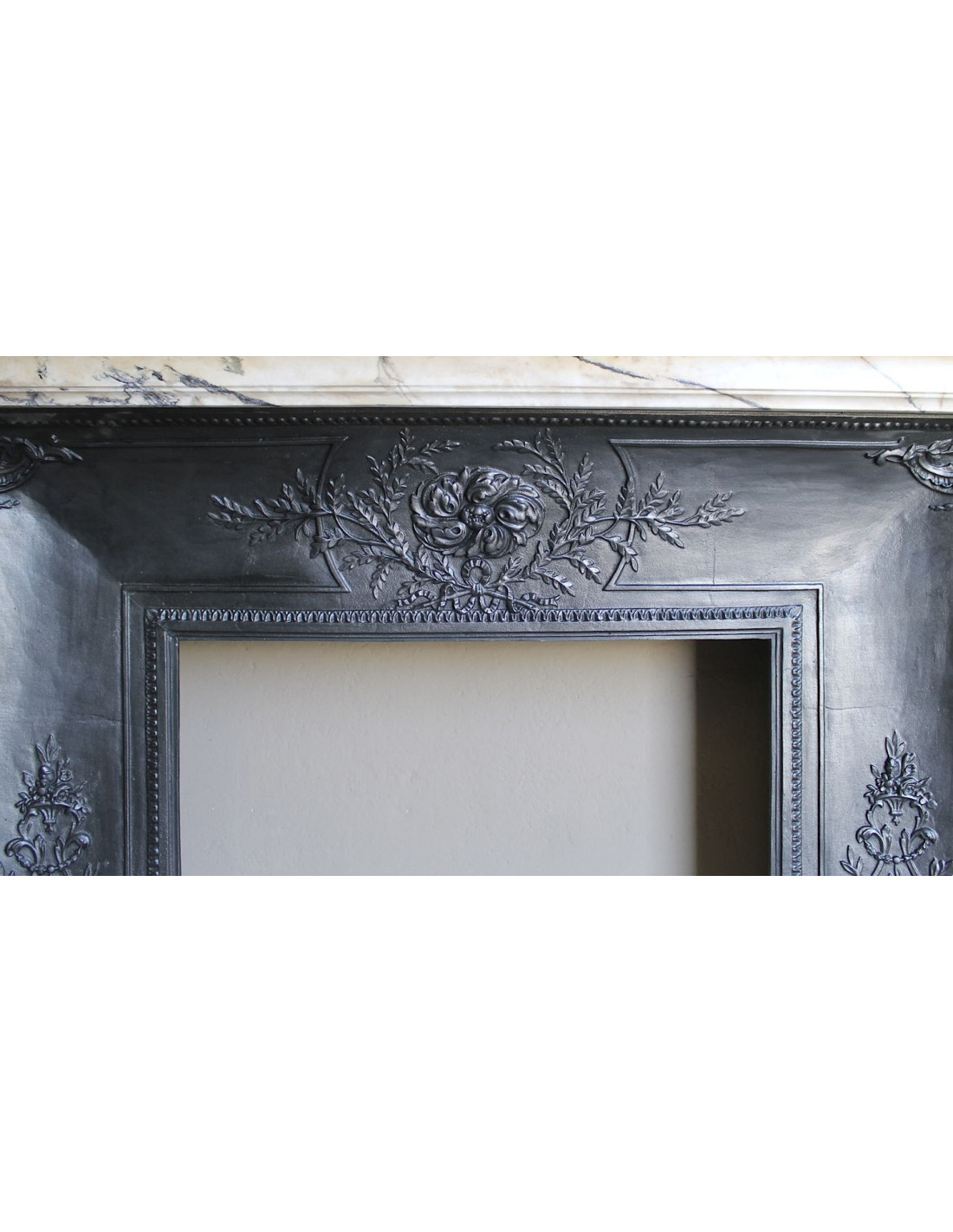
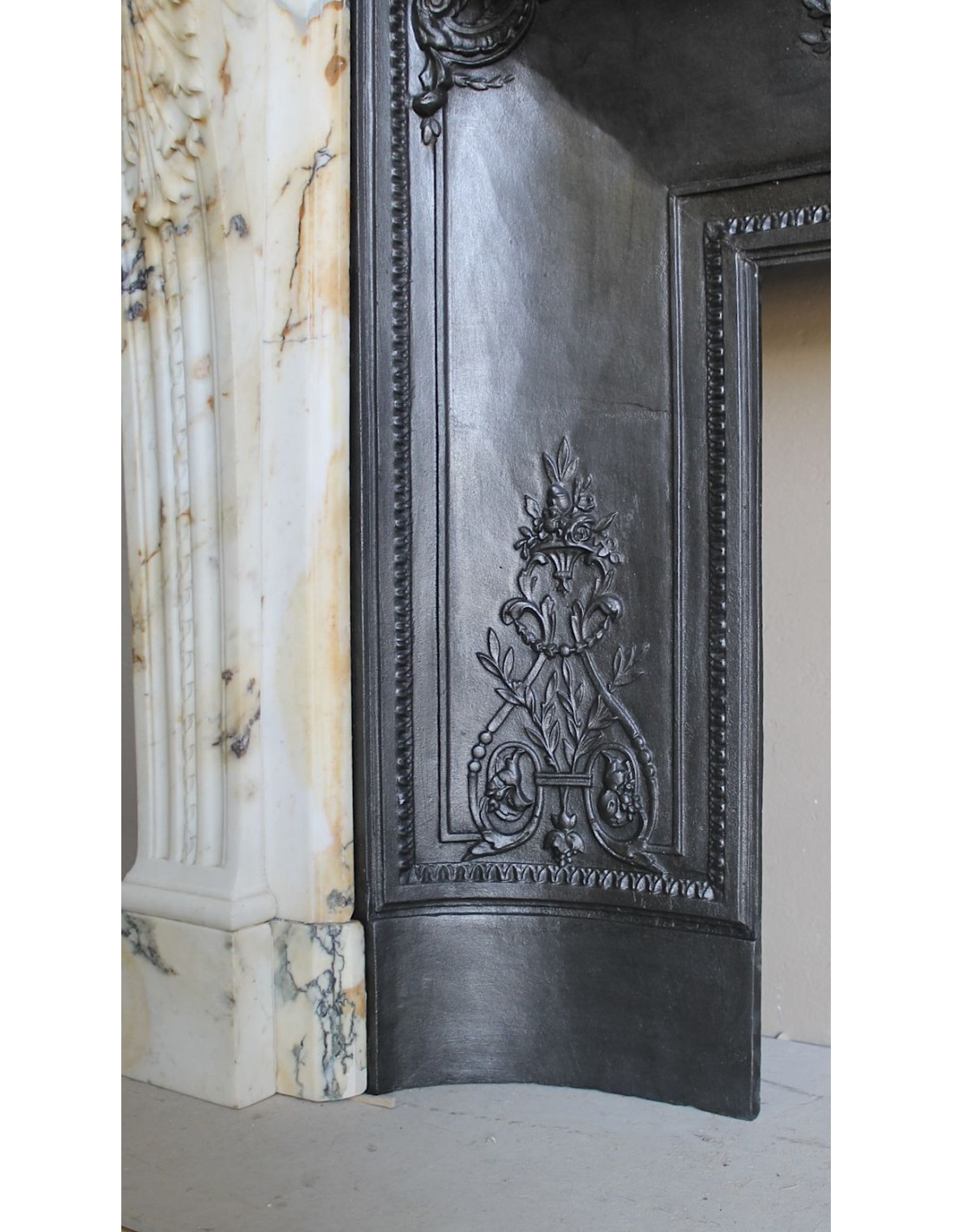
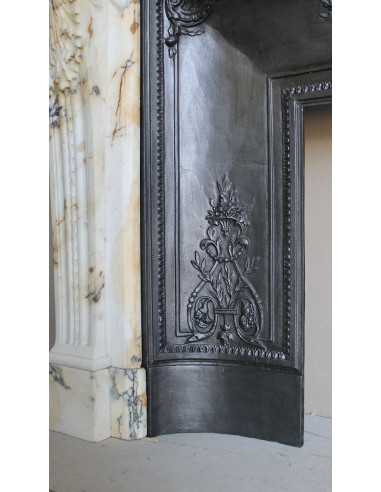
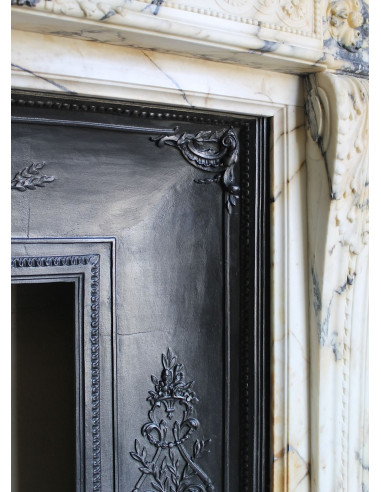
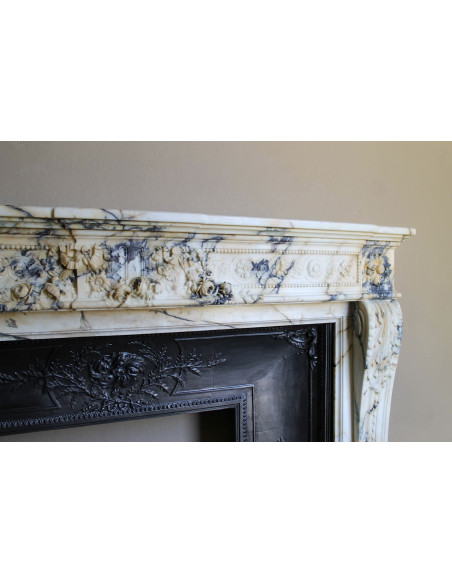
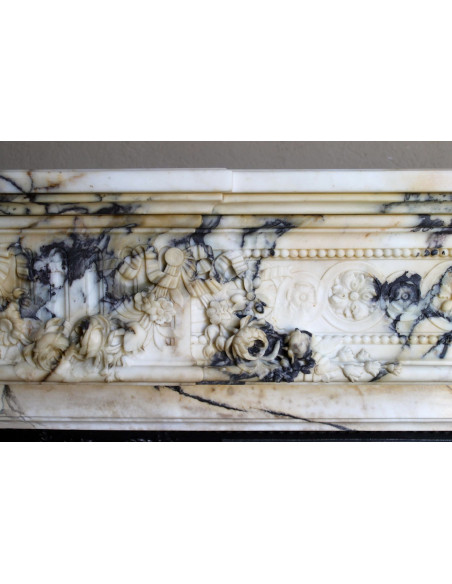
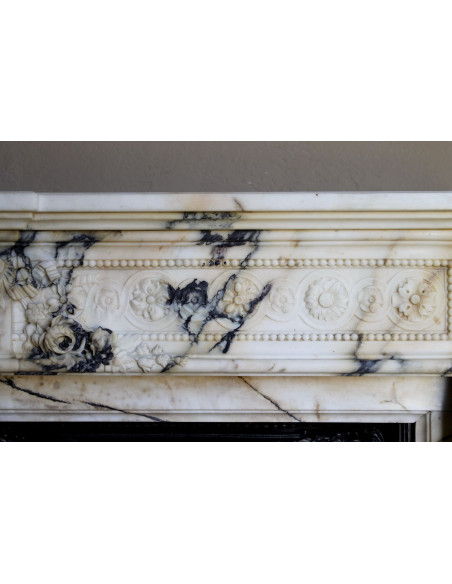
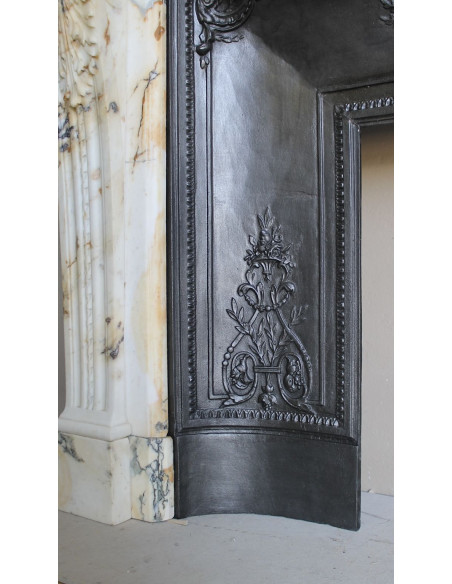
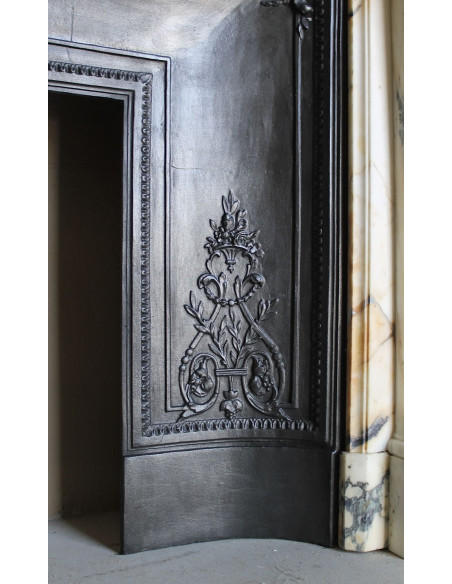
To understand the next chapter of our story, take a close look at the decorative photographs accompanying this fireplace.
Notice the elegant intertwining curves?
These motifs belong to the celebrated Cosmatesque tradition, named after the Roman Cosmati family of master marble workers and mosaic artists.
Inspired by Byzantine ornament, the Cosmati transformed these flowing geometric patterns into one of Italy's greatest decorative achievements.
Several centuries later, during the second half of the nineteenth century, Parisian architects searched constantly for new decorative ideas.
Like many designers throughout history, they looked to the past for inspiration.
The flowing Cosmatesque interlaces fascinated them, and they reinterpreted these Italian motifs into a new ornamental language that became known as the "Macaron."
Despite the name, it has nothing to do with the famous French pastry.
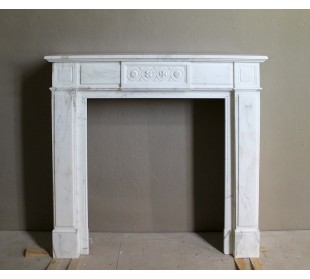
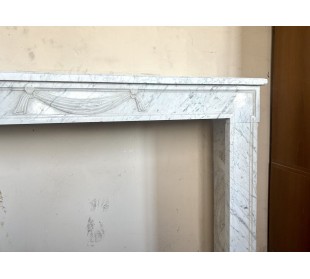
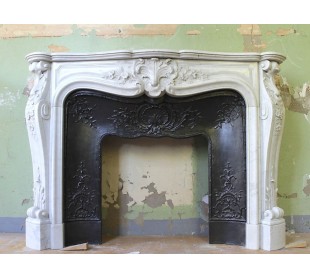
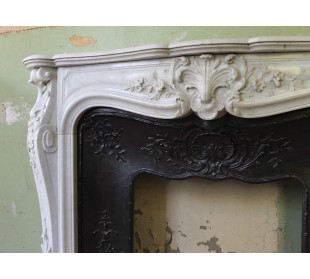
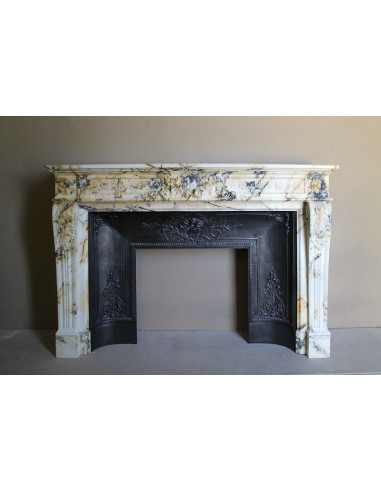
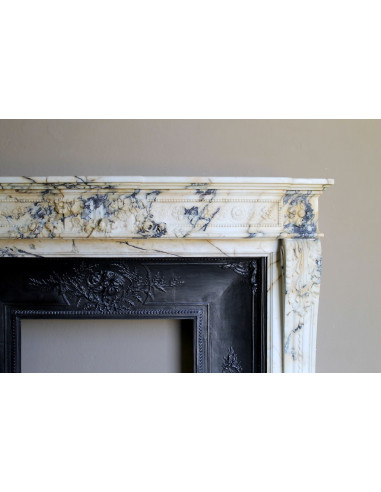
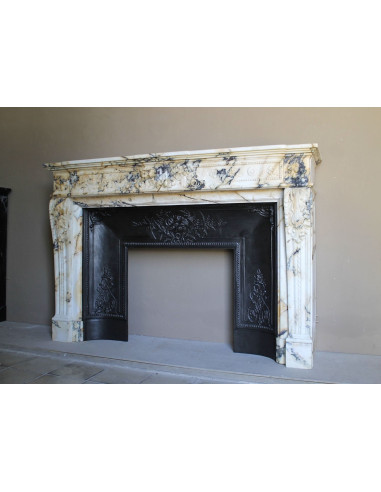
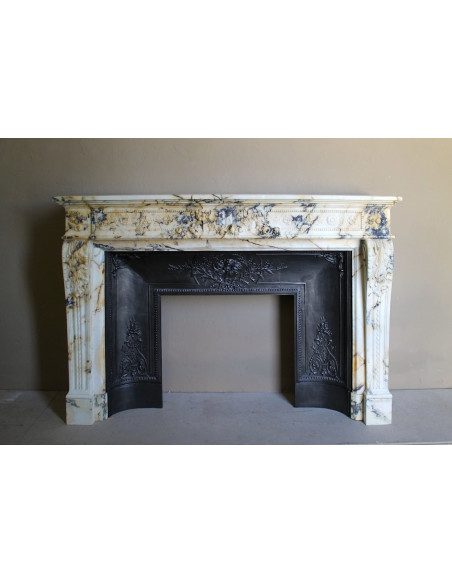
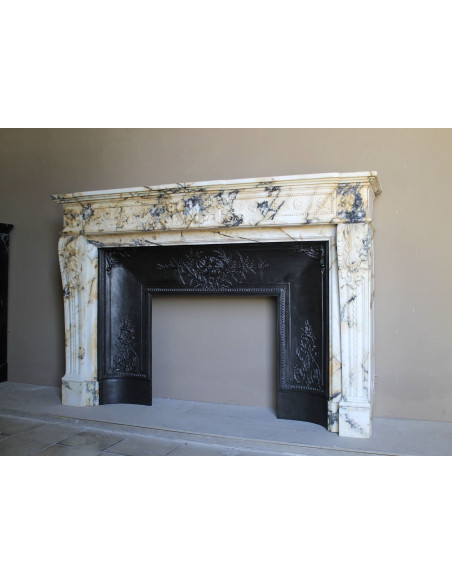
In this context, Macaron refers to the elegant interwoven ribbon pattern that decorates the frieze of this exceptional Louis XVI fireplace mantel.
Within these interlacing circles, the sculptor introduced a rich symbolic programme.
Three contain finely carved daisies.
For many scholars, these flowers evoke the radiant image of the Sun King, Louis XIV. Their golden centre and outward-reaching petals naturally recalled the sun itself, making the daisy a fitting royal emblem.
Elsewhere appear delicate oak branches with acorns, timeless symbols of strength, endurance and fertility.
Smaller Paris Rosettes return throughout the decoration, while another remarkable motif resembles a floral star.
To me, it recalls the Star of Bethlehem, the guiding star that has inspired artists for centuries.
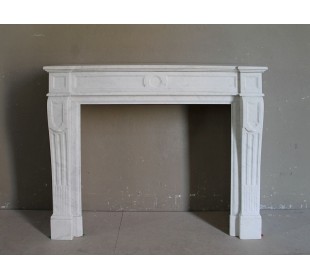
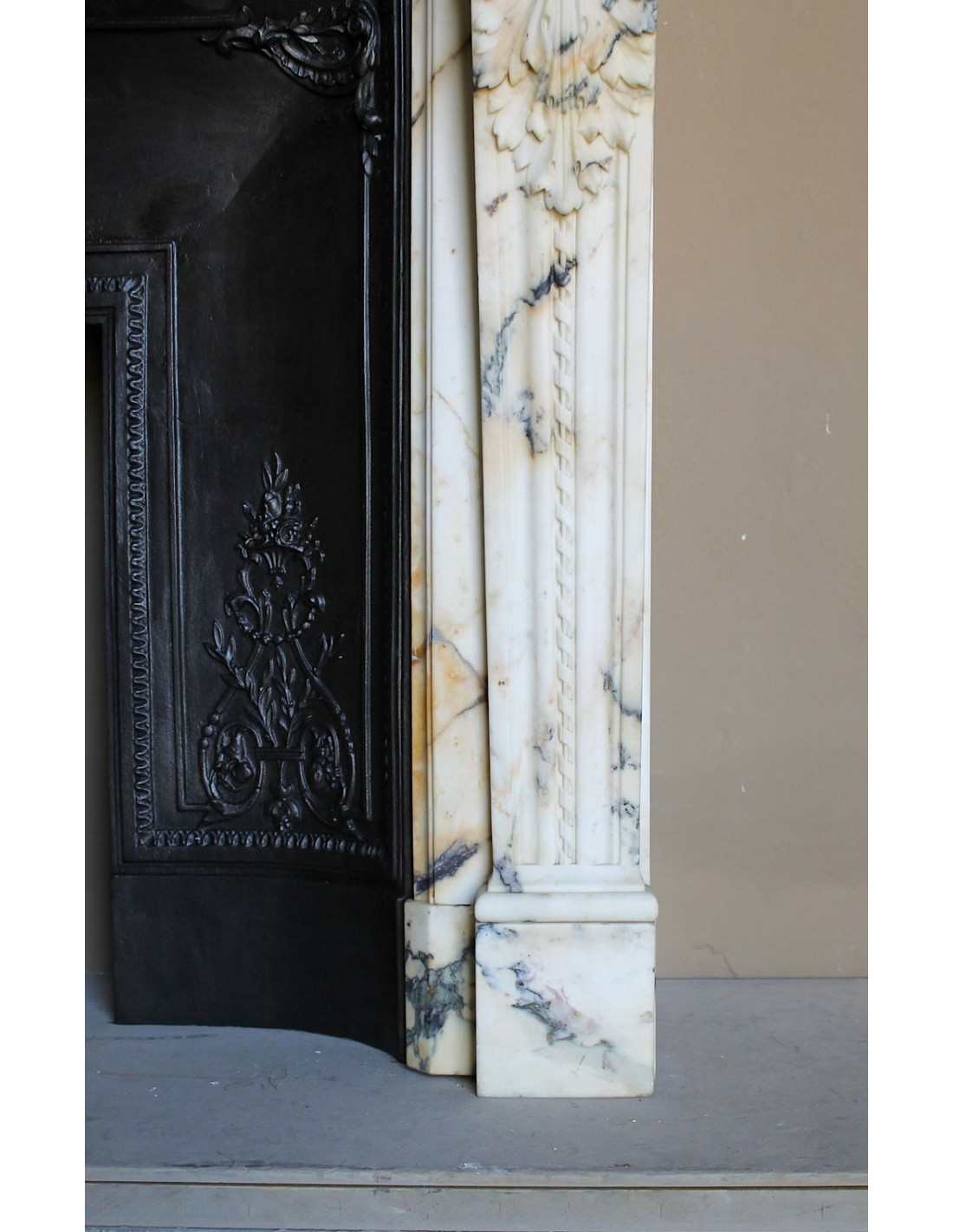
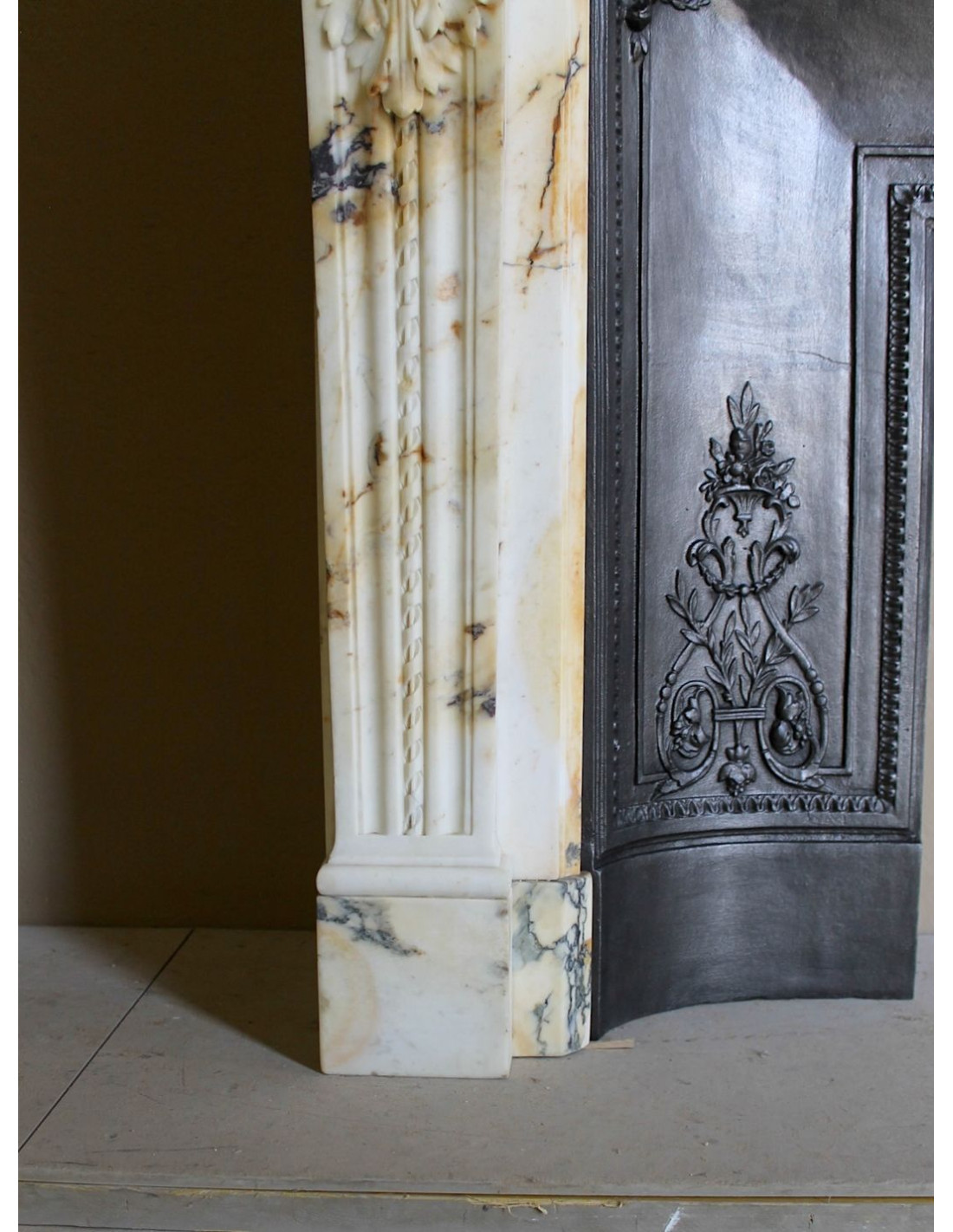
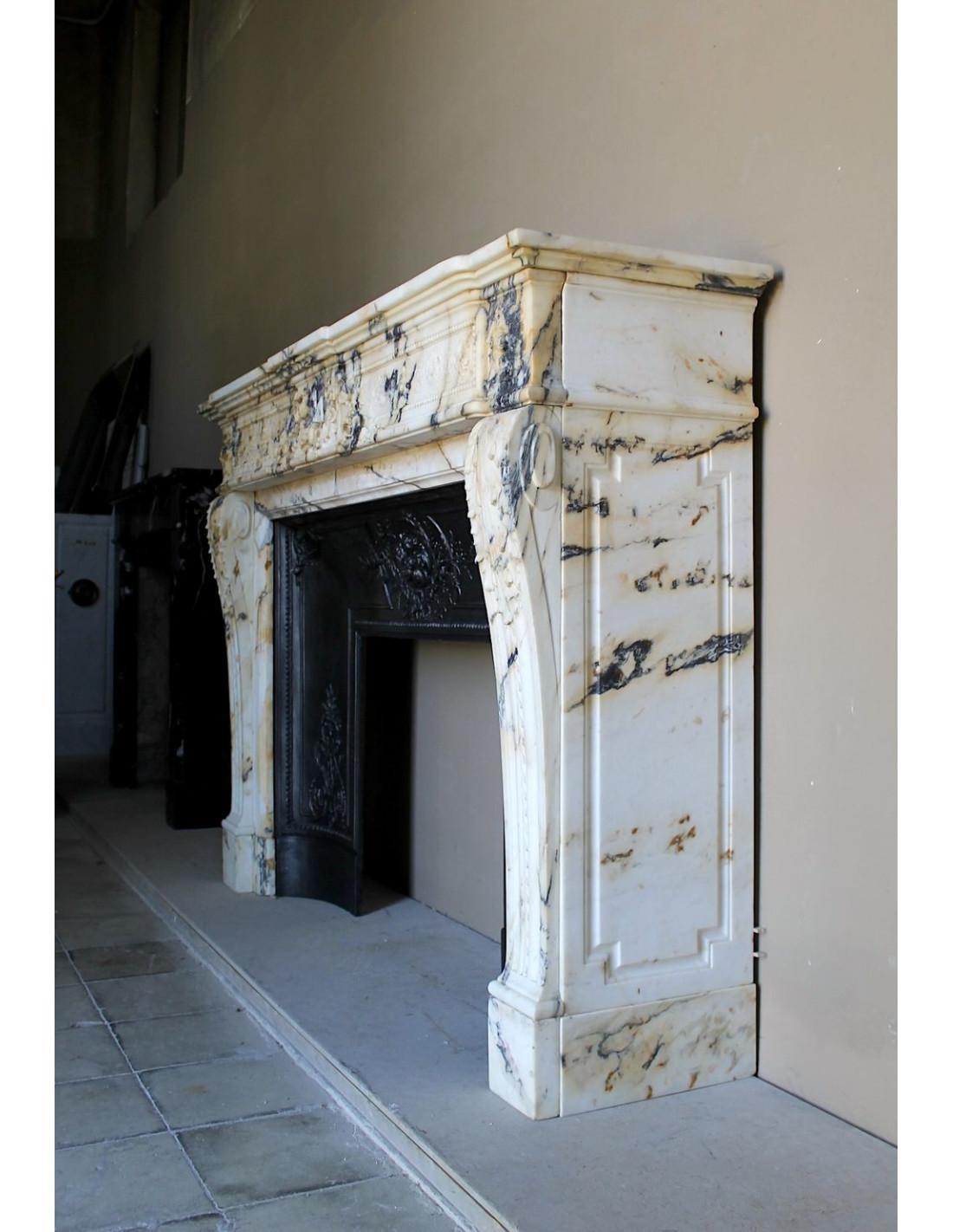
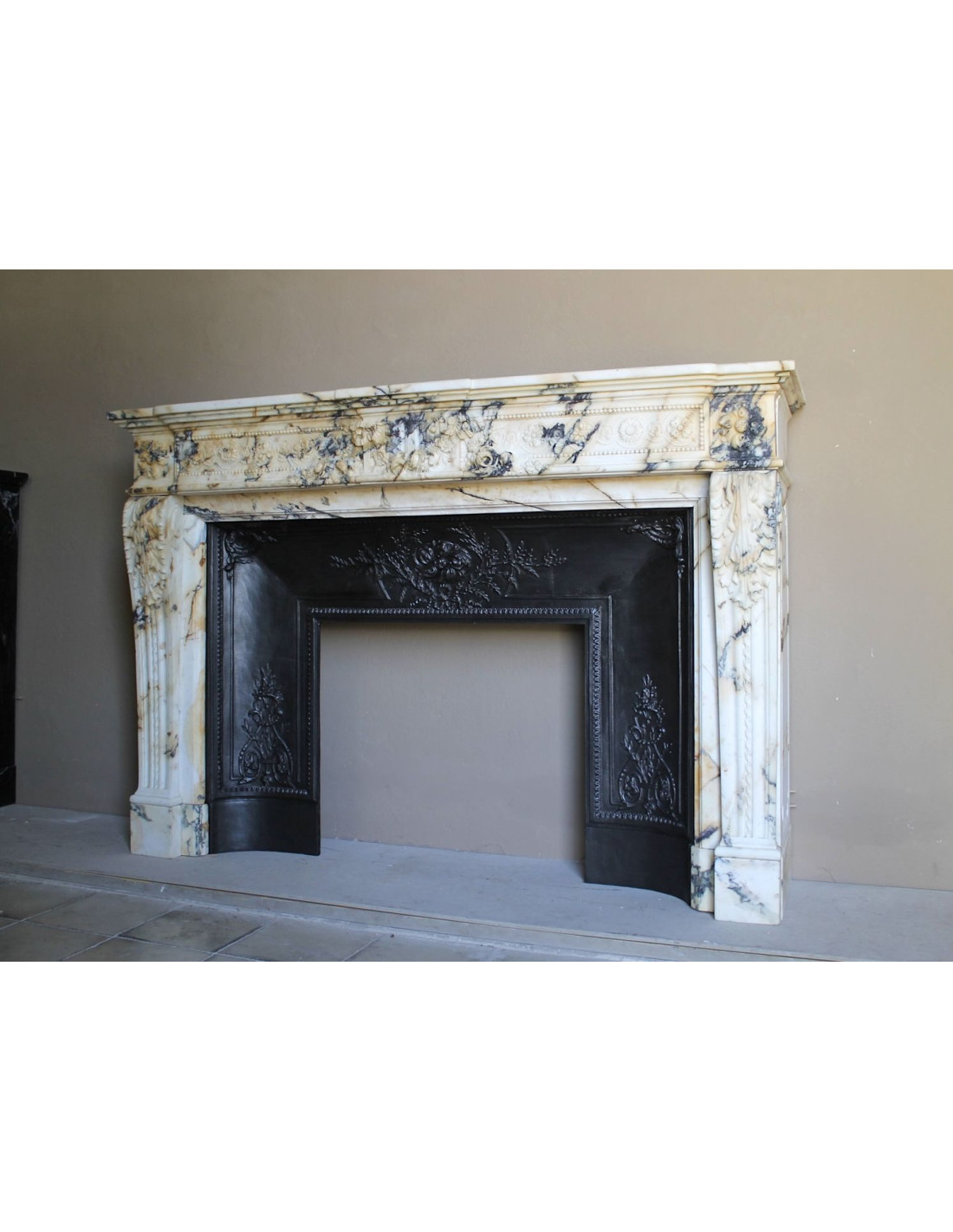
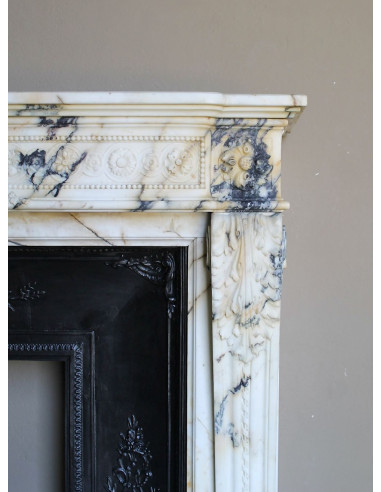
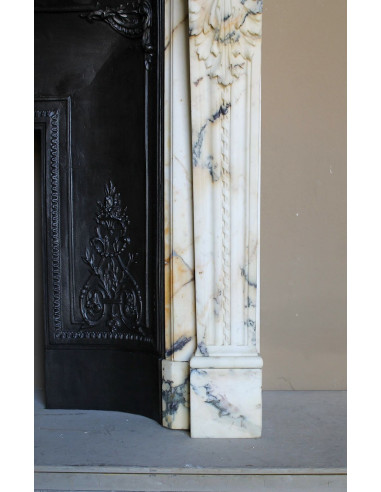
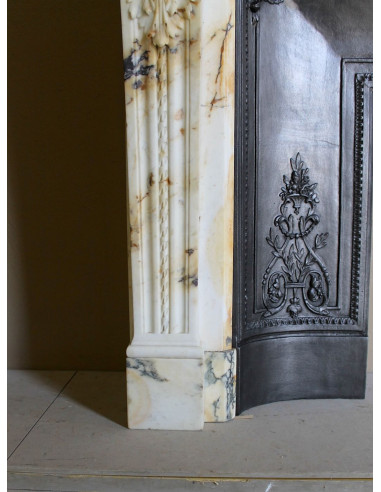
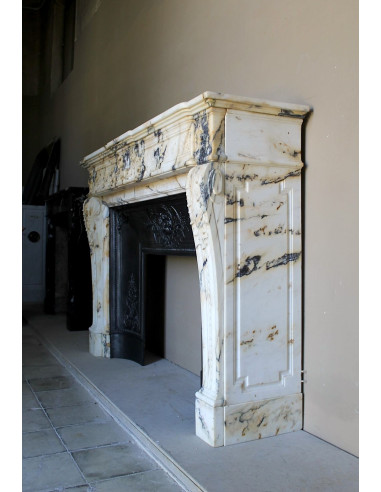
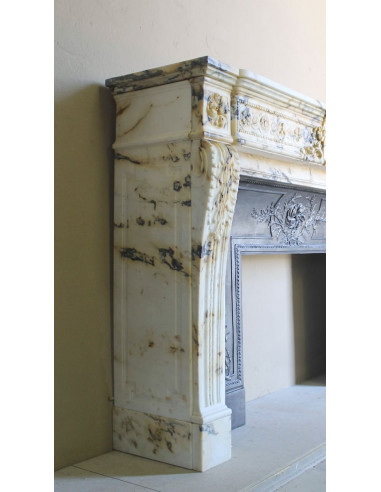
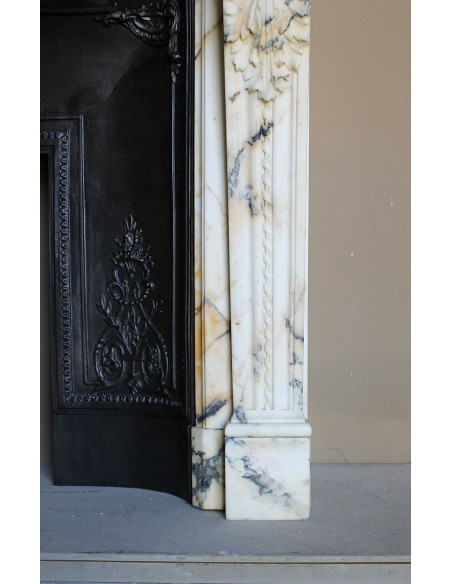
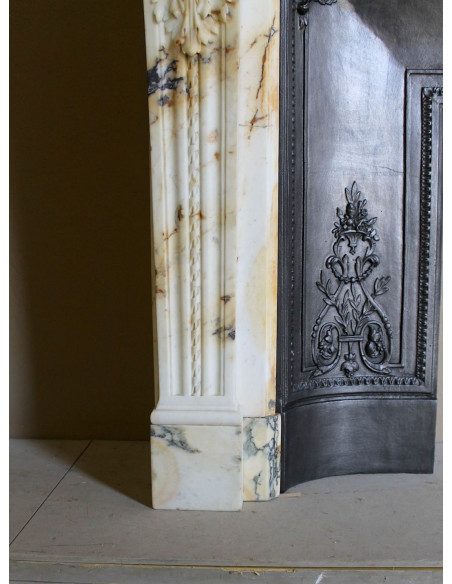
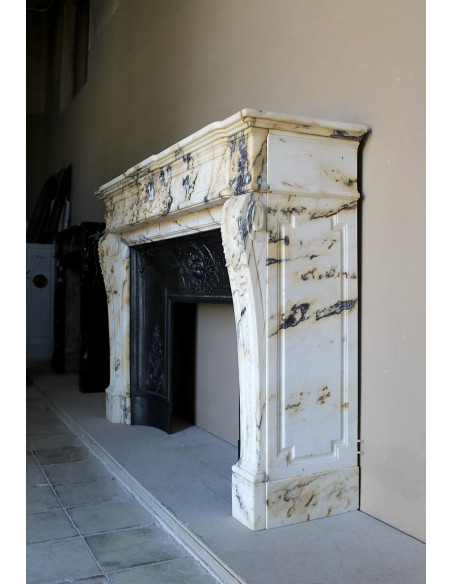
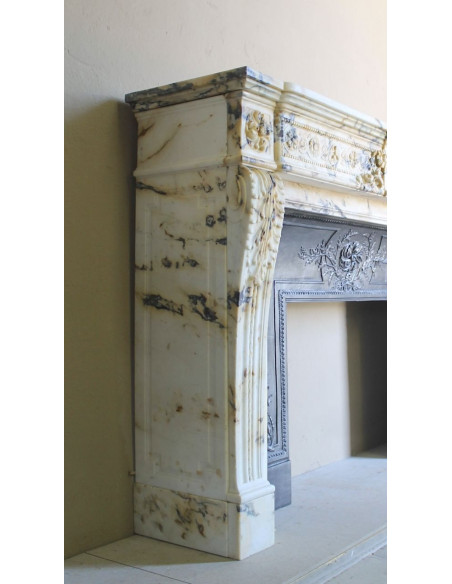
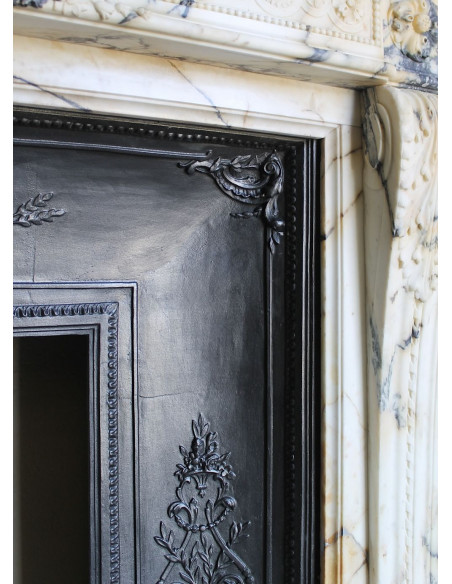
The decoration continues along the jambs, where finely carved acanthus leaves form elegant capitals. Flowing ribbons descend gracefully towards the feet, while delicately panelled surfaces enrich the sides of the fireplace.
These are all characteristic features of the finest Macaron fireplace mantels.
Yet this particular example possesses an additional refinement.
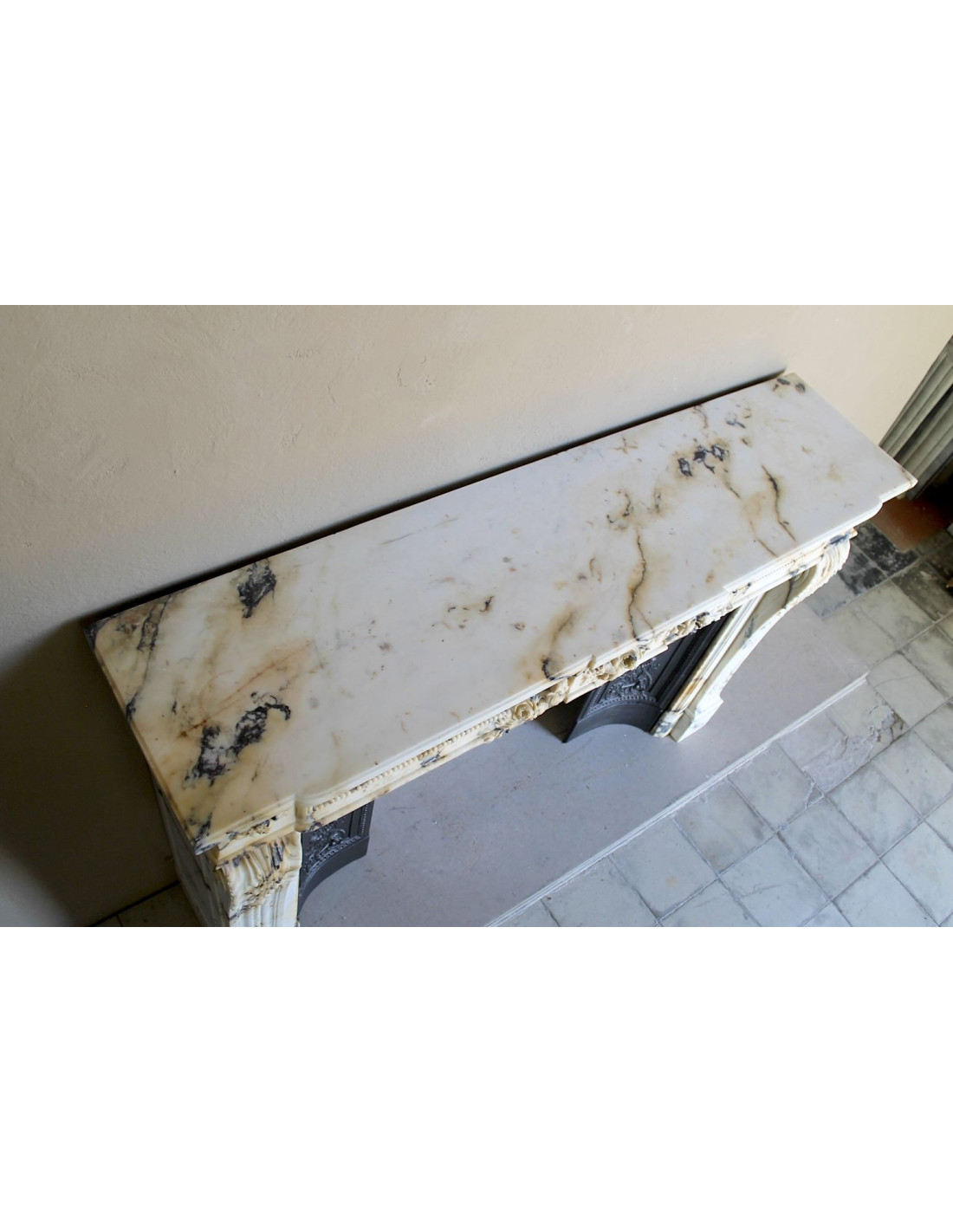
Not every Macaron fireplace is framed by this wonderfully delicate beaded border, known in French workshops as perlage.
Imagine Audrey Hepburn in Breakfast at Tiffany's.
She was already beautiful.
Now imagine her wearing those famous pearl necklaces.
The pearls did not create her elegance.
They simply elevated it.
That is precisely what the perlage does for this fireplace.
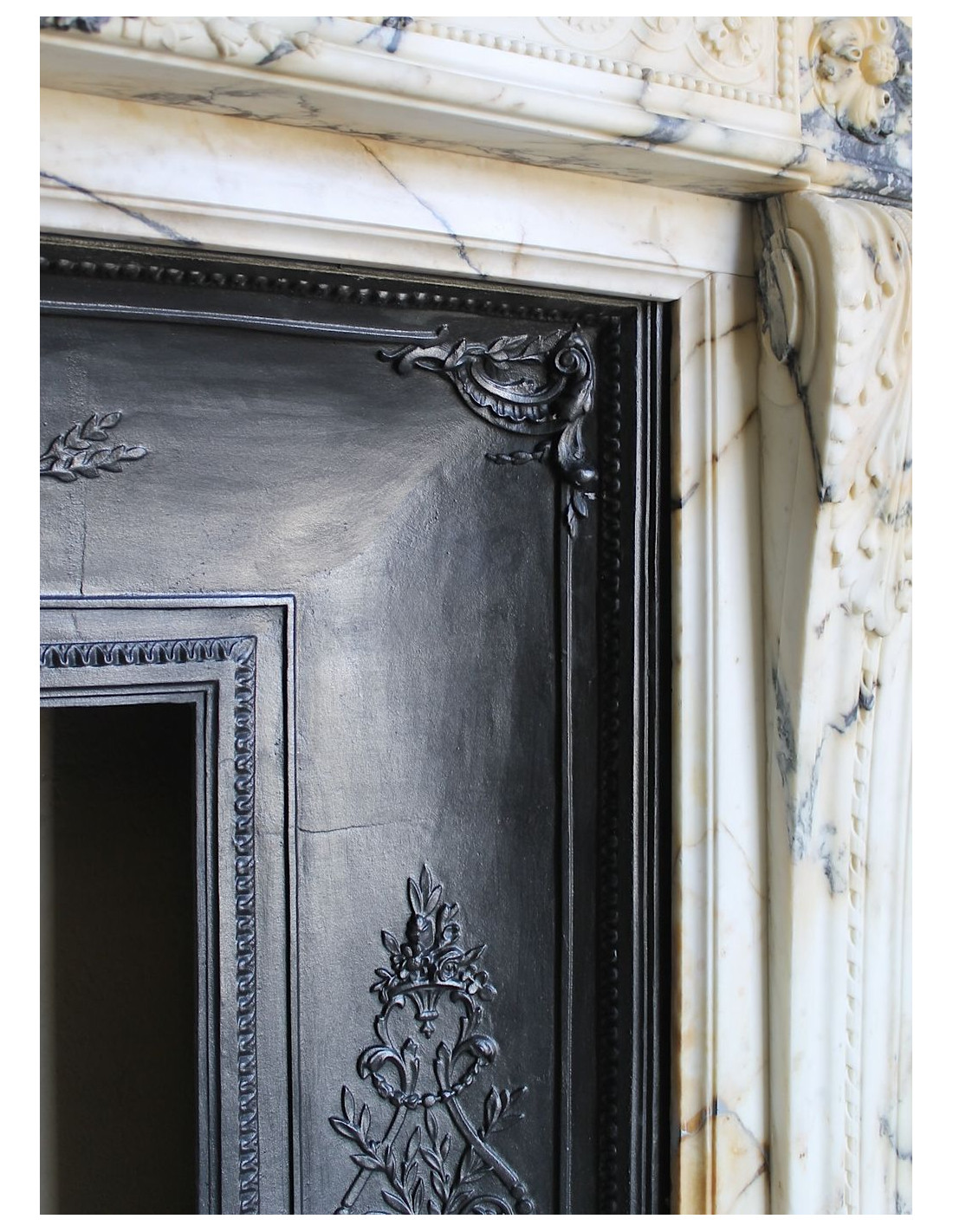
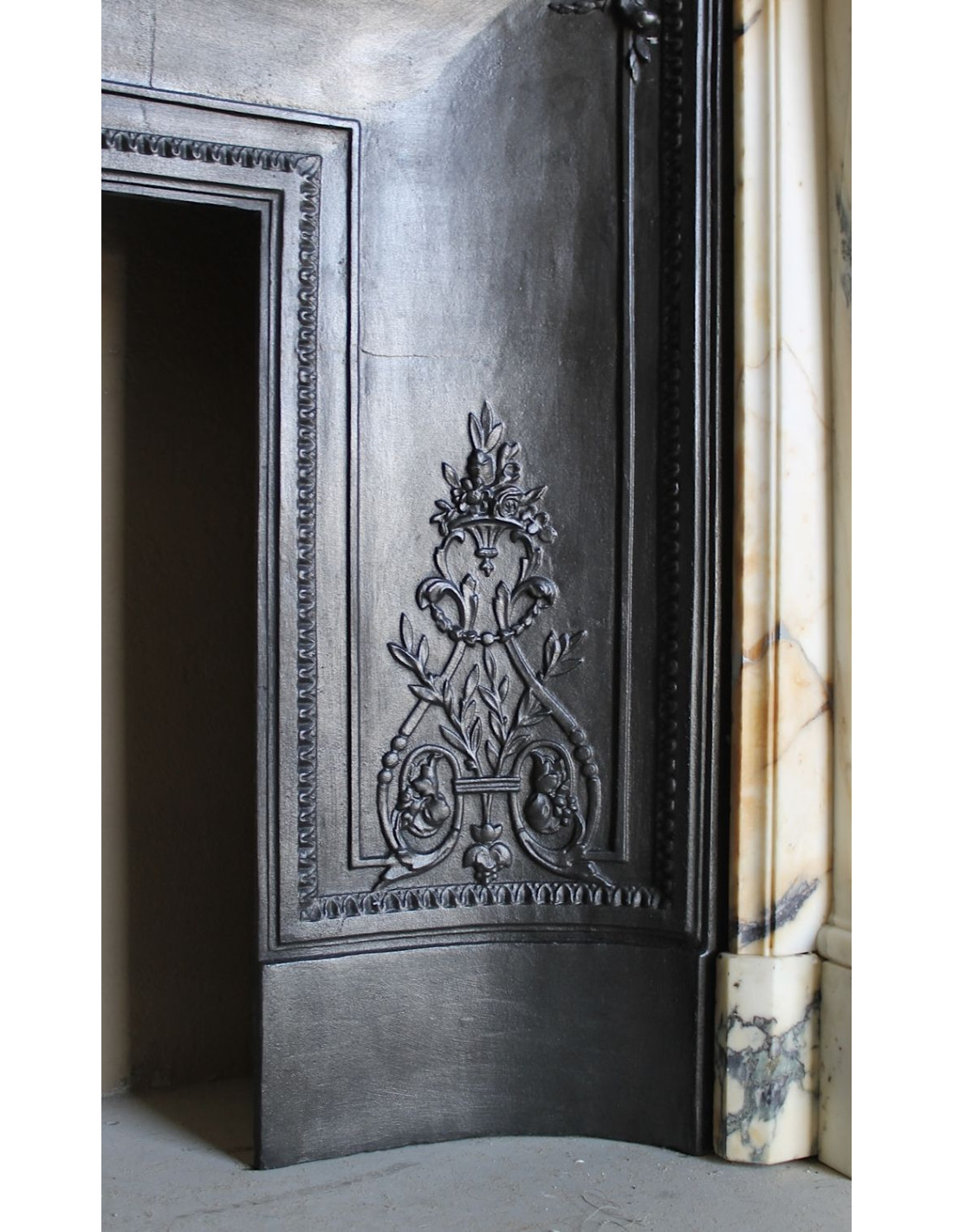
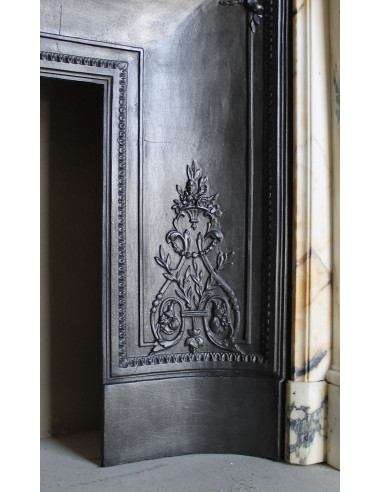
Even the original cast-iron insert follows the same artistic philosophy, incorporating graceful botanical ornament that perfectly complements the floral carving of the marble itself.
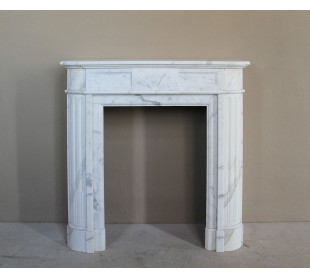
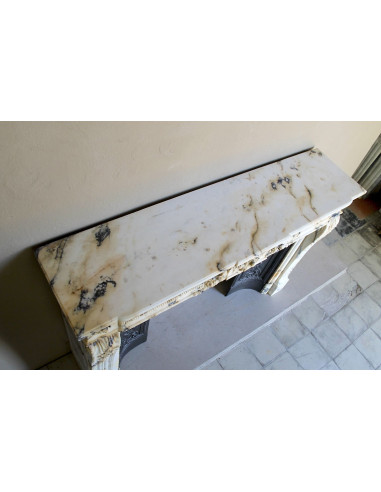
This remarkable antique fireplace mantel was discovered by us in Lyon. It was carved in Italy around the middle of the nineteenth century, more precisely in Pietrasanta, where the greatest marble sculptors of the era worked.
Its authorship becomes evident through the use of a remarkable carving tool known as the Violino ("the Violin"), an instrument invented in Pietrasanta and guarded as a closely kept secret for generations because it allowed sculptors to achieve a level of delicacy that few others could equal.
Today, nearly two centuries later, this extraordinary fireplace remains a magnificent testament to that forgotten mastery.