
SHARE ON:
NECESSARY “PATRIOTIC” PREMISE:
FOR REASONS OF PRESERVATION OF NATIONAL ARTISTIC HERITAGE THIS FIREPLACE WILL NOT BE ABLE TO BE SOLD OUTSIDE THE ITALIAN TERRITORY, WHICH, AFTER ALL, WE DO NOT MIND.
OBVIOUS THAT, HAVING TO GIVE UP FOREIGN CUSTOMERS, WE WILL HAVE FEWER POSSIBILITIES OF SALE BUT THE SATISFACTION THAT ONE OF THE MOST IMPORTANT WORKS OF OUR “BELL'ADOLFO” REMAINS IN OUR HOME, UNDERNEATH, MAKES US PROUD.
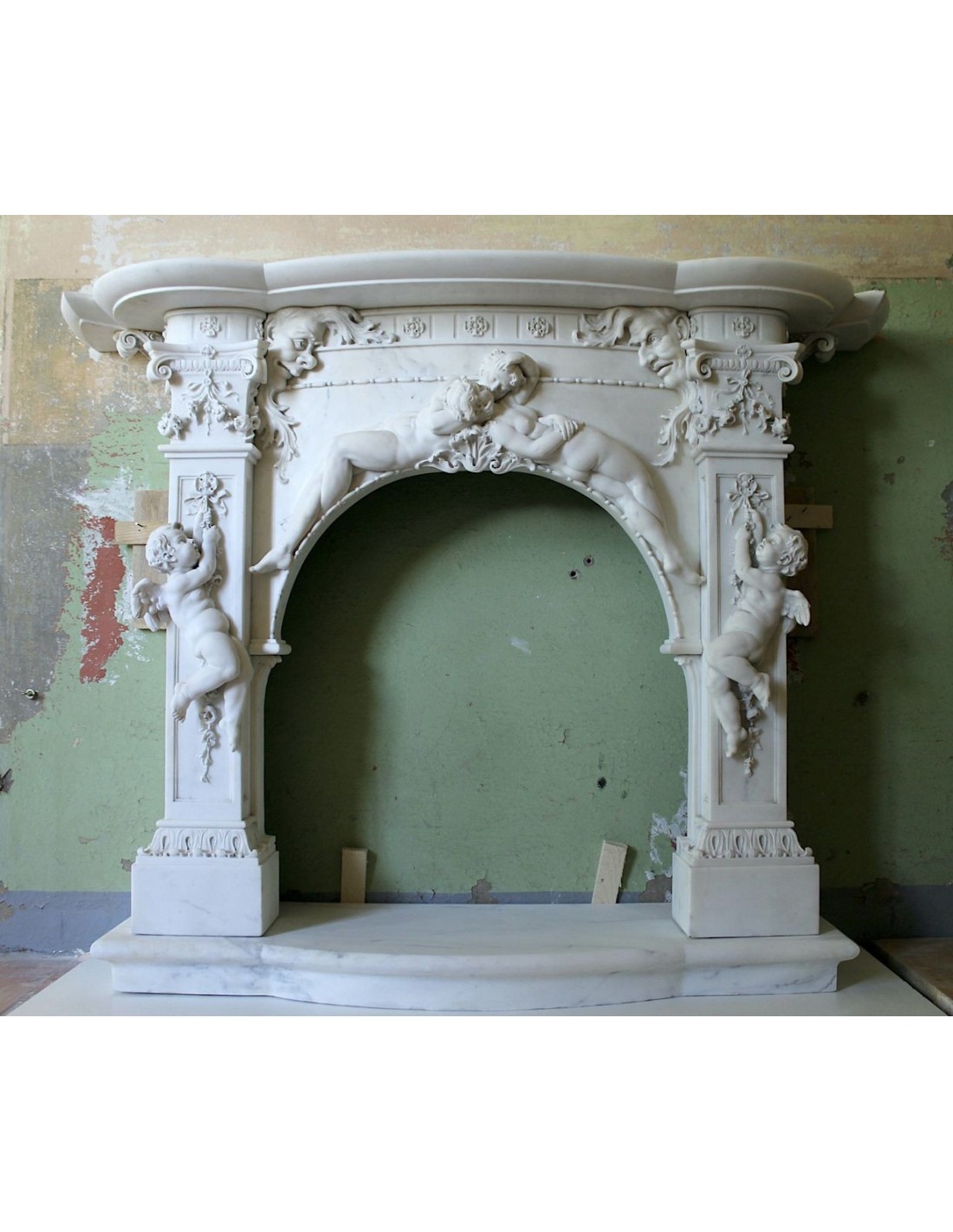
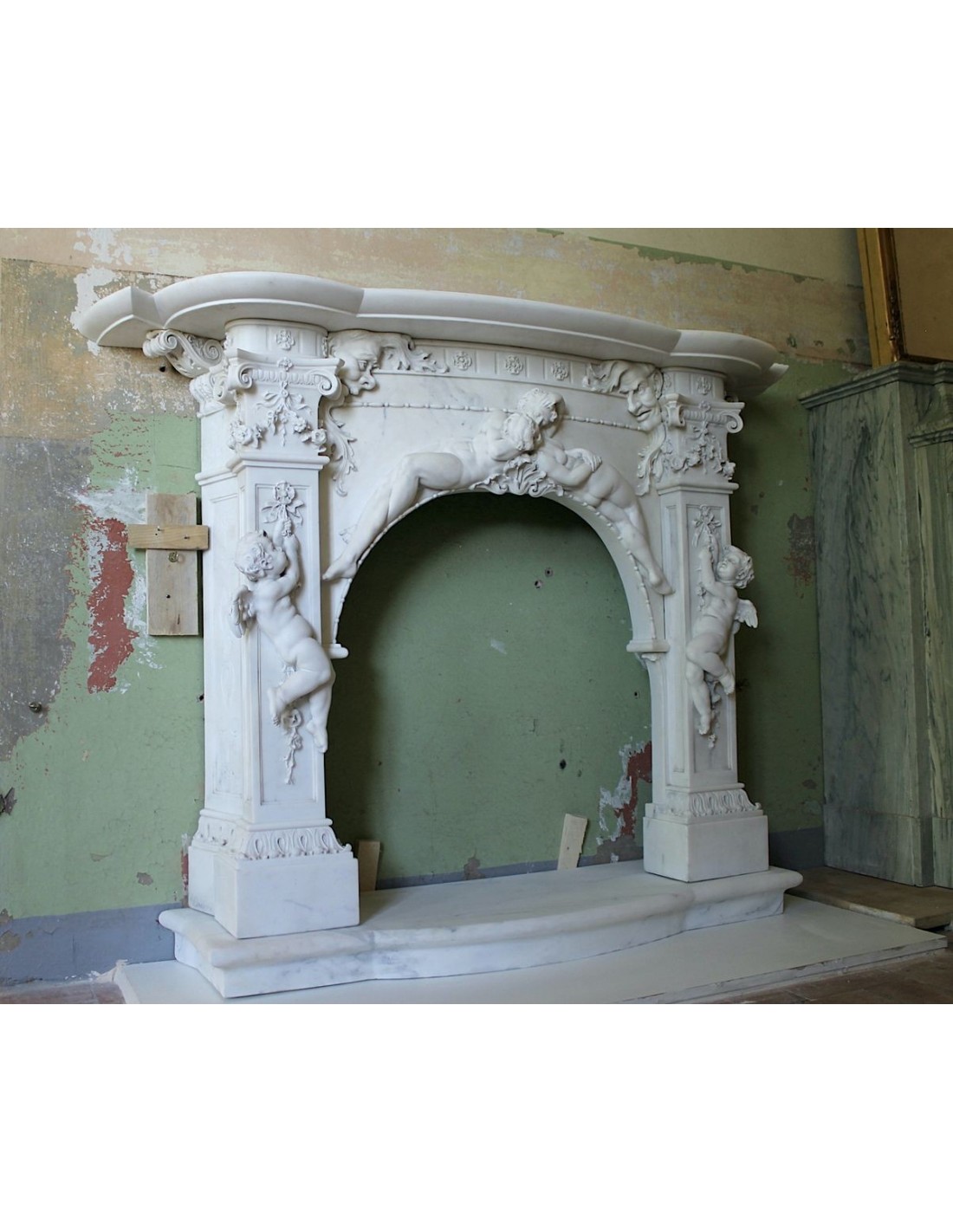
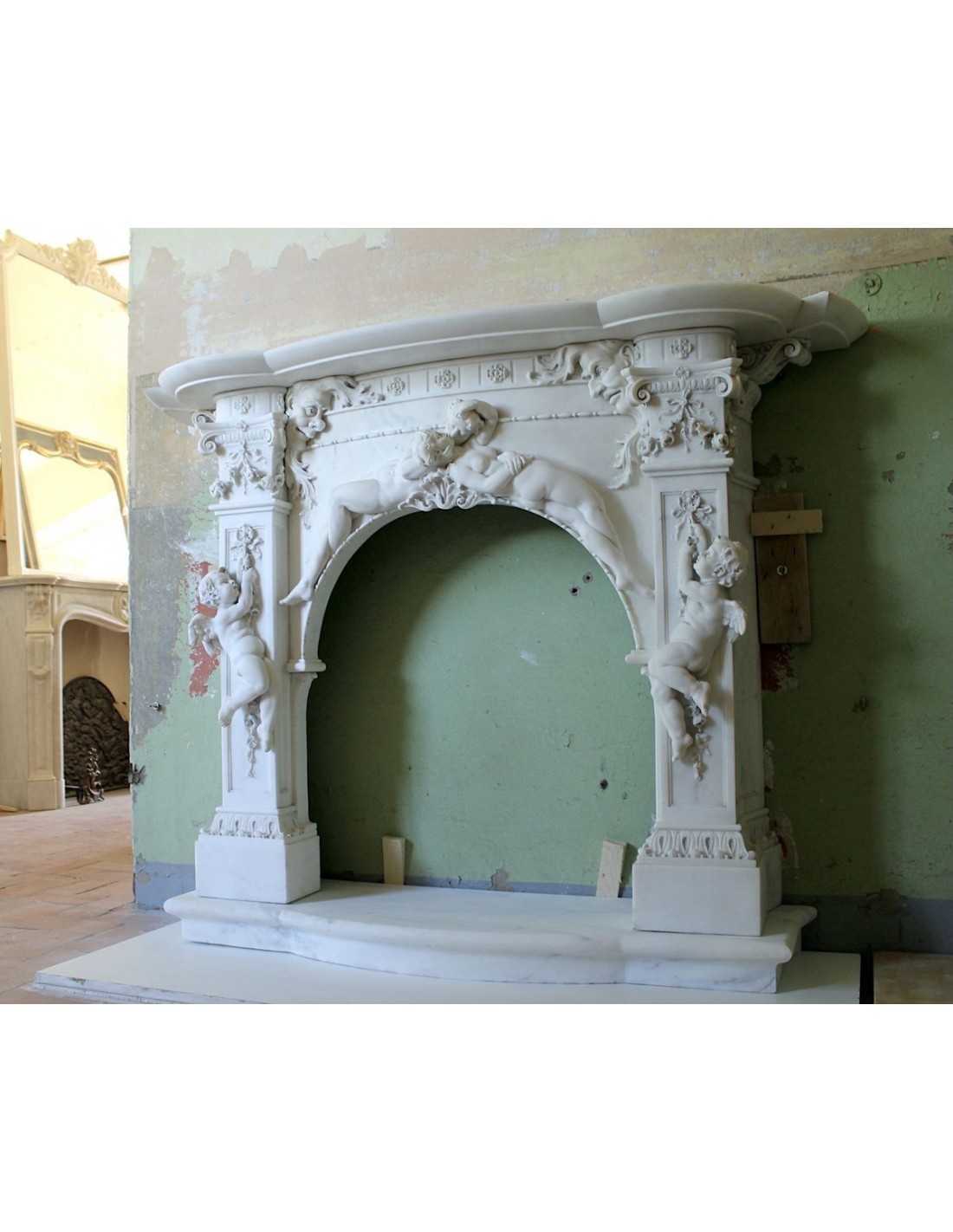
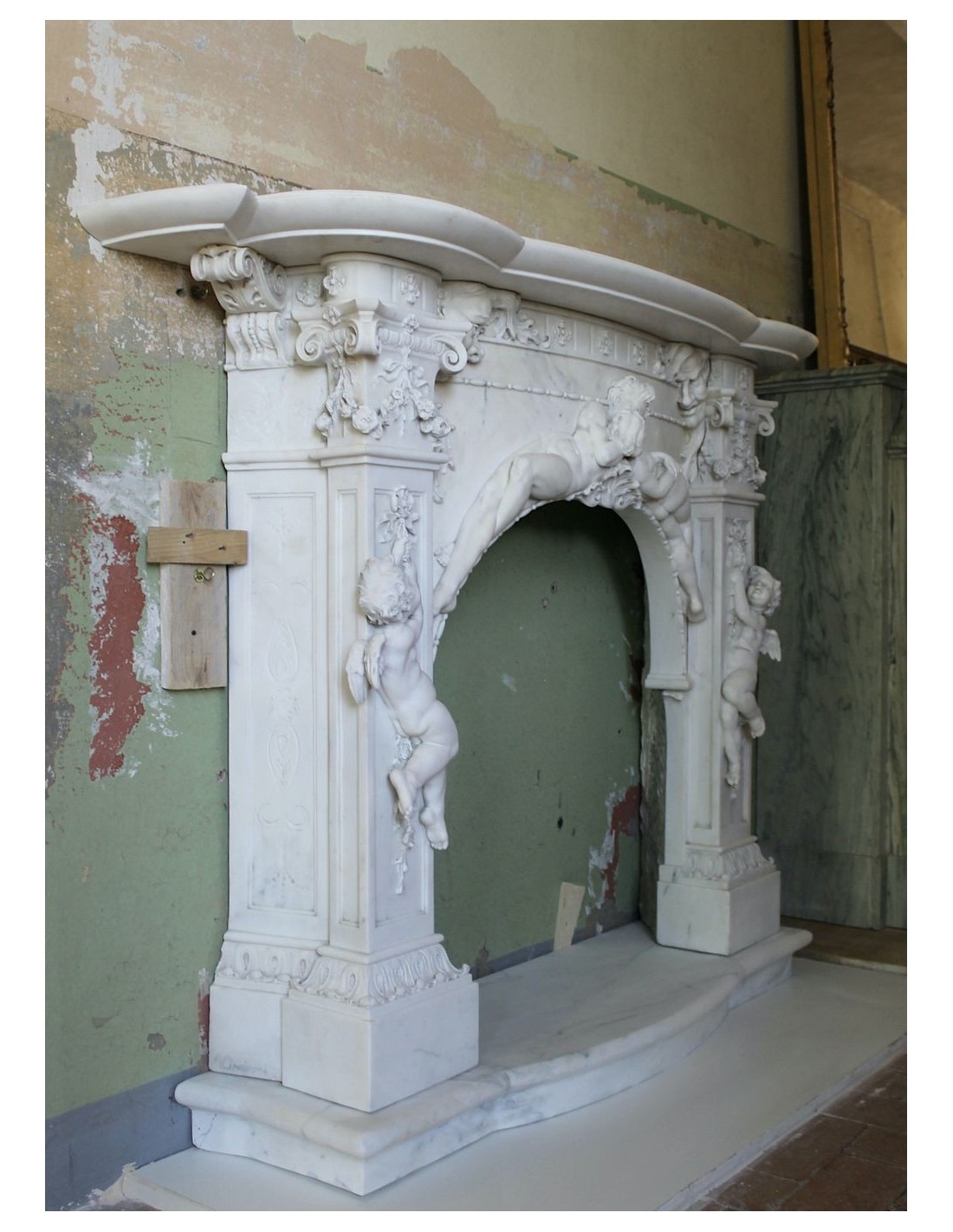
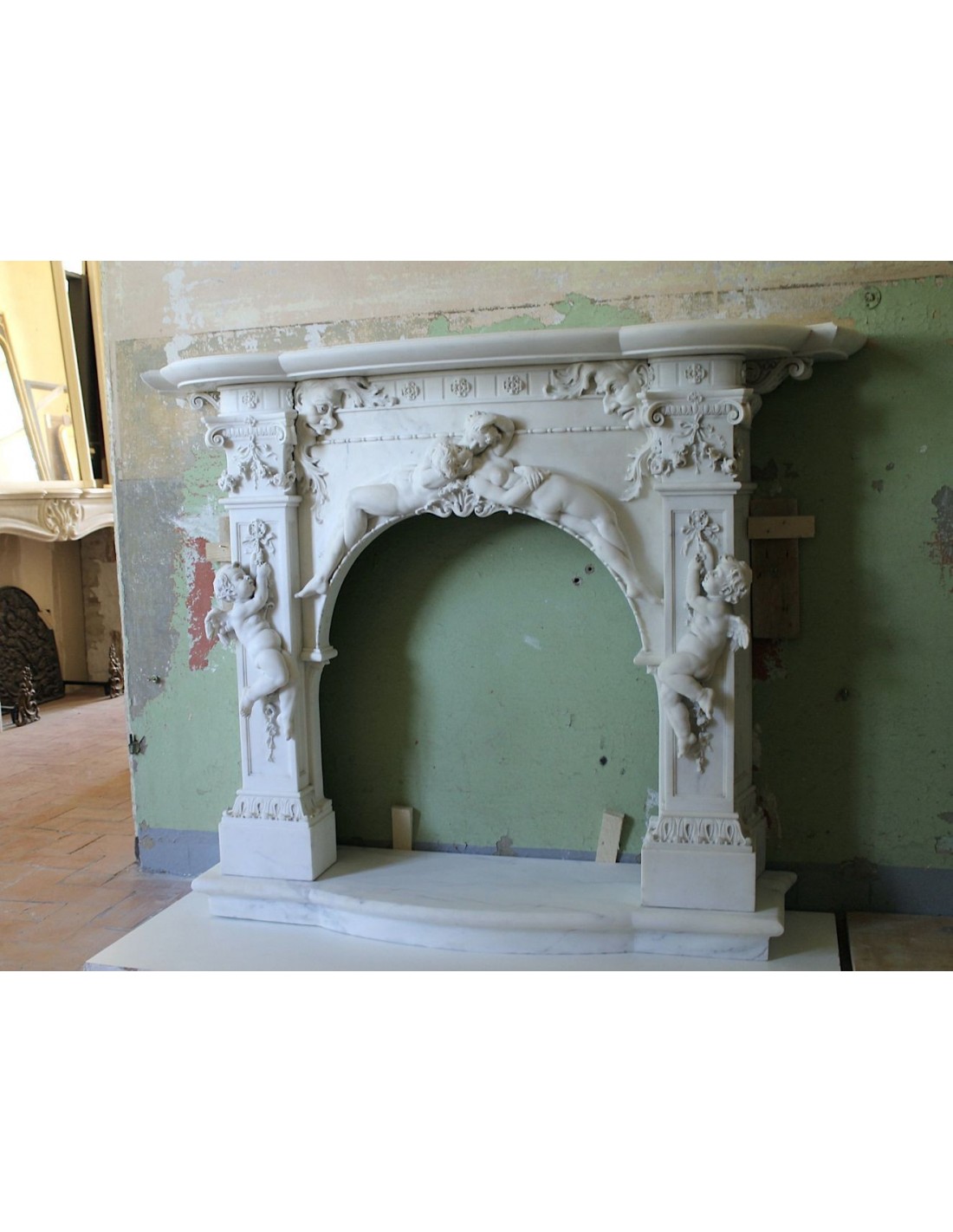
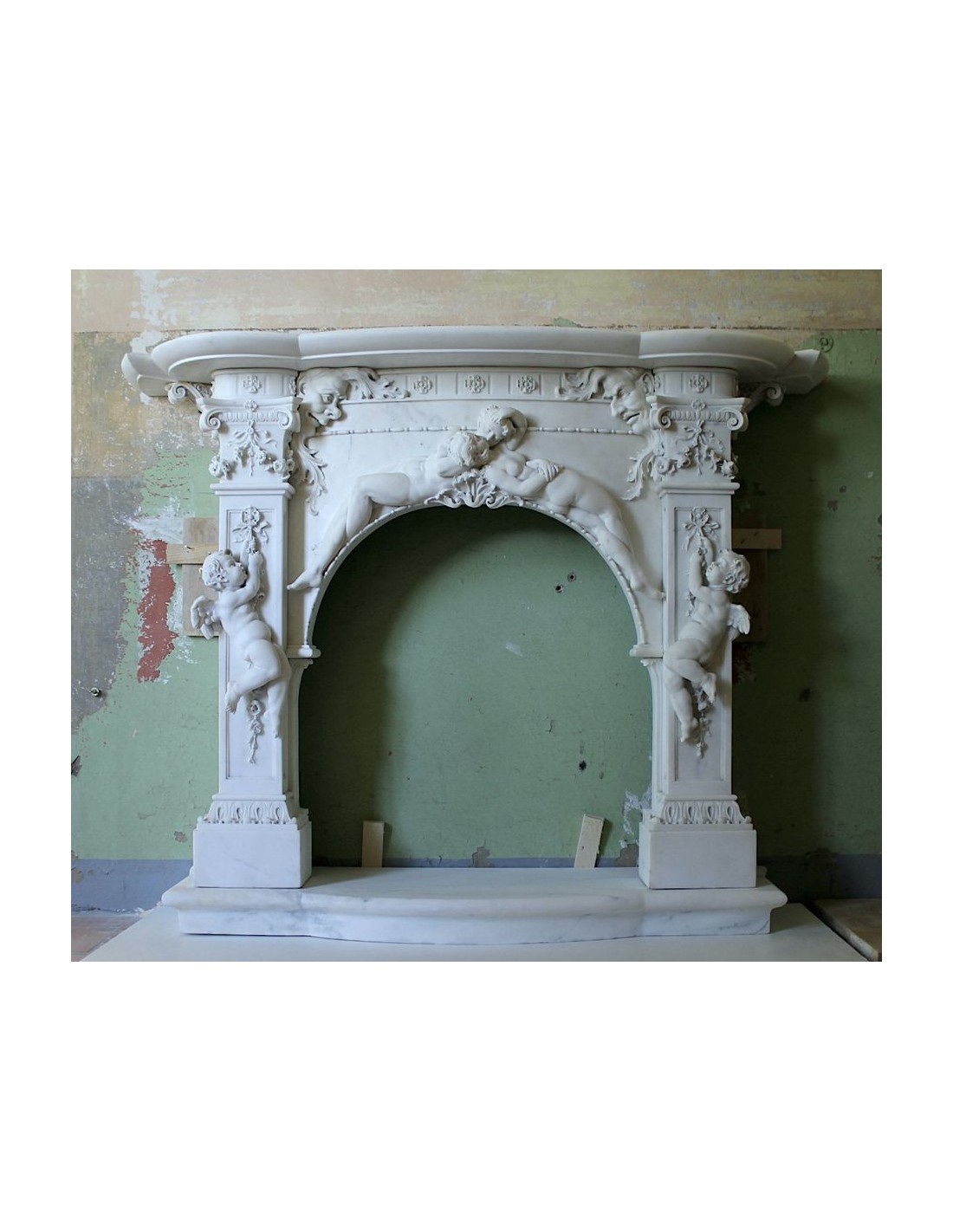
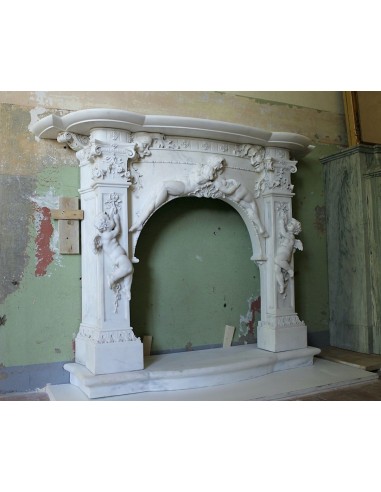
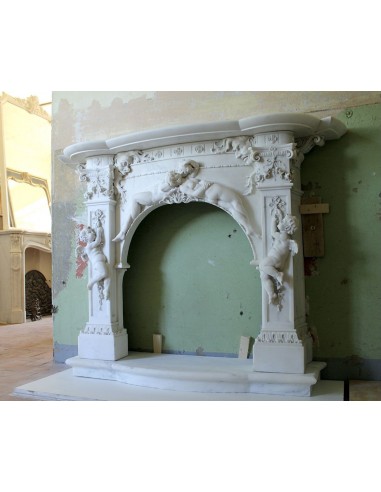
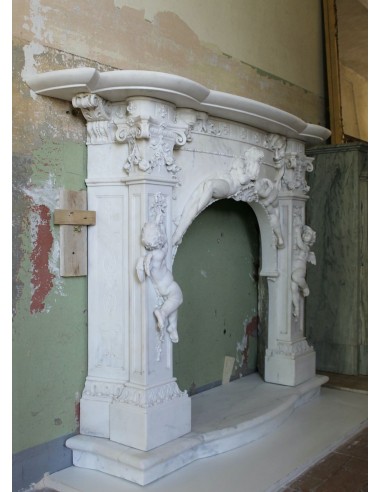
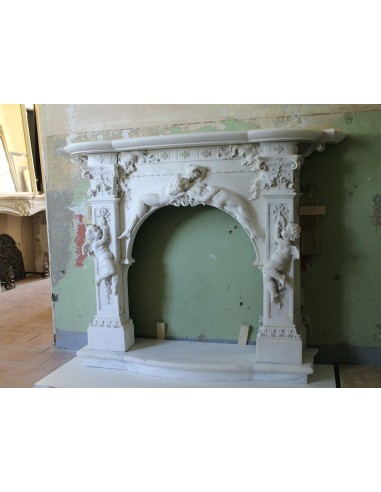
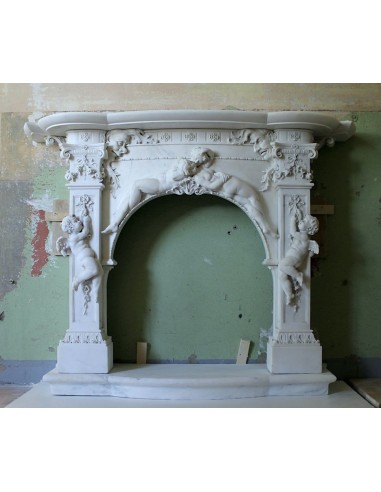
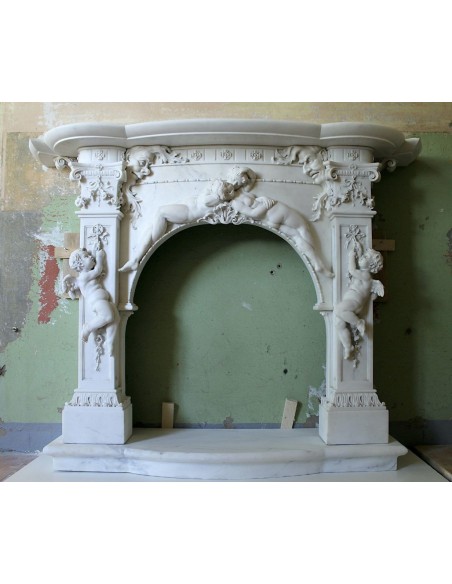
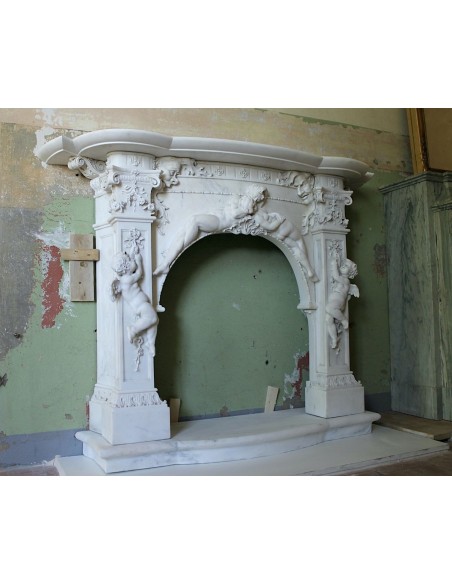
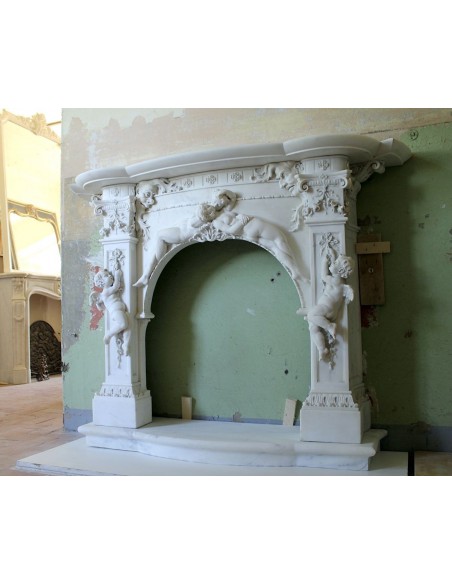
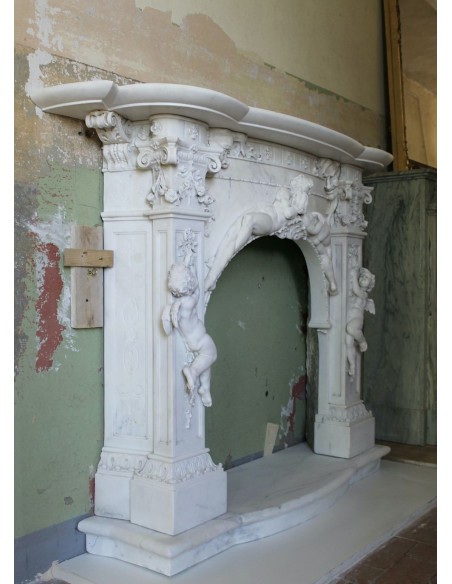
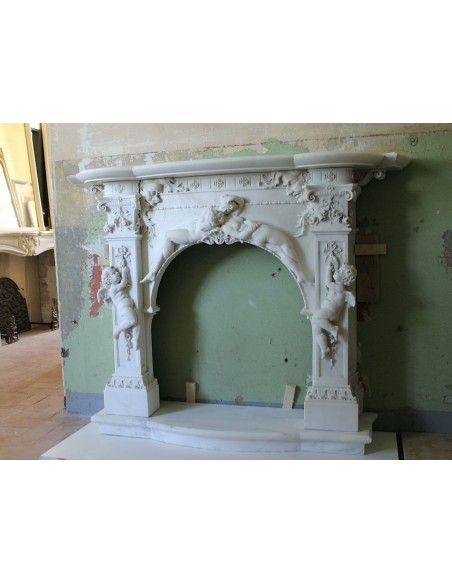
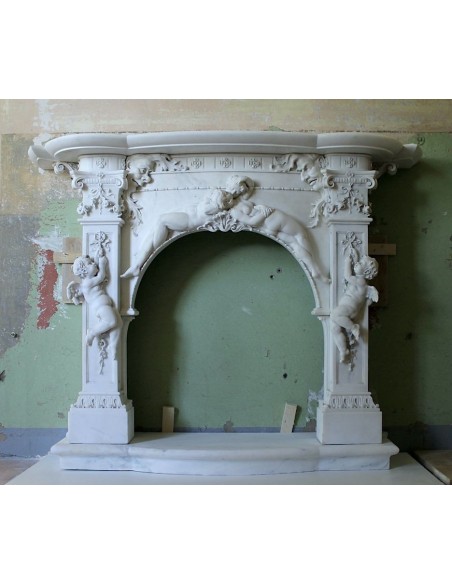
IN THE LATE NINETEENTH AND EARLY TWENTIETH CENTURIES, A FAMOUS FLORENTINE SCULPTOR (ADOLFO CIPRIANI, FATHER OF UGO CIPRIANI, ALSO A RENOWNED SCULPTOR) CONCEIVED THIS FIREPLACE, A KIND OF “TREE OF LIFE” AMONG THE FINEST I HAVE EVER SEEN.
Perhaps not everyone knows what a “TREE OF LIFE” is in the art world.
This appellation originates with the physicality of an actual tree (think of the ancient American Totems or the modern Expo symbol tree), but it can also be represented by a painting, a column (the Trajan Column, whose coils tell of the exploits of this emperor, is, arguably, the most famous Tree of Life in the world) or a graffito in a cave inhabited by prehistoric men or the many a bas-reliefs found in the Egyptian pyramids ... THE IMPORTANT THING IS THAT THIS WORK TELLS ABOUT THE LIFE OF A MAN OR A PEOPLE, THEIR WORK, THEIR DEEDS, THEIR RELIGION ETC.. ETC..
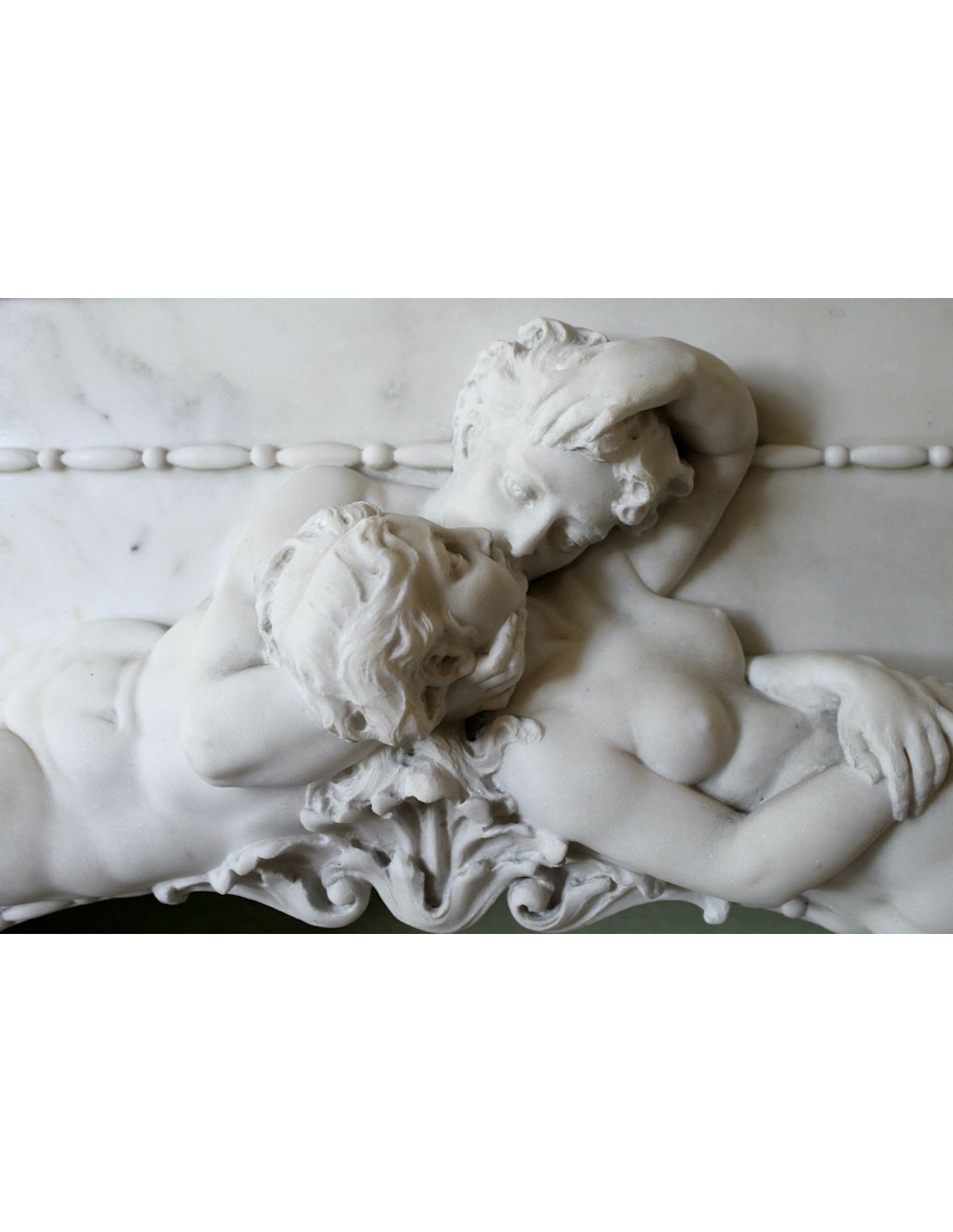
In our case the Story that these marbles tell us is the most important story of all humanity, THAT OF LOVE BETWEEN A MAN AND A WOMAN:
Before examining with you the “technical” and artistic peculiarities of this sculptural complex, I would like to tell you about the story it is telling us, the result of the Estro of our Adolfo, who, as a good Tuscan, was also what is called a “bon vivant,” a definition that does not only mean “viveur” or “tombeur de femmes,” but also means “the one who seeks, finds and enjoys the pleasantness that every moment of our life offers us.”
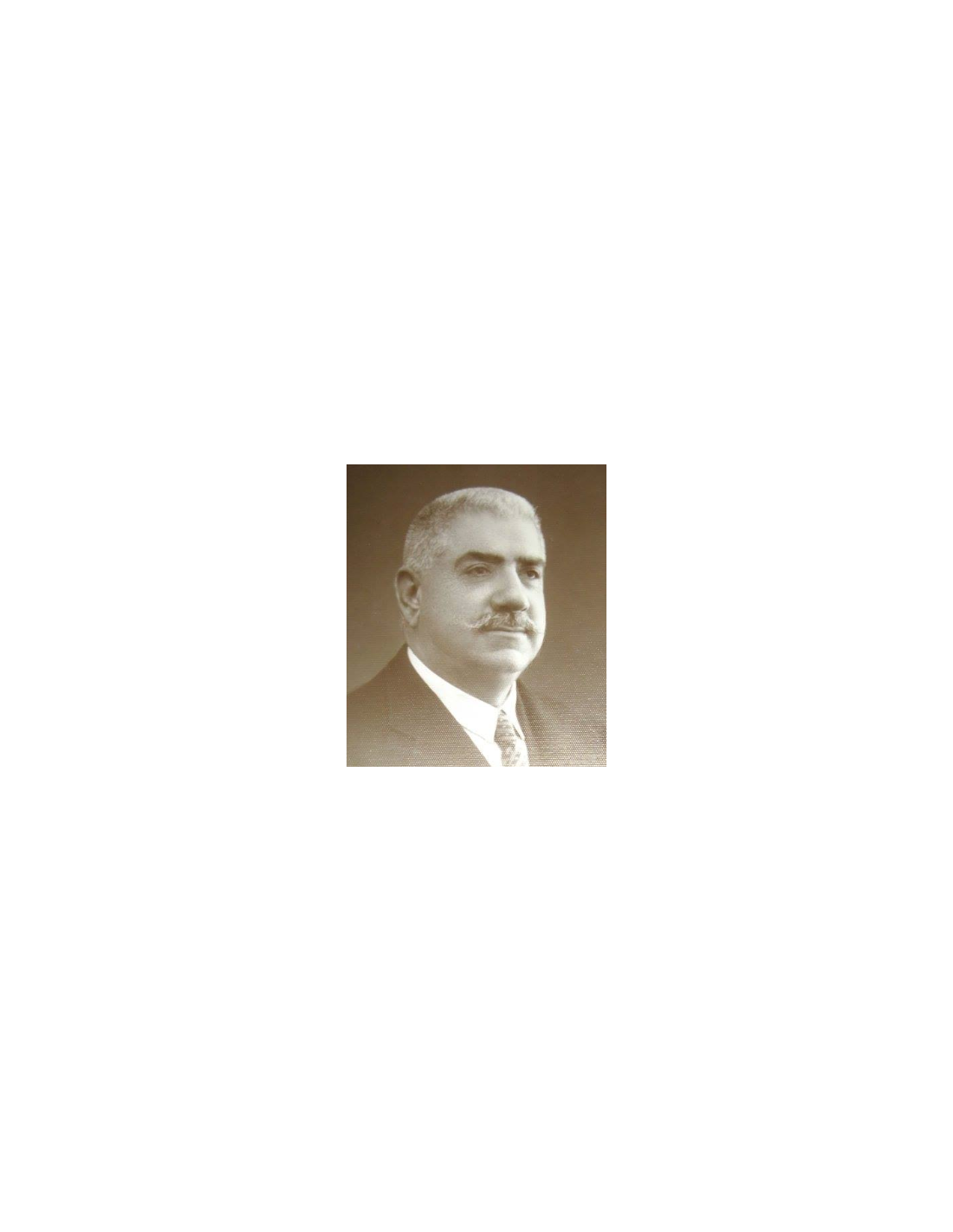
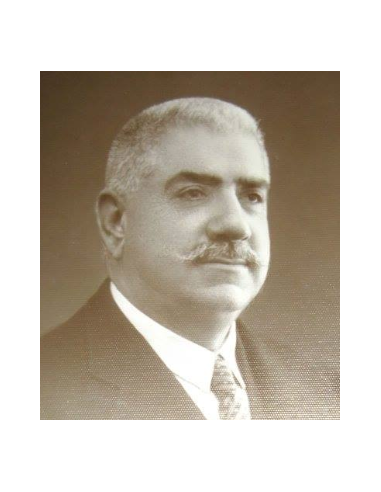
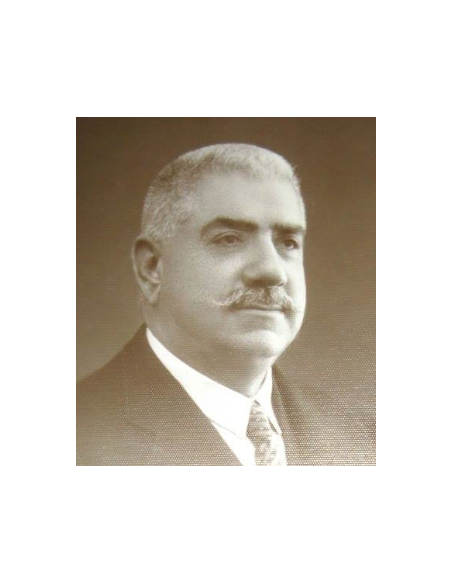
And our Adolfo has traveled extensively in search of the Pleasures of Life, not only in many Italian cities but also in much of Europe, showing a particular love for France and Paris. To let you get to know him de visu, scrolling through the fireplace photographs you will find a daguerreotype depicting the face of our sculptor, an image that tells us so much about Him, in his features, in his gaze (satisfied and good-natured), even in his mustache (happily “sparrowhawk-like” and pleasantly old-fashioned) which mustache tells us of his character as eager for Life as he was capable of living it serenely. To better define the life of this well-rounded artist, know that our Adolfo was also a great painter, a fantastic landscape painter in primis, but also at ease in trying his hand at “mannerist” sacred canvases, that is, made according to the modes and techniques of painters of different periods and styles... In short, Adolfo (by now we are friends, he and I, so I call him by his name) was a true artistic chameleon, a sort of Leonardo Da Vinci in miniature.
FIRST ACT
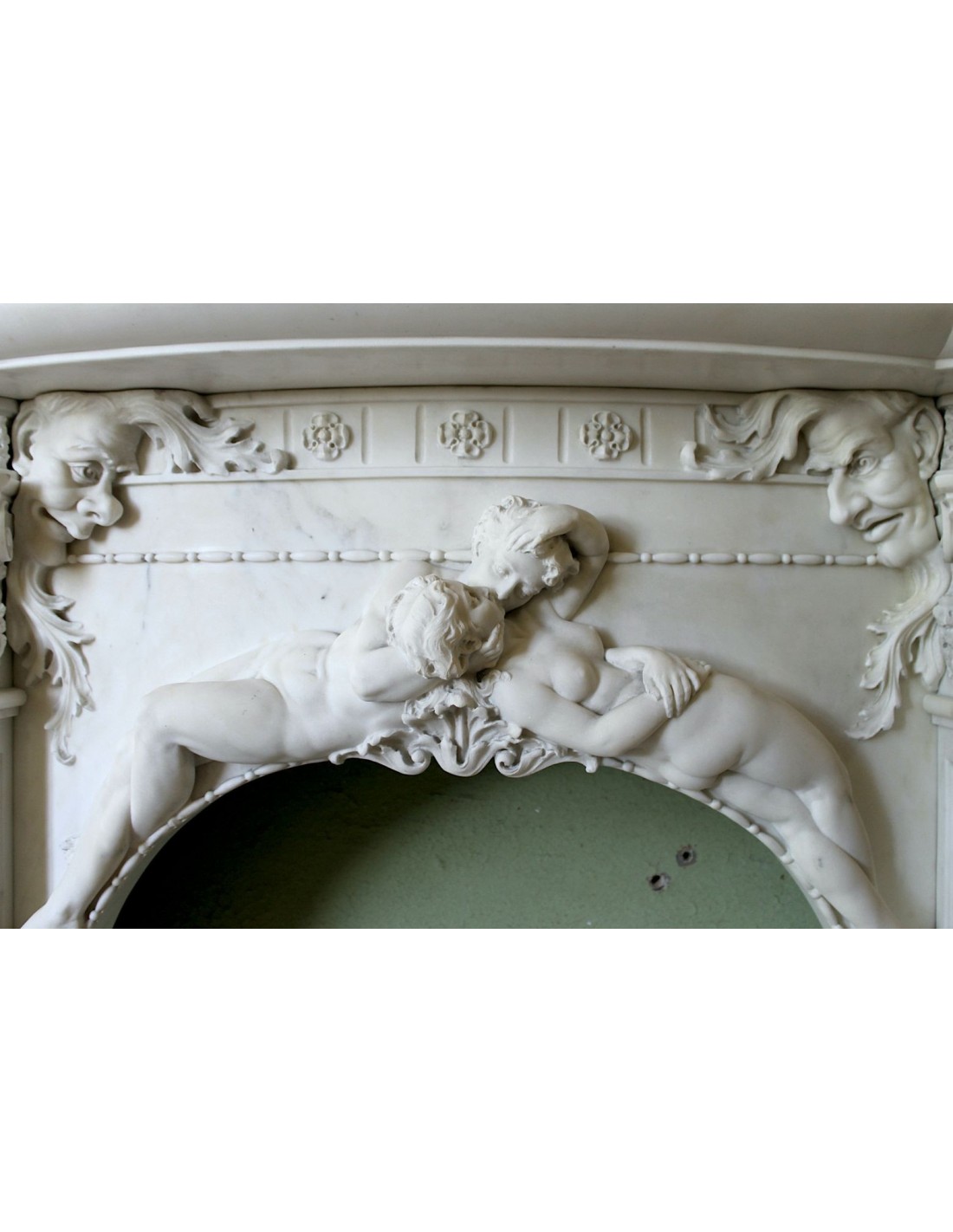
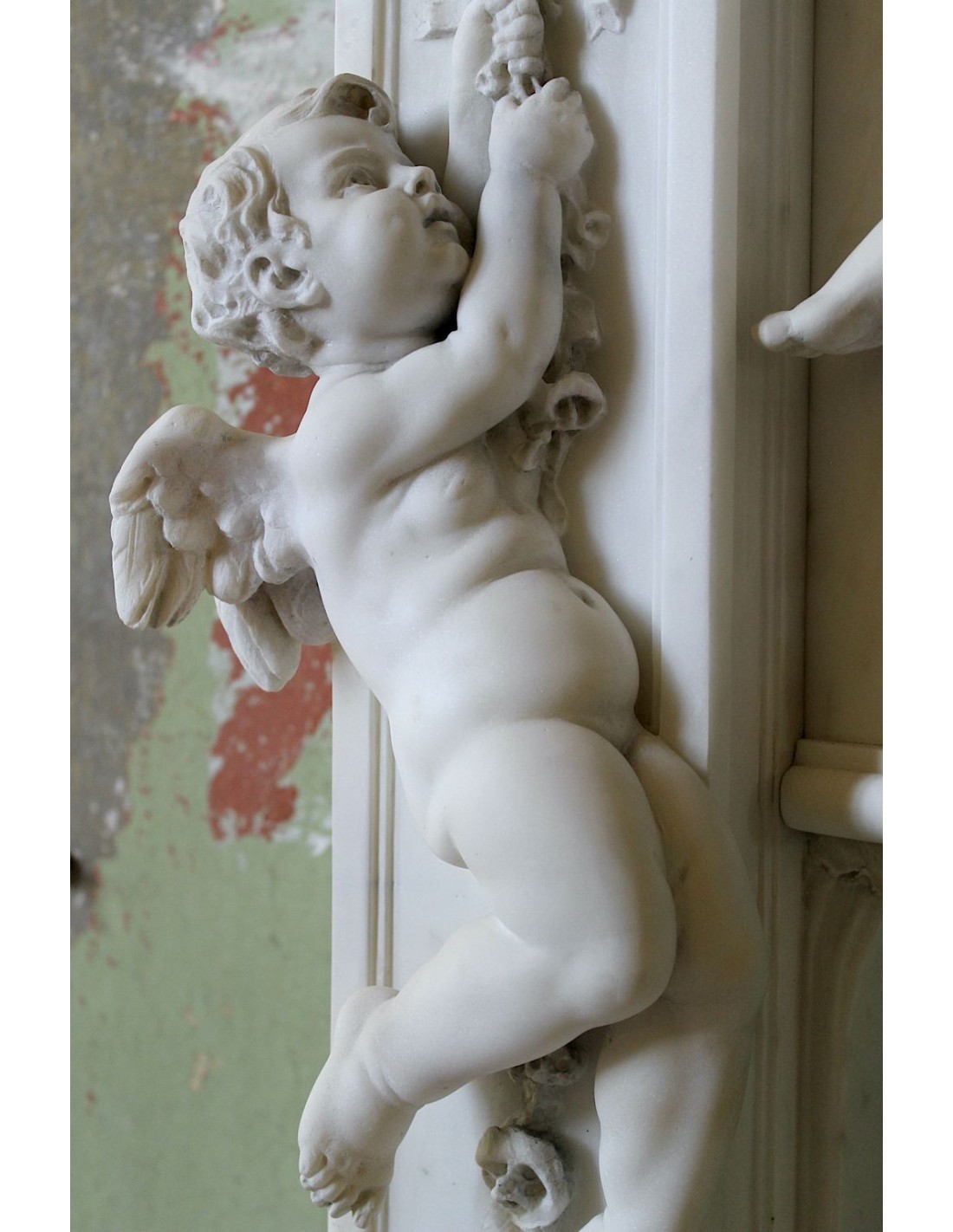
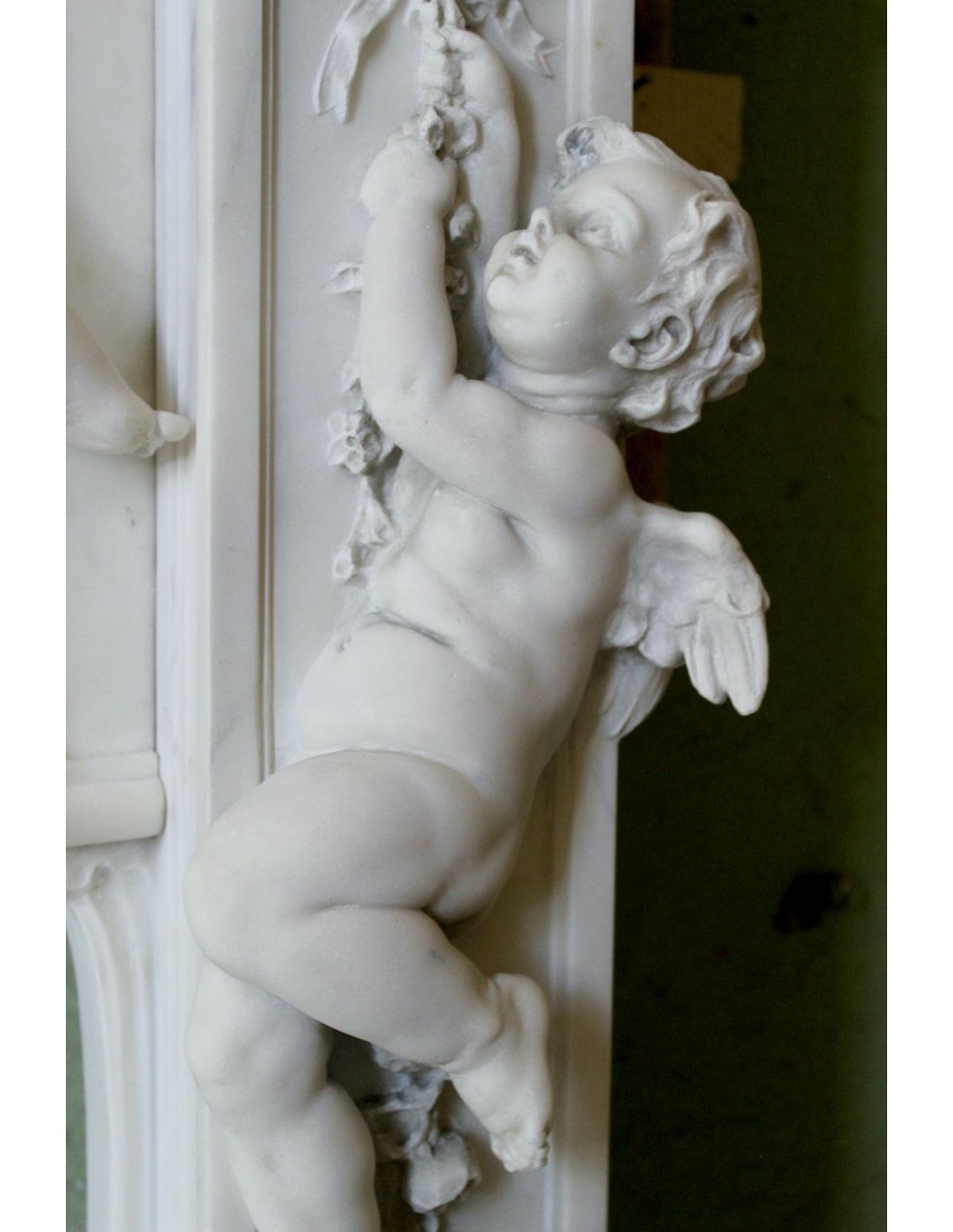
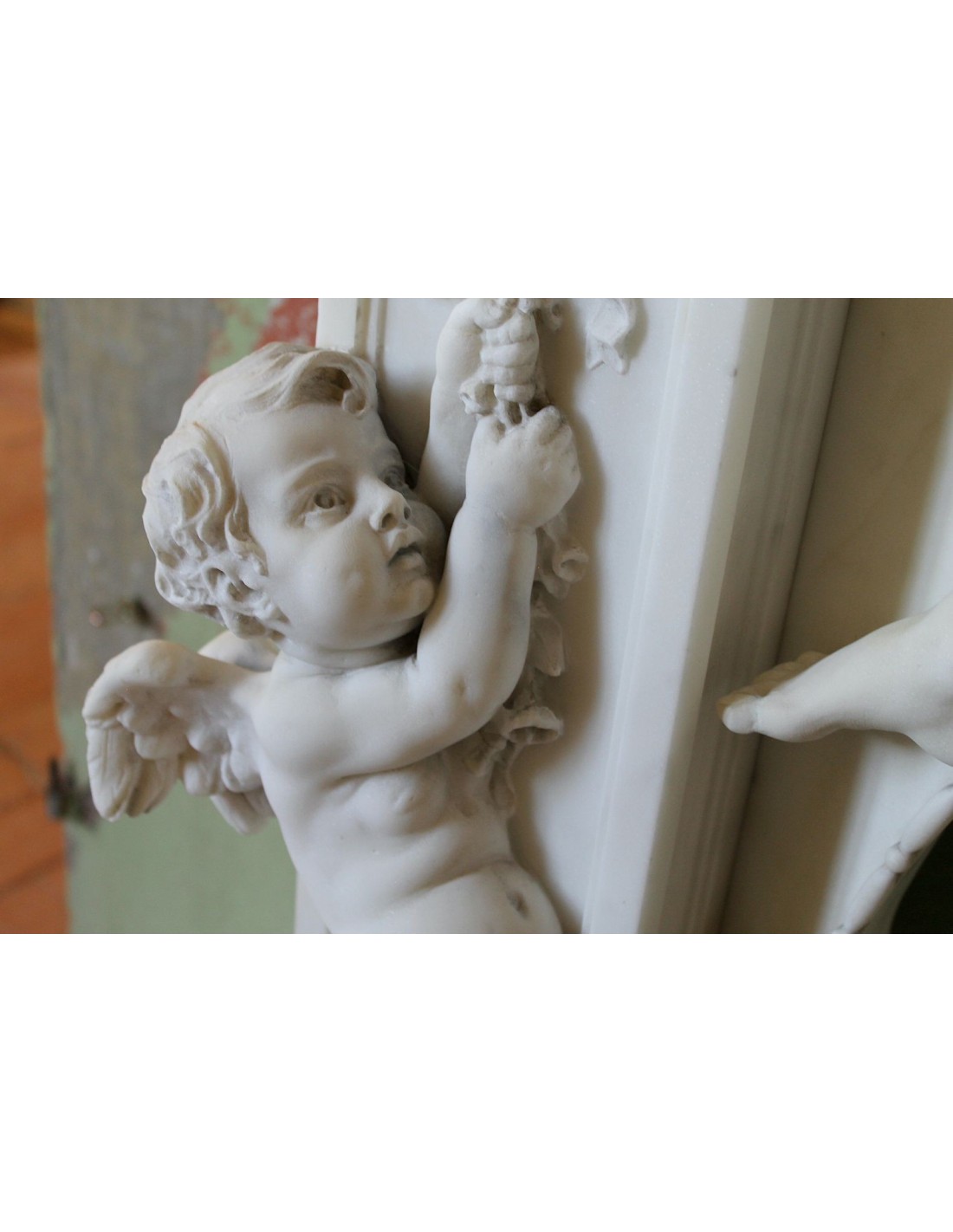
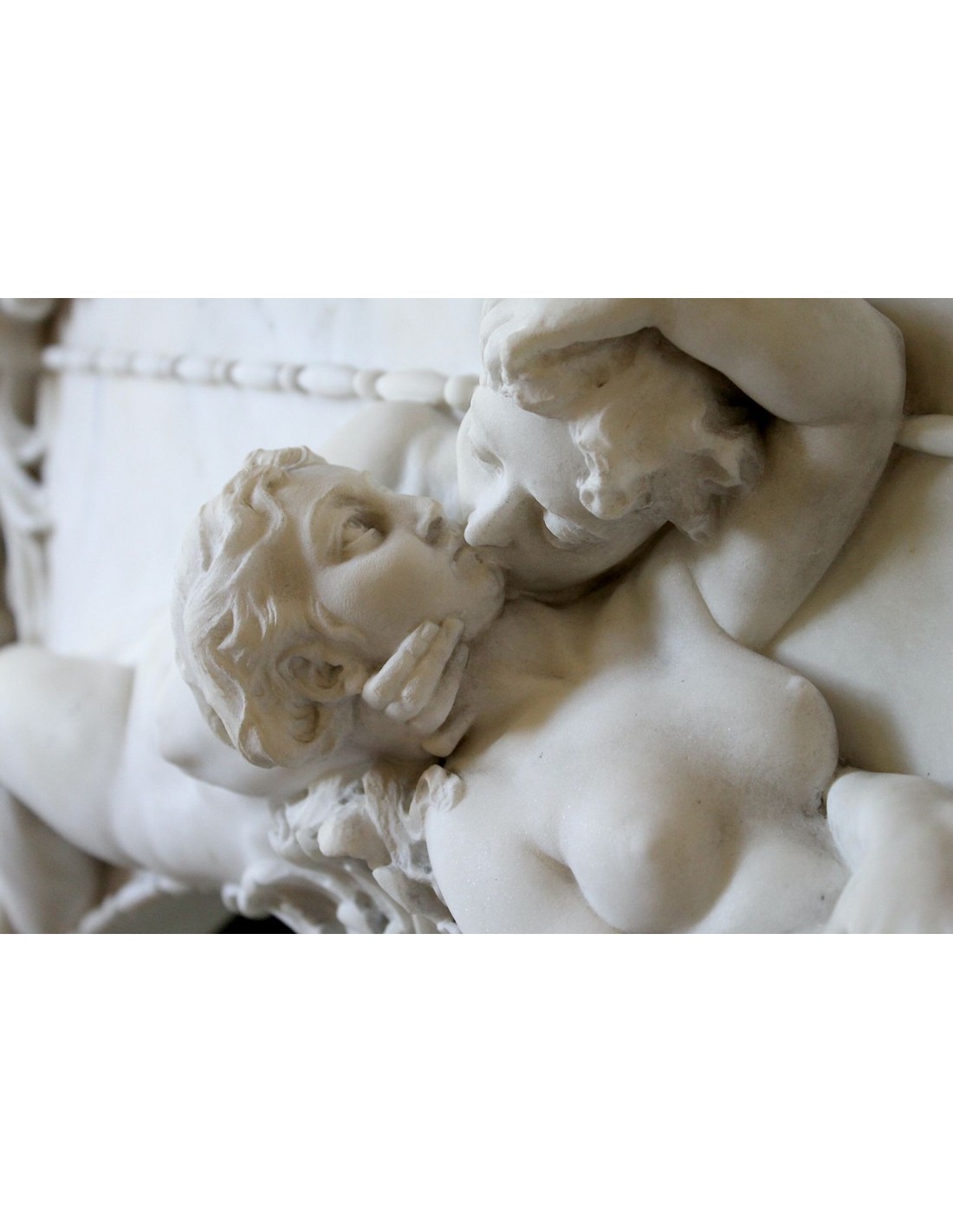
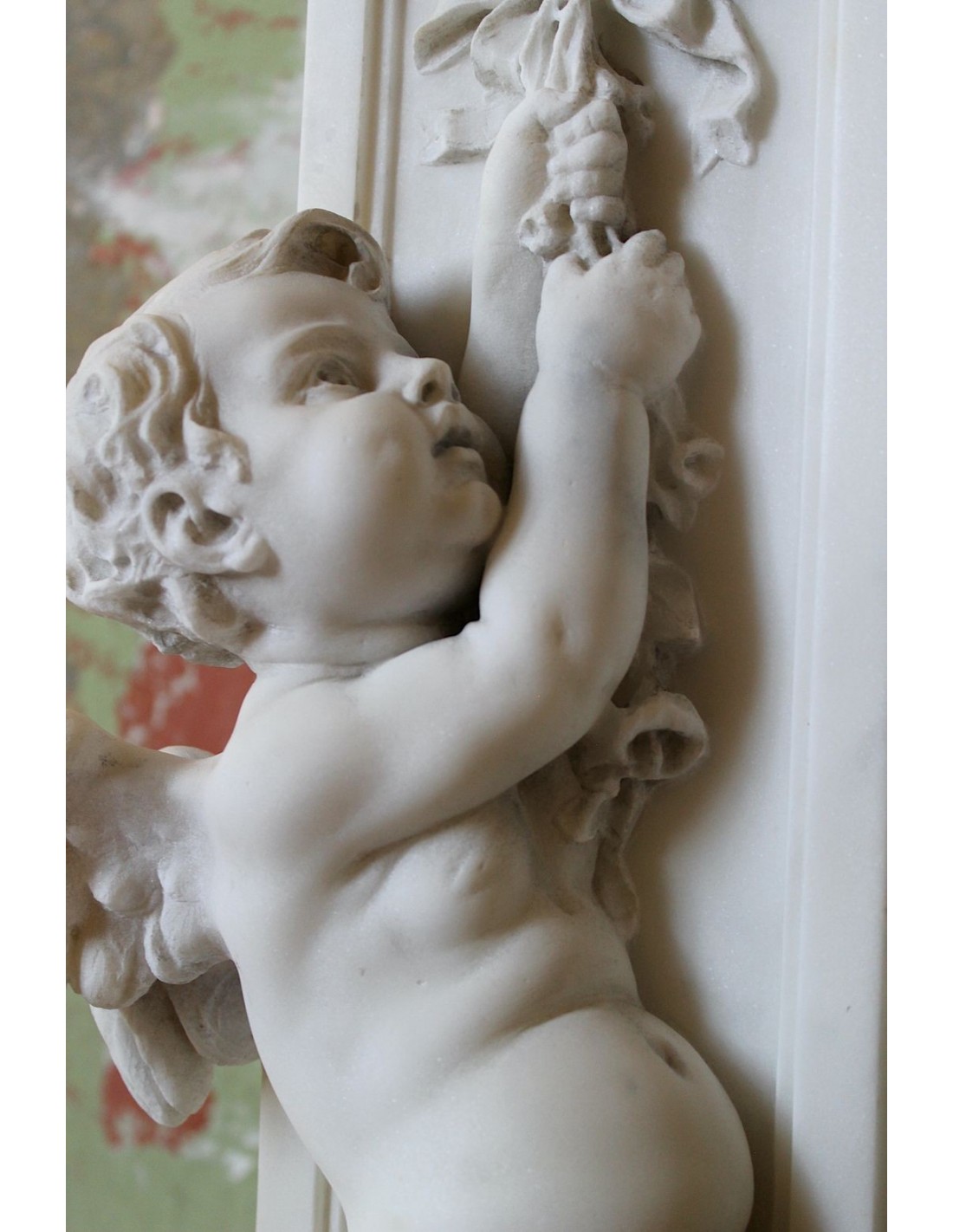
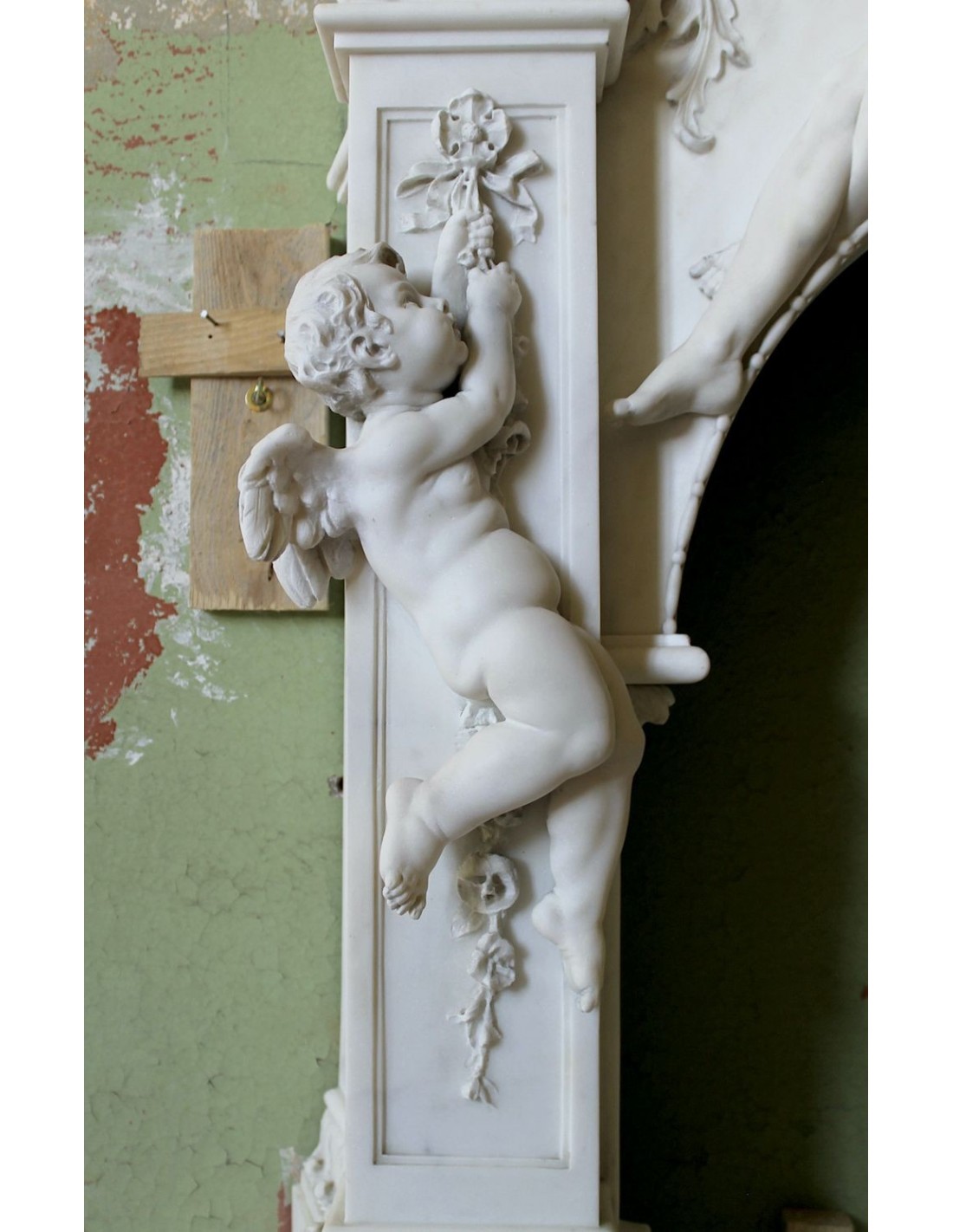
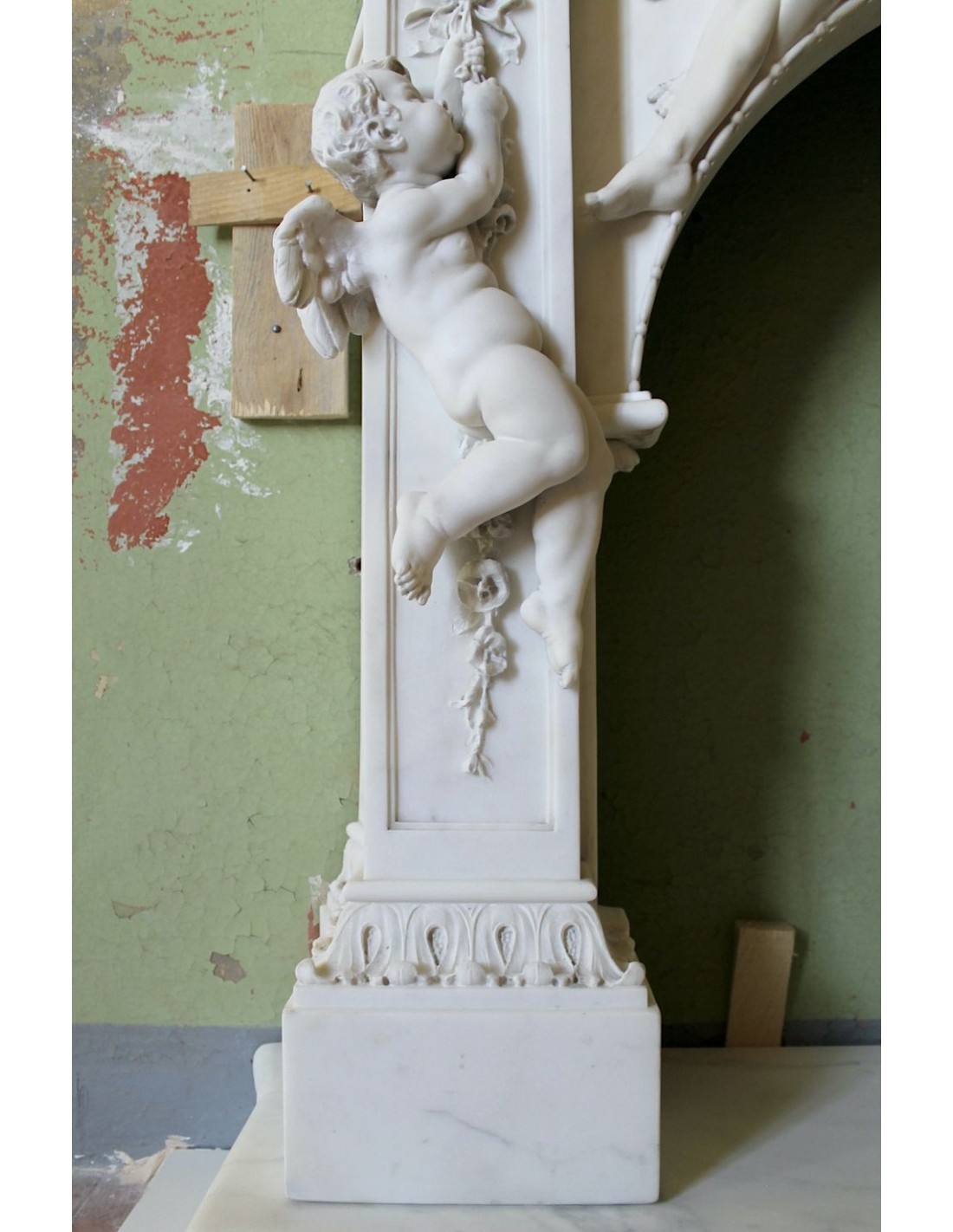
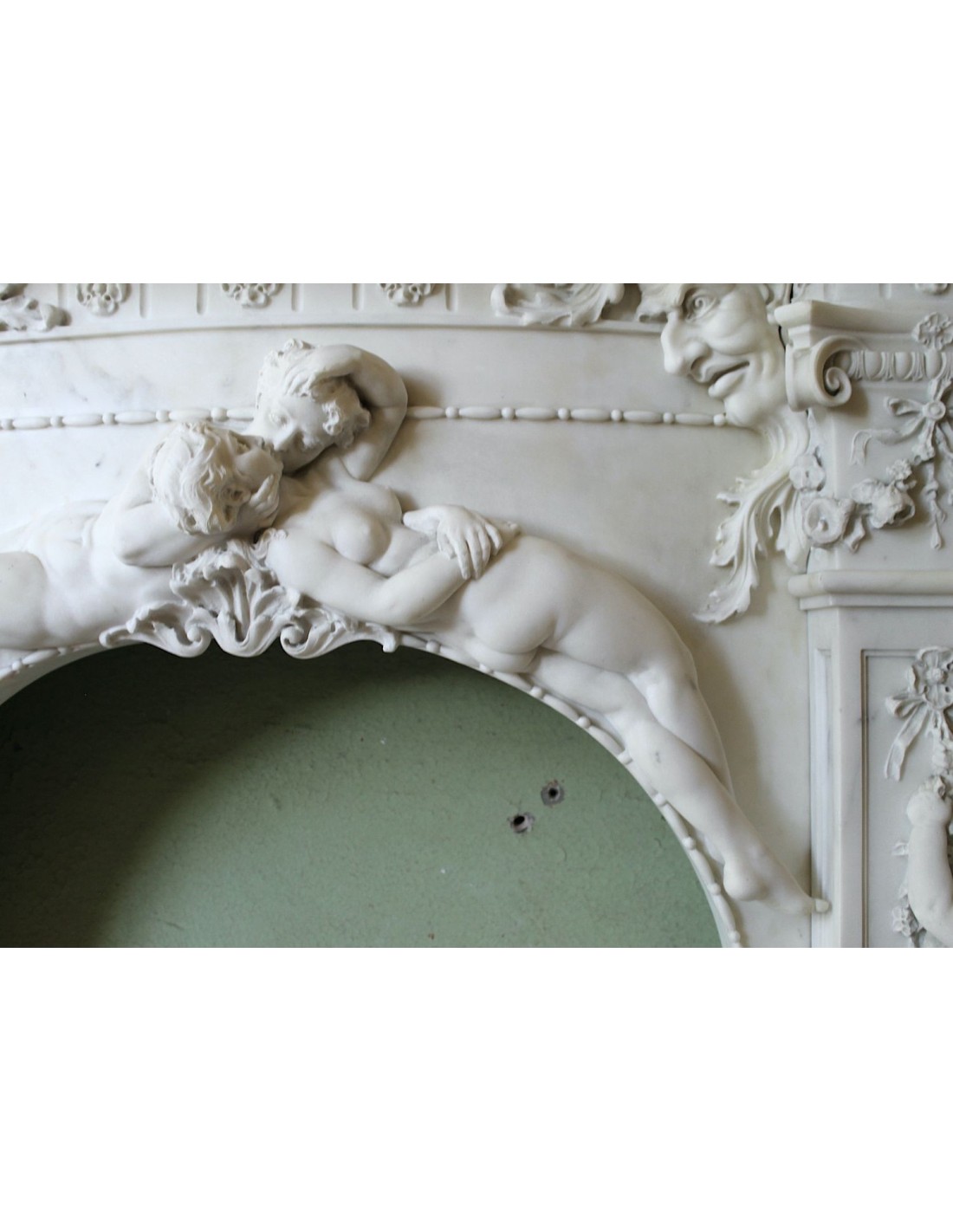
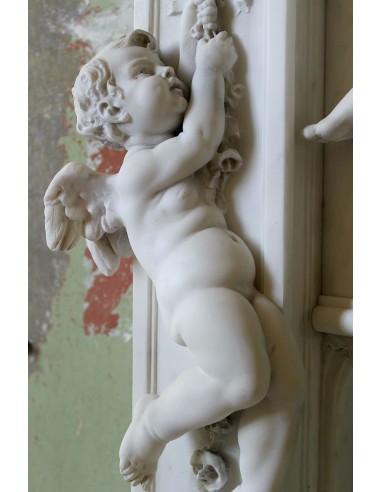
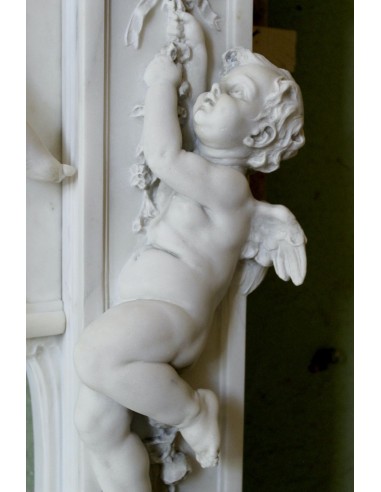
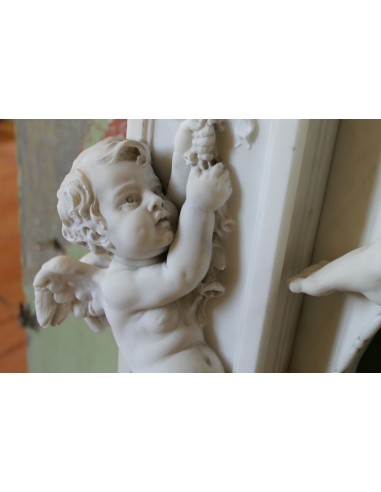
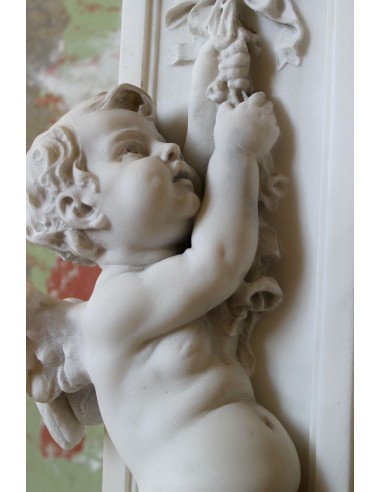
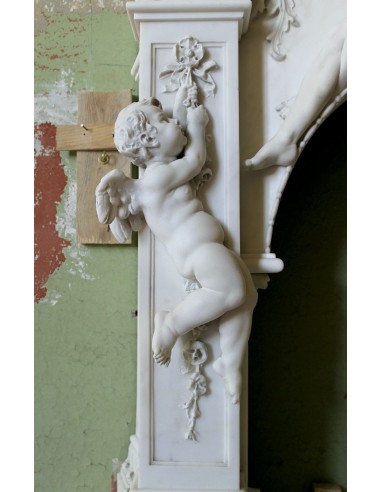
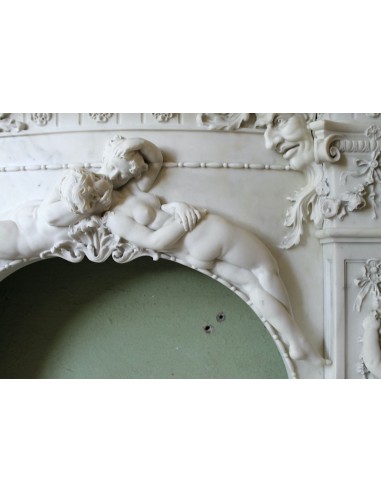
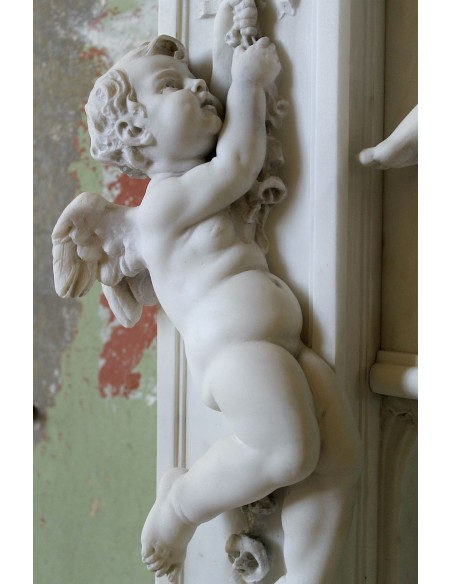
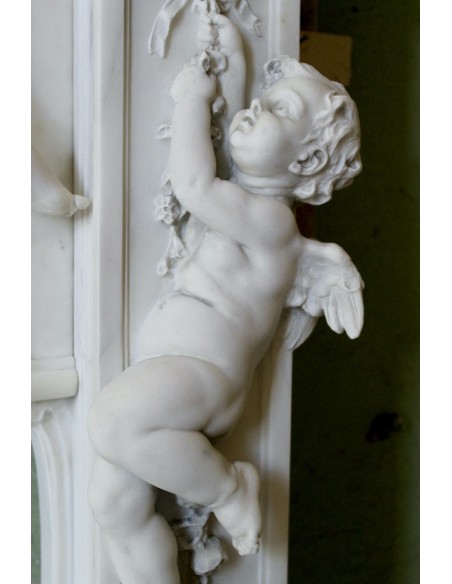
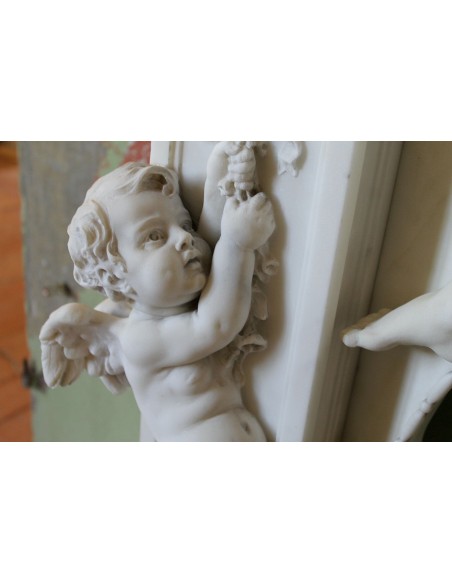
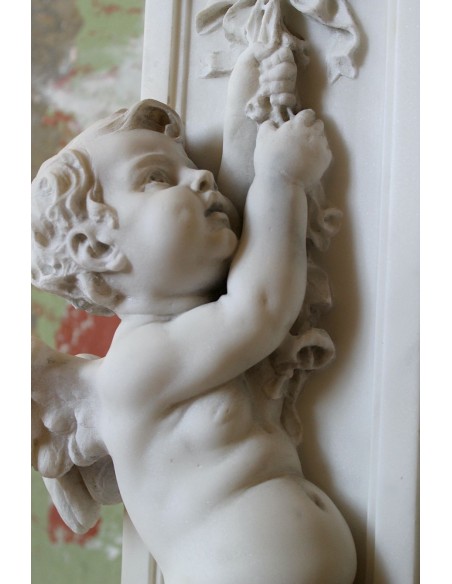
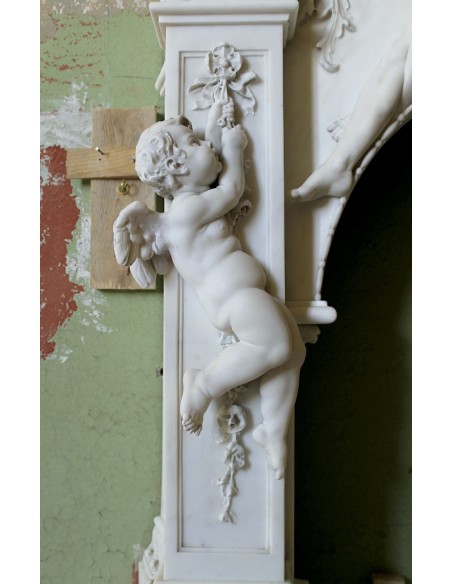
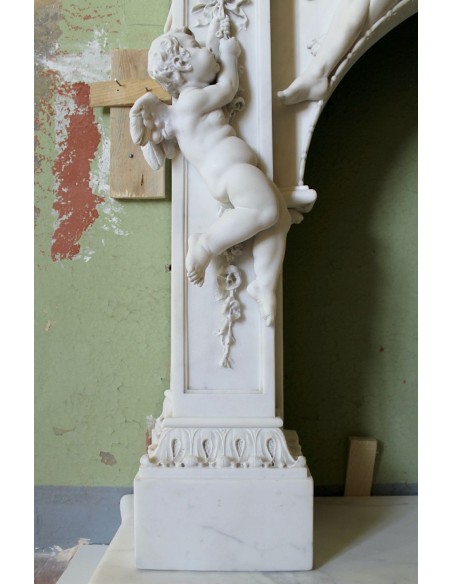
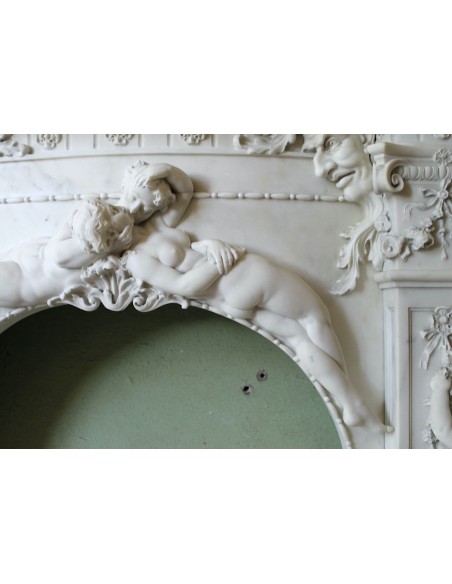
The two putti are climbing the tree of life, they are, that is, climbing among the happenings of life and, more properly, they are watching, amazed, the kiss between two young lovers.
The two putti experience, in short, the discovery of Love.
SECOND ACT
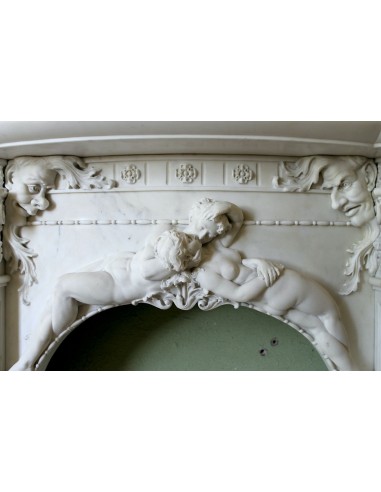
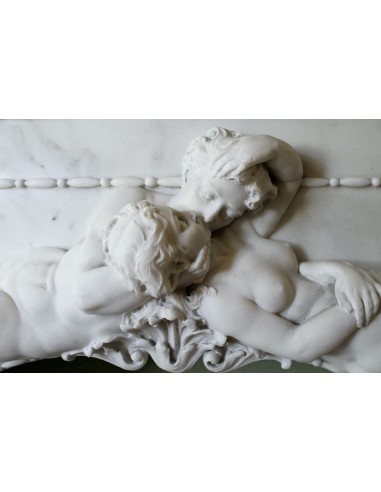
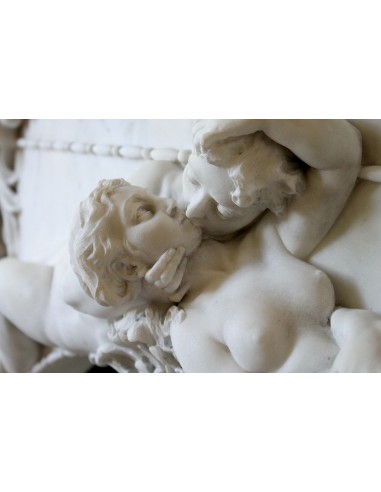
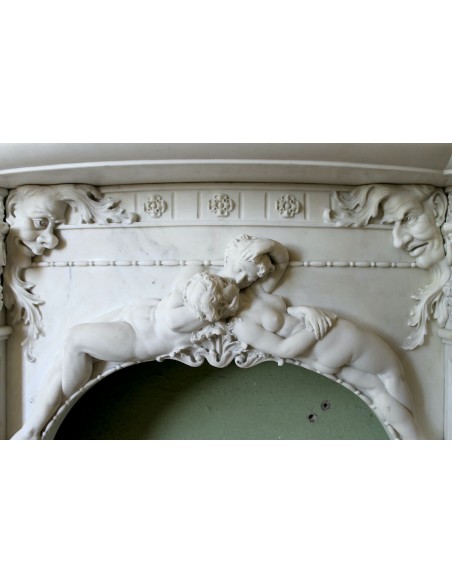
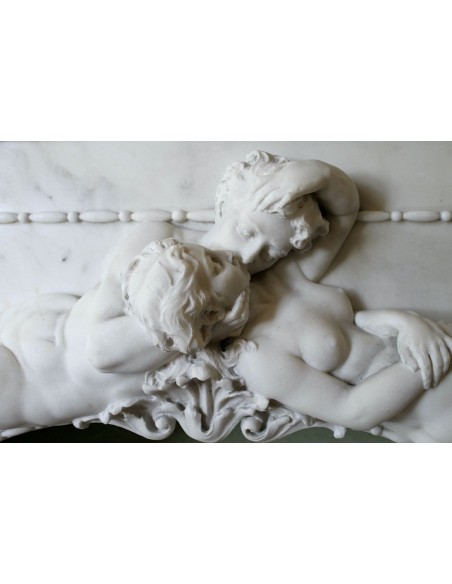
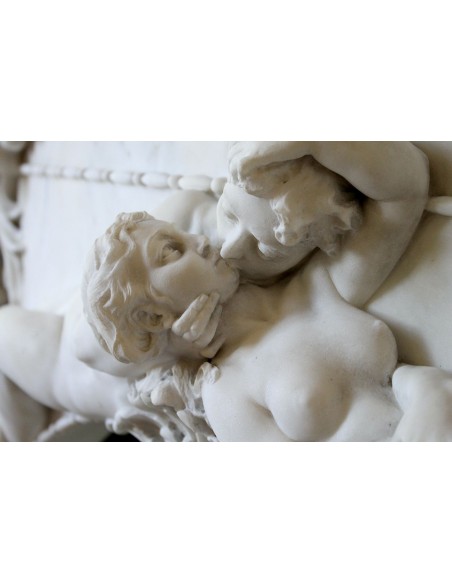
The two “mourners” are reveling in the pleasure of Love (their nudity clearly implies that they would not stop at the kiss but, as you will understand, in those days, even Rodin could not have gone beyond the depiction of the kiss, moreover on the mouth, thus already beyond the limit normally allowed).
The two lovers make love.
THIRD AND LAST ACT
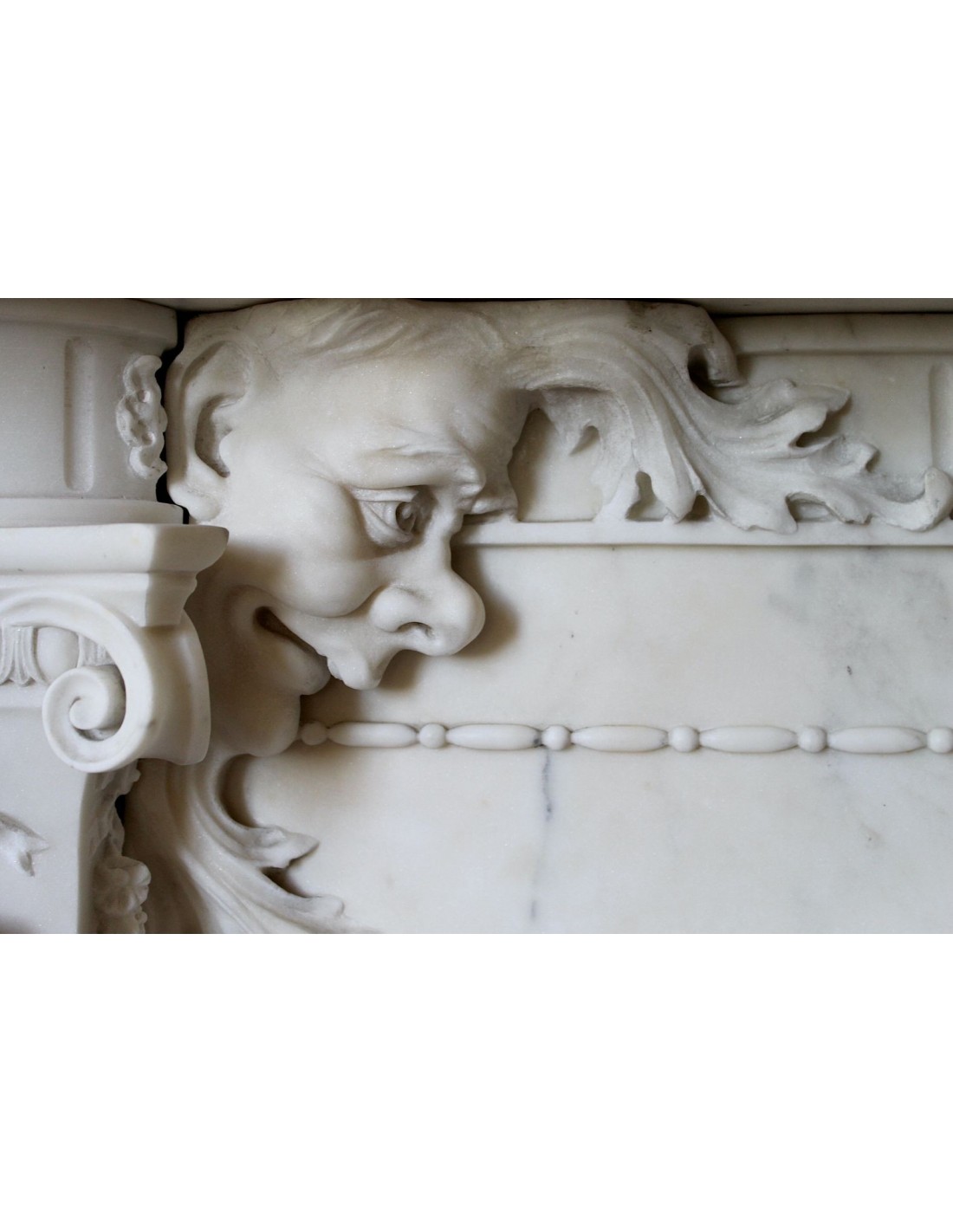
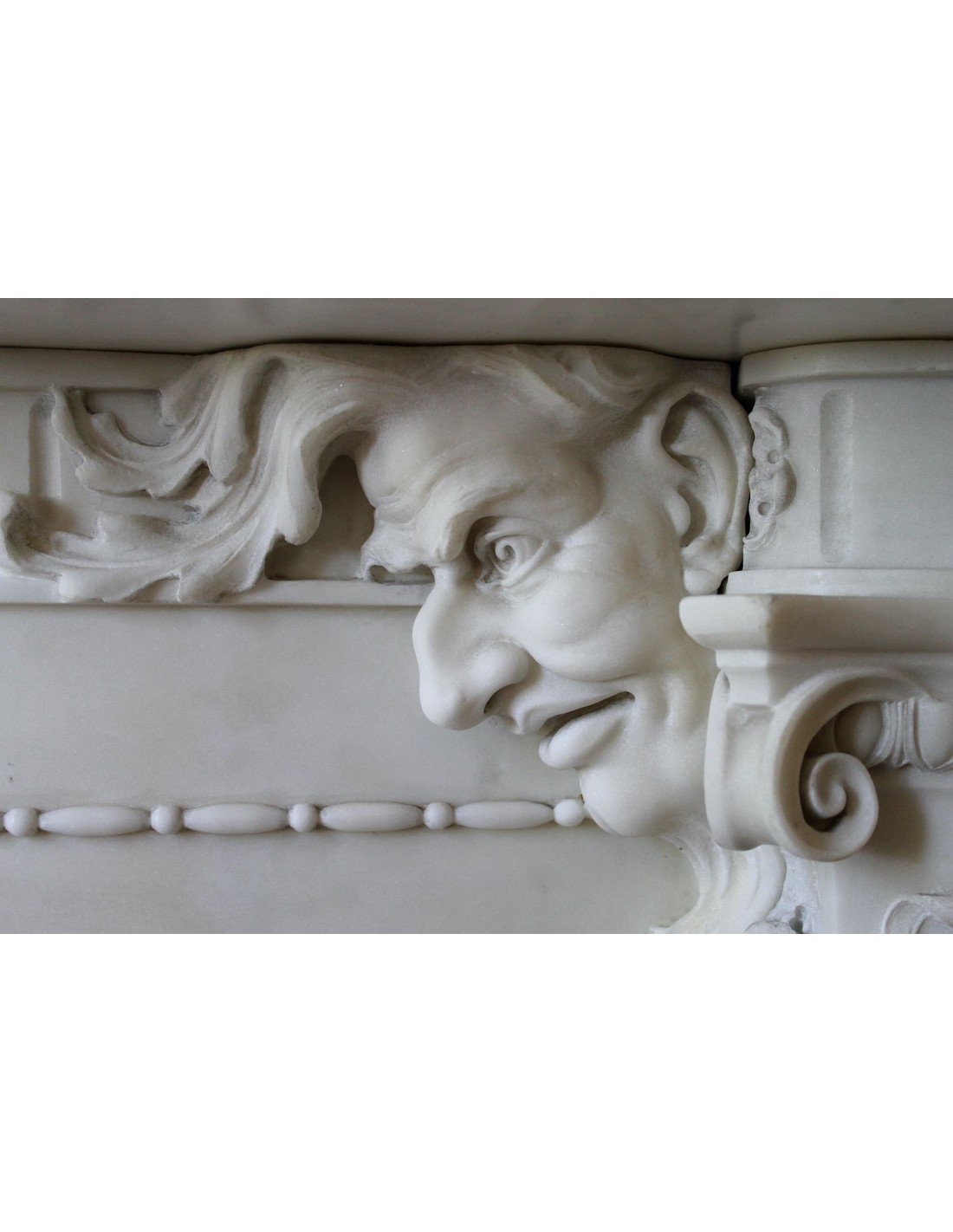
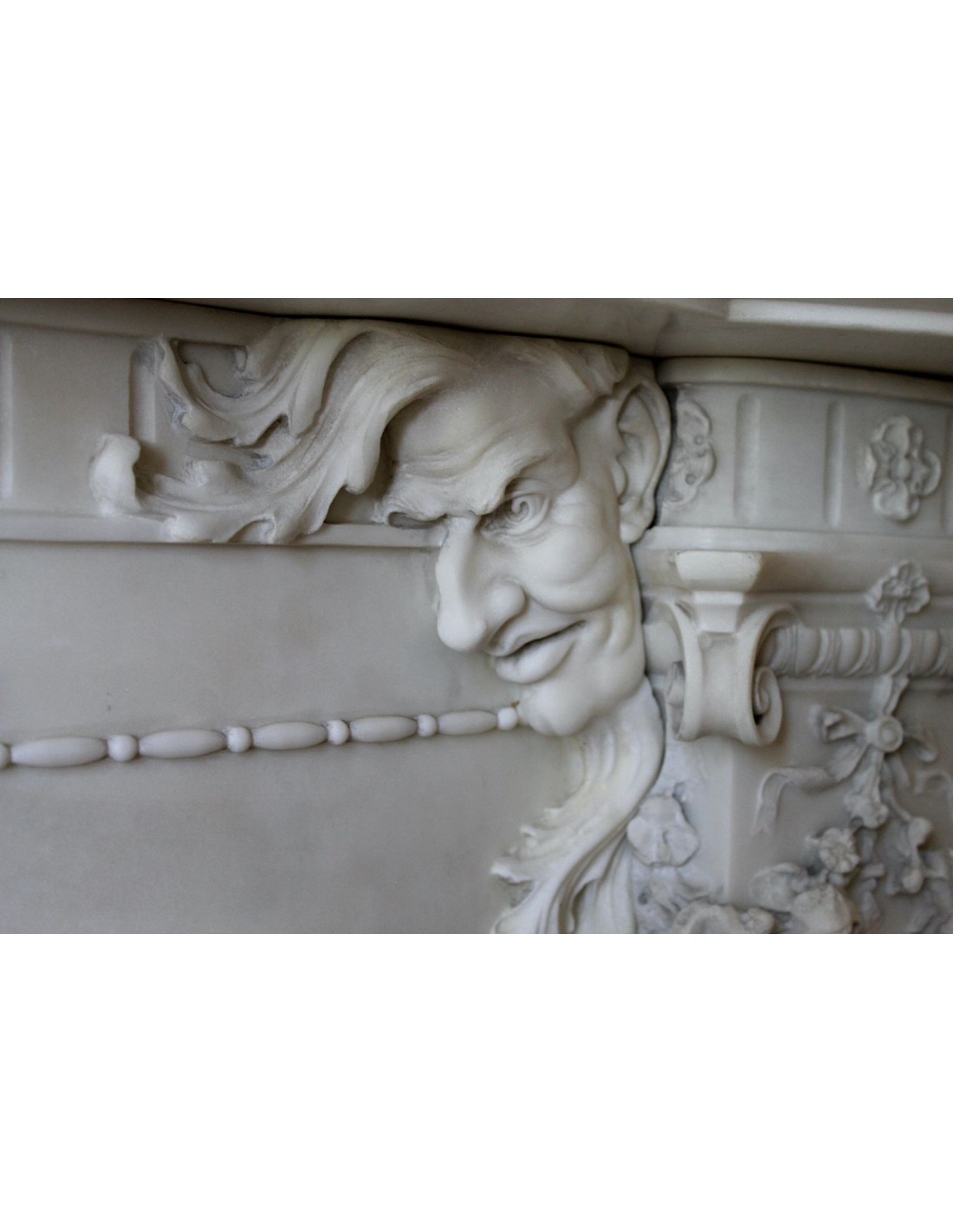
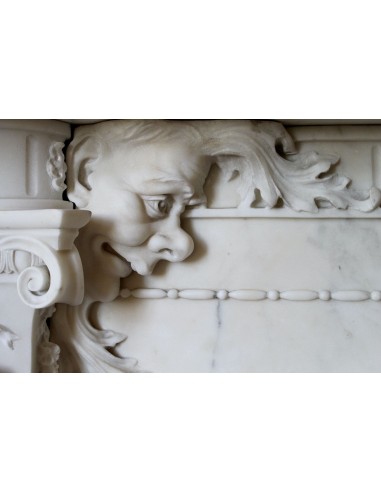
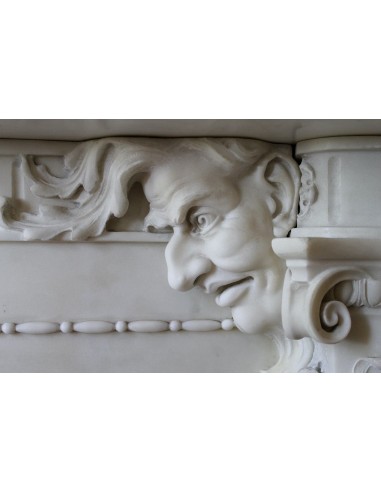
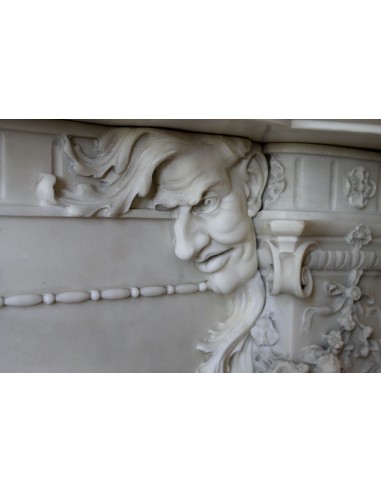
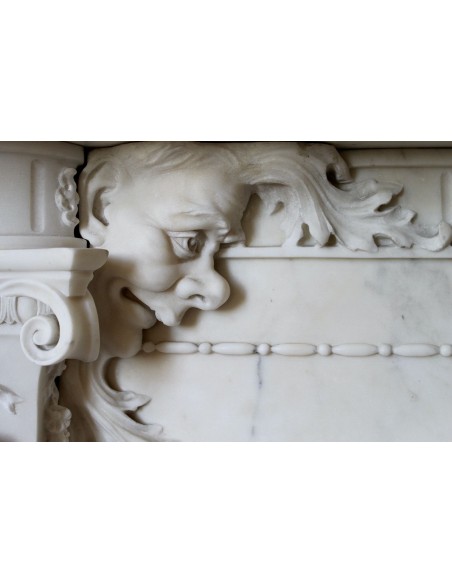
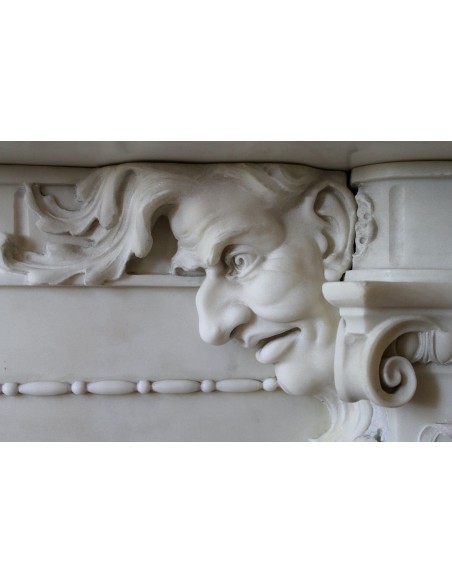
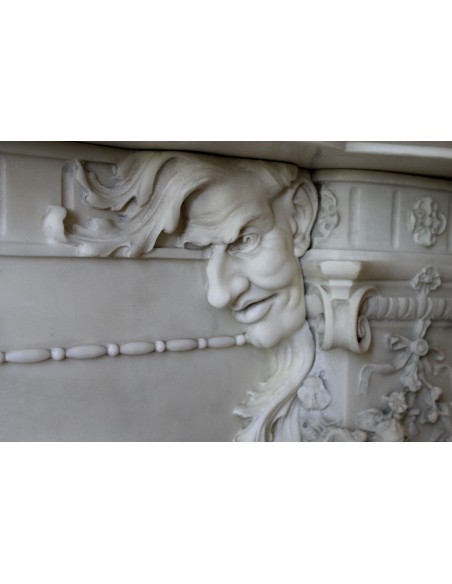
At the top, two masks represent two old men, at the summit of their lives, who are observing (and commenting between the serious and the facetious mixed with nostalgia) what they themselves have already experienced and know well.
The two old men, having now come to the curtain of their lives, draw the summaries of it in an atmosphere of gentle melancholy.
Having completed the summary of the events described in the sculpture, let us now look together at the salient features of the sculpture itself:
The first and most important quality of this work lies in the impressive veracity of the expressions.
The two putti are bewildered by the vision that has appeared to them, surprised, perhaps even a little confused, and certainly, however, intrigued and attentive in the face of this new and so “strange” discovery.
Here, Adolfo's hand was masterful. These two putti remind me of another pair of putti by our Cipriani, a small sculptural complex that I bought 20 years ago from Arnoux (he is a famous restorer in Macon, Lyon area) and which represented, precisely, two putti playing blind fly. Well, if it was easy to notice the mocking smile of the bare-faced putto, even of the blindfolded putto one could tell the expression through the “posture” of the lips alone!!! I sold this sculpture but kept several images of it, so fascinating were they.
Returning to our present-day putti, what can I say, judge for yourself, you don't need Sgarbi to understand the happy artistry that gave life and feeling to these sculptures.
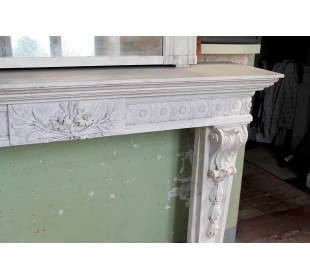
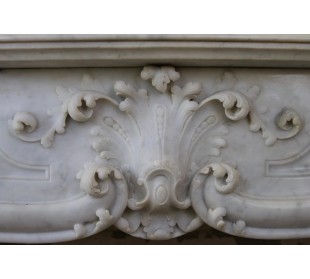
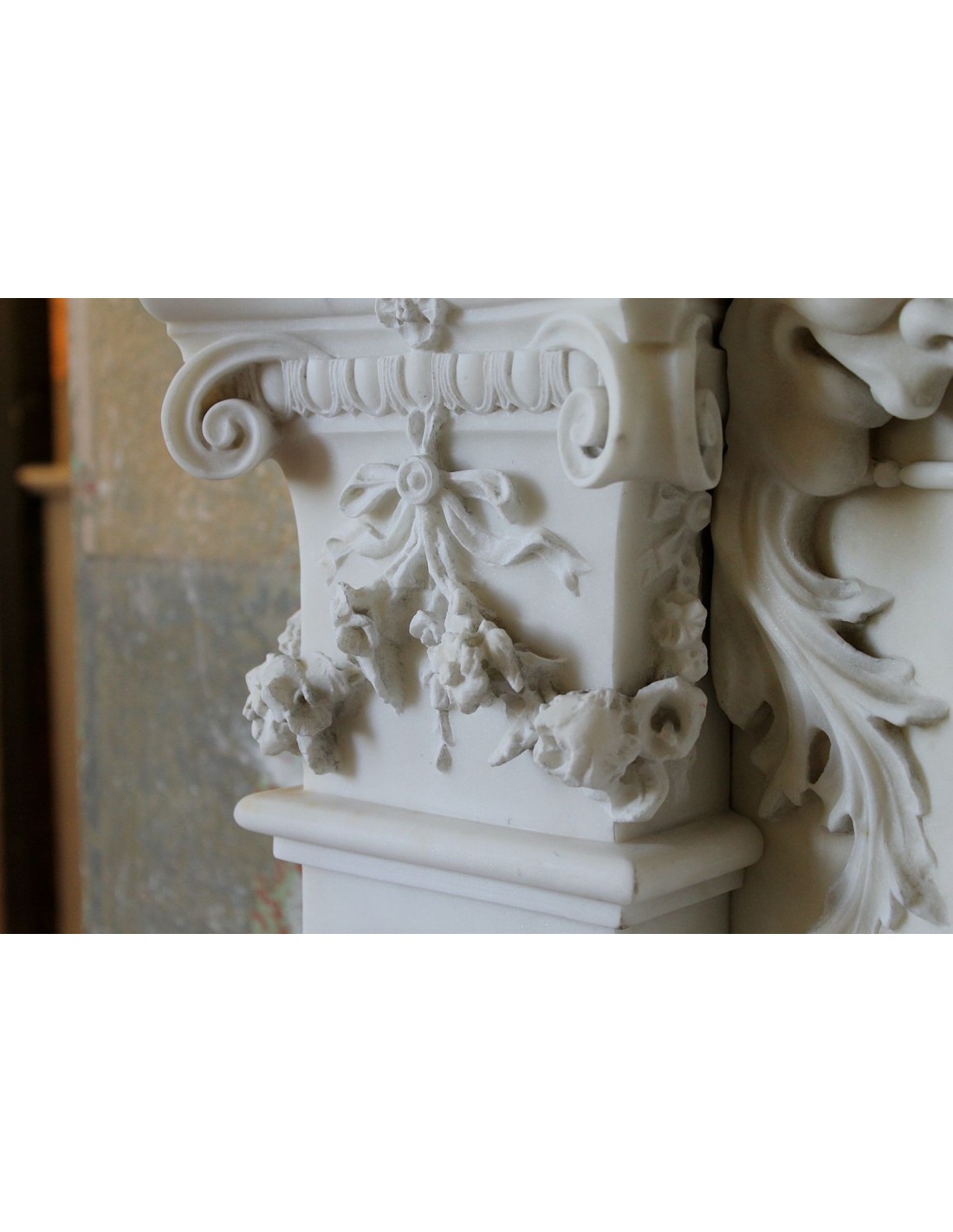
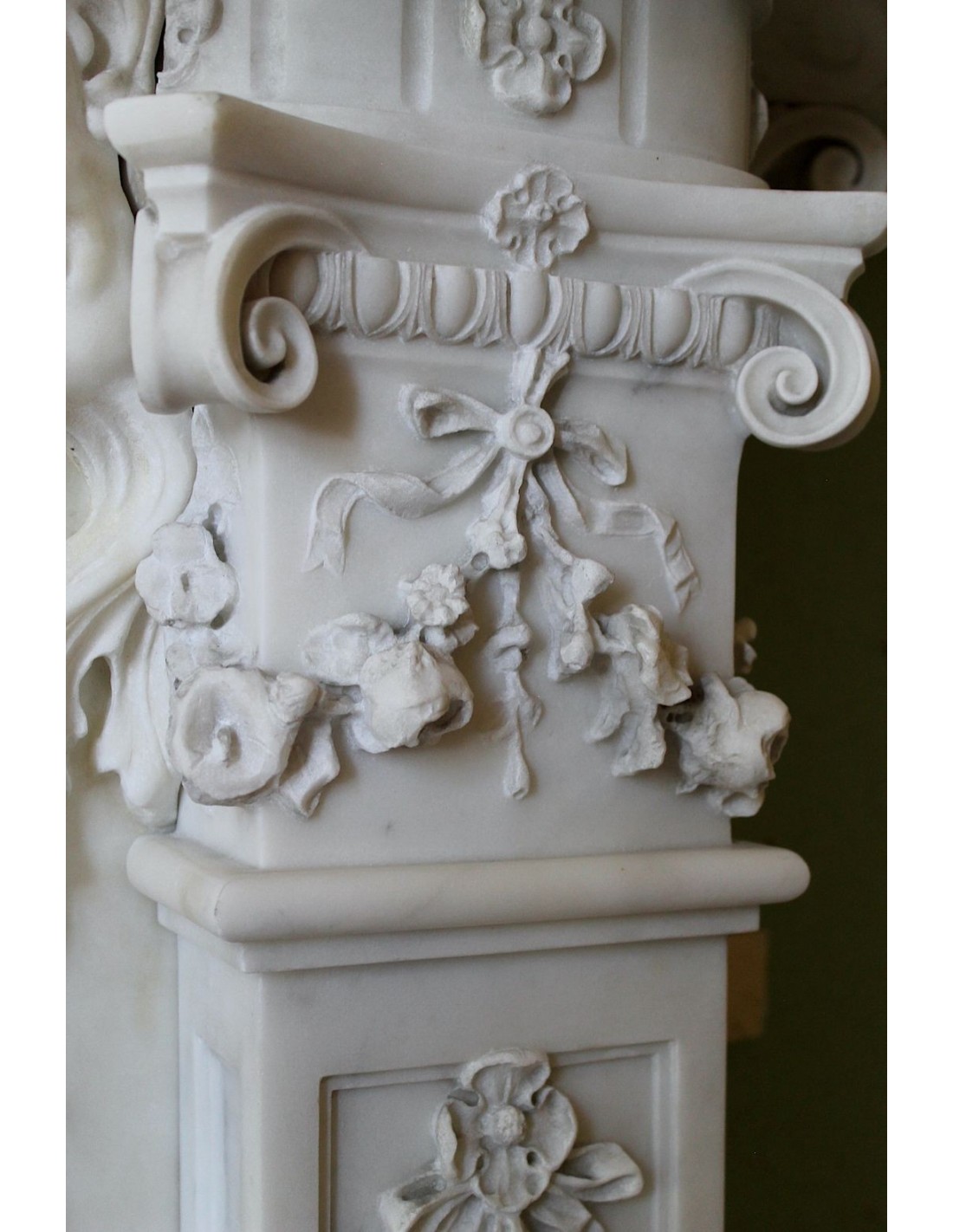
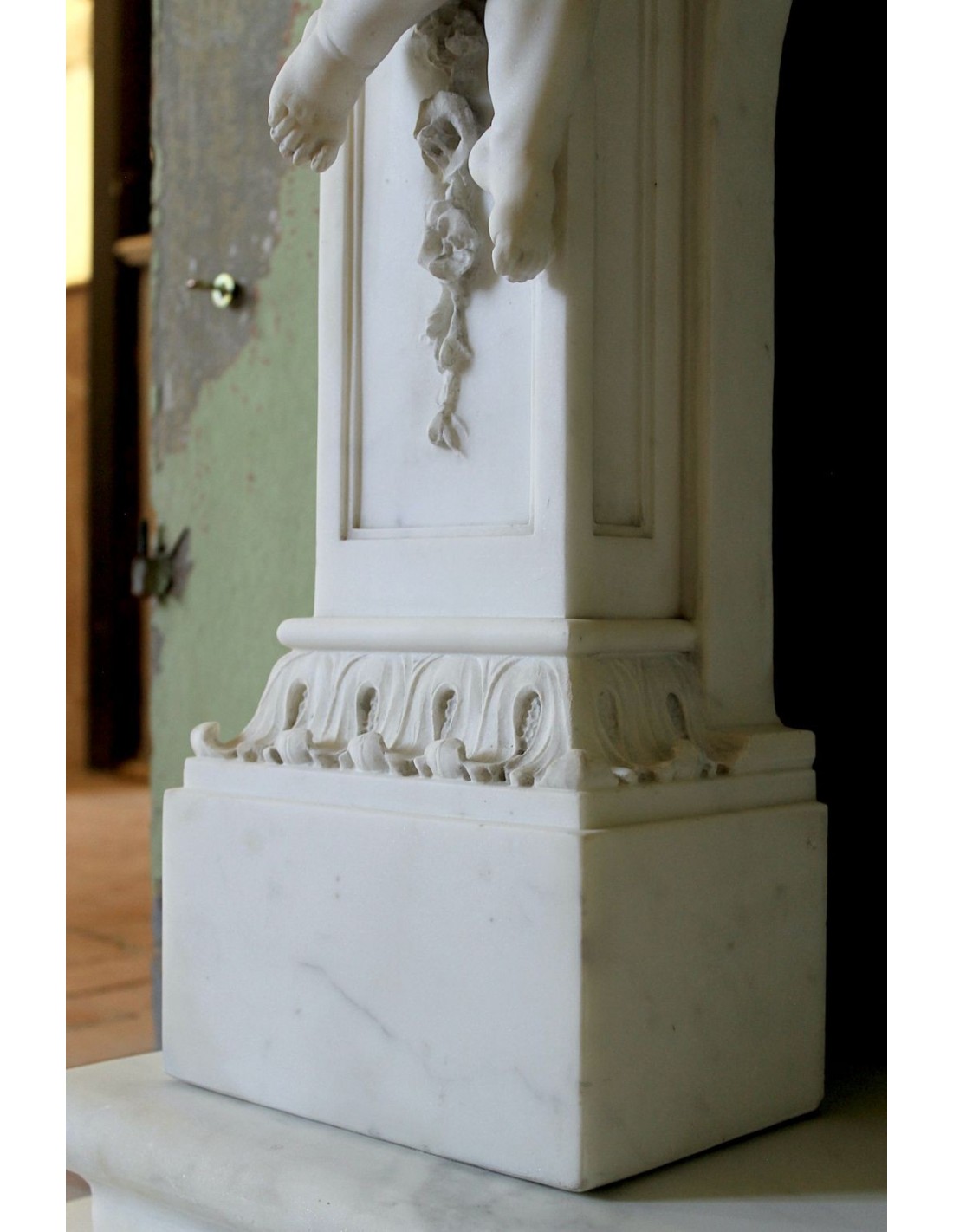
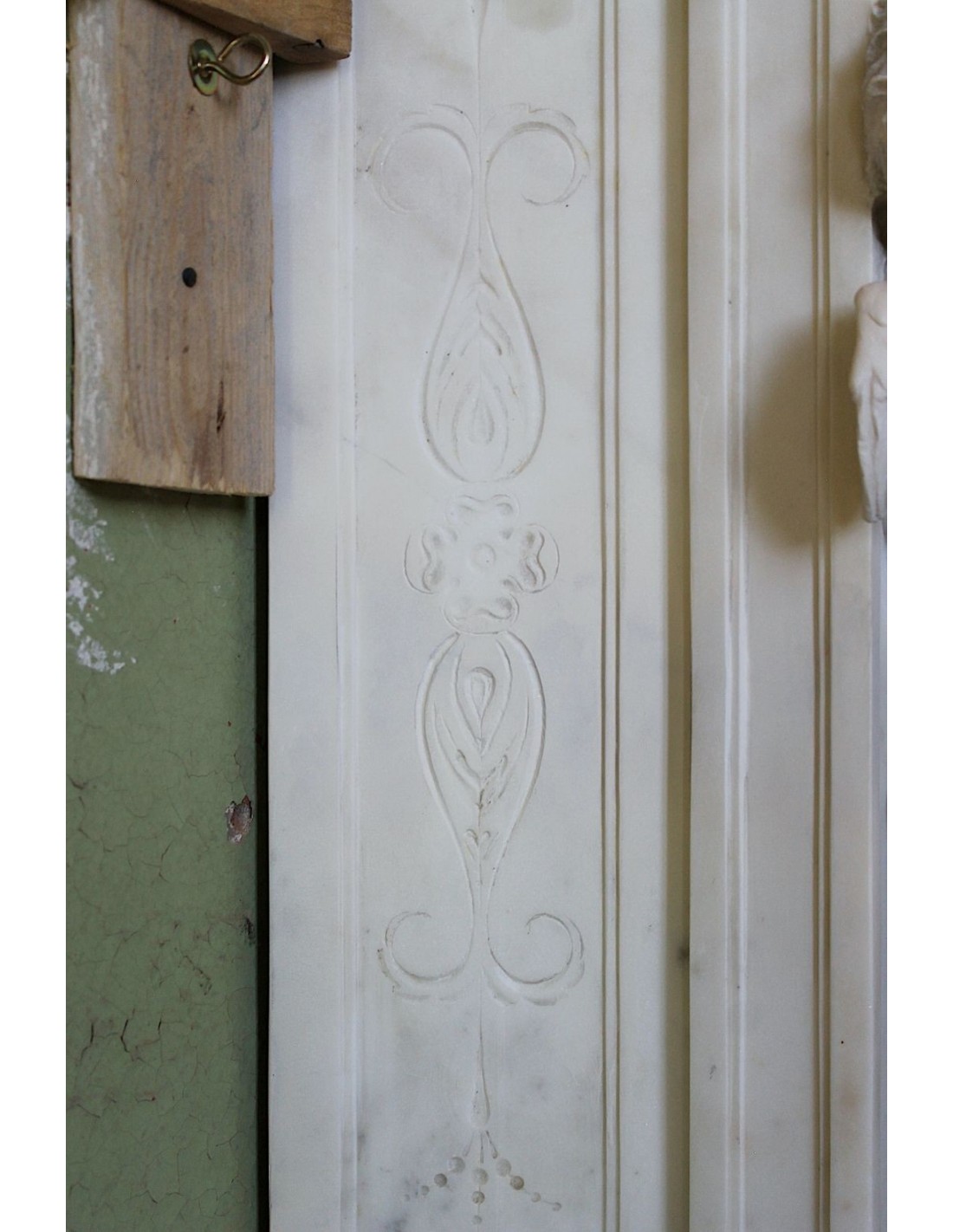
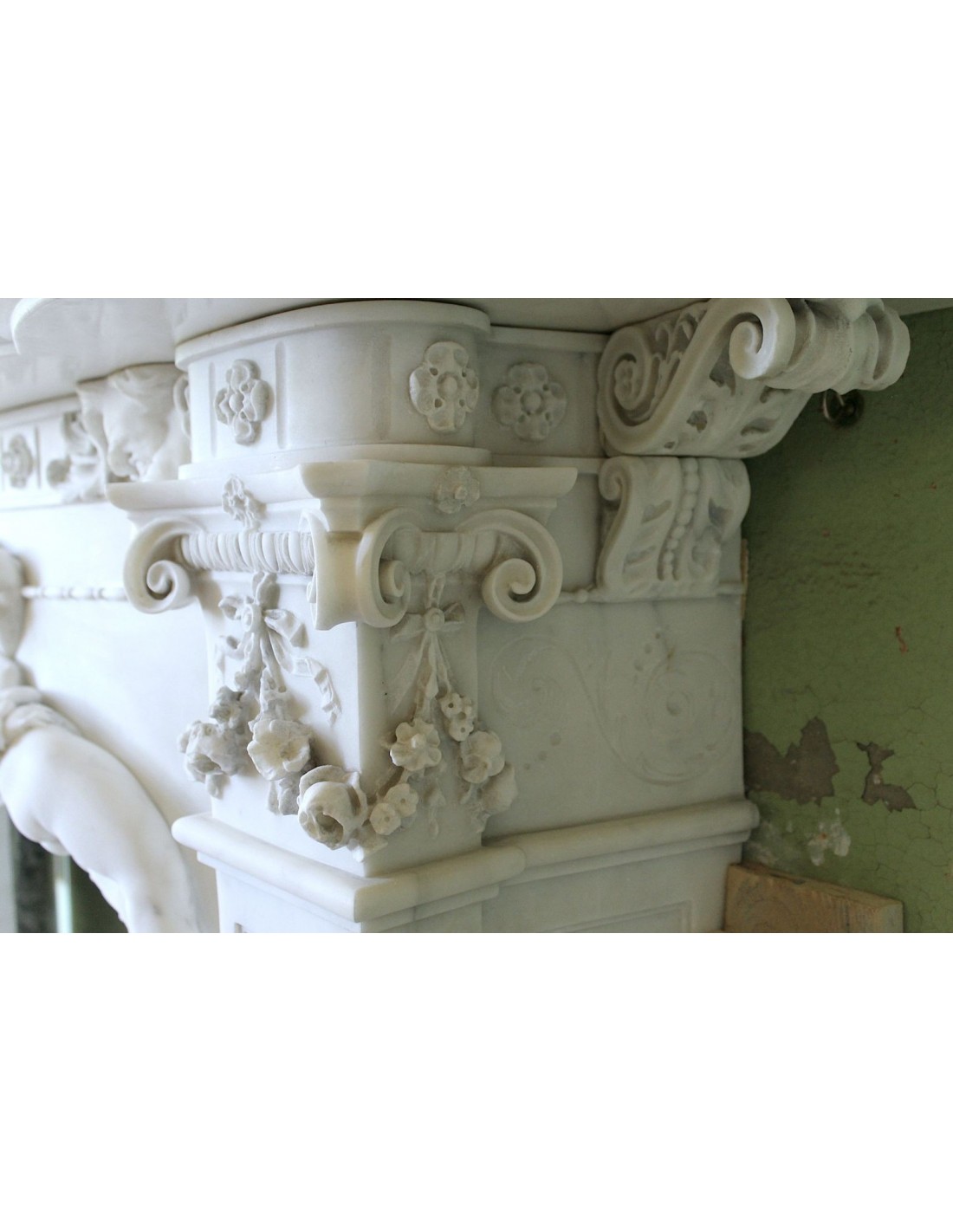
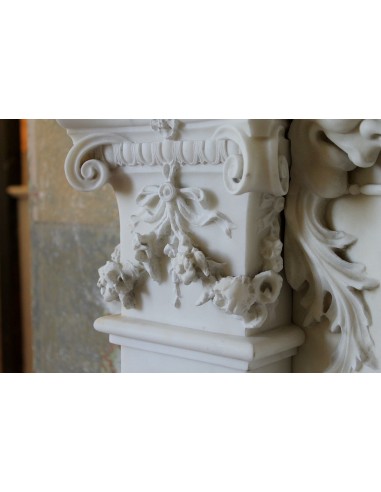
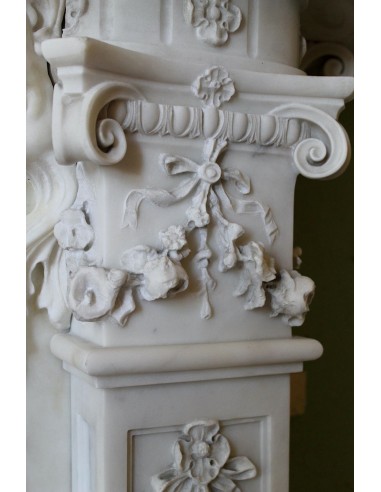
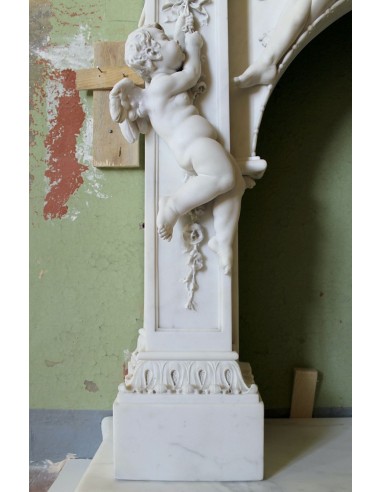
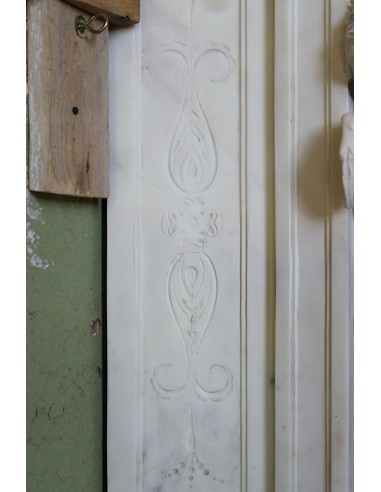
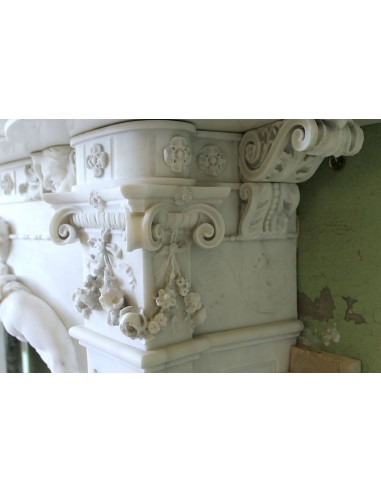
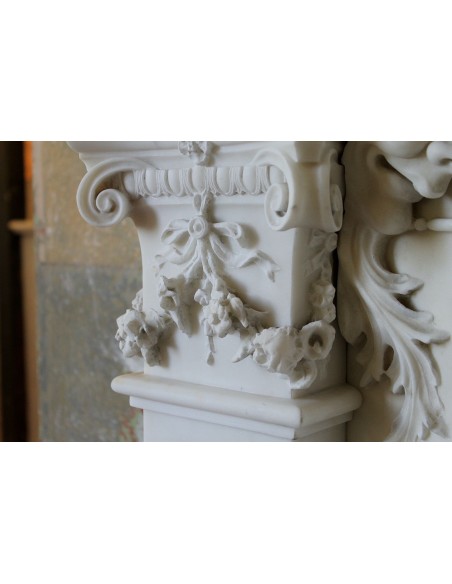
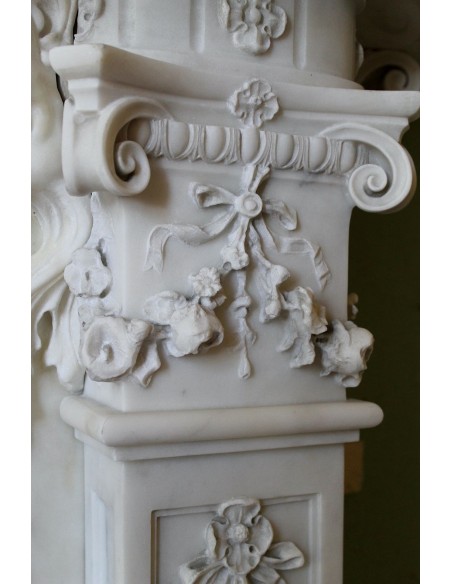
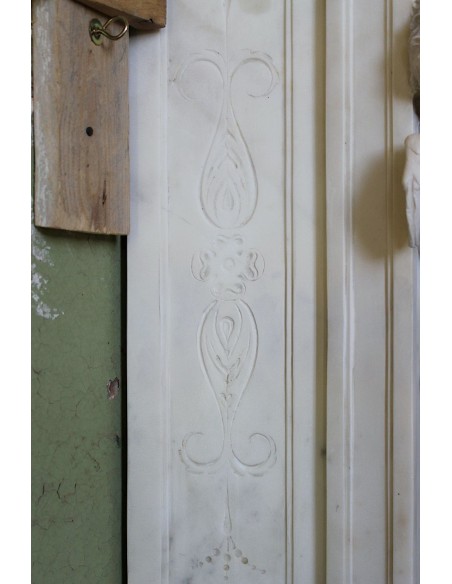
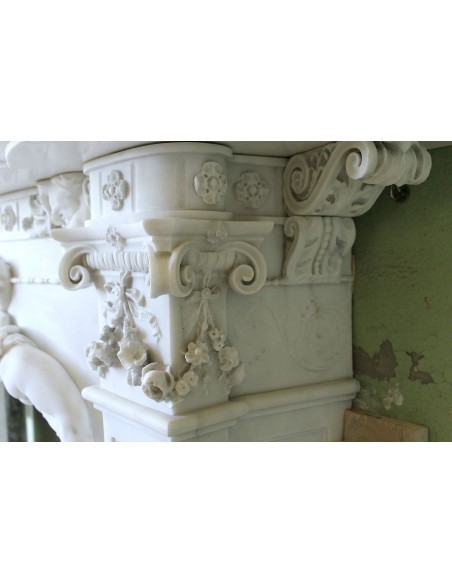
The decorative load is infinite in quantity, I am not going to list the individual decorations because you will only have to scroll through the many photographs to become acquainted with them.
What is important for me to highlight is the quality of these decorations, made with the use of the violin, an instrument invented in Lunigiana (and which it seems never crossed the Italian borders) that allowed those who knew how to handle it to make “undercut” sculptures. Needless to say, Cipriani was an excellent connoisseur of that tool, and I think that, combining this technical knowledge with his innate artistic abilities, Adolfo never had any problems surviving in all the places he stayed.
Incidentally (I mention this because this fact, too, will help us to understand what kind of character Cipriani was), although well aware of his very high artistic level, our Hero, in times of economic straits, was not at all ashamed to make alabaster sculptures (considered by many to be poor, works, in short, at which a sculptor of renown should not have tried his hand)), a work situation avoided by many of his colleagues because it was considered demeaning. Thus it is relatively “easy” to come across busts and small alabastrine statues signed by Cipriani in Italy and various countries in Europe.
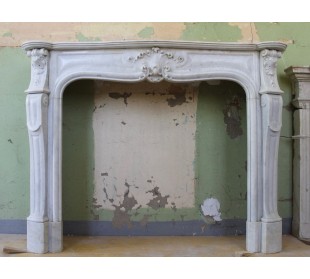
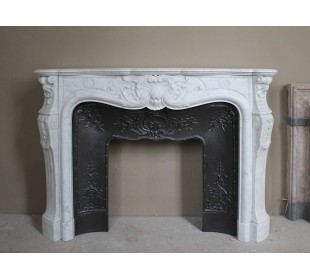
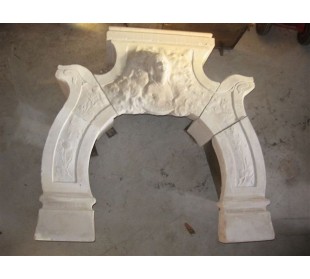
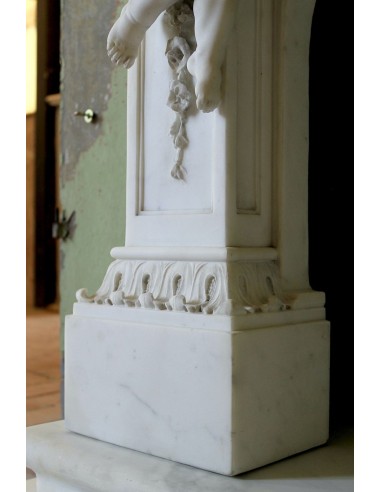
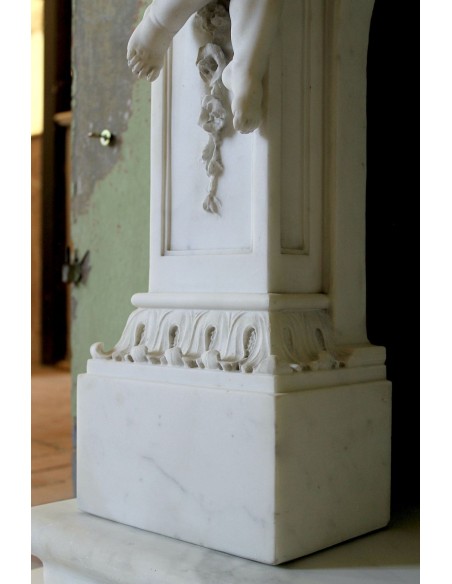
This sculptural complex was carved from three blocks of Statuario Carrara marble (needless to say, of EXCELLENT QUALITY) from which the two legs and the pediment were made. The marble parts of the base and platform were also made from solid blocks.
The time of its making can reasonably be dated between 1890 and 1910, and it was found in a manor house in the Cremona countryside. The former owners say they are certain (family recollections) that said fireplace was at one time purchased in Veneto, a location not known. But it matters little where he came from geographically; our Adolfo worked halfway around the world and in any conditions; all he needed was the few tools that fit in a bag and the company of the Artistic Leprechaun that lived joyfully in his brain.
LAST NOTES:
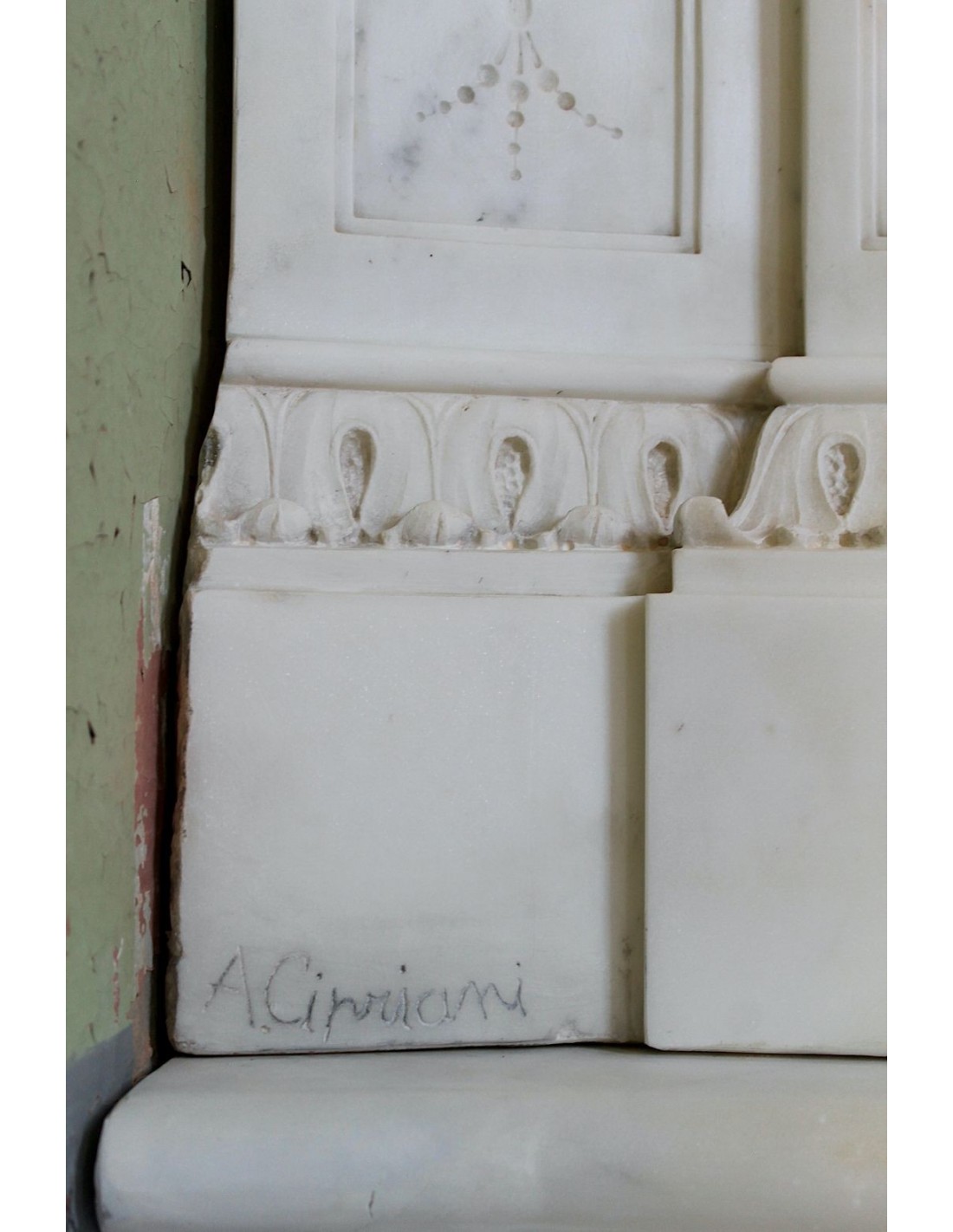
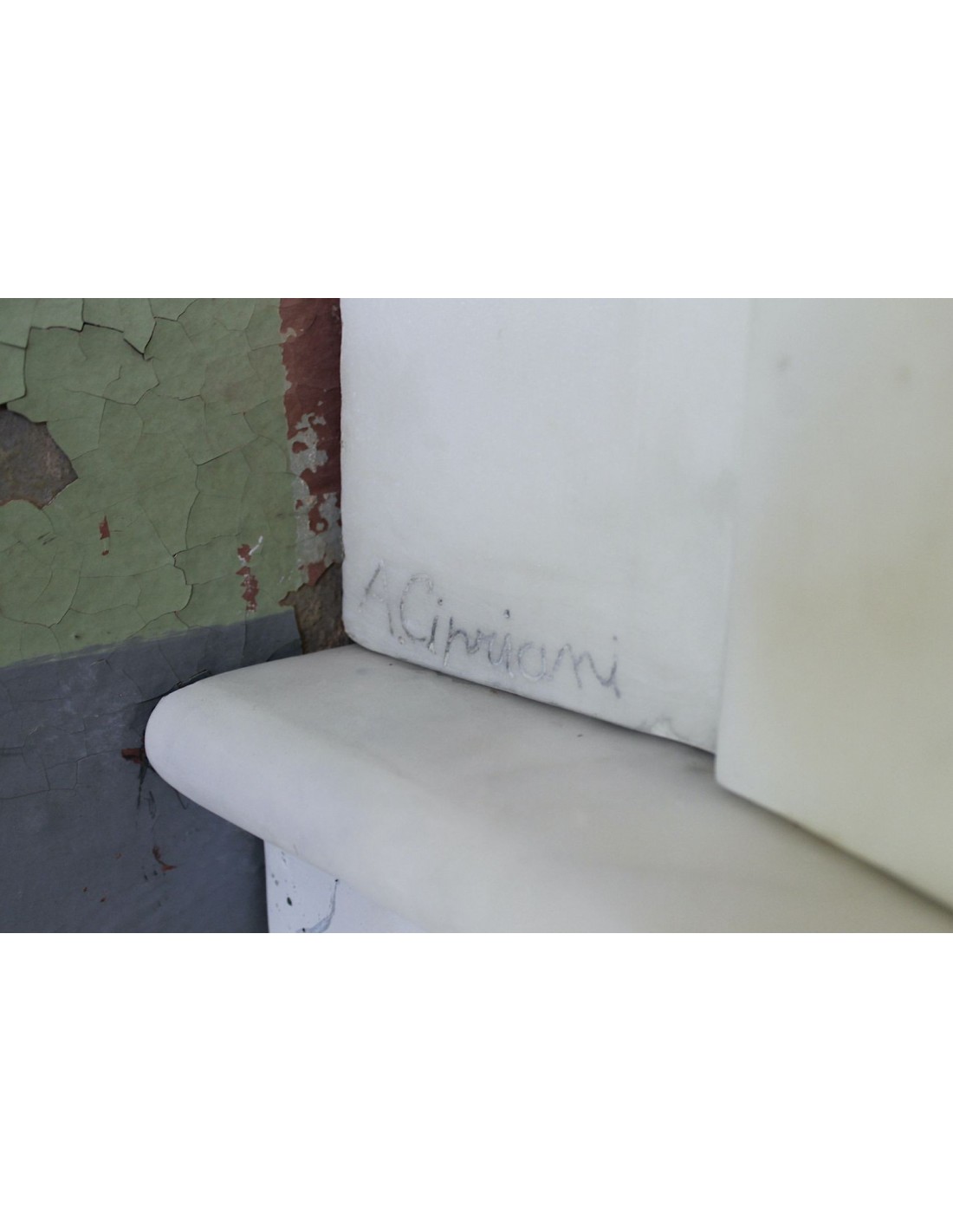
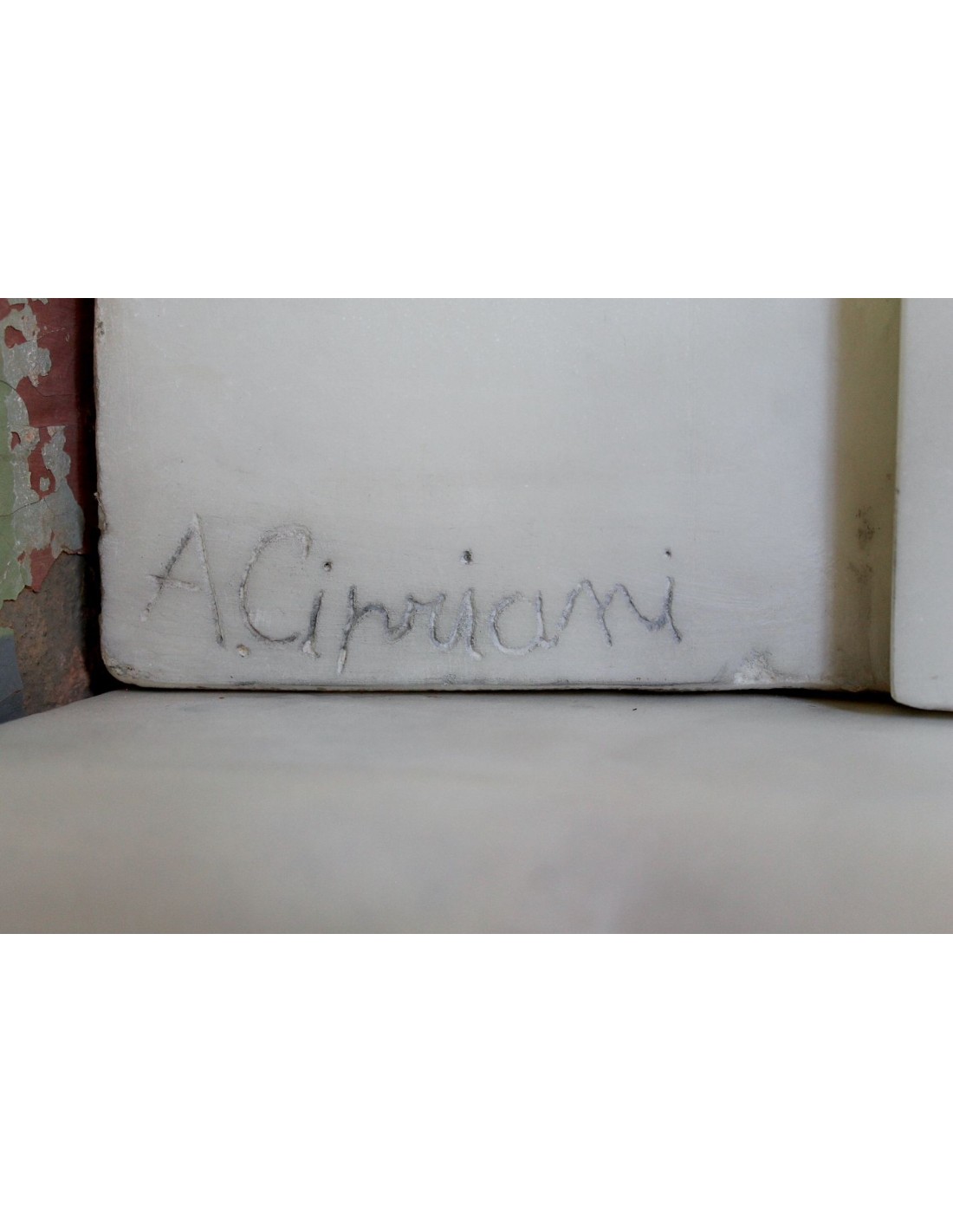
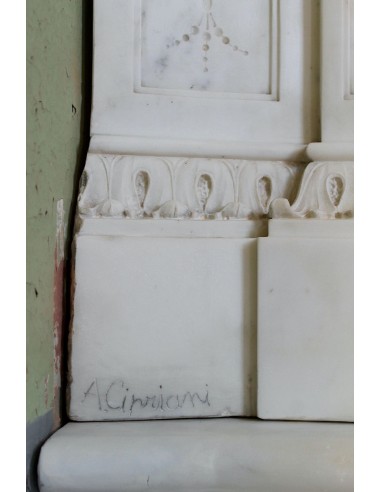
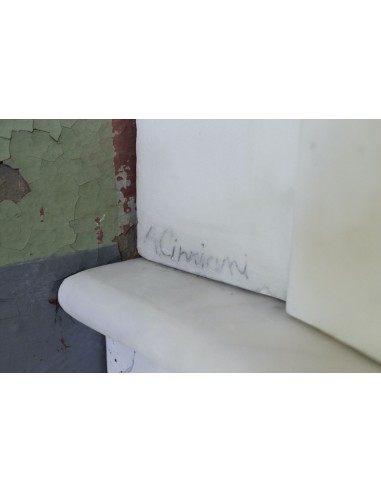
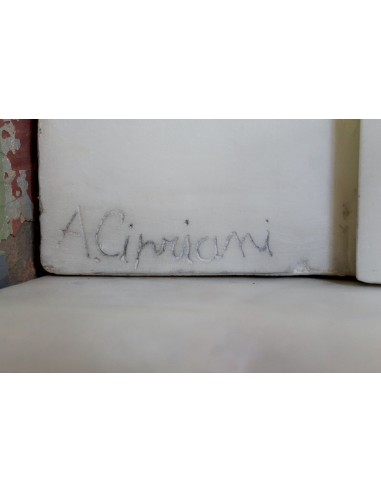
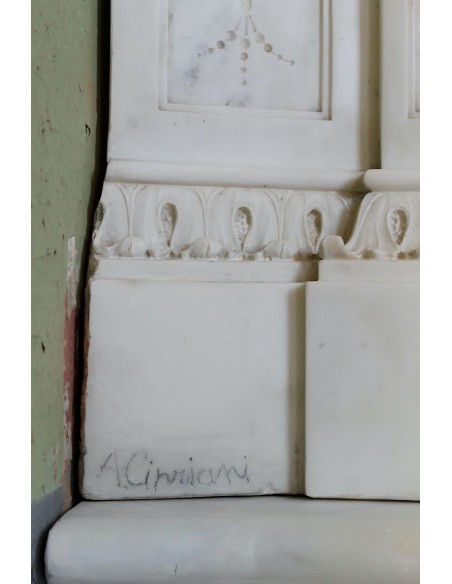
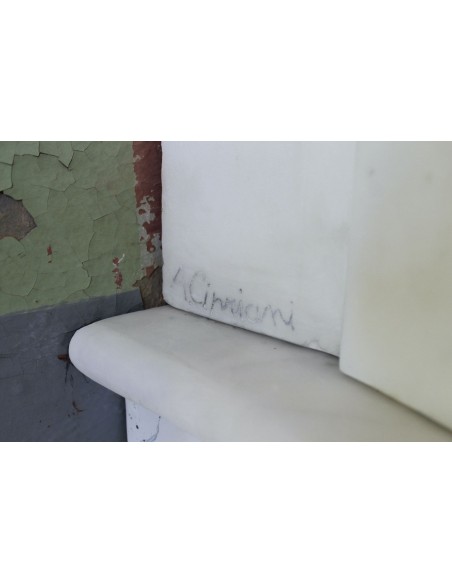
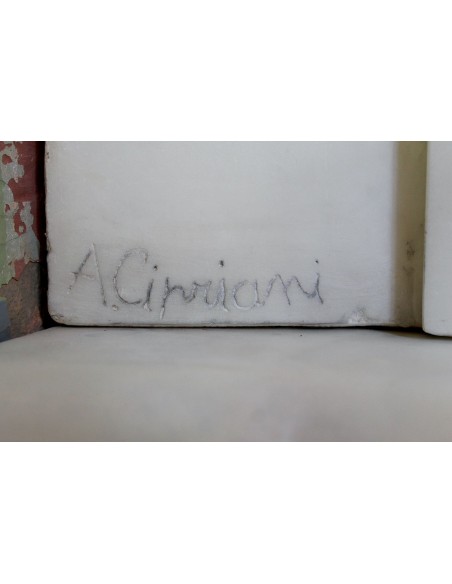
THIS MANTEL IS SIGNED BUT I WOULD LIKE TO POINT OUT THAT ADOLFO IS ONE OF THE FEW HISTORICAL SCULPTORS WHO COULD HAVE NOT SIGNED HIS MARBLES, SO MUCH HIS FANTASTIC “HAND” IS RECOGNIZABLE AND UNMISTAKABLE.
MANY ARTISTS COULD SCULPT A FACE WITH PERFECT LINES, CIPRIANI SCULPTED THE SOUL.
P.S. VENAL NOTE, ALMOST COARSE, BUT, PERHAPS, NECESSARY TO UNDERSTAND HOW THE PRICE OF THIS WORK IS NOT SO HIGH: IN 2012 THE LONDON-BASED SOTHEBY'S SOLD AT AUCTION FOR $92,500 (YOU WILL EASILY FIND EVIDENCE OF THIS ON THE INTERNET) A 117 CM HIGH LITTLE STATUETTE OF OUR ALFREDO DEPICTING A YOUNG GIRL.
CERTAINLY, CONSIDERING THAT THE HAND OF THE AUTHOR WAS THE SAME, THE QUALITY OF THE SCULPTURE WILL NOT HAVE BEEN INFERIOR TO THAT OF OUR FIREPLACE, BUT THE SIZE, DECORATIVE LOAD AND WEIGHT OF THE TWO WORKS ARE NOT COMPARABLE, THE YOUNG GIRL IS “PHYSICALLY” ABOUT 20% OF OUR INCREDIBLE FIREPLACE, NOT TO MENTION THAT THE THEME OF FEMALE REPRESENTATION WAS BY FAR THE MOST ADUSABLE, WHILE A FIREPLACE THAT BECOMES A TREE OF LIFE IS UNIQUE IN THE WORLD.